As an Amazon Associate, we earn from qualifying purchases. Some links on this site are affiliate links at no extra cost to you. Our recommendations are based on thorough research and editorial judgment.

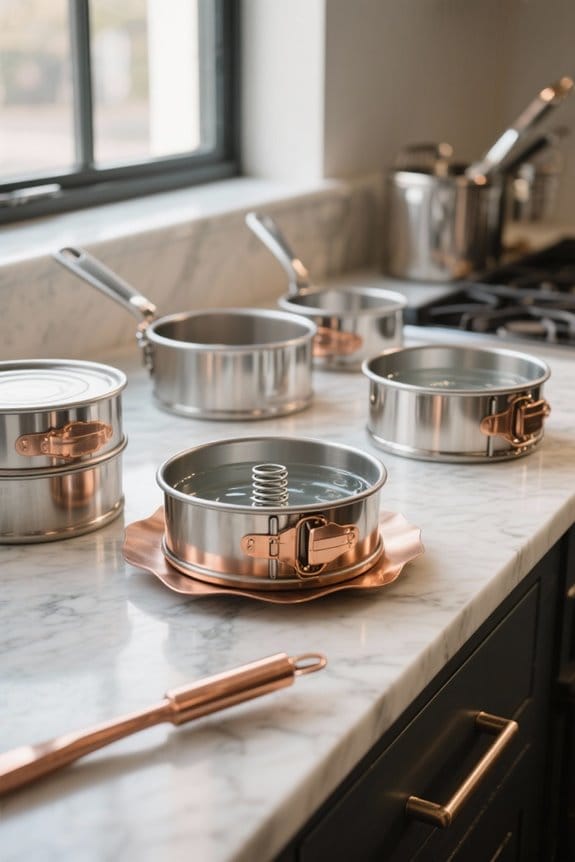
Why Springform Pans Need Water Bath Protection

Springform pans require water bath protection to guarantee even baking and prevent cracking in cheesecakes. A water bath creates a moist environment, providing gentle heat that helps maintain a consistent temperature. This method prevents the edges from overbaking while allowing the center to cook through. Proper setup minimizes leaks that can lead to soggy crusts. By using heavy-duty aluminum foil or alternative wraps, bakers can achieve better texture and appearance. Further insights on perfecting cheesecakes await.
Key Takeaways
- Water baths provide moist, gentle heat, ensuring even baking and preventing the cheesecake from cracking during the process.
- The steam from a water bath maintains humidity, combating dry oven heat that can lead to texture issues.
- A water bath acts as an insulator, allowing gradual setting of the custard filling for a perfectly soft center.
- Properly prepared water baths reduce the risk of soggy crusts by preventing moisture infiltration during baking.
- Using a water bath enhances aesthetic appeal, resulting in a smoother, crack-free surface for your cheesecake.
Importance of a Water Bath for Cheesecakes
You may be interested
Using a water bath when baking cheesecakes is essential for achieving the best results. This method involves placing a springform pan in a larger pan filled with warm water. The water bath creates a moist, gentle heat that helps the cheesecake bake evenly. It prevents sudden temperature changes that can compromise the creamy texture. Additionally, this technique reduces the risk of overbaking the edges while ensuring the center is fully cooked. A water bath also aids in preventing cracking, leading to a more aesthetically pleasing, perfect cheesecake. Although it may extend the baking time, the consistent temperature and humidity provided by the water bath markedly enhance the final quality of the cheesecake. For optimal results, it is important to preheat cookware to enhance caramelization and searing, as this can significantly affect the baking outcome.
How a Water Bath Works
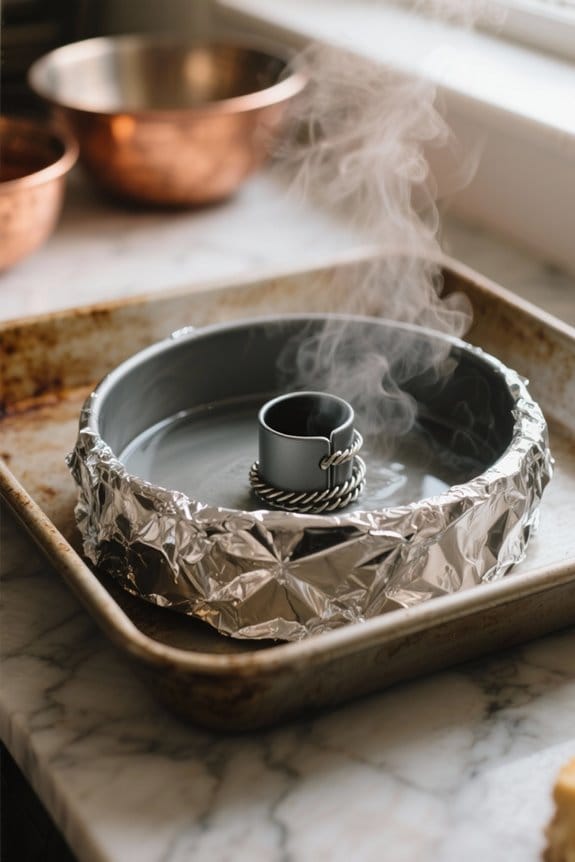
A water bath, also known as a bain-marie, works by creating a consistent baking environment for cheesecakes. Surrounding a springform pan with hot water helps maintain even baking temperatures. This setup reduces temperature fluctuations that can curdle the cheesecake filling. The steam generated contributes to a moisture-rich environment, cooking the cheesecake evenly. This prevents overbaked edges while allowing for a soft center. The humidity from the water bath counteracts dry oven heat, markedly lowering the chances of a cracked surface. Additionally, the water acts as an insulator, providing gentle heat to set the custard-based filling gradually. Using tempered glass in baking dishes ensures durability against high temperatures, making them suitable for both the oven and microwave. Overall, using a water bath promotes a smoother texture and enhances the cheesecake’s visual appeal.
Step-By-Step: Preparing a Water Bath
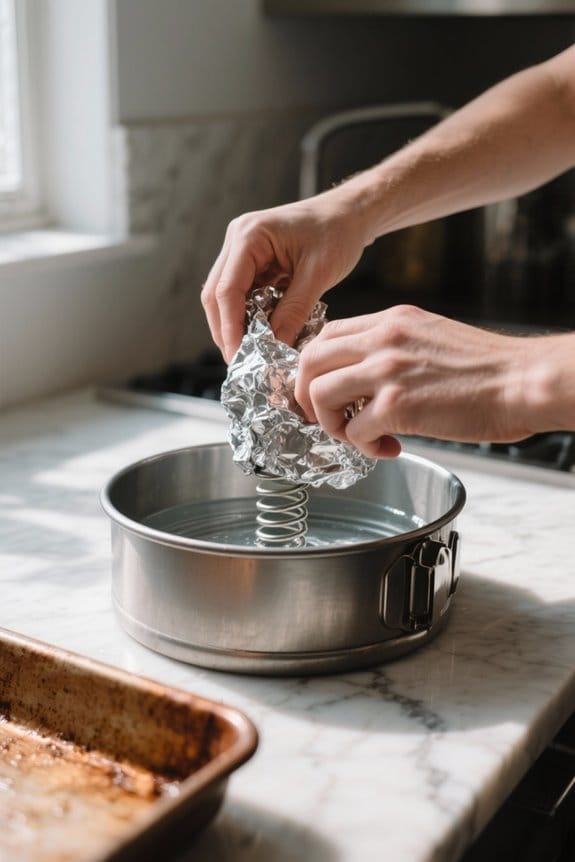
Preparing a water bath requires careful attention to detail and specific materials. First, preheat the oven and position a larger roasting pan inside. Ascertain there is enough space for the cheesecake springform pan. Next, wrap the bottom of the springform pan tightly with heavy-duty aluminum foil. This prevents water from leaking during baking. A baking sheet constructed from high-quality 18/0 stainless steel is preferred for its durability and rust resistance during such processes. After securing the foil, place the foil-wrapped pan into a larger baking dish. Pour hot water into the roasting pan until it reaches halfway up the sides of the cheesecake pan. Be cautious to avoid splashes. Finally, bake the cheesecake as per your baked cheesecake recipes. Allow it to cool in the water bath for improved texture and to prevent any cracks.
Recommended Products

Heavy Duty Aluminum Foil: Made from excellent quality, this foil is 25 Microns thick as well making it extremely durable. 18 inches wide and 500 feet long, this foil roll will be long lasting and great to have around in the kitchen.

Searching For The Best Heavy Duty Aluminum Foil? This foil weighs is the heaviest duty thickest foil we stock. Don’t be fooled by other heavy duty claims, ours is the real deal. Foil will not rip easily and will wrap easily to protect your food storage.

1 Roll Of Foil :SEARCHING FOR THE BEST HEAVY DUTY ALUMINUM FOIL? This foil weighs is the heaviest duty thickest foil we stock. Don’t be fooled by other heavy duty, ours is the real deal. Foil will not rip easily and will wrap easily to protect your food storage.
Common Issues With Water Baths
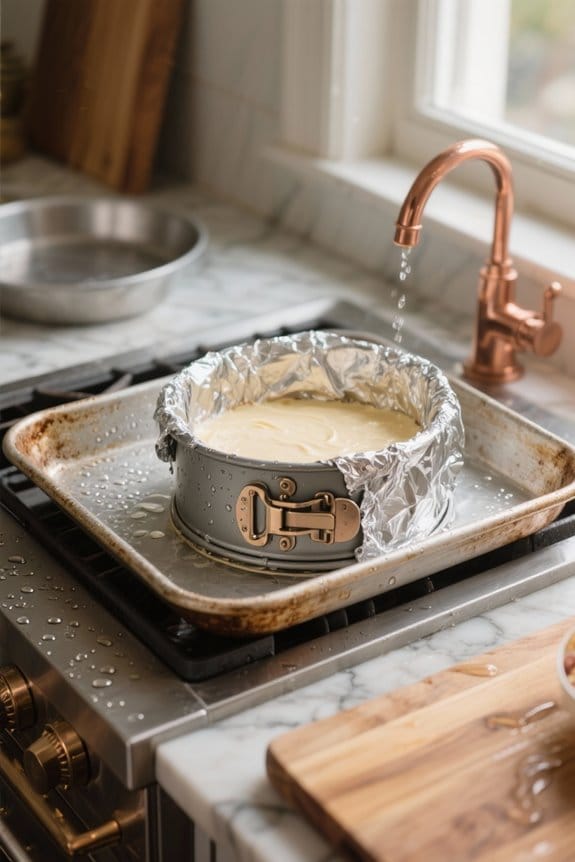
Baking with a water bath can present several common issues, especially when using springform pans. One of the most significant problems is leaks. If water seeps into the pan, it can result in soggy crusts that negatively affect cheesecake texture. Even with tight wrapping, small tears in the foil can allow moisture to infiltrate. This highlights the importance of effective wrapping techniques. Many bakers find water bath methods frustrating due to potential leaks and uneven baking. To combat these issues, alternative solutions such as oven bags or silicone wraps can be employed. These materials may provide better protection against water leaks while still allowing for the benefits of a water bath during baking a cheesecake. Additionally, using carbon steel pans, known for their excellent heat conductivity and durability, can improve the baking experience by ensuring even temperature distribution throughout the process.
Recommended Products

Thousands of micro-fine droplets create a special showering experience, refreshing like summer rain

✨【Modern Smart Design, 40°C Thermostat】High-precision thermostat technology, fast response, and automatic adjustment ensure a consistent water temperature for a comfortable shower experience. Food-grade silicone resists discoloration over time and automatically removes scale without residue.

Fast Heating & Fully Waterproof:Unlike traditional heaters that require preheating, this immersion pool heater instantly enters its optimal heating state as soon as it's powered on—no warm-up time needed. It’s 100% waterproof, and the cable is wrapped in durable silicone tubing to protect against leakage caused by prolonged water exposure.
Tips for Creating a Leak-Proof Water Bath
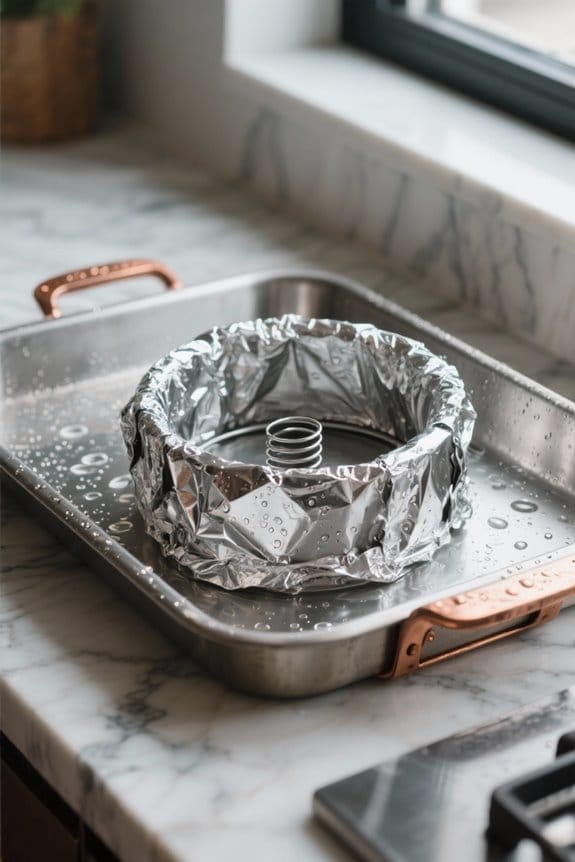
How can one effectively create a leak-proof water bath when using a springform pan? First, wrap the springform pan tightly in heavy-duty aluminum foil. This prevents water from seeping in during baking. Ascertain the springform pan fits snugly in a larger roasting pan. Gaps can allow water to enter, harming the cheesecake. For added protection, consider using an oven-safe plastic wrap or a silicone cheesecake wrap alongside the foil. This provides a waterproof barrier against leaks. Next, fill the outer roasting pan with hot water. The water should reach halfway up the springform pan’s sides. Finally, inspect the foil for any holes or tears, as even small openings can lead to soggy crusts. Utilizing dishwasher safe pots ensures easy cleanup after baking, as their durable coatings withstand mechanical washing without degrading.
Recommended Products

The Pro-Release 9-inch Springform Pan makes it easy to bake everything from creamy cheesecakes to savory quiches and deep-dish pizzas
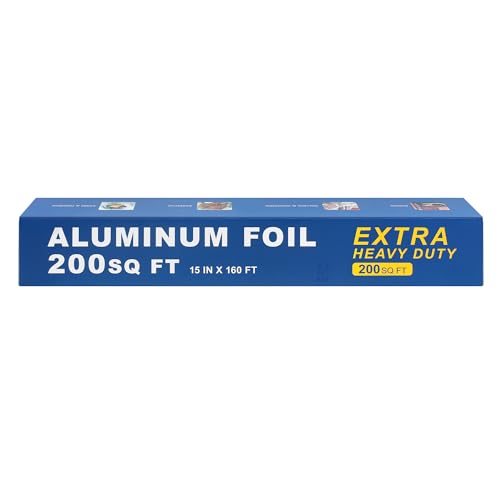
This package includes one roll of our superior extra heavy-duty aluminum foil (15" x 200 sq. ft.). Designed to be about 30% thicker than conventional heavy-duty foil for extra strength
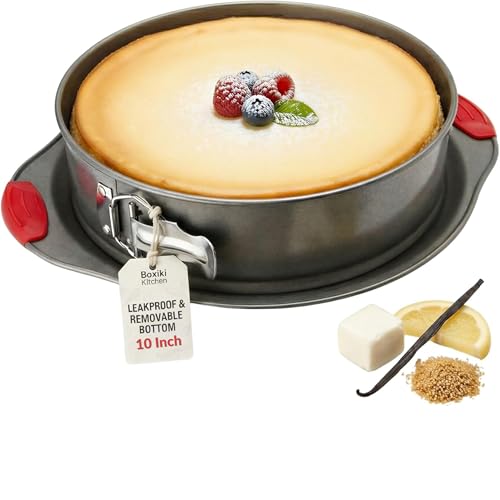
NONSTICK STEEL BAKING PAN – High quality non-stick steel surface releases foods easily, without mess. Best bakeware you can find; great for endless recipes, including variety of cakes and cheesecakes. Ideal for classic cheesecake, tortes, coffee cake, and other baked desserts when you want cleaner release and easier serving.
Alternative Techniques for Moisture Retention
Utilizing alternative techniques for moisture retention can enhance the baking process of cheesecakes. Rather than using a traditional water bath, placing a smaller baking dish filled with hot water directly beneath the cheesecake on a rack can create humidity in the oven. This method avoids direct water contact while maintaining moisture. Another option is to use steam by placing a pan of water in the oven, which helps prevent cracking. A silicone mat or cover can trap steam around the cheesecake, ensuring a moist environment. Additionally, wrapping the springform pan in plastic wrap and foil adds protection against moisture loss. Lowering the oven temperature and extending baking time can also promote moisture retention, producing desirable results when baking a cheesecake. Using high-quality cookware, such as those with Multi-ply construction, can further enhance even heat distribution during baking, ensuring consistent and well-cooked results.
Recommended Products

3-IN-1 CONVENIENCE – Ultimate kitchen versatility, bake your favourite treats with this 3-piece professional grade silicone baking mold set: round cake baking pan , square cake pan, banana bread / meat loaf pan

Create perfect mini loaf shaped cakes

Turns out 10-1/4" diameter cake, cornbread or quick bread with indentations for 12 even slices.
Expert Tips for Perfect Cheesecake
Perfecting a cheesecake requires attention to several key factors. Using a springform pan is vital for easy removal of the baked cheesecake. To prevent leaking, wrap the pan tightly with heavy-duty foil. This guarantees no water enters during the baking process. A water bath is essential for maintaining a consistent temperature. It creates a humid environment, minimizing cracking and enhancing cheesecake texture. Place the foil-wrapped springform pan inside a larger roasting pan, allowing space for water circulation. Fill the roasting pan with hot water to halfway up the sides of the springform pan. This boosts moisture retention, protecting the creamy consistency. Finally, allow the cheesecake to cool in the water bath to stabilize its structure and further reduce cracking. Choosing a high-quality, nonstick coating ensures the cheesecake slips out smoothly without sticking to the pan.
Personal Experiences and Community Recommendations
Many bakers have found that using a water bath with springform pans leads to noticeable improvements in cheesecake results. It reduces the risk of surface cracking and helps maintain creamy texture consistency. Community recommendations often highlight wrapping springform pans in aluminum foil multiple times. This creates a waterproof barrier, ensuring no water leaks during baking. Additionally, personal experiences suggest using silicone cheesecake wraps alongside heavy-duty foil for best results. These techniques help achieve consistent moisture levels throughout the cheesecake. Discussions also emphasize experimenting with different pan materials, like glass versus metal, to assess their impact on baking outcomes. Sharing successes and failures within baking communities enhances collective understanding and guides bakers toward effective methods in water bath usage. A heavy gauge construction is crucial for even heat distribution and durability, which could further enhance baking results when using springform pans.
Frequently Asked Questions
Can I Use a Springform Pan in a Water Bath?
Using a springform pan in a water bath creates an oasis of moisture while baking cheesecake. This technique guarantees even heat distribution, enhancing cake texture, elevating food presentation, and safeguarding oven safety during baking.
How to Prevent Water From Getting Into a Springform Pan?
To prevent leaks in a springform pan during a water bath, effective wrapping with heavy-duty foil, incorporating baking tips, and considering recipe adjustments enhance cheesecake texture by ensuring proper heat distribution and minimizing water intrusion.
How to Wrap a Springform Pan for a Water Bath?
Carefully contour the chosen springform pan materials with two tightly wrapped layers of foil. This best baking practice protects against moisture, preserving cheesecake texture differences while aiding in proper cake cooling techniques and preventing overbaking issues during water baths.
Can I Bake My Cheesecake Without a Water Bath?
Baking cheesecake without a water bath compromises dessert moisture, resulting in a dry texture. Recipe variations exist, yet cooking tips recommend water baths to guarantee ideal flavor profiles and crust types, adhering to baking science principles.