As an Amazon Associate, we earn from qualifying purchases. Some links on this site are affiliate links at no extra cost to you. Our recommendations are based on thorough research and editorial judgment.

The Science Behind Even Heat Distribution in Baking

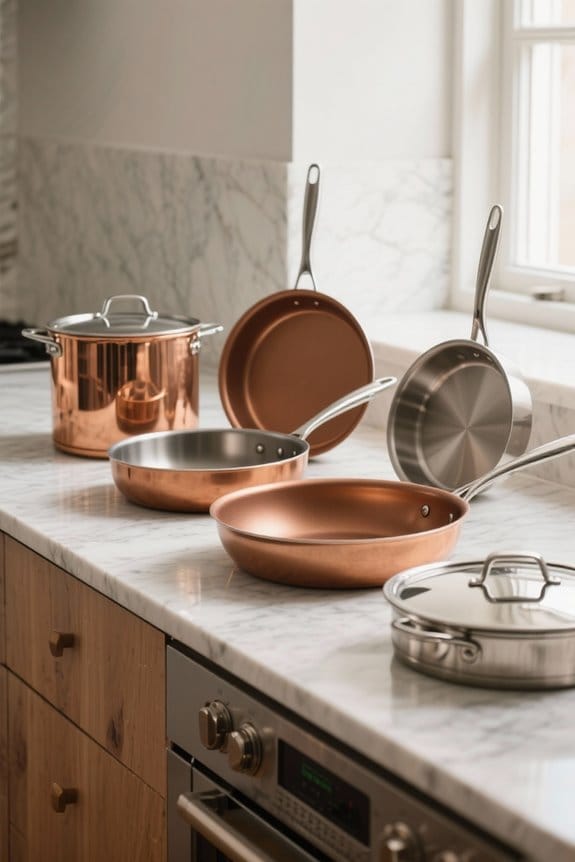
Even heat distribution is critical for successful baking. It guarantees consistent rise and flavor through caramelization. Materials like copper and aluminum provide excellent thermal conductivity. Light-colored aluminum pans manage heat better than darker ones. Preheating cookware helps achieve uniformly baked products. Techniques like rotating pans enhance air circulation. Using heating cores can further aid in temperature consistency. Understanding these principles can enhance baking quality. More insights on optimizing baking techniques and avoiding common mistakes await.
Key Takeaways
- Even heat distribution is essential for consistent baking results, preventing issues like doming or collapsing in baked goods.
- Cookware materials like copper and aluminum impact thermal conductivity, influencing how evenly heat spreads during baking.
- Preheating ovens and cookware helps maintain steady temperatures, reducing fluctuations that can affect baking quality.
- Convection ovens enhance heat circulation, ensuring uniform cooking and reducing overall baking time by 25-30%.
- Common baking mistakes, such as not preheating or using incorrect pan sizes, can lead to uneven heat distribution and cooking.
Importance of Heat Distribution in Baking
You may be interested


Even heat distribution is essential for successful baking. It guarantees even cooking for baked goods like cakes, which often form uneven textures without proper heat. Good thermal conductivity in materials such as aluminum or copper enhances this heat distribution. When using these materials, bakers achieve consistent browning and flavor through caramelization and the Maillard reaction. Preheating the oven is critical for maintaining steady oven temperatures, preventing fluctuations that can lead to uneven cooking. Additionally, using techniques like heating cores or water baths can improve heat distribution, especially in deep cakes or delicate desserts. These methods help achieve uniform texture and appearance while reducing the risk of under- or overcooked sections in the final product. Stainless steel baking sheets are also a great option, as they provide excellent heat conductivity for even baking and are resistant to warping and bending under high heat.
How Different Cooking Techniques Impact Even Heating
Different cooking techniques play a noteworthy role in achieving even heat distribution during baking. Techniques like using convection ovens notably enhance even heat distribution. These ovens circulate hot air, promoting uniformity in cooking. This reduces hot spots, improving baking performance. Additionally, employing a shallow hollow in batters helps larger cakes cook consistently. It counters slow heat penetration, supporting even heat distribution. Using light-colored aluminum pans also assists, as they manage thermal conductivity better than darker options. Methods like water baths regulate heat transfer effectively, ensuring a uniformly cooked product. Each of these techniques contributes to preventing uneven rising, which is critical for baked goods to achieve their intended texture without collapsing or doming. To ensure perfectly fluffy cakes, it’s beneficial to use professional-weight aluminum pans for their even heat distribution and reliable baking performance.
The Role of Cookware Materials in Heat Distribution
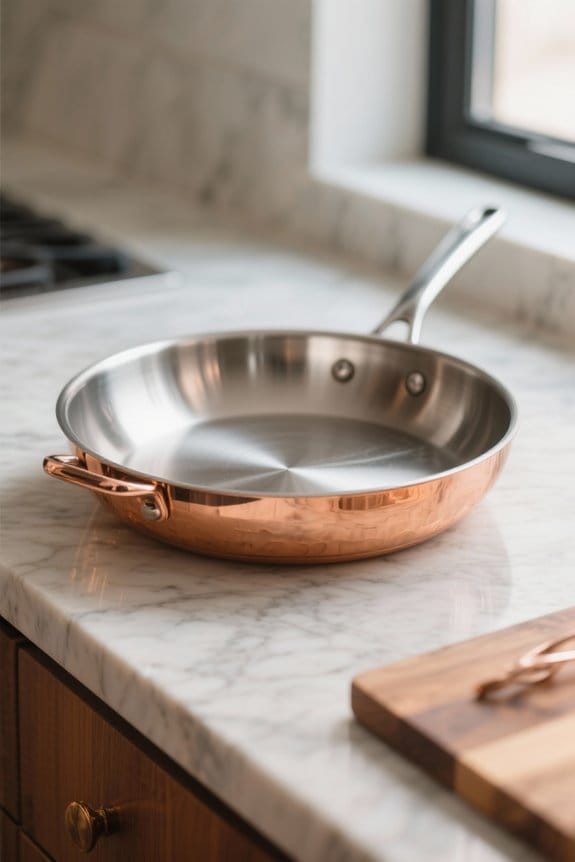
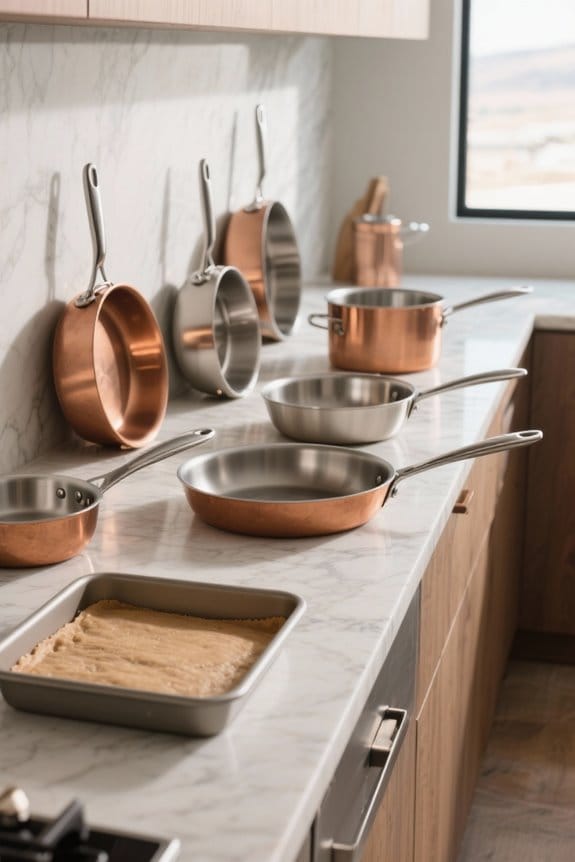
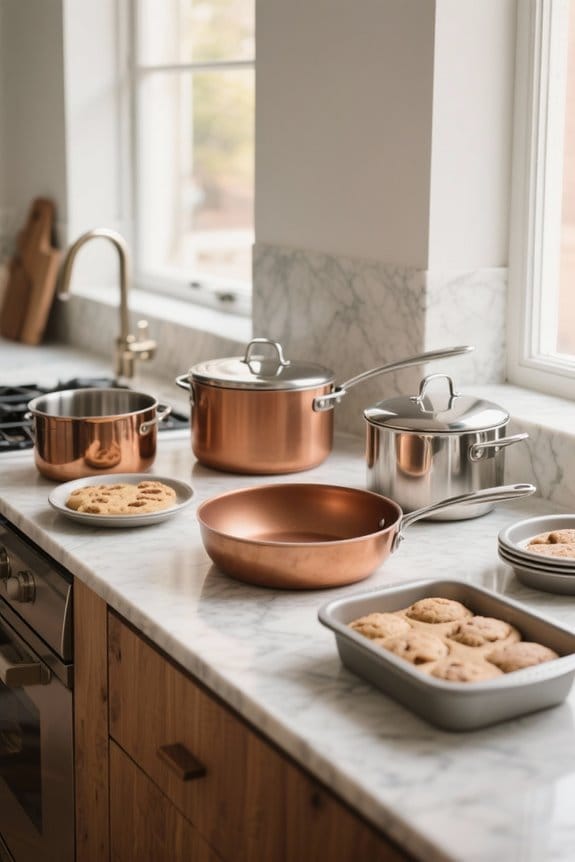
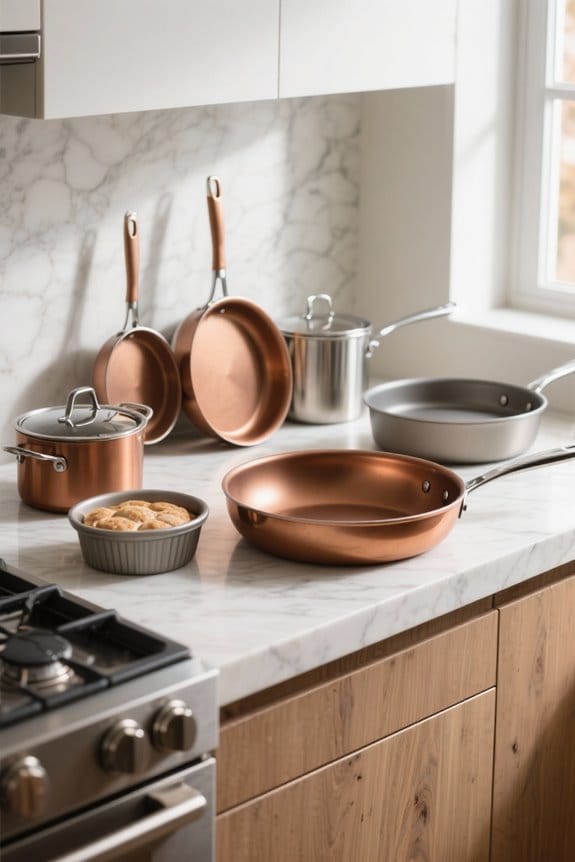
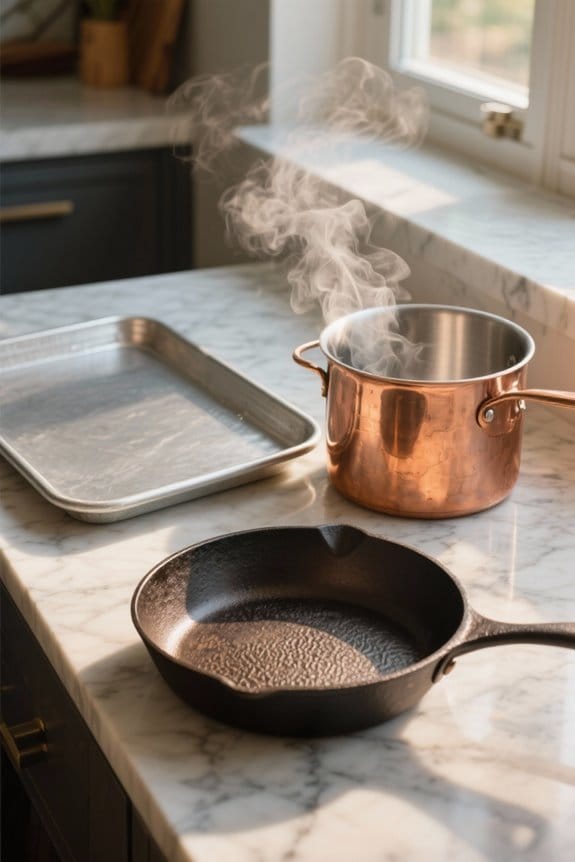
Cookware materials greatly impact heat distribution in baking. Copper is known for its superior conductivity, ensuring rapid and even heating. This leads to precise cooking control and excellent results. Aluminum is lightweight and affordable, but it may cause temperature changes due to lower heat retention. In contrast, cast iron is celebrated for its excellent heat retention, making it ideal for slow cooking and achieving golden-brown crusts. However, it heats and cools more slowly. Stainless steel can create hot spots without an aluminum or copper core, which improves heat distribution. Enamel-coated cast iron combines the best of both worlds, offering even heating and a non-stick surface, making it versatile for various cooking tasks. Nonstick coatings in high-quality loaf pans are also essential for smooth food release and easy cleaning, enhancing the overall baking experience.
Recommended Products

Enamel Cast Iron Sink with Self-Trimming Apron: 35.5-inch Whitehaven Sink is made of enameled cast iron and features a shortened apron that overlaps the cabinet face for beautiful results; this solid Basalt sink can be used in most standard cabinetry or retrofitted to existing standard cabinetryBiscuit

Enameled cast iron delivers superior heat distribution and retention

Enameled cast iron delivers superior heat distribution and retention
Convection vs. Conventional Ovens: Understanding the Differences
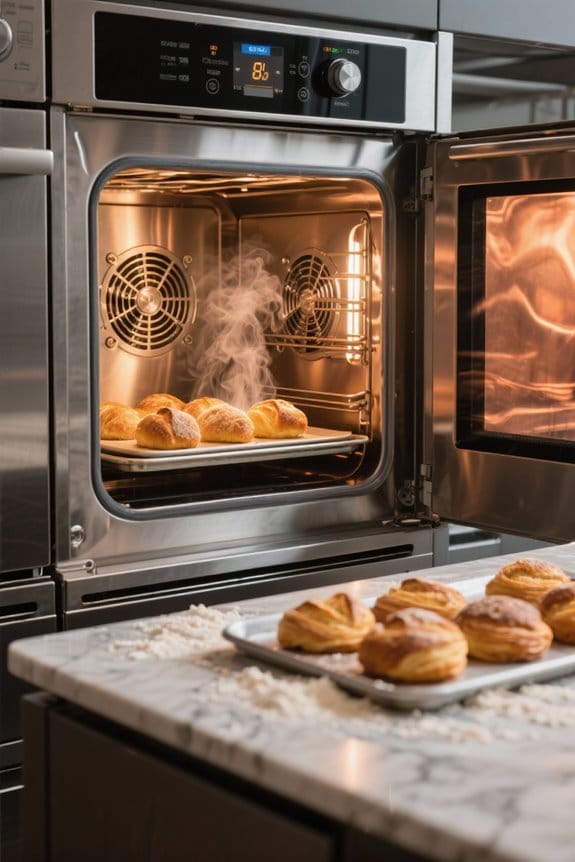
A range of baking enthusiasts often face the choice between convection and conventional ovens. Convection ovens use a fan to circulate hot air. This guarantees even heat distribution and reduces cooking times by 25-30%. In contrast, conventional ovens rely on hot air rising naturally, which can create hot spots. This often leads to overcooked edges and undercooked centers. Convection is especially useful for baking items like pastries or cookies, where even cooking is vital. However, delicate foods, such as custards, may not perform well in a convection oven due to intense airflow. It is generally advisable to lower cooking temperatures by 25 degrees Fahrenheit when adapting conventional recipes for a convection model to maintain results. Nonstick surfaces enhance the cooking experience by promoting easy food release, appealing to both novice and experienced cooks.
Recommended Products

Enjoy professional cooking with this 14 piece cookware set which includes 10 inch and 12 inch Fry Pans, 2 Quart and 3 Quart covered Sauce Pans, 3 Quart and 6 Quart covered Sauté Pans, 12 inch covered chef’s pan and an 8 quart covered stockpot

{ENERGY EFFICIENT} The Kratos 29Y-057 electric convection oven features a high efficiency heating tube with direct, forced hot-air system. Double-pane thermal glass windows provide easy visibility and ensure energy efficiency
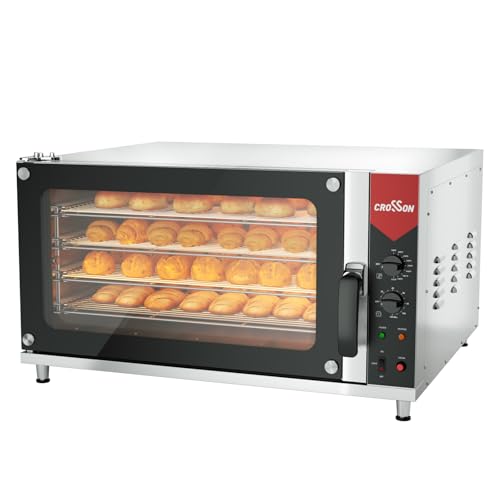
125L Super Large Capacity: CROSSON commercial convection oven features a 4.4 cu.ft. (125 L) inner capacity, perfectly sized to cook a large batch of delicious foods,embrace a world of unrestricted baking potential.The dimensions of the 4-tier interior reach 27.24”x21.3”x12.23”(69.2x54.1x33.6 cm), ideally meeting the needs of parties or commercial use.
Using Heating Cores for Improved Baking Results
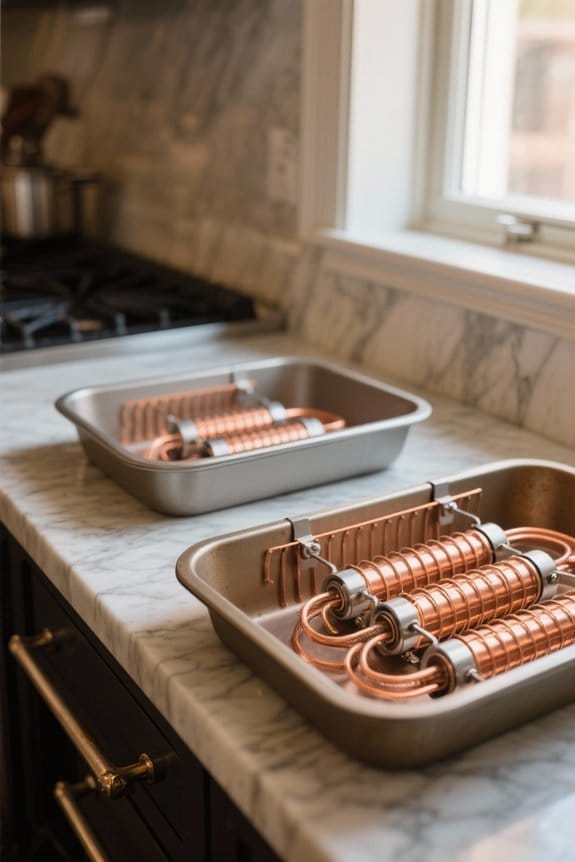
Using heating cores can greatly improve baking results, especially in larger cakes. These metal tools are designed to conduct heat effectively into the center of cakes. They help prevent uneven baking, ensuring cakes bake evenly from the inside out. Cone-shaped heating cores have a larger surface area and can be filled halfway with batter. Rod-shaped heating cores are customizable and also promote heat distribution for faster cooking. By enhancing heat transfer, these cores help maintain ideal air circulation, leading to evenly cooked desserts. This not only improves the cake’s texture but also aids in enhancing flavors. Overall, using heating cores is an effective method for achieving superior baking results across various baked goods. It is similar to the use of high-quality stainless steel inserts in pasta pots, which ensure durability and even heat distribution for perfect pasta.
DIY Alternatives for Achieving Even Baking
Achieving even baking can be accomplished with effective DIY alternatives. High-sided cookie cutters can act as DIY heating cores to enhance heat conduction in baked goods. Steel timbales provide consistent cooking when inserted into larger batters. Cake decorators’ flower nails can also improve heat distribution in cakes and loaves. In emergencies, creating a cone from aluminum foil and placing it in the batter can simulate the heat transfer of a metal core. For better temperature regulation, wrapping insulation strips around cake pans can limit heat fluctuations throughout the baking process. These methods aid in ensuring even baking results and prevent undercooked centers, making them practical solutions for home bakers seeking reliable outcomes. For optimal results, using non-reactive materials in your baking tools can prevent food interaction and ensure consistent cooking.
Recommended Products

LUXURIOUS GOLD HANDLES – Add a touch of elegance to your kitchen. Our ergonomic stay-cool handles are finished in a lustrous gold color to give your kitchen décor an extra spark. Each handle contains a built-in heat diffuser to keep the grip cooler.

Professional 5-Layer Fully Clad Construction for Superior Cooking: Experience professional-grade performance with our fully clad pots and pans, featuring 5 layers of premium materials spanning the entire body—not just the bottom. Food surfaces are 304 stainless steel for corrosion resistance and easy cleaning, completely free of chemical coatings. Features dual aluminum cores for 30% faster heating vs. standard one clad aluminum cores and prevents warping. while the magnetic 430 stainless steel base guarantees perfect induction compatibility

ELEGANT YET PRACTICAL: The Gotham Steel hammered collection is beautiful and makes a statement in every kitchen, yet nonstick, lightweight, scratch resistant and dishwasher safe!
Common Baking Mistakes Related to Heat Distribution
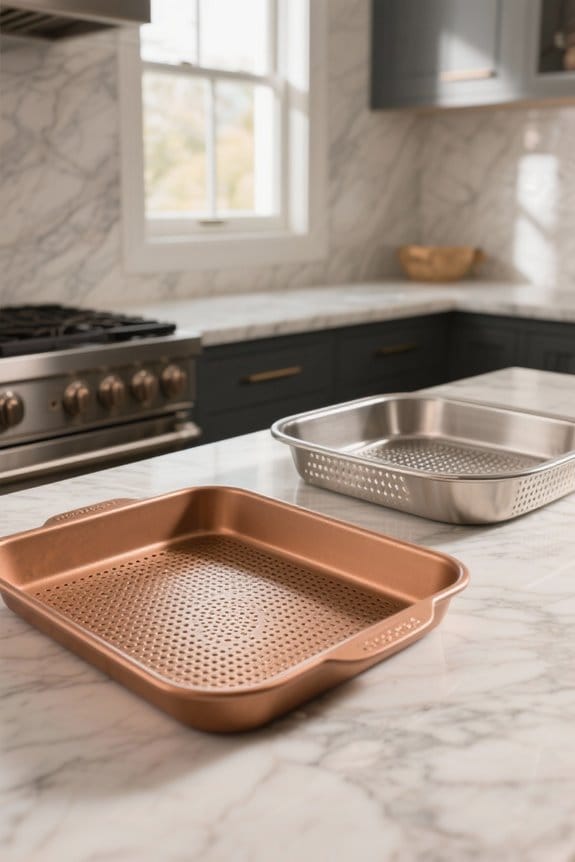
Many bakers may overlook common mistakes related to heat distribution in the oven. Uneven heat can lead to undercooked or overcooked areas in baked goods. This often results in a domed cake center or an unevenly browned crust. Using dark metal baking pans can absorb too much heat, causing the outside to burn while the inside remains undercooked. The wrong size baking pan can disrupt cooking times and heat circulation. Not preheating the oven can create inconsistent temperatures, affecting rise and texture. Additionally, frequently opening the oven door causes temperature fluctuations, leading to unevenly cooked items. Square Shape ensures even heat distribution for consistent cooking results. Adopting better heat distribution practices can improve the final results and enhance energy efficiency during baking.
Recommended Products

High-efficiency heating tube with direct, forced hot-air system

Door hinging: Door hinging on left side, standard (No Discounts Applied)

Compact & Efficient: Fits up to three full-size sheet pans with 3-1/3" tray spacing, perfect for high-volume cooking.
The Science Behind Temperature Control in Baking
Temperature control is fundamental to successful baking. Slight variations in temperature can greatly alter texture and flavor. For best results, cakes should be baked at around 350°F (175°C). This temperature enables proper rising and prevents over-browning. Oven preheating is essential; it guarantees that baked goods cook evenly from the start. The choice of pans also affects temperature control. Light-colored pans reflect heat better, reducing the risk of burning the outer layers. Insulation methods, such as baking strips or heating cores, help maintain consistent temperature throughout the batter. This minimizes undesirable results like doming or collapsing. Effective temperature management is vital for achieving evenly baked products that meet desired quality standards in home baking. Additionally, using nonstick coatings like PFOA-free options can enhance the baking experience by providing even heat distribution and ease of cleaning.
Tips for Ensuring Consistent Cooking Outcomes
Consistent cooking outcomes in baking rely on several key techniques. Preheating cookware for 3-5 minutes helps achieve even heat distribution and reduces hot spots. Light-colored, natural aluminum pans with good thermal conductivity are ideal for promoting consistent results, as darker pans can absorb excess heat. Rotating pans halfway through baking enhances air circulation, preventing uneven cooking and browning. To avoid steam buildup that can lead to inconsistent outcomes, do not overcrowd baking sheets. Additionally, using heating cores or DIY alternatives can improve heat penetration in deep or oversized cakes, ensuring they cook evenly. Adopting these practices contributes to successful baking with reliable results every time. Consider using non-stick coatings that prevent food from sticking and ensure easy food release, which further aids in achieving consistent baking results.
Frequently Asked Questions
How Can Heat Be Distributed Evenly?
Heat distribution can be achieved through proper oven placements, effective baking techniques, and suitable baking materials. Utilizing convection currents, managing temperature, and adjusting recipes according to thermodynamic principles enhances uniform cooking throughout baked goods.
How to Distribute Heat Evenly in an Oven?
Heat distribution within an oven, akin to a well-conducted symphony, relies on oven convection techniques, appropriate baking pan selection, diligent oven calibration, strategic placement, and temperature monitoring tools to harmonize air circulation and counteract heat source variations.
What Is the Science of Heat Transfer in Baking?
The science of heat transfer in baking involves conduction versus convection, radiant heat effects, and thermal mass. Proper oven calibration and insulation improve airflow patterns, minimize temperature fluctuations, and enhance heat retention on baking surfaces for consistent results.
How to Even Out Heat in an Oven?
To even out heat in an oven, one should preheat thoroughly, utilize proper rack positioning, monitor thermometer placement, select suitable baking pans, and consider convection fans while ensuring adequate air circulation to optimize heat sources.