As an Amazon Associate, we earn from qualifying purchases. Some links on this site are affiliate links at no extra cost to you. Our recommendations are based on thorough research and editorial judgment.

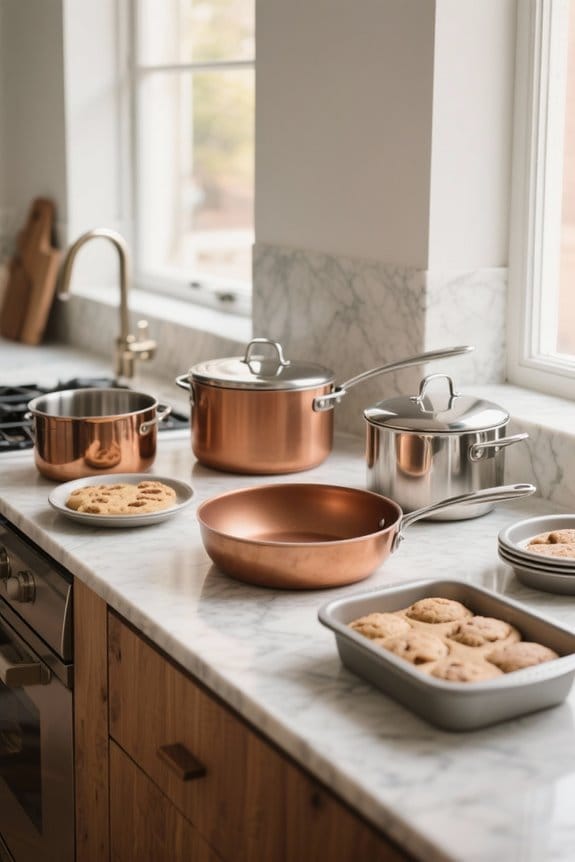
Why Some Cakes Stick Despite Greasing

Cakes can stick despite greasing due to several factors. Insufficient greasing or failing to dust flour after greasing can create sticking areas. Dense or wet batters are more likely to adhere to the pan. Cooling time is also critical; letting a cake cool too long can harden its edges. Using proper fats and high-quality baking tools can enhance release. Understanding these aspects can help prevent sticking in future baking endeavors. More insights can help improve cake release techniques.
Key Takeaways
- Insufficient or uneven greasing leaves areas uncoated, causing cakes to stick to the pan.
- Neglecting to dust flour after greasing creates no barrier, increasing the chance of sticking.
- Dense or wet batters are more prone to adhering to the pan surface, despite greasing.
- Excessive cooling time in the pan can harden the edges, complicating cake release.
- Poorly maintained non-stick pans may lose their effectiveness, leading to sticking issues.
Common Causes of Cake Sticking
You may be interested
Cakes often stick to their pans for several reasons. One common issue arises from insufficient greasing. If any part of the pan is ungreased, the cake may stick in that area. Additionally, failing to dust the greased pan with flour can prevent a proper barrier between the batter and the pan surface. New or poorly maintained non-stick pans may also pose challenges, as their surfaces may lose effectiveness. The consistency of the cake batter plays a role too. Dense or wet batters are more likely to bond to the pan. Finally, allowing the cake to cool too long in the pan can set the edges firmly, making it tougher to release the cake onto a cooling rack. Utilizing high-quality materials like aluminum or carbon steel in cake pans can improve heat conductivity and minimize sticking.
Importance of Proper Pan Preparation
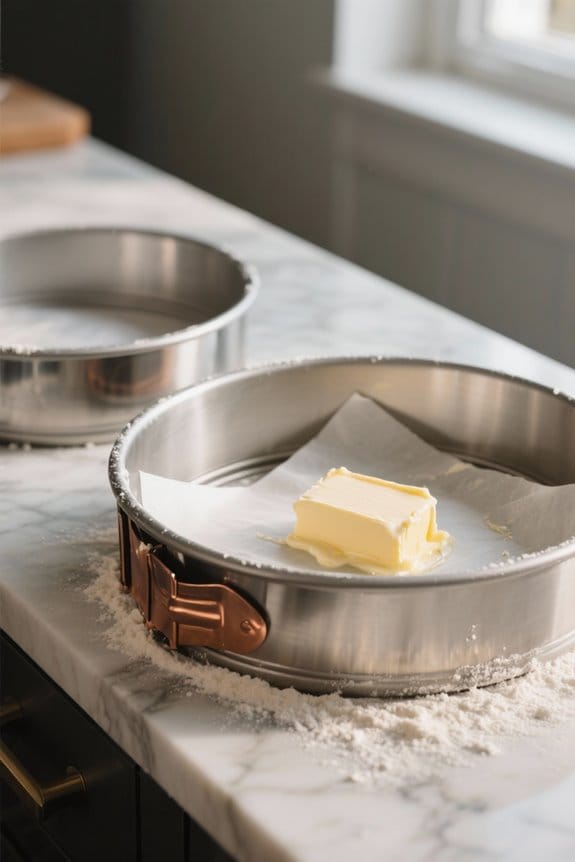
Proper pan preparation plays a significant role in achieving a successful cake release. Even non-stick pans require adequate greasing and flouring to prevent sticking. Applying methods like the butter and flour technique, using cake goop, or spray oils can impact the cake’s ability to come out easily. It is crucial to coat the pans evenly, especially in intricate designs. This creates a barrier between the batter and the pan surface. Without proper preparation, cakes can stick, leading to breakage during removal. Skipping steps or using too little grease and flour will contribute to sticking issues. A well-prepared pan guarantees a better baking experience and preserves the cake’s integrity upon releasing it from the pan. It is also important to consider the quality of the nonstick coating on the bakeware, as a high-quality coating can greatly improve ease of release and cleaning.
The Role of Cooling Time
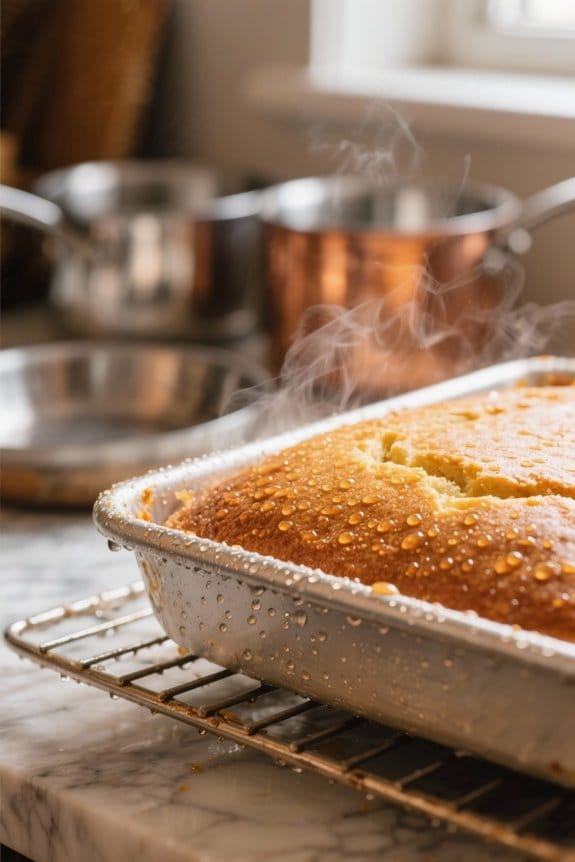
Cooling time is a critical phase in the cake-making process. Proper cooling allows the structure of the cake to set. If a cake is removed too early, its fragile structure can break. Ideally, cakes should cool in the pan for about 10 minutes. This period helps prevent the cake from sticking to the pan. However, leaving it in too long can harden the crust, making it harder to release. Cakes require time for their core temperature to decrease. Rapid cooling can create steam, causing the batter to cling stubbornly. Dense or moist cakes may benefit from longer cooling periods. This guarantees that cakes come away cleanly from pan surfaces without damage. To achieve consistently perfect cakes, consider using heavy-duty materials like steel or aluminum that ensure even heat distribution and durability.
Greasing Techniques That Work
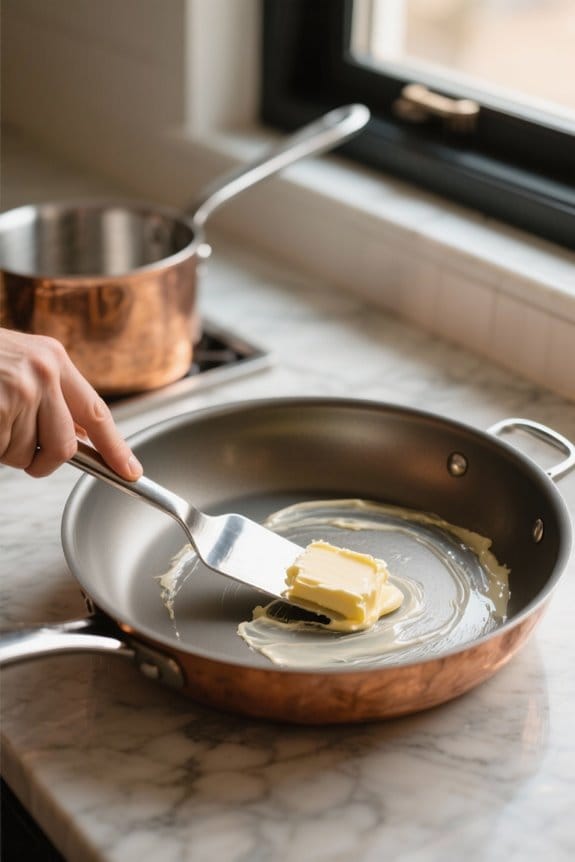
Achieving a flawless cake release begins with effective greasing techniques. It is essential to grease the pan evenly using softened butter or vegetable shortening. Pay close attention to the crevices and the central core of Bundt pans. After greasing, dust the pan lightly with flour or cocoa powder. This creates a barrier that enhances cake release. Non-stick spray can provide a quick and efficient solution; apply it from a distance of 15-20 cm for an even coating. For a homemade option, “cake goop” made from equal parts vegetable oil, shortening, and flour can be brushed on. Finally, allow cakes to cool in the pan for about 10 minutes before removing them to prevent breaking or sticking. For those using nonstick surfaces, proper maintenance and care can further ensure easy cake release and prolong the pan’s lifespan.
Flour Application Tips
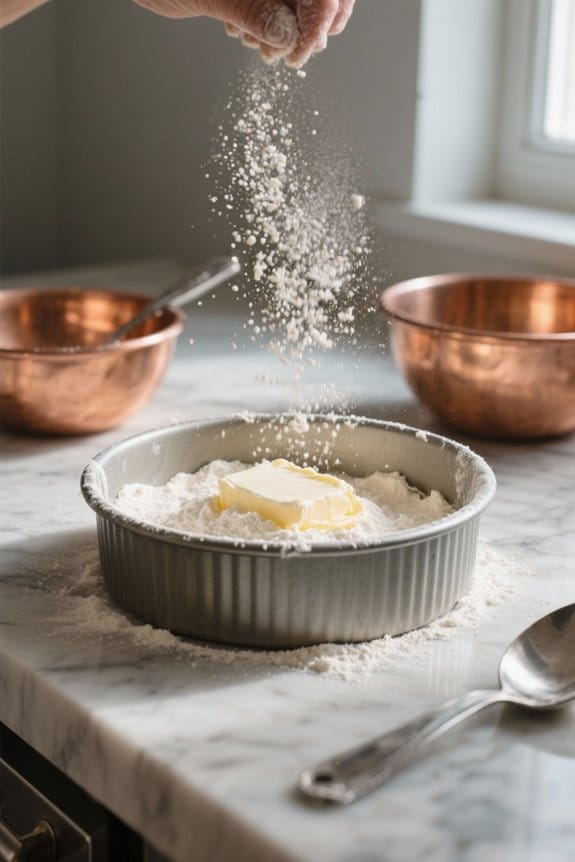
Flour application is a critical step in ensuring cakes release easily from their pans. After greasing the cake pan, it is essential to dust it thoroughly with flour. This creates a barrier between the batter and the pan surface, preventing sticking. Shake out any excess flour to maintain a smooth texture. Leftover flour can produce a grainy finish on the cake. For chocolate cakes, using cocoa powder instead of flour is an effective alternative that enhances flavor while avoiding sticking. Pay special attention to crevices and corners when applying flour, as these areas often trap batter. Additionally, applying flour over oil can improve adhesion and reduce the greasy surface that may cause cakes to stick. Enameled cast iron options offer easy cleaning and versatility, which can be beneficial in baking scenarios where non-stick surfaces are preferred.
Recommended Products
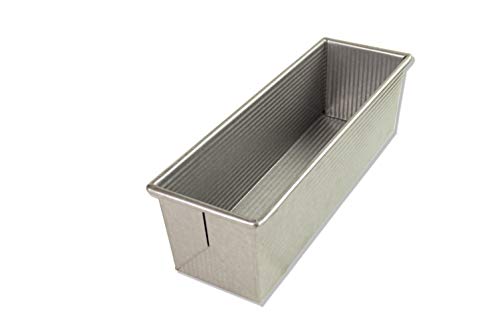
Large Pullman loaf pan bakes beautiful bread; commercial grade and heavy gauge aluminized steel with a Limited Lifetime

Various healthy course settings include Multigrain, Whole Wheat, Rapid Whole Wheat, Gluten Free, Salt Free, Sugar Free and Vegan

Automatic programable 1-pound bread maker
Choosing the Right Type of Fat
Choosing the right type of fat for greasing a cake pan can greatly impact the success of cake release. Vegetable shortening is often favored for its high fat content and lower water levels. This provides a strong barrier against sticking, unlike vegetable oil, which can create a slippery surface. Softened butter offers better grip than melted butter due to more even coating, but proper application is vital. An even layer of butter helps cover all surfaces, especially in Bundt pans. Baking sprays designed for cakes also work well, featuring emulsifiers that enhance cake release. However, alternative fats like coconut oil or margarine may affect flavor and effectiveness if not aligned with the recipe. Additionally, using a nonstick frying pan with a reliable coating can further prevent sticking issues and facilitate easy cake release. Careful selection of fat is essential for ideal results.
Recommended Products

Perfect 16 hole pan bakes and molds delicious shell-shaped Madeleine cookies.

Features a non-stick coating which makes it easy to get the cake out whole.

COMMERCIAL GRADE 18 GAUGE ALUMINUM the choice of professional bakers, Overall dimensions: 20.75 x 14.5 x 1.5 inch, Interior dimensions: 13 x 18.5 inch
The Impact of Pan Material
The choice of pan material is significant in determining how well a cake releases after baking. Non-stick pans are designed to minimize sticking, but they still need greasing and flouring for the best results. Metal pans, particularly aluminum and steel, conduct heat well and enhance browning, but they may cause cakes to stick. This issue is prominent in detailed designs like Bundt pans. Glass and ceramic pans have limited non-stick properties due to their porous surfaces, leading to possible sticking. Silicone pans offer flexibility and usually release cakes easily, but they may need adjustments in baking time. Hard anodized cookware, known for its durable nonstick surface, can also be used for baking to prevent sticking while ensuring even heat distribution. Overall, compatibility between cake batter moisture levels and pan type plays an essential role in preventing sticking.
Best Practices for Cake Removal
When removing a cake from its pan, proper technique is vital for achieving a smooth release. Allow the cake to cool in the pan for about 10 minutes. This prevents breakage caused by cake fragility. After cooling, run a knife around the edges to loosen it before inverting. For a seamless transfer, place a serving platter over the pan and flip it quickly. Utilizing parchment paper at the bottom of the pan can greatly help to remove the cake. It acts as a barrier against sticking. Make sure to properly grease and flour the pan, or use non-stick spray, particularly in Bundt pans with intricate designs. These practices minimize the risk of sticking and enhance overall results. For those using nonstick surfaces, it’s important to follow regular maintenance guidelines to preserve the coating’s effectiveness.
Troubleshooting Sticking Issues
Cakes often stick to their pans despite careful preparation. Insufficient greasing of the pan can cause sticking, especially in crevices and around the central core. A common oversight is neglecting to dust flour after greasing, which weakens the non-stick barrier. Newly purchased or infrequently used pans may need extra layers of grease and flour to perform well. Additionally, a very cold or damp batter can impede the cake’s release from the pan. It is crucial for ingredients to be at room temperature before mixing. Finally, proper cooling is critical; allowing a cake to cool too long or too little can affect its ability to release cleanly. Timing is essential for a successful outcome. Using nonstick coatings that are free from harmful chemicals like PFAS and PFOA can also enhance the release of cakes from the pan, ensuring healthier baking results.
Recommended Baking Tools and Products
Baking tools play an essential role in achieving successful cake releases. High-quality baking spray creates a reliable barrier against sticking. It often includes flour for added effectiveness. A pastry brush guarantees even application of melted butter or grease, covering every crevice of the pan. Parchment paper is especially significant for tricky cake types. It can be cut to fit the pan’s bottom, allowing for easy release. Silicone baking mats are another option. They provide a reusable non-stick surface while being eco-friendly. For Bundt cakes, investing in a pan with a non-stick coating is advisable. This design helps achieve a perfect release without needing excessive grease. Selecting the right tools is important for successful baking outcomes. Choosing durable materials like high-quality ceramics ensures longevity and minimizes sticking issues, as they are often resistant to cracking and crazing.
Frequently Asked Questions
How Do I Stop My Cake From Sticking?
To prevent cake sticking, one must consider cake baking techniques, avoid common mistakes, select appropriate ingredient choices, choose suitable pan types, and employ proper cooling techniques before removing the cake from the pan.
How to Get a Cake to Unstick?
To unstick a cake, make certain it cools sufficiently, prepare the pan meticulously, and verify batter consistency. Maintain proper oven temperature and ingredient ratios for ideal results, transforming any stuck cake drama into a glorious dessert triumph.
Does Parchment Paper Prevent Cake From Sticking?
Parchment paper prevents cakes from sticking considerably, enhancing baking pan preparation. Its benefits include creating a smoother release for various cake batter consistencies. Compared to alternative lining options, it often improves grease effectiveness, ensuring better results.
What Spray Stops Cake Sticking?
Non-stick sprays specifically designed for baking, incorporating flour alternatives, effectively prevent cakes from sticking. Utilizing spray tips, such as applying from 15-20 cm away, enhances coverage compared to traditional cooking methods or standard baking oils.