As an Amazon Associate, we earn from qualifying purchases. Some links on this site are affiliate links at no extra cost to you. Our recommendations are based on thorough research and editorial judgment.

How Altitude Affects Baking and Pan Selection

Altitude impacts baking by reducing air pressure, leading to faster gas expansion and increased risks of collapse. To adjust, bakers should reduce baking powder and sugar while increasing liquid content. Choosing heavier pans like cast iron aids in heat retention, essential at high altitudes. Additionally, oven temperature should be increased by 15°F to 25°F for proper baking. Understanding these adjustments can enhance baking outcomes in elevated locations. Further details on successful high-altitude baking approaches are available.
Key Takeaways
- High altitude reduces air pressure, causing baked goods to rise faster, risking collapse if not adjusted properly.
- Oven temperatures should be increased by 15°F to 25°F to compensate for rapid baking and ensure proper structure.
- It’s essential to decrease baking powder and baking soda by 20% to 50% to maintain stability in high-altitude conditions.
- Selecting heavier pans like cast iron helps retain heat for even cooking, while thinner pans may need temperature adjustments.
- Increasing liquid content by 1 to 2 tablespoons and adding extra flour can counteract evaporation and improve structure at high elevations.
Understanding High Altitude and Its Impact on Baking
You may be interested


High altitude presents unique challenges when it comes to baking. Elevations above 3,000 to 3,500 feet reduce air pressure, impacting baked goods’ texture and rise. When baking at high altitudes, baked items tend to rise faster due to rapid gas expansion. This can cause collapse and lead to coarse or dry textures. Additionally, moisture loss occurs, as liquids evaporate quickly because water boils at lower temperatures. As a result, adjusting oven temperature is essential, often requiring increases of 15°F to 25°F. Baking time must also be modified for successful outcomes. Leavening agents, like baking powder, will perform differently, demanding careful ingredient measurement. Understanding local microclimates further refines the baking process in elevated baking environments. The choice of heat distribution efficiency in cookware, such as a saucepan, can help mitigate uneven cooking results at high altitudes.
Essential Adjustments for High-Altitude Baking
Bakers must adapt their techniques when traversing the challenges of high-altitude baking. At elevations above 3,500 feet, it is essential to decrease baking powder by 20% and further by 50% at 5,000 feet. This mitigates the risk of excessive rise and collapse. Increasing the oven temperature by 15°F to 25°F accelerates the setting of baked goods’ structure. Liquid content should be raised by 1 to 2 tablespoons per cup to address moisture loss. Adding 1 tablespoon of flour for every 1,500 feet above 3,500 feet strengthens the structure. Ultimately, reducing sugar by 1 to 3 tablespoons per cup improves stability since excess sugar can destabilize batters and doughs in high-altitude conditions. When choosing baking pans, consider options made from food-grade silicone or heavy-duty carbon steel for their reliability and heat resistance.
Recommended Products

Revolutionary Artisan Bread Making System: The LoafNest combines a professional non-stick liner with a custom cast iron Dutch oven designed specifically for home bread making, offering a new approach to creating artisan-quality bread

3-IN-1 CONVENIENCE – Ultimate kitchen versatility, bake your favourite treats with this 3-piece professional grade silicone baking mold set: round cake baking pan , square cake pan, banana bread / meat loaf pan

Includes two 8-inch round cake pans, one 8.5 x 4.5 x 2.5-inch loaf pan, one 6-cup muffin pan (13.5 x 8 x 1.5 in.), one 13 x 9 x 2-inch oblong pan, and one 15.25 x 10.25 x 0.75-inch medium baking pan, covering all your baking needs.
Choosing the Right Pans for High Altitude
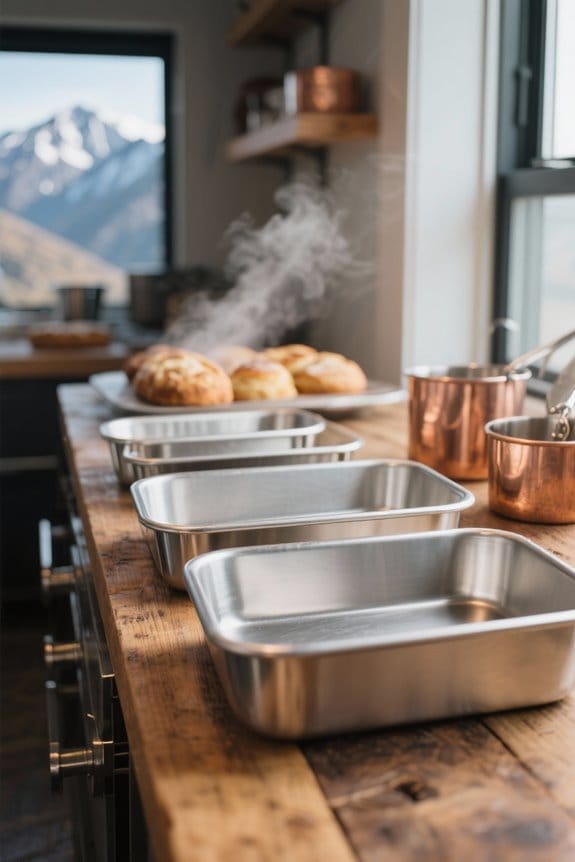
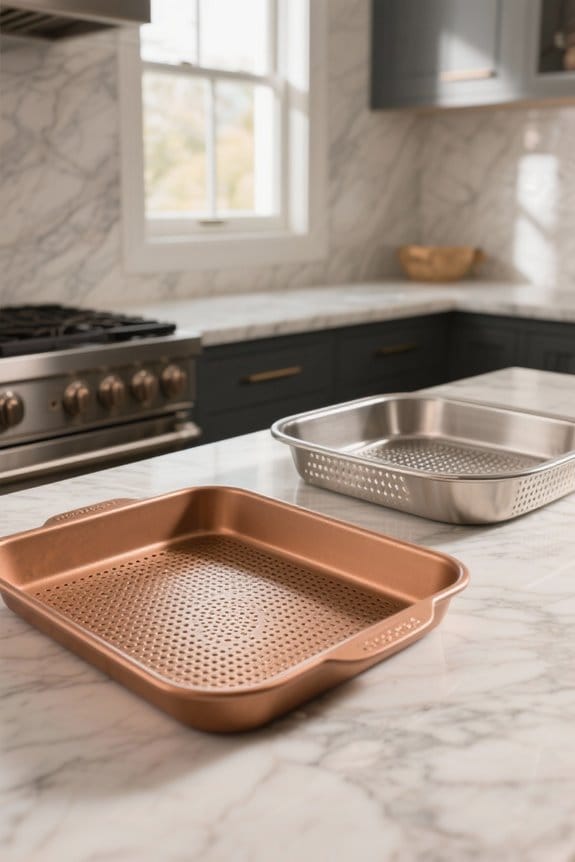
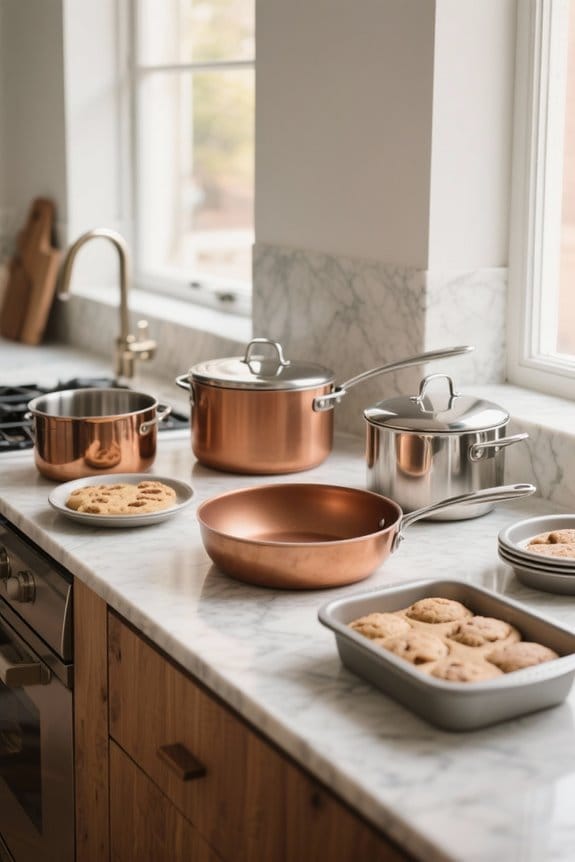
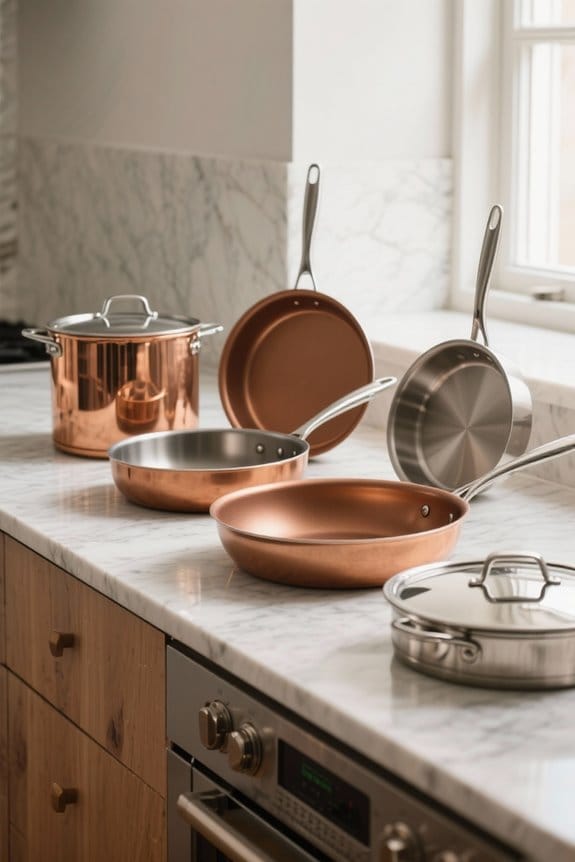
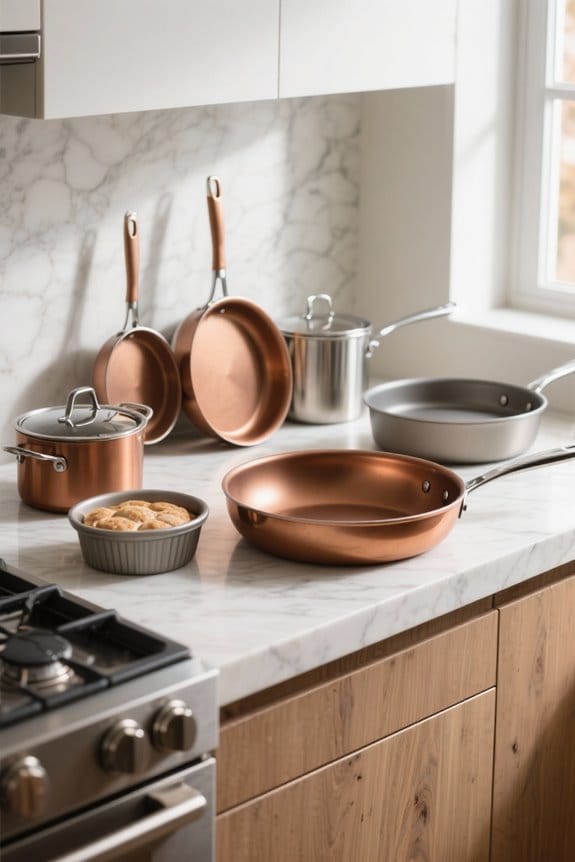
Selecting the appropriate baking pan is important for achieving consistent results in high-altitude baking. Heavier pans, like stainless steel or cast iron, retain heat better. This helps to mitigate issues like uneven baking. Thinner aluminum pans allow heat to penetrate too quickly, often requiring temperature adjustments. Non-stick pans can promote easy release but may need extra greasing to prevent sticking due to low moisture. Glass and ceramic bakeware heat slowly, therefore necessitating careful monitoring during baking. It is also essential to take into account pan size. Deeper pans may need longer cooking times to guarantee the interior cooks through without burning the exterior. Stainless steel pans, known for their excellent heat distribution, can be particularly beneficial in high-altitude baking to ensure even cooking. Choosing the right baking pans is crucial for successful high-altitude recipes.
Recommended Products

The perfect addition to any kitchen, this 5-Piece Stainless Steel Baking Set includes a half sheet pan, quarter sheet pan, cooling & baking rack, square baker, and rectangular baker. A versatile bakeware set and baking pan set for everyday use

VERSATILE: Use for baking breads, cakes and meatloafs or make Jam, dough and sourdough

CLAD CONSTRUCTION: Triple-bonded, stainless steel sheet pan features an aluminum core for greater, even heat conductivity. Designed to fit 30" ovens Including Handles. Dimensions with handles: 21"L x 13.75" (Cooking Surface 18"L x 13" W)
Common Baking Challenges at Elevated Locations
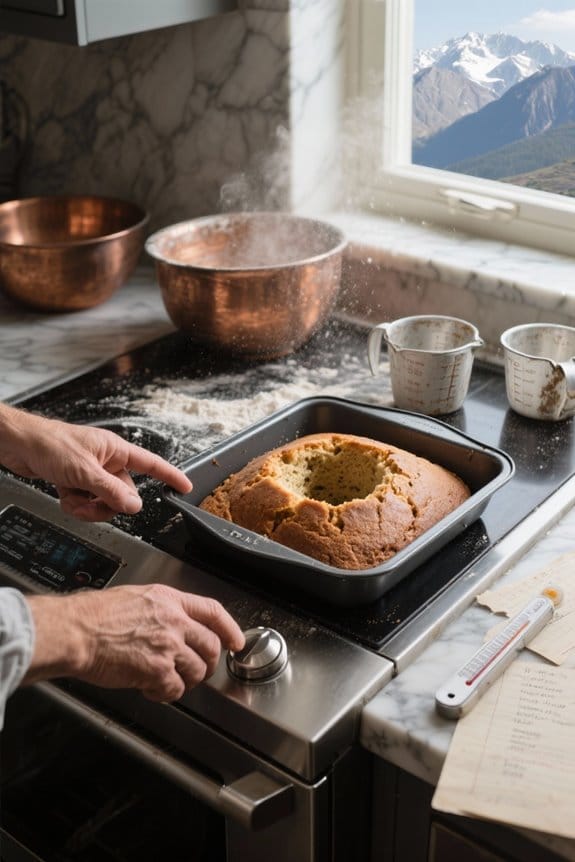
Baking at elevated locations presents unique challenges that can affect the outcome of recipes. At high elevations, lower air pressure causes gases in doughs and batters to expand more rapidly. This can lead to rapid rising and potential collapsing. The boiling point of water also decreases, meaning longer baking times are needed to reach the proper internal temperature. Additionally, as liquids evaporate quickly, extra liquid may be necessary. Bakers often need to add 1 to 4 tablespoons more to maintain moisture content in doughs and pastries. The amount of baking powder may also require adjustment to account for reduced atmospheric pressure. Finally, flavor strength can diminish, prompting bakers to enhance flavors in high-altitude baking. Consider using a non-slip base mixing bowl to ensure stability while dealing with potential spills during ingredient preparation.
Tips for Successful Baking at High Altitude
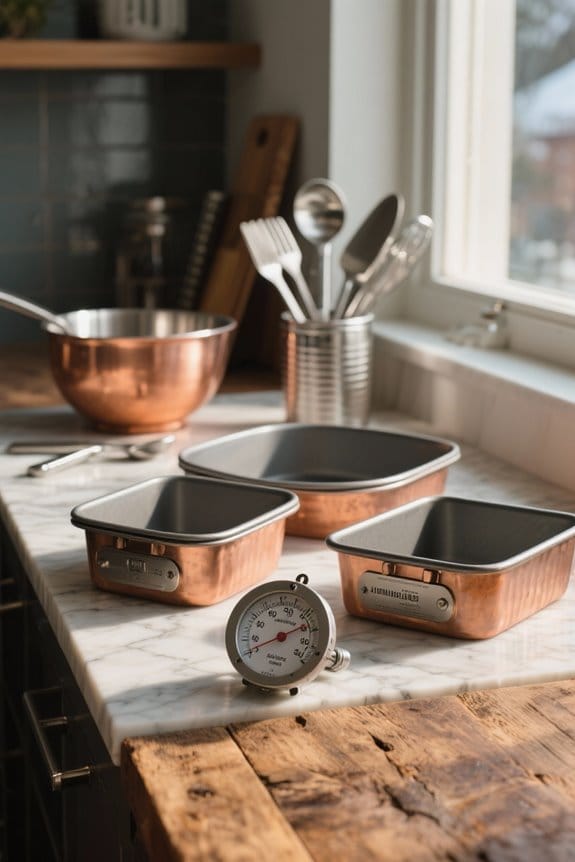
When considering high-altitude baking, adjustments are vital for success. At elevations above 3,500 feet, increase the oven temperature by 15°F to 25°F. This helps baked goods set properly and prevents excessive rise and collapsing. Reduce baking soda and baking powder by 20% to maintain structure. Increase liquid content by 1 to 2 tablespoons for each cup of ingredients to counteract quicker evaporation rates. Adding an extra egg or egg white enhances moisture and stability in the batter. It is also advisable to use metal or glass pans, as they conduct heat evenly. Finally, opting for smaller pan sizes ensures proper baking times and consistent cooking at high altitudes. When selecting bakeware, consider the oven safety ratings to ensure compatibility with high temperatures required at altitude.
Frequently Asked Questions
Does Higher Altitude Affect Baking?
Like a delicate dance, higher altitude profoundly affects baking. It requires careful flour adjustments, precise yeast activation, increased oven temperature, altered liquid quantities, and thoughtful experimentation with leavening agents, sugar impacts, baking duration, and egg incorporation.
How to Adjust Baking Recipes for High Altitude?
To adjust baking recipes for high altitude, individuals must modify baking temperature, ingredient measurements, leavening agents, moisture content, flour type, pan size, implement elevation-specific recipes, and consult altitude conversion charts to prevent common high altitude mistakes.
How to Adjust Cooking Times for Altitude?
To adjust cooking times for altitude, one must consider baking temperature, ingredient ratios, and moisture content while calibrating the oven. Leavening agents and mixing methods require adjustments to guarantee dough consistency and ideal cake texture.
Is 4000 Feet Considered High Altitude for Baking?
Yes, 4,000 feet is classified as high altitude, presenting unique baking challenges. It necessitates recipe modifications, ingredient adjustments, and careful monitoring of rising agents, oven temperatures, and moisture levels to counteract altitude effects on flavor and baking times.