As an Amazon Associate, we earn from qualifying purchases. Some links on this site are affiliate links at no extra cost to you. Our recommendations are based on thorough research and editorial judgment.

Understanding the Science Behind Nonstick Coatings

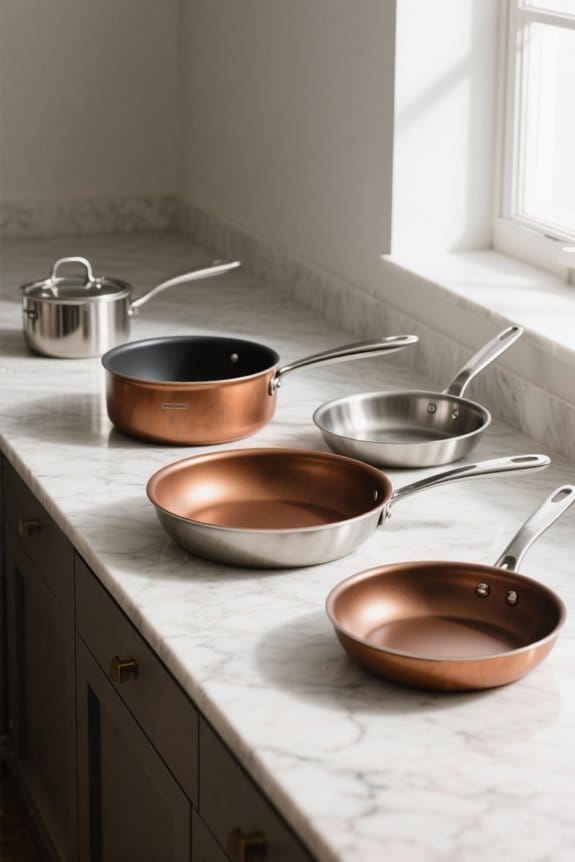
Nonstick coatings, primarily made from materials like PTFE (Teflon) and ceramic, enhance cookware performance. Teflon provides superior nonstick capabilities, while ceramic offers a chemical-free option. These coatings reduce food sticking and simplify cleanup, making cooking more efficient. Additionally, innovations like diamond-infused options improve durability and resistance to scratches. It’s important to maintain nonstick cookware properly to guarantee safety and longevity. More insights about selecting and caring for nonstick cookware can help make an informed choice.
Key Takeaways
- Nonstick coatings like Teflon and ceramic reduce friction, enhancing food release and simplifying cleanup in cooking applications.
- Teflon (PTFE) operates safely below 500°F, while ceramic can withstand higher temperatures, up to 600°F.
- Innovations such as diamond-infused and titanium-reinforced coatings increase durability and heat conductivity, ensuring longer lifespan for cookware.
- Eco-friendly ceramic coatings are made from natural minerals, promoting safer cooking options without harmful chemicals.
- Proper care, including avoiding metal utensils and maintaining lower cooking temperatures, preserves the integrity of nonstick surfaces over time.
The Role of Nonstick Coatings in Modern Cookware
You may be interested



Nonstick coatings play an essential role in modern cookware. They considerably reduce friction between the cookware and food, promoting easier cooking and cleanup. Teflon is known for superior nonstick performance, while ceramic cookware offers a chemical-free alternative. These coatings enhance the durability and heat resistance of pots and pans. Most nonstick cookware can withstand high temperatures, with ceramic options able to endure up to 600°F. This versatility allows various cooking techniques to be employed without risk of sticking. Recent innovations introduce features such as diamond-infused and titanium-reinforced coatings, which improve both longevity and scratch resistance. With such advancements, nonstick coatings continue to evolve, meeting diverse culinary needs in kitchens around the world. Heavy-gauge construction ensures even heat distribution, preventing hot spots for consistent cooking results.
Teflon: The Pioneer of Nonstick Technology
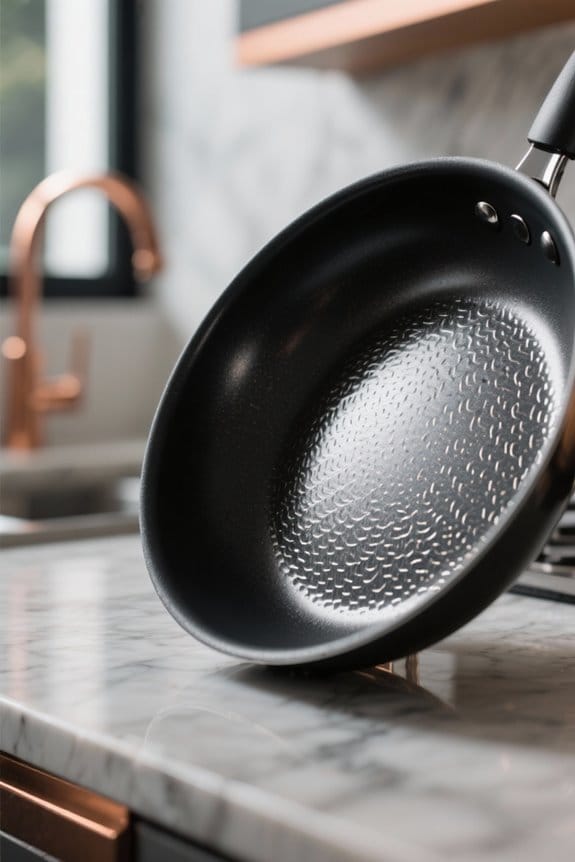
Teflon, recognized for its innovative nonstick properties, revolutionized cookware in the mid-20th century. This trade name for polytetrafluoroethylene (PTFE) was discovered by chemist Roy Plunkett in 1938. The unique molecular structure of PTFE, consisting of carbon and fluorine atoms, greatly reduces food adhesion. The first Teflon nonstick pan, named “The Happy Pan,” debuted in the 1950s. Presently, around 70% of skillets sold in the U.S. feature a nonstick coating. Teflon can endure cooking temperatures up to 500°F. However, overheating can degrade the material and release harmful fumes. Concerns have arisen over perfluorooctanoic acid (PFOA), which has largely been eliminated since 2015. Proper use is essential to maintain Teflon’s effectiveness and safety. Non-toxic options like SENSARTE and Cuisinart have become popular alternatives, offering safety without compromising on nonstick performance.
Recommended Products

Stainless steel construction for durability
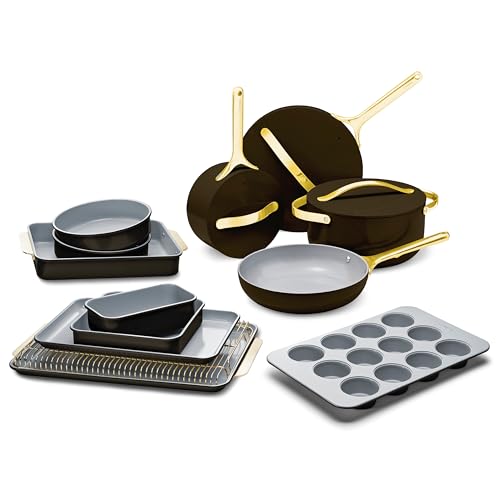
COMPLETE KITCHENWARE SET: Includes 23-piece cookware with 10.5” frying pan, 3 qt saucepan, 6.5 qt Dutch oven, 4.5 qt sauté pan, 3 lids, magnetic pan racks, canvas lid holder, baking sheets, muffin pan, loaf pan, cooling rack, and storage organizers.

Ceramic Coatings: A Greener Alternative
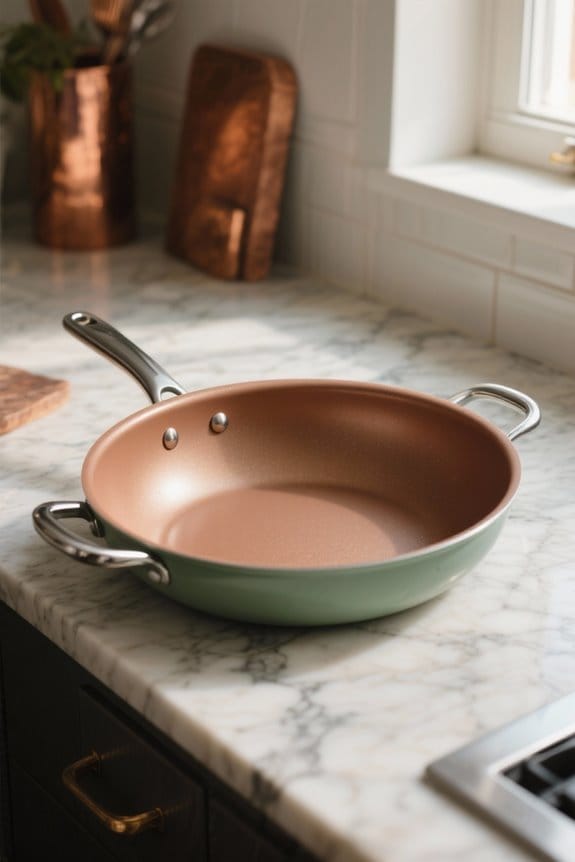
Cookware options have expanded to include ceramic coatings, offering a greener alternative to traditional nonstick surfaces. These coatings are made from natural minerals, primarily silicon and oxygen, making them eco-friendly. Unlike Teflon, ceramic cookware is free from harmful chemicals such as PTFE and PFOA. They can withstand higher temperatures, up to 600°F, allowing for versatile cooking methods. While ceramic coatings provide vibrant colors and glossy finishes, they may have a shorter lifespan compared to Teflon. Over time, they can become stickier, affecting performance. However, continuous advancements in ceramic coating technology aim to enhance durability and reduce stickiness. This makes ceramic coatings an increasingly competitive option for health-conscious consumers. Some top ceramic sauté pans, like the SENSARTE Nonstick Ceramic Frying Pan, are designed for easy cleanup and are available in various sizes to suit diverse cooking needs.
Recommended Products

Exceptionally crafted, our stainless-steel cook-set with a copper core offers versatility, durability and optimal cooking performance to fuel your passion for cooking, for years to come

7-piece cookware set.

HexClad’s patented Hybrid technology features a laser-etched hexagonal nonstick surface that combines both stainless-steel and our TerraBond ceramic coating for the ultimate sear and easy cleaning.
Other Nonstick Coatings: Innovations in Cookware
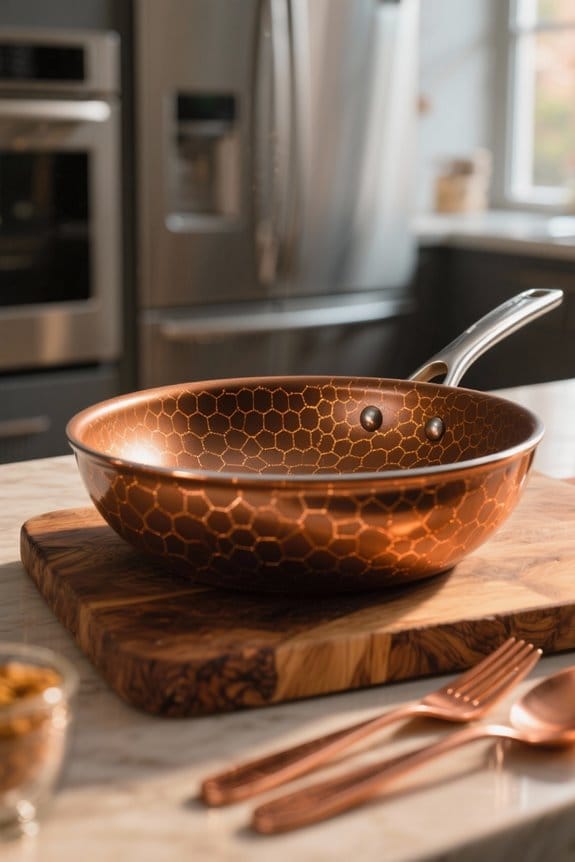
Innovations in the domain of nonstick coatings are transforming how consumers approach cooking. Diamond-infused coatings enhance durability and heat conductivity. They provide a longer-lasting nonstick surface compared to standard options. Titanium-reinforced nonstick coatings offer increased strength and scratch resistance. This makes them suitable for intensive cooking tasks. Enamel-coated cast iron combines traditional heat retention with nonstick properties, making it versatile for various cooking methods. Some brands are now using eco-friendly materials in their nonstick coatings. These materials aim to deliver safer options that are free from harmful chemicals found in traditional cookware. Continuous innovations in nonstick technologies focus on improving performance and durability, helping consumers select better cookware for their needs. A key consideration for modern nonstick skillets is the use of eco-friendly materials that ensure safer cooking surfaces by eliminating harmful chemicals like PFOS and PFOA.
Why SENSARTE Cookware Stands Out
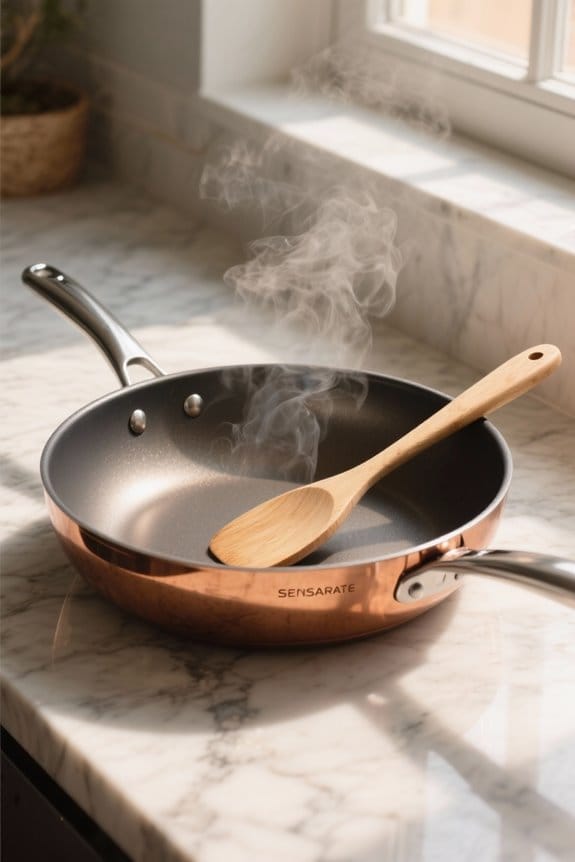
SENSARTE cookware stands out for its advanced nonstick technology. This ceramic nonstick cookware is made from natural minerals. It guarantees an eco-friendly cooking experience without harmful chemicals like PTFE. The products can withstand high temperatures up to 600°F, allowing for diverse cooking methods. SENSARTE features scratch-resistant surfaces that enhance durability compared to traditional nonstick options. This durability extends the lifespan of the cookware, making it a wise investment. The cookware also offers effective heat distribution, guaranteeing consistent cooking results. Additionally, the smooth, nonstick surfaces make cleaning effortless for the user. With vibrant colors and sleek finishes, SENSARTE cookware combines aesthetic appeal with functional performance, making it suitable for any modern kitchen. The Tramontina Signature set also offers dishwasher-safe convenience, showcasing how premium cookware can be both durable and user-friendly.
Choosing the Right Nonstick Cookware for Your Kitchen
How does one choose the right nonstick cookware for their kitchen? Evaluating cooking habits is essential. Teflon-coated pans serve well for everyday cooking. Ceramic options are great for those seeking a chemical-free, high heat resistance alternative. Durability is another key factor. Diamond or titanium-reinforced coatings extend the lifespan of nonstick cookware. Always check for PFOA-free certification to guarantee safety from harmful chemicals. Weight and ergonomics also matter; heavier pans offer better heat retention, while comfortable handles improve usability. Personal priorities should guide the decision. For eco-friendliness, ceramic options are appealing. For performance and easy cleaning, traditional PTFE-coated cookware remains a solid choice. Adapt the cookware selection to fit individual needs and preferences effectively. When selecting nonstick cookware, consider compatibility with cooktops to ensure optimal performance and versatility in your kitchen.
Recommended Products

Composition: 1 frying pan 24 cm, 1 frying pan 28 cm, 1 saucepan 20 cm, 1 saucepan 24 cm, 1 saucepan 28 cm, 3 saucepans 16 – 18 – 20 cm, 1 grill pan 24 cm, 1 frying pan 28 cm, 1 wok 32 cm, 5 glass lids with anti-fog valve, 7 removable handles, 4 pairs of silicone handles + 1 set of T

16-PIECE DELUXE COOKWARE SET: Included in this 16-piece cookware set is a 10.5" frying pan, 3 qt. sauce pan with lid, 6.5 qt. dutch oven with lid, 4.5 qt. sauté pan with lid, 4 modular magnetic pan racks and a canvas lid holder with hooks. Also includes Mini 8" Fry Pan, Mini 1.7qt Sauce Pan, and magnetic pan rack.
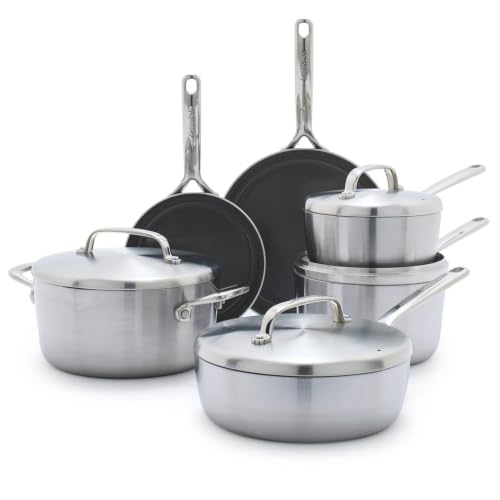
SET INCLUDES: 8” and 10” frying pan, 2.24QT and 3.25QT saucepan with lids, 5QT stock pot with lid, 3.25QT sauté pan with lid, 3 pan protectors, cleaning sponge
The Science Behind PTFE Nonstick Technology
PTFE, or Polytetrafluoroethylene, serves as the foundation for efficient nonstick cookware. Its unique structure consists of carbon and fluorine atoms. This arrangement contributes to the low coefficient of friction, which prevents food from sticking to the surface of the cookware. Nonstick coatings made with PTFE are often applied in multiple layers, enhancing their durability and scratch resistance. Proper care can extend the lifespan of nonstick surfaces while avoiding abrasive cleaners is critical to maintain coating integrity. Since 2015, most nonstick cookware has been produced PFOA-free, addressing safety concerns related to previous manufacturing processes. Proper usage of PTFE cookware is essential. It should not exceed temperatures of 500 degrees Fahrenheit to maintain its performance and safety. Overall, PTFE technology allows for easy cooking and cleaning, making it a favored choice for many home cooks.
The Truth About Nonstick Cookware
While many consumers have questions about the safety and performance of nonstick cookware, the facts provide clarity. Modern nonstick pans are largely free of PFOA, which has been phased out since 2015. Research shows that these pans, containing PTFE, remain safe when cooked at temperatures below 500°F. At normal cooking levels, there are no carcinogenic risks linked to PTFE. Additionally, nonstick cookware offers benefits such as easy cleanup and low-fat cooking. It allows for cooking delicate foods like eggs and fish without excessive oils. To guarantee safety, they should be replaced when wear, scratches, or flaking is visible. Nonstick saucepans are effective choices for easy food release and cleanup, which enhances cooking efficiency and facilitates maintenance. Understanding the science behind your nonstick cookware helps consumers make informed decisions for healthier cooking.
Care and Maintenance of Nonstick Cookware
Nonstick cookware can offer significant advantages in the kitchen, but proper care and maintenance are essential for long-lasting performance. To protect nonstick surfaces, avoid using metal utensils, as these can scratch and damage the coating. Regular inspections for wear and tear, such as scratches or flaking, can indicate when to replace the cookware. It is important to keep cooking temperatures below 450 degrees Fahrenheit to prevent compromising the nonstick coating. Hand washing is recommended to avoid high temperatures from dishwashers. Use a soft sponge when cleaning to maintain the integrity of the surfaces. Blue Diamond pans utilize a diamond-infused surface for increased durability and quick heat distribution, making them a robust choice for frequent use. Additionally, proper storage with protective layers between stacked pans can help prevent scratches and extend the life of the cookware.
Frequently Asked Questions
What Is the Science Behind Non Stick Pans?
The science behind nonstick pans involves durability testing, heat resistance, and careful material composition. Manufacturing processes guarantee safety standards, while maintenance tips enhance cooking efficiency. Environmental impact considerations further guide the development of these essential kitchen tools.
What Nonstick Coating to Avoid?
To avoid nonstick coatings with toxic chemicals and health risks, one should choose eco-friendly options with durable cookware materials, consider alternative coatings, adhere to safety regulations, and follow maintenance tips to guarantee longevity and safety.
Why Don’t Professional Chefs Use Non-Stick Pans?
Professional chefs often avoid non-stick pans due to culinary preferences for superior cookware quality, heat retention, and seasoning techniques. These kitchen tools enhance flavor, support professional standards, and improve cooking techniques, making them essential for serious cooking.
Why Was Teflon Discontinued?
Teflon faced discontinuation amid safety concerns, harmful chemicals, and evolving manufacturing processes. Regulatory changes ignited consumer awareness, while environmental impact begged for alternatives. Historical usage faded as eco-friendly materials emerged to replace the once-popular, yet controversial, coating.