As an Amazon Associate, we earn from qualifying purchases. Some links on this site are affiliate links at no extra cost to you. Our recommendations are based on thorough research and editorial judgment.

How Carbon Steel Compares to Cast Iron

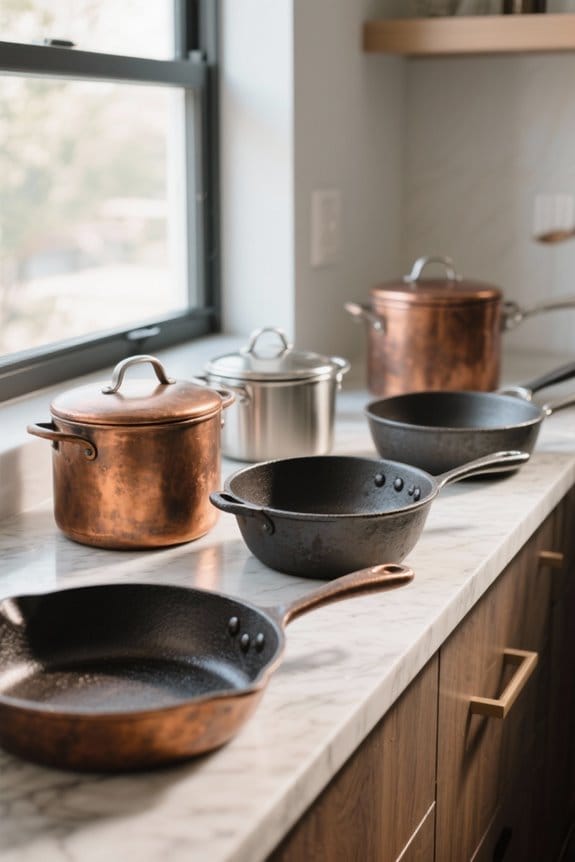
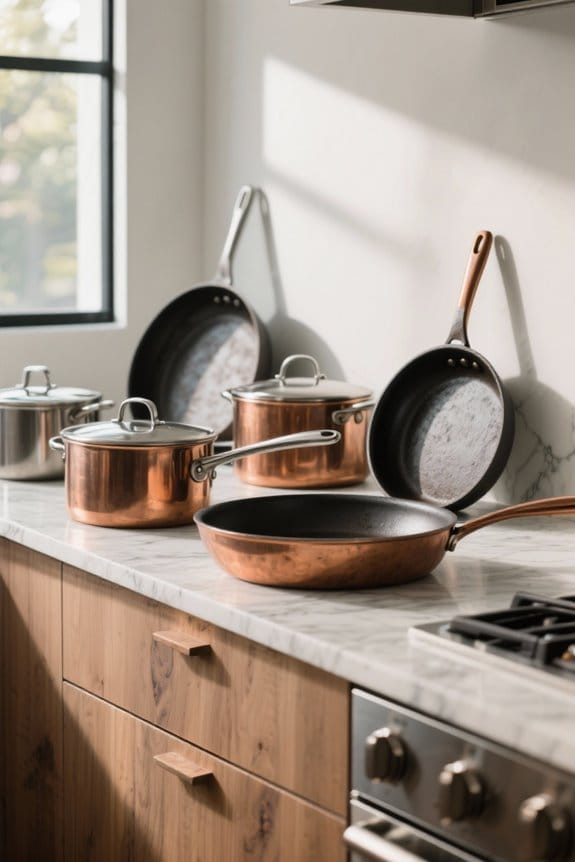
Carbon steel and cast iron are both excellent cookware materials, each with unique benefits. Carbon steel pans are lighter and heat up quickly. They are great for rapid cooking methods like sautéing. Cast iron pans are heavier and retain heat well, making them ideal for slow cooking and frying. Both require seasoning for non-stick surfaces. Carbon steel needs more frequent seasoning compared to cast iron. Understanding these differences can help in selecting the right cookware for specific needs.
Key Takeaways
- Carbon steel is lighter and more flexible than cast iron, making it easier to handle in the kitchen.
- Cast iron excels in heat retention and distribution, ideal for slow-cooking and achieving crispy crusts.
- Carbon steel heats and cools faster, providing better temperature control for rapid cooking methods like sautéing.
- Both materials require seasoning to develop a non-stick surface, with carbon steel needing more frequent maintenance.
- Cast iron is generally more affordable and durable, while quality carbon steel pans can hold their value well.
Overview of Carbon Steel and Cast Iron
You may be interested



When considering cookware options, carbon steel and cast iron stand out for their unique properties and performance. Carbon steel pans are made by stamping sheets of steel. This gives them a lighter weight compared to cast iron. As a result, they are easier to handle for cooking tasks like sautéing. Cast iron pans, produced by pouring molten iron into molds, retain heat longer. This makes them great for consistent cooking. Both require oil seasoning for a natural non-stick surface. However, carbon steel needs more frequent seasoning due to its reactivity to moisture. While both can achieve high temperatures, carbon steel’s smoother surface is better suited for delicate dishes, while cast iron excels in slow-cooked meals. Notably, even heat distribution is a key advantage of cast iron, ensuring perfectly crispy crusts and consistent cooking results.
Material Differences
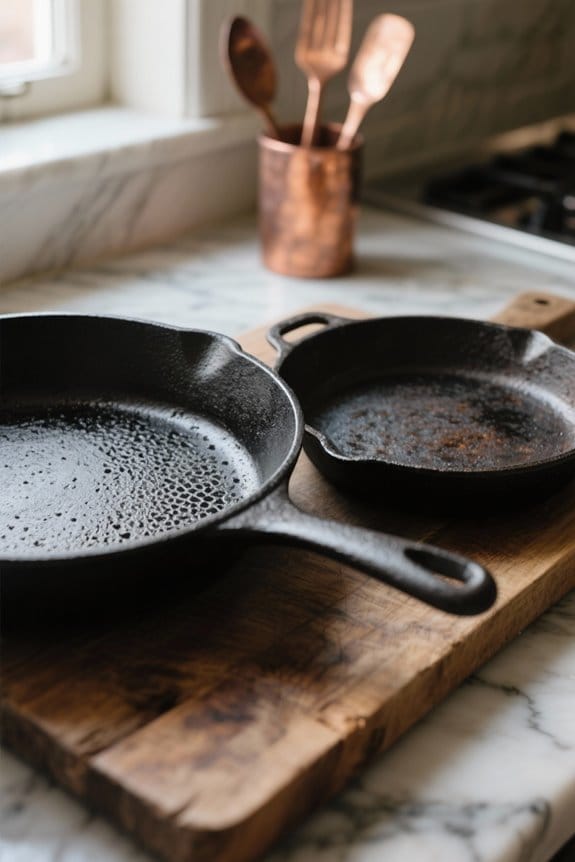
Material differences play a crucial role in how carbon steel and cast iron perform in the kitchen. Cast iron contains 2 to 3.5% carbon, which makes it more brittle than carbon steel. Carbon steel has less than 2% carbon, offering greater flexibility. The construction process is another key factor. Carbon steel pans are stamped from sheets of metal, resulting in a smoother surface compared to the rough texture of cast iron. Additionally, cast iron is notably heavier. A typical cast iron skillet weighs over 5 lbs, while a comparable carbon steel pan weighs around 3 lbs. The higher carbon content in cast iron allows for better heat retention, whereas carbon steel responds more quickly to temperature changes, enhancing cooking efficiency. The excellent heat retention features of cast iron make it ideal for slow cooking and maintaining consistent temperatures.
Cooking Applications
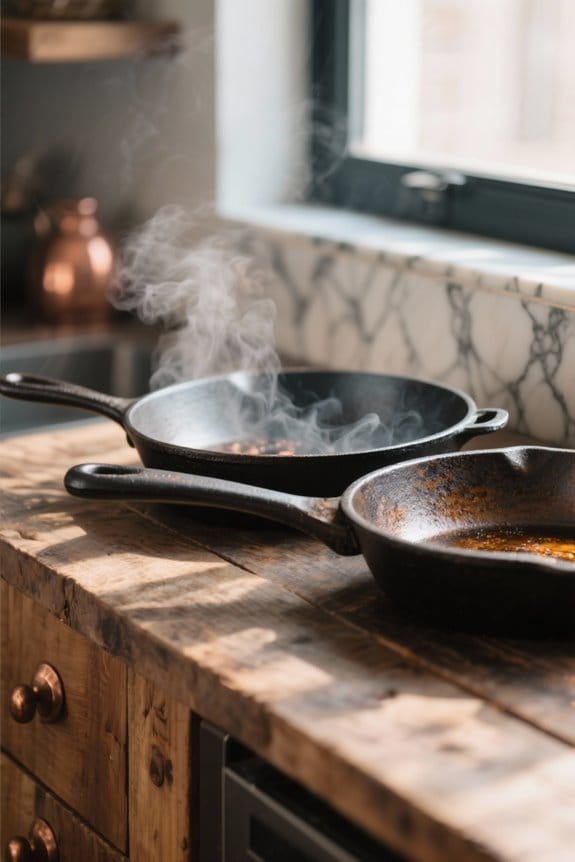
In the kitchen, carbon steel and cast iron serve different cooking applications effectively. Carbon steel pans are ideal for rapid cooking methods such as sautéing and flash frying. Their lightweight construction allows for quick maneuvering when tossing or flipping food. In contrast, cast iron skillets excel at tasks needing high heat retention, making them suitable for frying, baking, and roasting over longer periods. Both types of cookware offer excellent versatility, compatible with all cooking methods, including stovetop, oven, and grill. However, it is essential to be cautious with acidic ingredients, as they can damage both materials, especially carbon steel when it is not well-seasoned. Each offers unique advantages based on the specific cooking requirements at hand. Additionally, carbon steel woks are highly popular for their ability to heat quickly and retain heat, making them ideal for high-temperature cooking like stir-frying.
Heat Distribution and Retention
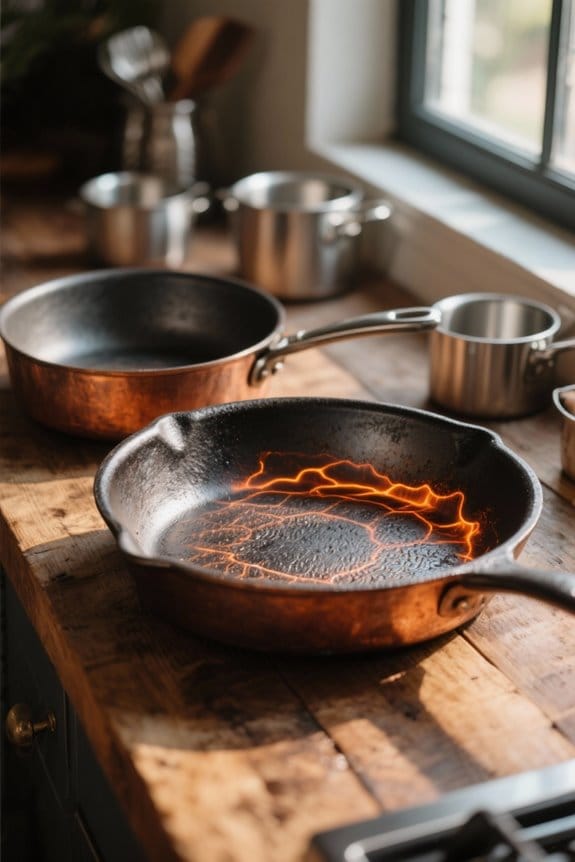
Heat distribution and retention are key factors when choosing between carbon steel and cast iron cookware. Cast iron pans excel in heat retention due to their thicker construction. This quality makes them ideal for frying and baking at consistent temperatures. In contrast, carbon steel pans heat up and cool down faster, allowing for better temperature control. This feature is particularly useful for dishes requiring varying temperatures. Both materials provide even heat distribution, thanks to their density. However, cast iron’s superior heat retention shines in slow-cooking tasks. Carbon steel can withstand high cooking temperatures, making it well-suited for searing. Enameled cast iron offers additional benefits, such as resistance to chipping and easy cleaning, further enhancing its appeal for slow cooking. Ultimately, the choice between these materials depends on specific cooking needs and techniques.
Recommended Products

Enameled cast iron delivers superior heat distribution and retention

Enameled cast iron delivers superior heat distribution and retention; Ready to use, requires no seasoning

Enameled cast iron delivers superior heat distribution and retention
Maintenance and Care
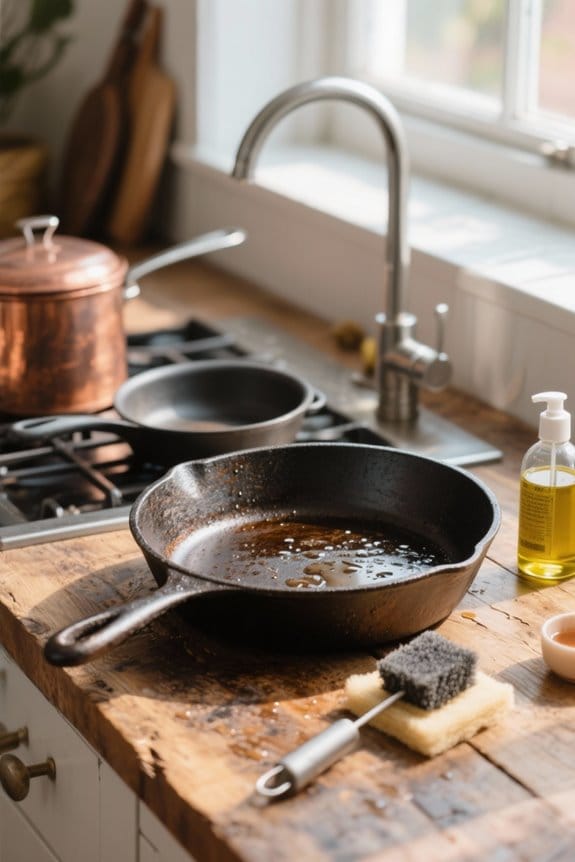
When maintaining cookware, proper care is essential for both carbon steel and cast iron. Both materials require consistent seasoning to protect against rust. This involves applying a layer of oil and heating it to bond with the metal. However, cast iron is more prone to rust if not promptly dried and oiled after washing. Carbon steel retains moisture better but still needs regular seasoning. Cleaning both types of cookware involves gently scrubbing with warm water. Soaking should be avoided to preserve the seasoning layer. After cleaning, regular oiling is essential for maintaining the non-stick properties and longevity of both types. Enameled cast iron eliminates seasoning needs but traditional cast iron and carbon steel require ongoing maintenance for peak performance. Nonstick coatings like silicone can enhance food release, with some being PFOA, PTFE, and BPA free.
Cost Considerations
Cost is an important factor when choosing between carbon steel and cast iron cookware. Cast iron pans, like the Lodge skillet, are generally affordable, costing around $20. In contrast, high-quality carbon steel pans, such as those from Mauviel, typically range under $100, making them more expensive than entry-level cast iron options. Vintage cast iron can often be found at lower prices in thrift stores, whereas quality carbon steel pans are less commonly available second-hand and tend to hold their value. Although the initial cost of carbon steel can be higher, their lighter weight and faster heating may result in energy savings over time. Both materials offer budget-friendly options, giving consumers a variety of choices based on their budget. For individuals concerned about health-conscious materials, nonstick cookware presents an alternative with options like PFOA-free coatings and ceramic surfaces.
Recommended Products

Complete 10 piece set includes 8 inch and 10 inch Fry Pans, 1.5 quart and 3 quart Sauce Pans with lids, 3 quart Sauté Pan with lid, and an 8 quart Stockpot with lid.t
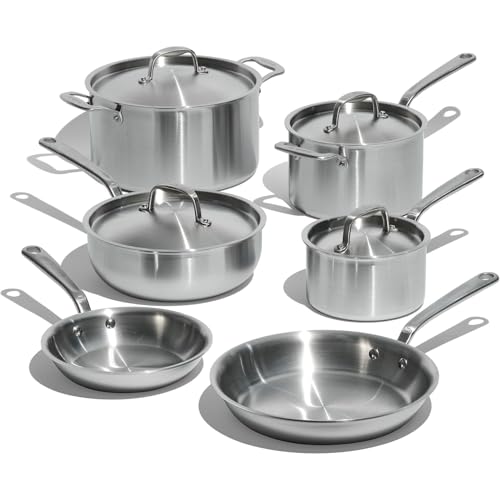
Includes: 10" Stainless Clad Frying Pan | 8" Stainless Clad Frying Pan | 8 QT Stainless Clad Stock Pot with Lid | 4 QT Stainless Clad Saucepan with Lid | 2 QT Stainless Clad Saucepan with Lid | 3 QT Stainless Clad Saucier Pan with Lid

This All-Clad HA1 Hard Anodized Nonstick cookware set includes 8 inch, 10 inch, and 12 inch Fry Pans, 2 quart and 3 quart covered Sauce Pans, 4 quart covered Sauté Pan, 4 quart covered Soup Pot, and 8 quart covered Stockpot
Pros and Cons of Each Material
Both carbon steel and cast iron have distinct characteristics that can influence cookware selection. Cast iron pans excel in heat retention and are ideal for slow cooking and baking. Their heavier weight offers stability during high-heat cooking. In contrast, carbon steel pans heat up and cool down quickly. This feature makes them better for sautéing and flash frying. Both materials are durable. They develop a natural non-stick surface through seasoning. Cast iron often comes pre-seasoned, while carbon steel may require seasoning from the start. Cast iron resists acidic ingredients better, preserving its seasoning. Carbon steel pans are better for delicate foods like eggs. However, carbon steel pans typically have a higher upfront cost compared to basic cast iron options. Cast iron cookware is constructed from high-quality materials, promoting longevity, and can be used on stovetops, in ovens, on grills, and over campfires, making them versatile for various culinary applications.
Recommended Products

Made in France. Mauviel is the leading cookware manufacturer for professional and household chefs throughout the world.

Made in France. Mauviel is the leading cookware manufacturer for professional and household chefs throughout the world.

Set includes: 8, 10, & 12-inch fry pans, 2 & 3-quart sauce pans w/ lids, 4-quart saute pan w/ lid, 4-quart soup pot w/ lid, and an 8-quart stockpot w/ lid
Choosing the Right Cookware for You
How can someone choose the right cookware based on their cooking needs? For faster cooking tasks, carbon steel cookware is preferable because it is lighter and heats up quickly. It excels in sautéing and preparing delicate dishes. In contrast, cast iron pans provide superior heat retention and distribution, making them ideal for slow cooking and baking. While cast iron takes longer to heat and is heavier, its durability and even cooking qualities are notable. Price also matters; quality cast iron options are often around $20, while good carbon steel pans may cost less than $100. Consider seasoning needs as well. Most cast iron pans come pre-seasoned, whereas carbon steel pans often require initial seasoning by the user. Additionally, anodized cookware provides a balance of durability and non-stick properties, making it an excellent choice for everyday use.
Recommended Products

Made in France. Mauviel is the leading cookware manufacturer for professional and household chefs throughout the world.
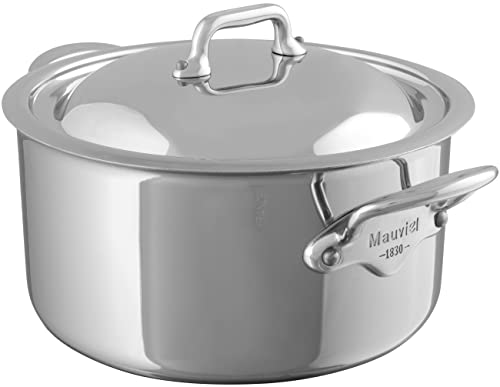
Made in France. Mauviel is the leading cookware manufacturer for professional and household chefs throughout the world.

Mauviel Cookware. Mauviel is the leading cookware manufacturer for professional and household chefs throughout the world. The 5-Piece Set includes, 1.8 qt. Saucepan with lid, 10.2-in Frying Pan, and 3.2-qt. Saute pan with lid
Frequently Asked Questions
Is Carbon Steel Just as Good as Cast Iron?
Carbon steel offers unique advantages in weight and responsiveness, enhancing sautéing techniques. Meanwhile, cast iron boasts superior heat retention and searing benefits, making it more suitable for baking and slow cooking. Both materials excel depending on the culinary context.
What Are the Downsides of Carbon Steel Pans?
Carbon steel pans exhibit durability concerns, requiring careful maintenance to prevent rust. Their lighter weight enhances maneuverability, but may compromise heat retention, leading to inconsistent cooking performance compared to heavier alternatives, necessitating user diligence.
Which Is Better, Cast Steel or Carbon Steel?
In a culinary showdown reminiscent of knightly battles, carbon steel often shines for its quick responsiveness, while cast iron boasts superior heat retention and durability. Ultimately, the choice hinges on cooking preferences and desired longevity.
Do Professional Chefs Use Carbon Steel Pans?
Professional chefs frequently choose carbon steel pans due to their superior responsiveness to cooking techniques, lighter weight for maneuverability, and the unique seasoning differences that create natural non-stick surfaces, enhancing flavors in their dishes.