As an Amazon Associate, we earn from qualifying purchases. Some links on this site are affiliate links at no extra cost to you. Our recommendations are based on thorough research and editorial judgment.

How Different Cookware Materials Affect Heat Distribution

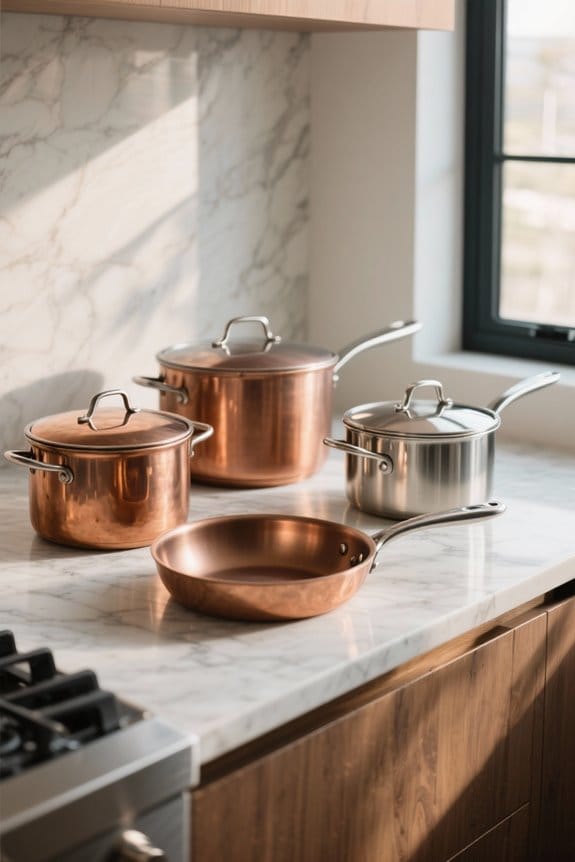
Different cookware materials impact heat distribution and cooking performance. Cast iron retains heat well, making it suitable for slow cooking. Stainless steel heats quickly but can create hot spots unless it has an aluminum or copper core. Aluminum is lightweight and heats rapidly but lacks heat retention. Copper boasts high conductivity for precise cooking but may react with acid. Each material has unique benefits, and understanding these can improve culinary results. Further insights on cookware selection follow.
Key Takeaways
- Cast iron offers excellent heat retention and even distribution, ideal for slow cooking and searing techniques.
- Copper cookware, with the highest thermal conductivity, provides precise heat control for delicate dishes but can react with acidic foods.
- Stainless steel pans, particularly with an aluminum or copper core, enhance heat conductivity and minimize hot spots during cooking.
- Lightweight aluminum heats up quickly, making it suitable for tasks like stir-frying, but struggles with heat retention during prolonged cooking.
- Non-stick cookware facilitates easy food release but may heat unevenly if not preheated properly, affecting the overall cooking result.
The Importance of Heat Distribution in Cooking
You may be interested



Heat distribution is vital in cooking as it directly affects the quality of a dish. Proper cookware materials guarantee even heat distribution, preventing hot and cold spots. Cast iron, for example, excels in heat retention, enhancing flavors through browning and searing. However, thin aluminum can lead to uneven cooking and hot spots, risking burning delicate foods. Copper cookware offers superior thermal responsiveness, making it a popular choice for precision cooking. Stainless steel cookware, particularly in multi-layered designs, enhances heat distribution and durability. It is essential to preheat pans for 3-5 minutes to achieve ideal cooking temperatures. Care should also be taken when cooking acidic foods, as certain materials may react negatively, affecting both flavor and safety. Cast iron skillets are also versatile, suitable for various cooking techniques, and can be used on all cooktops, including gas, electric, and induction.
Overview of Cookware Materials and Their Properties
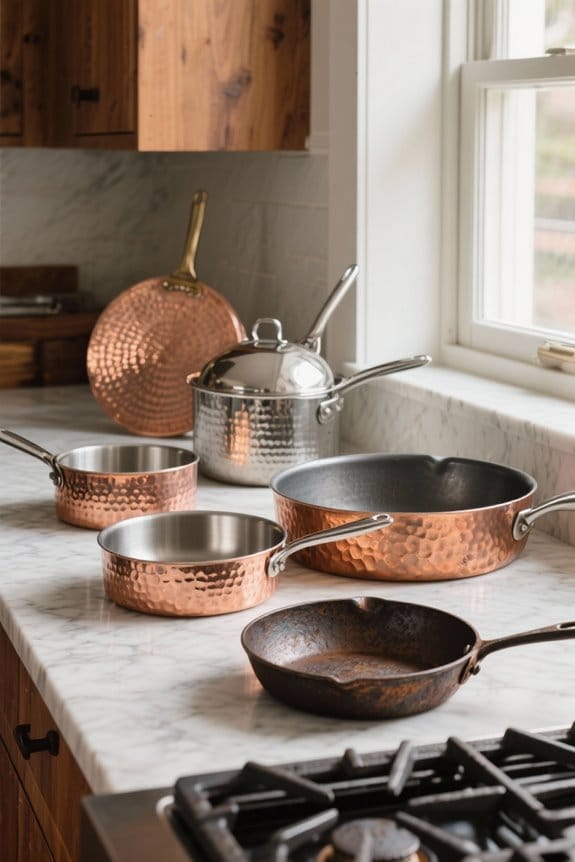
Cookware materials greatly influence cooking performance and outcomes. Cast iron is known for its excellent heat retention, suitable for slow cooking and searing. However, it takes longer to heat and cool down. Stainless steel heats quickly for tasks like sautéing but can create hot spots without an aluminum or copper core to help distribute heat. Aluminum pans are lightweight and heat up rapidly, though they struggle with thermal retention, leading to uneven cooking. Copper offers the best heat conductivity but can react with acidic foods unless lined with a non-reactive material. Nonstick cookware allows for easy food release and low oil cooking, but it may degrade over time, affecting its heat distribution efficiency. Induction stovetop compatibility is essential when selecting cookware to ensure it meets specific cooking needs.
Recommended Products

Enameled cast iron delivers superior heat distribution and retention

Enameled cast iron delivers superior heat distribution and retention; Ready to use, requires no seasoning

Enameled cast iron delivers superior heat distribution and retention
Thermal Conductivity: Understanding Its Role in Cooking
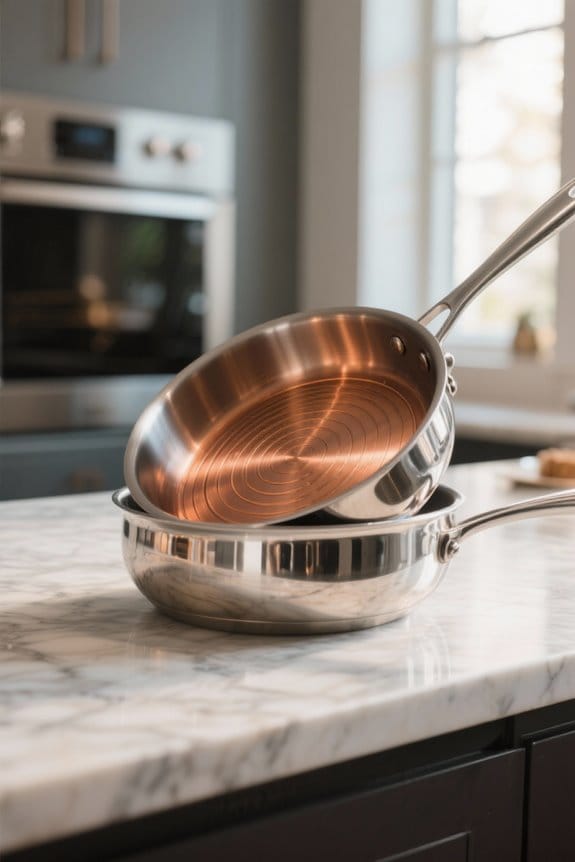
Different cookware materials have varying abilities to conduct heat, which directly affects cooking performance. Thermal conductivity measures how quickly heat transfers through a material. Copper cookware has the highest conductivity, making it ideal for precise heat distribution and quick temperature adjustments. Aluminum cookware also heats rapidly and is great for high-temperature cooking. In contrast, cast iron cookware has low conductivity, which means it takes longer to reach the desired cooking surface temperature. However, it excels in heat retention, making it suitable for slow cooking. A stainless steel pan typically incorporates aluminum or copper for improved heat transfer. Understanding these differences helps in selecting the right cookware for various cooking techniques, ensuring effective heat distribution for excellent results. Aluminum baking sheets are known for superior heat conductivity, which ensures evenly browned baked goods and prevents overbrowning, making them a reliable choice for bakers.
Comparing Heat Distribution Across Different Cookware Types
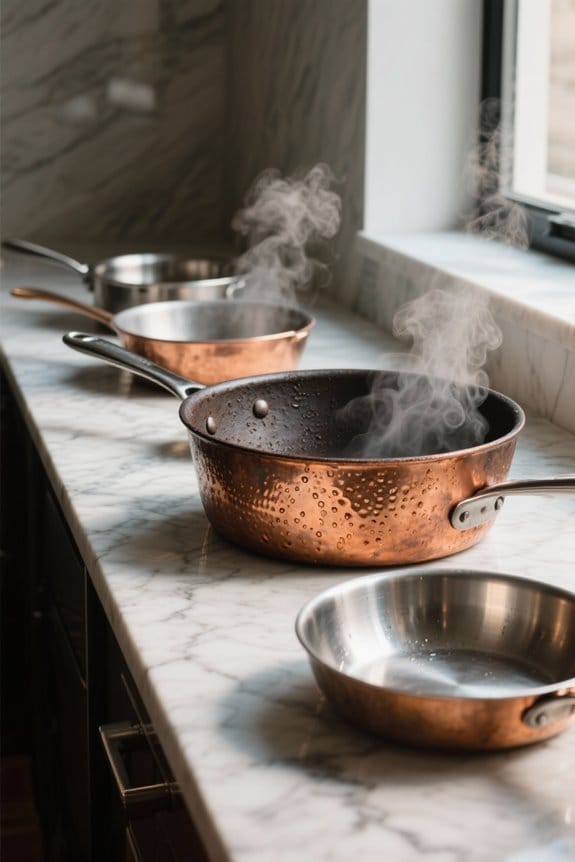
Which cookware type provides the best heat distribution during cooking? Cast iron cookware is known for exceptional heat retention. It heats slowly but evenly distributes heat across its surface. Enameled cast iron also offers even heat distribution while providing a non-stick surface. Stainless steel with an aluminum or copper core enhances heat conductivity and reduces the chances of hot spots. Aluminum cookware heats quickly and evenly but may not retain heat well, leading to temperature fluctuations. In contrast, non-stick cookware may heat unevenly if not properly preheated. Each of these different materials impacts heat distribution differently, affecting how well food cooks. Selecting the right cookware guarantees ideal cooking results for various dishes. Additionally, proper weight distribution in cookware handles can enhance control and comfort, reducing fatigue during cooking.
Choosing the Right Cookware for Specific Cooking Techniques
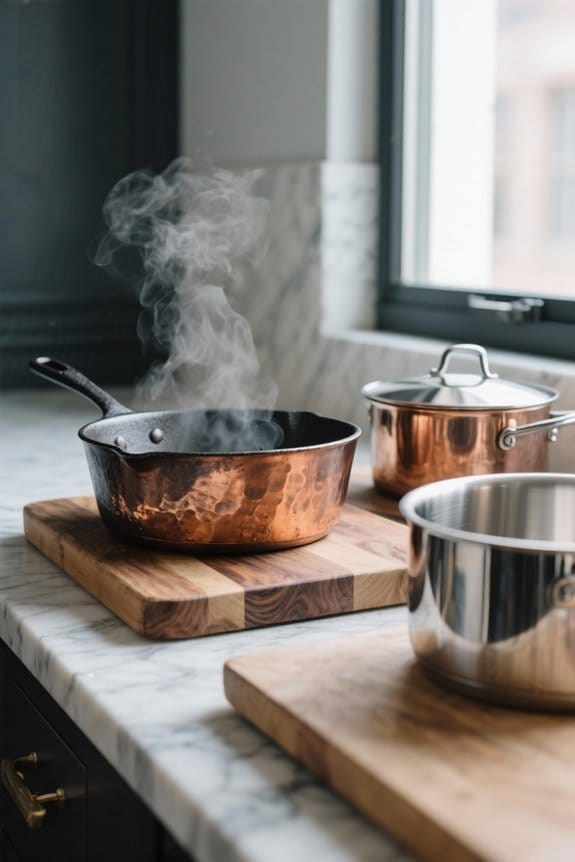
When selecting cookware for specific cooking techniques, one must consider how each type performs in various culinary tasks. Enameled cast iron excels in slow-cooking and braising. It provides excellent heat retention and even heat distribution. Stainless steel, particularly with a multi-layered base, is ideal for sautéing and deglazing. It offers quick heating for precise temperature control. Lightweight aluminum is suitable for rapid heating tasks like stir-frying. However, it can cause temperature fluctuations. Non-stick cookware is best for delicate techniques, such as cooking eggs. It prevents sticking and aids in food release. Finally, copper cookware has high thermal conductivity, making it great for sauce-making, though care must be taken with acidic ingredients to avoid reactions. Tri-ply cookware, with its aluminum core, provides consistent heating and is versatile for various cooking methods, from frying to simmering and baking.
Recommended Products

CAST IRON ADVANTAGE: Smooth ceramic surface distributes and retains heat evenly for perfect results, ready to use- no seasoning required
CAST IRON ADVANTAGE: Smooth ceramic surface distributes and retains heat evenly for perfect results, ready to use- no seasoning required

Made in France
Maintaining Your Cookware for Optimal Heat Performance
Maintaining cookware in good condition is vital for achieving ideal heat performance. Regular cleaning is essential for all types of cookware. For cast iron, use warm water and a soft sponge to keep its seasoning intact. This prevents rust and enhances heat retention during cooking. Stainless steel requires mild detergent and should avoid harsh scrubbing pads to maintain its heat distribution capability. Enamel-coated cast iron should be cleaned gently with mild soap to preserve its non-reactive coating. After washing, all cookware must be thoroughly dried to prevent moisture damage, which can impair performance. Additionally, periodic seasoning of cast iron with oil enhances both its non-stick properties and heat retention. Following these steps will guarantee the best cooking results. Using tempered glass in baking dishes ensures durability against high temperatures and promotes even heat distribution for consistent cooking results.
Frequently Asked Questions
How Does the Material of the Pan Affect Heat Conduction?
The material of the pan influences heat conduction notably; copper excels with performance, aluminum offers high conductivity, while cast iron provides heat retention advantages. Stainless steel guarantees durability, while non-stick coatings enhance temperature control in diverse cooking methods.
How Do Different Materials Affect the Transfer of Heat?
Different materials affect heat transfer through variations in heat conductivity, impacting cooking efficiency. Durability, surface texture, thermal expansion, weight considerations, and the use of reactive metals or non-stick coatings also influence cost comparison and environmental impact.
What Material Is Preferred for Baking Pans to Ensure Even Heat Distribution?
For even heat distribution in baking pans, stainless steel with aluminum fusion or cast iron for heat retention is preferred. Non-stick performance and ceramic benefits are notable, while glass baking is ideal for gradual heating and durability comparison highlights silicone use.
What Cookware Material Will Heat up the Fastest?
Could any material surpass copper cookware’s rapid heating capabilities? While aluminum holds advantages, stainless steel and cast iron fall short in speed. Nonstick surfaces may enhance cooking performance, but copper remains unmatched for quick heating and responsiveness.