As an Amazon Associate, we earn from qualifying purchases. Some links on this site are affiliate links at no extra cost to you. Our recommendations are based on thorough research and editorial judgment.

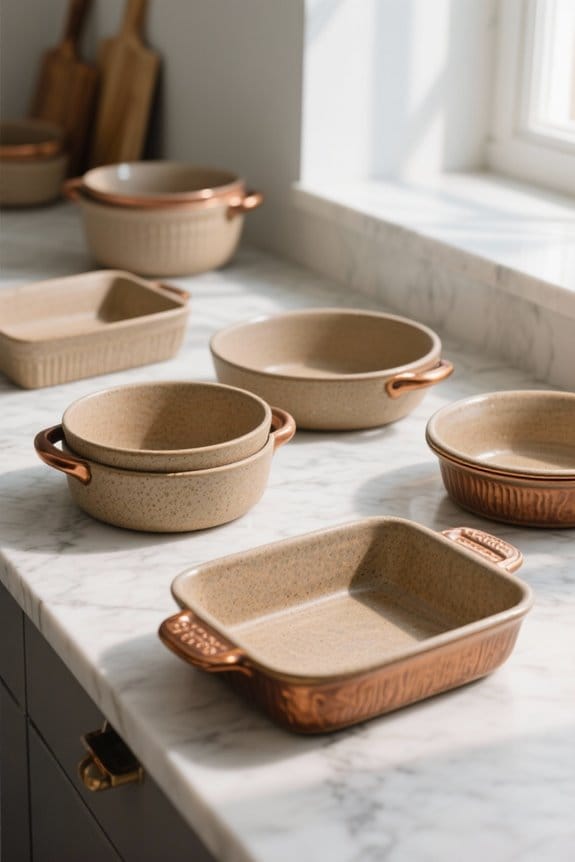
Why Stoneware Is Ideal for Even Baking

Stoneware is ideal for even baking due to its excellent heat retention and uniform distribution. It heats evenly, eliminating hot spots during cooking. Its slow and steady heat transfer prevents burning and undercooking. A well-seasoned stoneware develops a natural non-stick surface. The durable material resists chipping, ensuring longevity. Additionally, it maintains temperature, keeping food warm after baking. Proper selection and care can enhance these benefits further. More information can help in maximizing your stoneware experience.
Key Takeaways
- Stoneware heats evenly, minimizing hot spots for consistent baking results.
- Its excellent heat retention ensures a steady temperature for longer cooking times.
- The material’s slow heat transfer prevents burnt bottoms and undercooked centers.
- Durable stoneware resists chipping and cracking, providing long-lasting baking tools.
- Its rustic appearance enhances food presentation, making it ideal for serving as well.
The Advantages of Stoneware for Baking
You may be interested
Stoneware offers several advantages that make it a preferred choice for baking. First, it heats evenly, ensuring that baked goods like bread and cakes cook uniformly. This means fewer hot spots and no need to rotate the baking pan during use. Stoneware also retains a steady temperature throughout the baking process, making it suitable for recipes that require long cooking times. With proper seasoning, it develops a natural non-stick surface, reducing the need for additional fats and facilitating easy food release. Its durable material resists chipping and cracking under normal usage, providing a long-lasting investment. Additionally, the rustic appearance of stoneware enhances food presentation, making it appropriate for serving right from the oven to the table. Many stoneware casserole dishes are dishwasher safe for convenient cleaning, making them very practical for everyday use.
Understanding Stoneware’s Heat Retention and Distribution
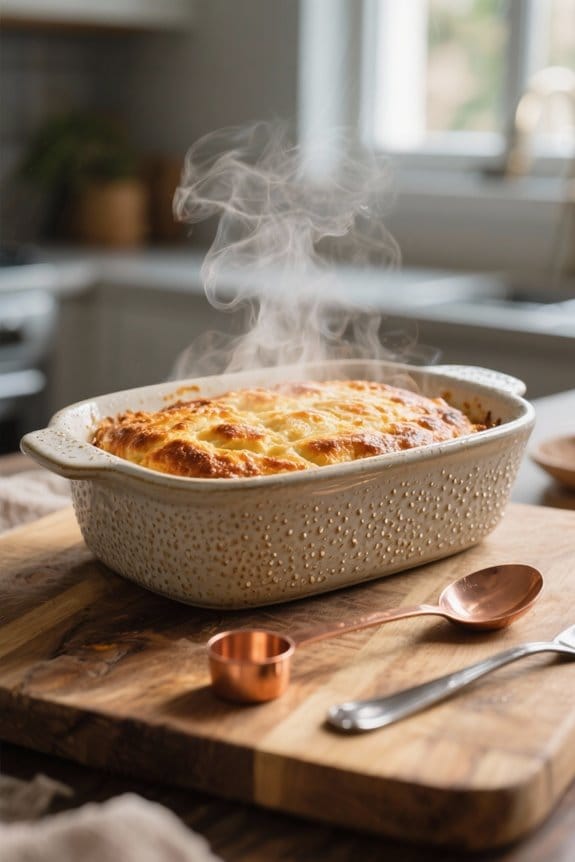
When it comes to baking, heat retention and distribution are essential for quality results. Stoneware excels in heat retention, maintaining a consistent temperature throughout the baking process. This feature is crucial for achieving perfectly baked goods. The even heat distribution of stoneware eliminates hot spots, ensuring uniform cooking. As a result, baked items achieve golden-brown crusts without the need for rotating pans. Although stoneware requires a longer initial heating period due to its dense material, this leads to slow and steady heat transfer. This characteristic also helps prevent burnt bottoms and undercooked centers in baked goods. Moreover, the heat retention ability keeps food warm longer after baking, making it ideal for leisurely meals. Durable construction resists cracks and crazing effectively, which is a significant advantage when choosing kitchen tools.
Recommended Products

4-quart oval roaster for roasting, baking, serving, and storing

Stylish, versatile dish for roasting, baking, braising

Expertly handcrafted in Poland by skilled artisans, each piece reflects generations of ceramic tradition, offering exceptional durability, authentic charm, and timeless beauty for your home.
Proper Care and Seasoning of Stoneware
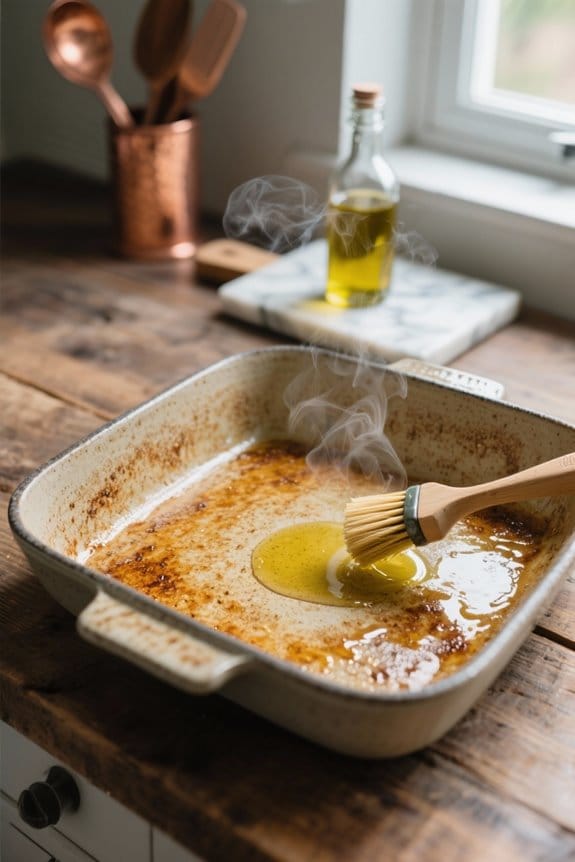
Proper care and seasoning of stoneware are essential for ideal baking performance. The initial seasoning process involves using saturated fats like coconut oil or beef tallow to create a natural non-stick coating. To maintain this seasoning, users should avoid soap, as it can damage the non-stick surface. Instead, hot water and a rubber scraper are recommended for cleaning. For stubborn residues, soaking the stoneware in hot water can help loosen stuck-on foods. Regularly applying oil during cooking aids in establishing the seasoning. Over time, high-quality stoneware will develop a darker appearance and better non-stick properties. Proper storage and careful handling will also prolong the life of the stoneware, ensuring its durability for generations. Stoneware is similar to ceramic cookware in that both promote healthier cooking with minimal oil usage.
Cleaning Techniques for Longevity
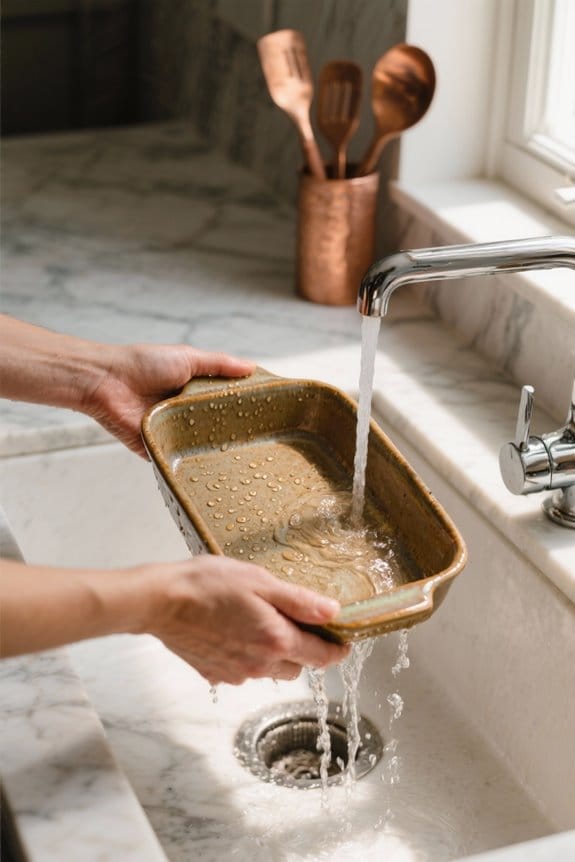
Maintaining stoneware requires careful cleaning techniques to guarantee its longevity. It is essential to avoid using soap, as it can strip the coating and affect the flavors of meals prepared in stoneware dishes. For light cleaning, a dry cloth may suffice. Stubborn residues can be removed with hot water and a rubber scraper. Soaking heavily soiled stoneware in plain hot water will help dislodge stuck food without damaging the surface. Nylon pan scrapers are specifically recommended for their effectiveness in cleaning without scratching the stoneware. These proper care and special cleaning techniques can enhance the durability of stoneware, allowing it to withstand years of use compared to metal pans, which require different care practices. Nonstick Dutch ovens require hand washing with wooden utensils to preserve their condition, similar to the careful maintenance needed for stoneware.
Selecting the Right Stoneware for Your Needs
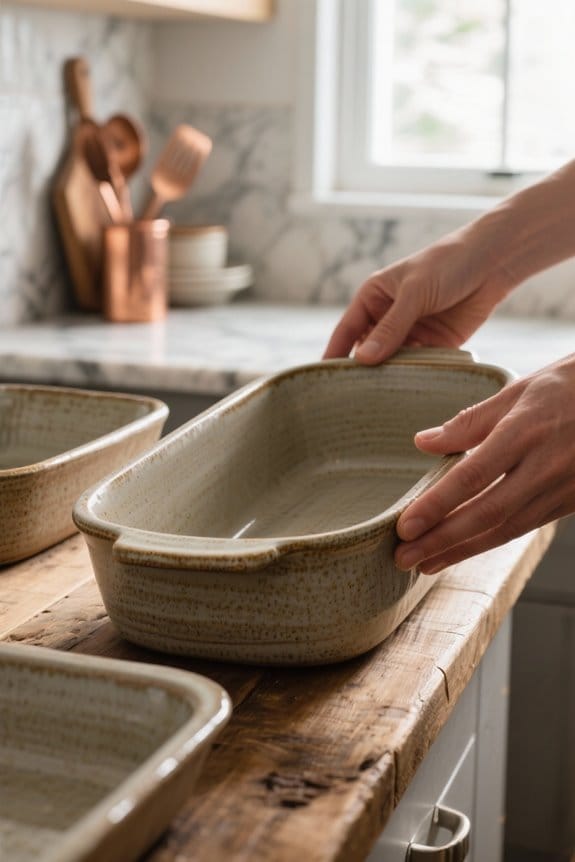
How can one choose the right stoneware for effective baking? Start by considering reputable brands like Pampered Chef or Traditional Cook. These brands guarantee lead-free materials and high quality. Next, evaluate the size and shape of the baking dishes. Different designs impact heat distribution, which affects cooking times. Look for pieces that include a warranty of around three years. This indicates durability and quality assurance. Additionally, choose stoneware that matches your cooking style, whether for baking, roasting, or serving. Finally, opt for smooth, non-porous surfaces to simplify cleaning and maintain seasoning for best results. High-quality stoneware like Le Creuset or KOOV ensures excellent heat retention and even baking results. Selecting appropriate stoneware is essential for perfectly baked goods, like flaky pie crusts and evenly cooked casseroles.
Frequently Asked Questions
What Are the Benefits of Stoneware Baking?
Stoneware baking offers durability benefits, ensuring long-lasting performance. Its excellent heat retention promotes consistent baking results, while the non-reactive surface maintains flavors without interference, making it a favored choice among enthusiasts for reliable and flavorful dishes.
Does It Take Longer to Bake in Stoneware?
In the cozy warmth of the kitchen, baking time comparison reveals that stoneware, with its impressive heat retention, often extends cooking periods. Adjustments in baking techniques become essential, as dishes require tender patience for perfectly baked results.
What Is the Disadvantage of Stoneware?
The disadvantages of stoneware include cumbersome handling and potential food odor retention. Proper stoneware maintenance tips are essential to avoid complications, particularly when considering its heat retention compared to metal alternatives, which offer faster cooking times.
Is Stoneware Healthy to Bake In?
While some cookware may harbor harmful chemicals, stoneware safety shines through its natural materials and non-toxic construction. This bakeware guarantees peace of mind for health-conscious cooks, allowing for a wholesome baking experience without harmful leaching.