As an Amazon Associate, we earn from qualifying purchases. Some links on this site are affiliate links at no extra cost to you. Our recommendations are based on thorough research and editorial judgment.

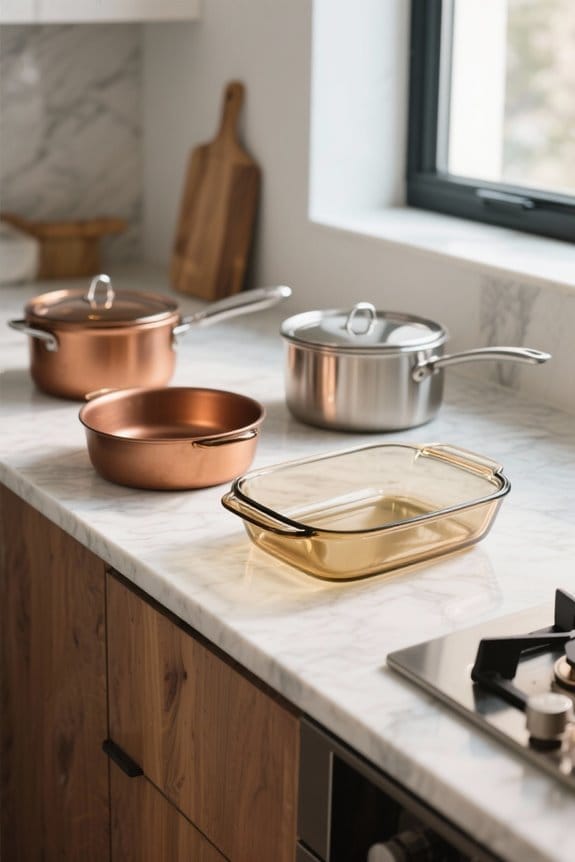
Why Glass Baking Dishes Retain Heat Differently

Glass baking dishes retain heat differently due to their higher specific heat capacity compared to metal. They heat up slowly but hold onto heat longer. This quality provides better insulation during cooking and allows for even heat distribution. However, this may lead to overcooked edges and undercooked centers if not monitored closely. For best results, recipes in glass often require adjustments, such as lowering the oven temperature. Understanding these features can enhance cooking outcomes in glass bakeware.
Key Takeaways
- Glass has a higher specific heat capacity than metal, enabling it to retain heat longer during cooking.
- Thicker glass constructions slow down heat transfer, leading to prolonged cooking times.
- The heat retention of glass can result in continued cooking effects, possibly causing uneven doneness.
- Lowering the oven temperature by 25°F is recommended for glass to prevent overcooking.
- Glass bakeware’s non-reactive nature ensures flavor integrity, especially in acidic dishes, enhancing overall cooking performance.
Understanding Thermal Properties of Glass
You may be interested

When comparing materials for baking, the thermal properties of glass are significant. Glass has a higher specific heat capacity than metal. This means it takes longer to heat up but retains heat longer once heated. The thicker composition of glass slows down heat transfer, allowing for better insulation. Glass pans retain heat after being removed from the oven, which can cause food to continue cooking. This can lead to overcooking if not monitored closely. Additionally, glass is non-reactive, avoiding heat-related reactions with acidic ingredients. However, because of the slower heat transfer, baking times and temperatures should be adjusted. Knowing these properties can enhance culinary outcomes when using glass baking dishes.
Comparison of Glass and Metal Heat Retention
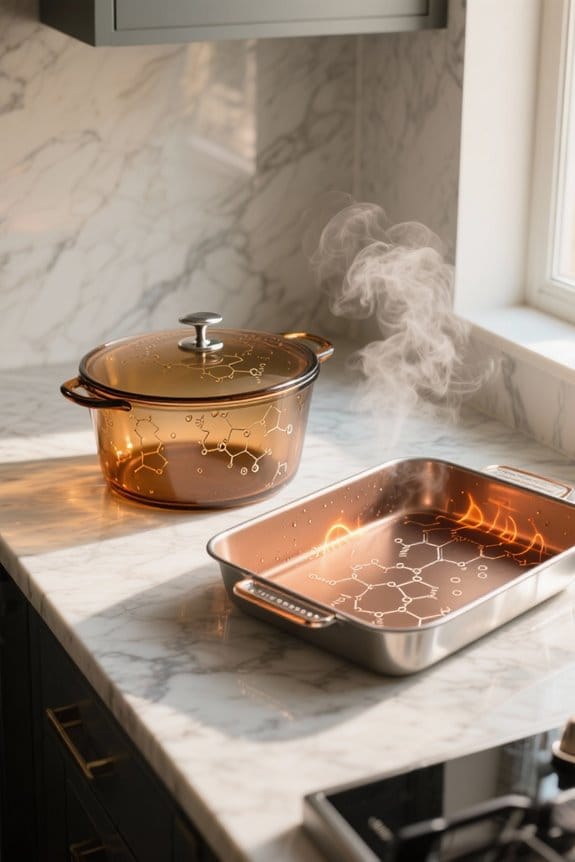
While both glass and metal baking dishes serve their intended purpose effectively, they exhibit different heat retention properties. Glass baking dishes retain heat better than metal pans due to their higher specific heat capacity. This allows glass to store warmth longer after being removed from the oven. However, the insulating properties of glass slow heat transfer, leading to longer cooking times. In contrast, metal pans conduct heat efficiently and cool quickly, allowing for faster adjustments during baking. Recipes using glass often need a reduction in oven temperature and a longer baking time to achieve ideal results. Additionally, glass heats gradually, which can result in overbaked edges if not monitored, unlike the rapid cooling of metal. Glass bakeware is resistant to warping and staining, offering an easy cleanup experience compared to metal or plastic alternatives.
Recommended Products

ZLINE Paramount Series - The ZLINE Paramount Professional Range Series provides a polished look that aligns with any kitchen layout or style

ZLINE Paramount Series - The ZLINE Paramount Professional Range Series provides a polished look that aligns with any kitchen layout or style

Restaurant Power in Your Kitchen: Master any recipe on this gas range! Features a blazing 18,000 BTU Power Burner (perfect searing!) + versatile 5-sealed burner gas cooktop (incl. 9K BTU oval), all with flame-failure safety. Ideal gas stove for kitchen demanding performance
The Impact of Heat Retention on Cooking
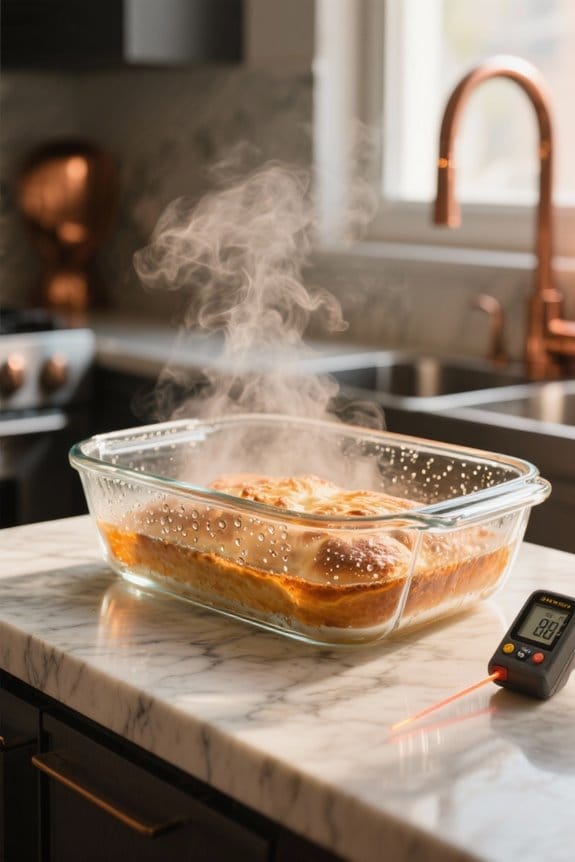
Heat retention greatly affects cooking outcomes in various types of baking dishes. Glass bakeware retains heat longer than metal pans due to its higher specific heat capacity. This property allows it to provide a continued cooking effect after removal from the oven. As a result, baked goods may have overcooked edges while remaining undercooked in the center. When baking in glass, adjustments are often necessary. It is advisable to lower the oven temperature by 25°F and to adjust baking time accordingly. Additionally, glass pans heat up slowly, which can affect browning and crisping unevenly. Careful monitoring during cooking is essential to guarantee desired results. Understanding heat transfer properties helps optimize the performance of glass baking dishes. Moreover, silicone baking mats are known for their ability to withstand high temperatures up to 500°F, offering a versatile alternative for even heat distribution in various cooking tasks.
Recommended Products
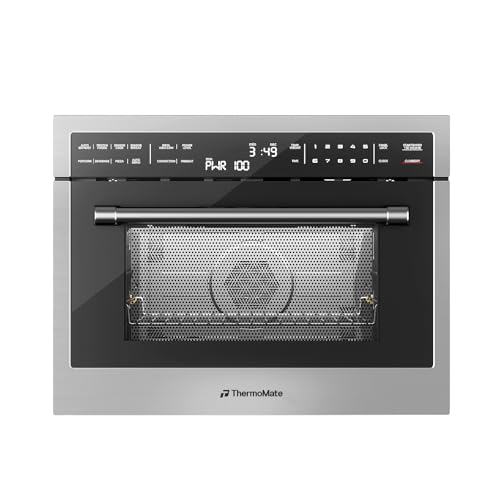
Convection and Microwave Modes: A dual microwave and convection oven, which includes convection, broil, sensor cooking, reheat, defrost, rapid pre-heat, and microwave cooking settings, expands your food prep options for optimal dish results.

MULTI-FUEL – Fire up with wood or charcoal right out of the box for a subtle wood-fired taste, or use gas with the Ooni Karu 2 Pro Gas Burner – sold separately – for maximum cooking versatility.

Interior holds up to (4) provided 12.5" x 17.25" sheet pans and has extra spacing between racks for taller food
Ideal Recipes for Glass Baking Dishes
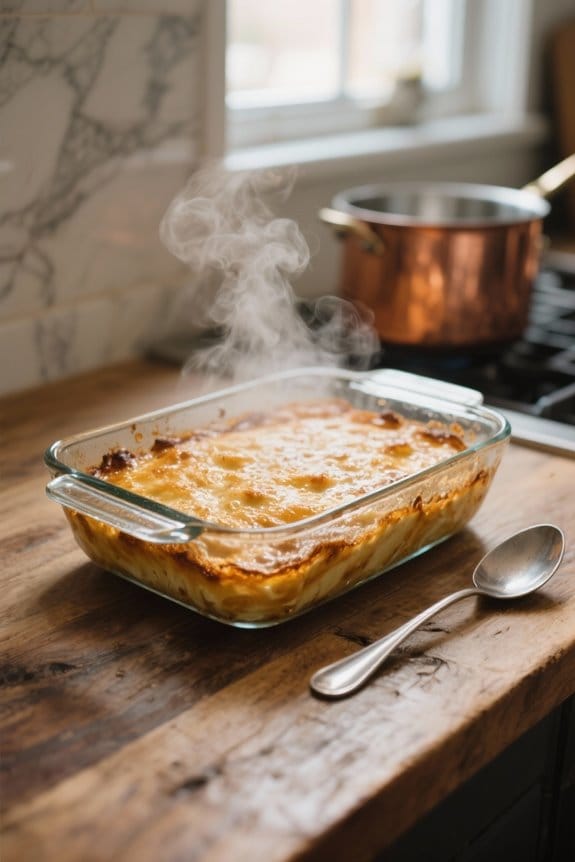
Glass baking dishes are particularly well-suited for recipes that require even cooking and consistent temperature control. They excel in making casseroles and lasagnas, where heat retention guarantees that ingredients cook evenly. Recipes with acidic ingredients, like fruit desserts or tomato-based dishes, benefit from glass pans as they do not react chemically. This preserves flavor integrity. Slow-cooked recipes, such as baked French toast casseroles, remain warm longer due to heat retention in glass baking dishes. Transparent baking dishes also allow for visual monitoring of doneness, making them ideal for pies and breads. Additionally, baking recipes needing moist environments, like bread puddings, thrive in glass. Glass dishes effectively retain moisture during extended cooking times. Stoneware pie dishes, like those made by Le Creuset or KOOV, ensure excellent heat retention and even baking results, which can provide similar benefits in baking scenarios.
Recommended Products

Corning Ware Cornflower Blue A-1-B Casserole 1 QT

Suitable for all types of cookers: can be used for gas, ceramic, induction and electric hobs, extra strong base, no warping, oven safe up to 180°C with lid and handle, up to 240°C without lid or handle, suitable for induction

Contents: 1x casserole dish (diameter 28 cm, height 16.4 cm, volume 6.0 l), 1x glass lid, 1x insert, 1x insert bridge, 1x removable thermometer item number: 2136301172.
Best Practices for Using Glass Bakeware
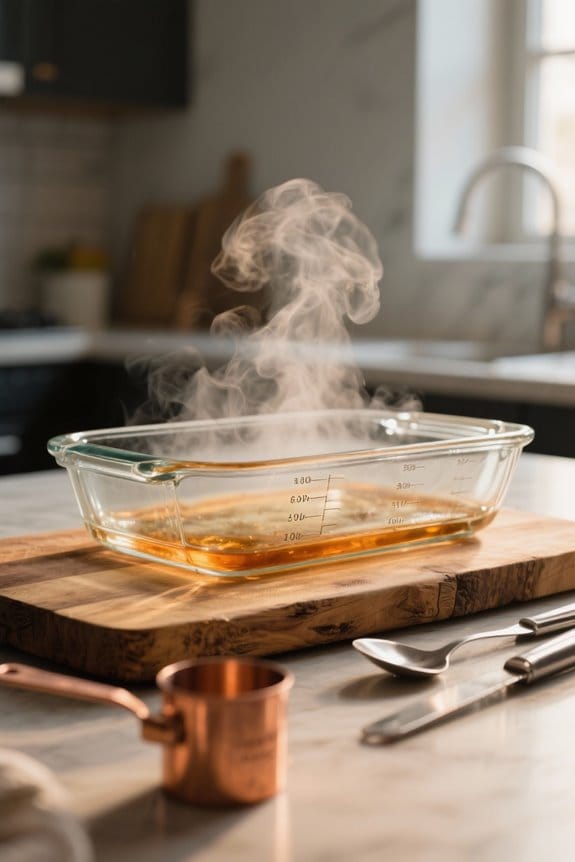
Using glass bakeware effectively requires attention to a few essential practices. First, grease glass bakeware lightly to prevent sticking even when using non-stick coatings. Monitor cooking times carefully, as glass retains heat and may cook dishes differently than baking in metal. Avoid sudden temperature changes, such as placing a frozen dish into a hot oven, to prevent breakage. Hand wash glass bakeware with warm soapy water, using soft sponges to avoid scratches. After baking, cool glass pans gradually. Avoid placing them on direct heat sources to minimize the risk of shattering. Recipes are designed with temperature fluctuations in mind, so understanding these guidelines will enhance baking success with glass bakeware. For optimal cooking results, self-basting lids in enameled roasting pans help retain moisture for juicier dishes.
Recommended Products


4-quart oval roaster for roasting, baking, serving, and storing
Frequently Asked Questions
How Do You Adjust Baking Time for Glass Vs Metal?
Like a tortoise in a race, glass baking dishes require careful consideration. To guarantee ideal results, adjust cooking times by extending five to ten minutes, lower temperatures, and keep material properties in mind for effective oven performance.
Do You Reduce Heat When Baking in Glass?
When baking in glass, one should reduce the baking temperature by 25°F due to its heat retention and slower heat distribution. Adjustments in recipe may also be necessary based on glass types and meal preparation specifics.
What Is the Disadvantage of Glass Cookware?
Despite their elegant glass appearance, glass cookware poses disadvantages, including temperature sensitivity, heat retention issues leading to overcooking, scratching problems, cleaning challenges, weight compared to metal, and cost differences, which impact durability and oven safety.
Is It Better to Bake in Glass or Metal Pans?
Baking in metal pans generally yields superior browning and quicker adaptations for various recipes due to better heat conductivity. Glass pans, while durable and easy to clean, excel in moisture retention but may affect flavor.