As an Amazon Associate, we earn from qualifying purchases. Some links on this site are affiliate links at no extra cost to you. Our recommendations are based on thorough research and editorial judgment.

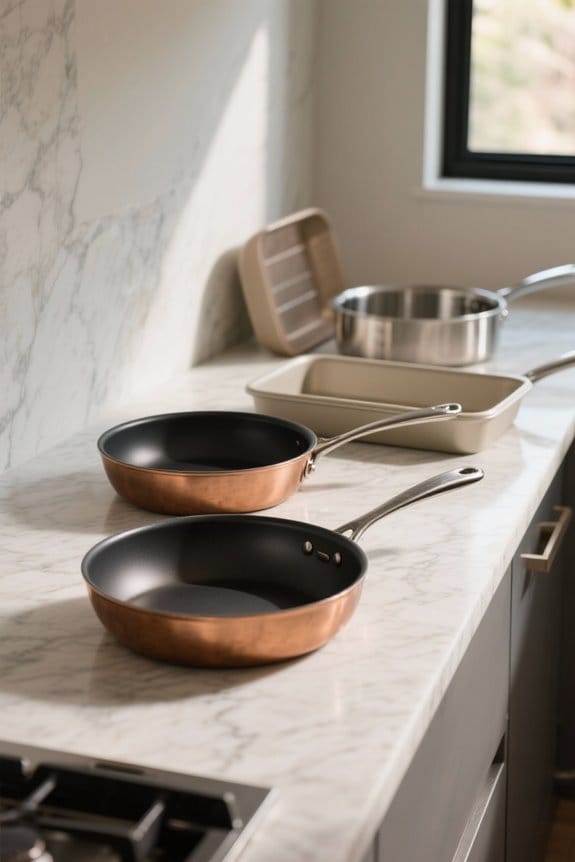
Why Dark Pans Bake Faster Than Light-Colored Ones

Dark pans bake faster than light-colored ones because they absorb heat more effectively. This rapid heat absorption leads to quicker browning on the sides and bottoms of baked goods. As a result, cakes may finish 5-10 minutes earlier compared to recipes using light pans. To prevent over-browning, it’s advisable to lower the oven temperature by 25°F when using dark pans. Understanding these differences can enhance baking performance and outcomes as you explore further options.
Key Takeaways
- Dark pans absorb heat more effectively, leading to quicker heating and faster baking times.
- Enhanced heat absorption results in quicker browning on the sides and bottoms of baked goods.
- Cakes and cookies may finish baking 5-10 minutes faster in dark pans than specified in recipes.
- Using dark pans often requires lowering the oven temperature by 25°F to prevent over-browning.
- Techniques like using silicone mats or foil can help regulate heat and minimize over-browning in dark pans.
It’s a Matter of Absorption and Radiation
You may be interested

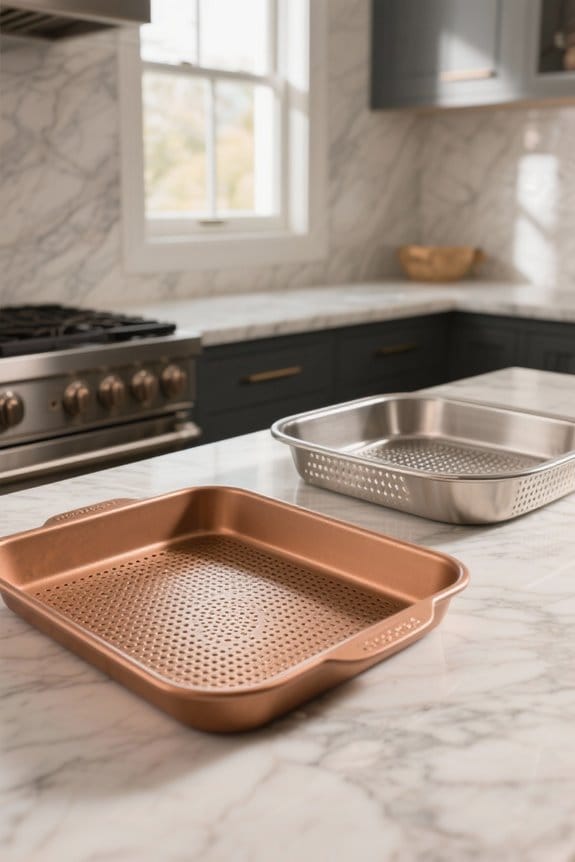
When comparing baking pans, the choice of color makes a significant difference in performance. Dark pans are known to absorb heat more effectively than their lighter counterparts. This attribute leads to faster heating, resulting in quicker baking times for treats like cakes and cookies. The increased heat absorption allows dark pans to promote quicker browning on the sides and bottoms of baked goods, enhancing both appearance and texture. As a result, cakes baked in dark pans may require less baking time. However, achieving the ideal results often necessitates adjustments to oven temperatures to avoid over-browning. Consequently, understanding how dark pans interact with heat can greatly influence baking outcomes and improve overall cooking efficiency. When using dark pans, it’s important to consider that commercial quality construction guarantees even browning, which can aid in achieving uniform results with light-colored aluminum pans.
When to Use Dark or Light Pans
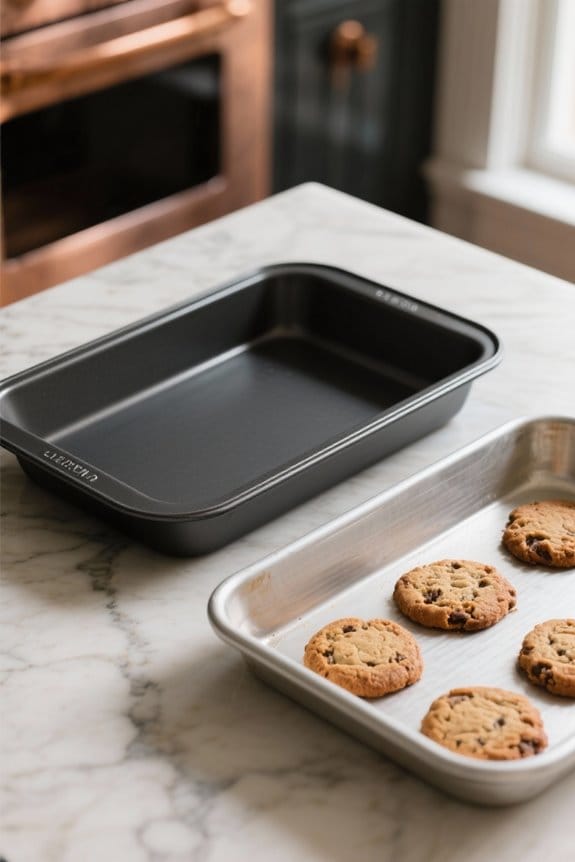
Choosing the right baking pan can greatly impact the outcome of baked goods. Dark baking pans are ideal for achieving a crispy bottom on items like pizza and potato wedges. They promote browning and enhance flavor. However, using dark pans may require lowering the oven temperature by 25°F to prevent over-baking and uneven browning. In contrast, light-colored pans guarantee even baking. They are best suited for cookies and cakes to avoid quick edge browning. General recommendations suggest using dark pans for roasting vegetables and pies. For delicate baked goods, light-colored pans are preferred. To prevent excess browning with dark pans, silicone mats can provide a helpful solution, allowing for better cooking results. When selecting baking dishes, materials like high-fired stoneware and ceramic are preferred for their durability and heat resistance, ensuring even cooking and longevity.
Recommended Products

BLACK STAINLESS STEEL WORKSTATION SINK w/ WorkFlow LEDGE creates a multi-functional workspace so you can work right over the sink – Clean lines, tightly rounded corners, and modern accessories make a bold statement in any space – Outer Sink Dims: 33 in. L x 19 in. W x 9.5 in. D – Bowl Dims: 31 in. L x 16 in. W x 9 in. D – Min. Cabinet Size: 36 in. – Min. Cabinet Size: 36 in. – INCLUDES workstation sink, cutting board, roll-up drying rack, drying mat, bottom grids x2, drain assembly w/ cover x2

Make food prep effortless with a workstation sink that adapts to every task; nesting accessories slide along integrated ledges to create a custom workspace right where you need it

DROP-IN KITCHEN SINK INSTALLATION – Easy top mount design with reinforced 2.5mm deck fits seamlessly into standard countertops for hassle-free installation. The 25 x 22 inch single bowl configuration provides ample workspace for daily meal prep and cleanup in compact kitchens or bar areas.
Tips for Working With the Pans You Already Have
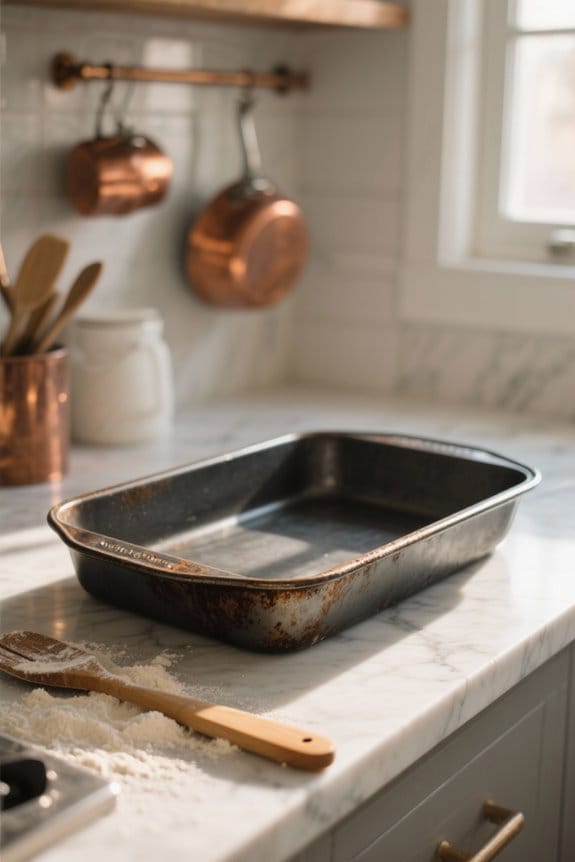
Baking with pans already in the kitchen can still yield excellent results. When using dark pans, it is wise to lower the oven temperature by 25ºF. This helps prevent over-browning. For more uniform heating, consider using silicone baking mats on your baking sheets. If adapting a recipe designed for light pans, increase the oven temperature by 25ºF for best results. Regular cleaning of bakeware is important to avoid residues that create hot spots in dark pans. Always keep an eye on baking times, as baked goods can finish up to 10 minutes earlier in dark pans. Additionally, non-stick properties enhance ease of use and cleanup, especially when working with different types of baking pans. These adjustments guarantee more consistent outcomes, making the most of the pans available.
Recommended Products

Size (W x D x H): 22.4 x 14.6 x 0.3 inches (568 x 372 x 8
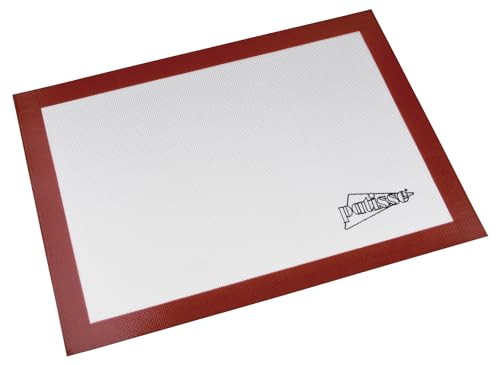
One rectangular fiberglass and silicone non-slip baking mat measuring 23 1/4 inches by 15 3/8 inches

Heat resistant from -40 to +300 degrees C
A Little Note About Dark Splashes & Burnt Spots on Baking Sheets
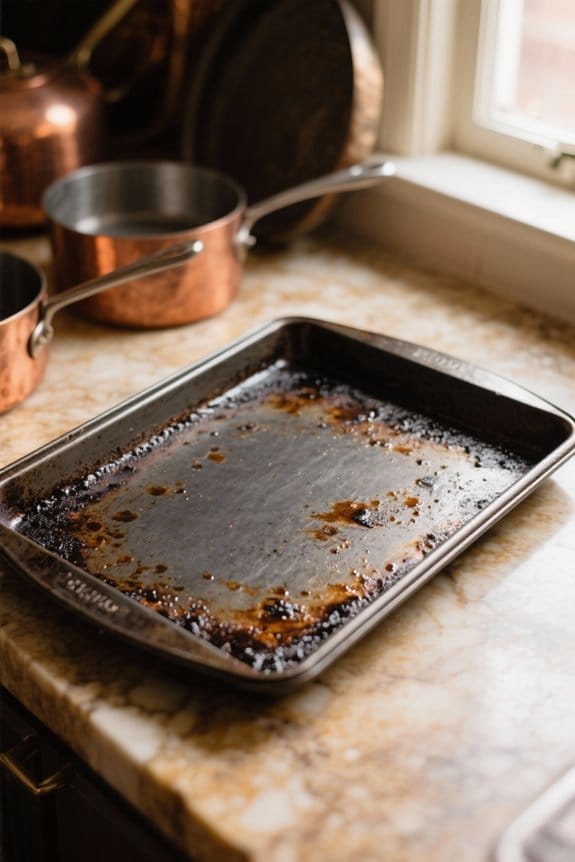
Maintaining clean baking sheets is essential for ideal cooking performance. Food splashes on baking sheets, especially dark pans, can lead to uneven heating. Over time, these splashes create darkened spots that absorb more heat. This increased heat can cause overcooked or burnt spots on baked goods. To achieve consistent results, it is vital to keep baking surfaces clean. Dirty pans can negatively affect the heat distribution, leading to undesirable cooking outcomes. Using silicone mats can help prevent unwanted dark splashes when baking with dark pans. Regular cleaning of bakeware should be part of a baker’s routine. This practice not only enhances the longevity of the sheets but also greatly improves the overall baking process. For effortless cleaning of bakeware, consider using pots and pans with nonstick surfaces that are dishwasher safe.
Impact of Dark Pans on Baking
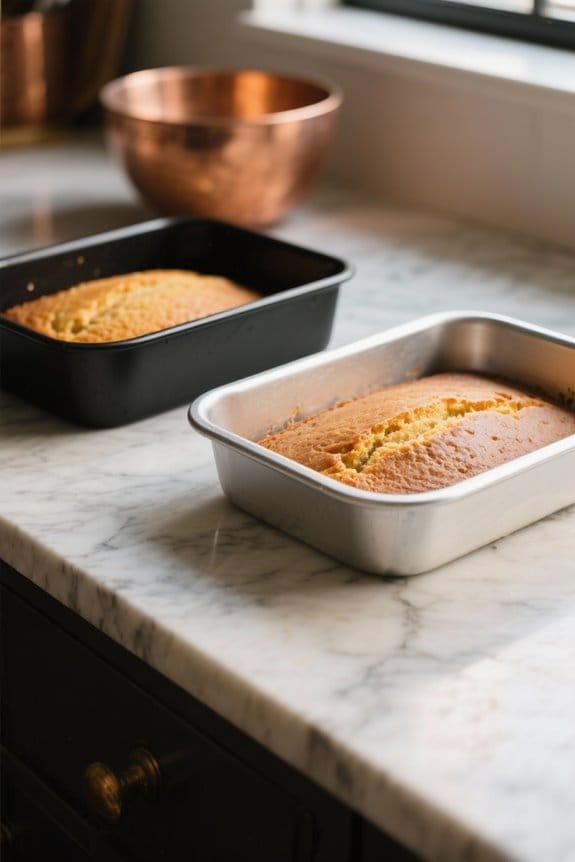
Dark pans play a major role in determining baking outcomes. Their darker surfaces absorb and radiate more heat than lighter pans. This leads to quicker baking times, often finishing cakes five to ten minutes sooner. The increased heat exposure can cause the sides and bottoms of cakes to brown more quickly, resulting in pronounced doming in the center. Dark pans are especially beneficial for recipes requiring a crisp texture, like pizza or roasted vegetables. However, they may present challenges for delicate cake recipes. To mitigate the risk of over-browning when using dark cake pans, it is advisable to lower the oven temperature by 25ºF. When choosing cookware, anodized coatings are tougher and more durable than nonstick coatings, making them suitable for high-heat applications. Proper understanding of dark pans can improve baking results greatly.
Temperature Adjustments
Adjusting oven temperatures is essential when using dark pans for baking. It is advisable to lower the oven temperature by 25ºF to guarantee even baking. Dark pans absorb heat more efficiently, which can result in over-browning if the temperature is too high. For instance, a cake baked in a dark pan at 350ºF may be done in 50 minutes instead of the usual 60 minutes. To avoid burning, one should start checking for doneness 5-10 minutes earlier than the recipe indicates. In addition, wrapping dark pans in aluminum foil can control browning while still requiring temperature adjustments. Overall, these changes help achieve better results on a baking sheet with dark pans. Additionally, using borosilicate glass dishes can ensure durability when baking, as they are resistant to rapid temperature changes.
Recommended Products

Integrated Baking & Proofing: Combines a convection oven with a proofer/holding cabinet for a complete baking solution.

All-in-One Solution: Combines a powerful convection oven with a sturdy equipment stand for added convenience.

High-efficiency heating tube with direct, forced hot-air system
Baking Time Considerations
When using dark pans, it is vital to reflect on baking times carefully. Cakes baked in darker pans often finish quicker than expected. For instance, a Classic Vanilla Bundt Cake may take 50 minutes instead of the 50-60 minutes suggested at 350°F. The higher heat absorption of dark pans causes edges and bottoms to brown faster. This characteristic makes it important to start checking for doneness 5-10 minutes earlier. Additionally, cakes baked in black tube pans might be done in just 45 minutes at 325°F. Consequently, using a baking sheet underneath can help manage heat distribution and prevent potential over-baking. Close monitoring is essential for ideal results and to guarantee a perfectly baked cake. It is also important to consider the nonstick coating types when choosing bakeware, as they impact food release and durability.
Recommended Products

SUSTAINABLE & ECO-FRIENDLY – Compostable baking paper made from FSC-certified, unbleached paper with a food-grade greaseproof coating.
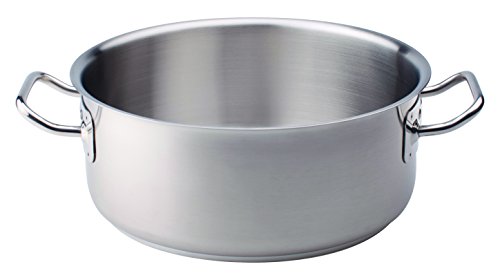
Product Available in Optimized Weight With 70.6 Litre Capacity.
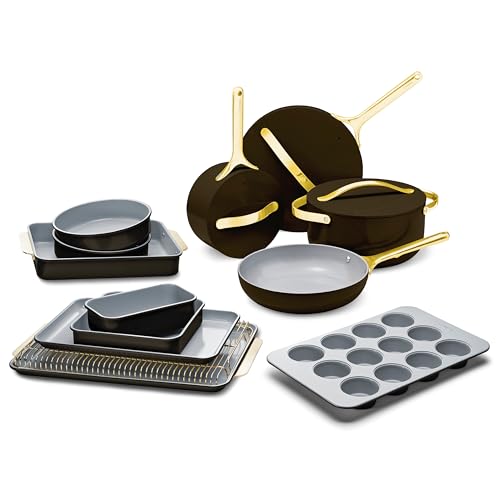
COMPLETE KITCHENWARE SET: Includes 23-piece cookware with 10.5” frying pan, 3 qt saucepan, 6.5 qt Dutch oven, 4.5 qt sauté pan, 3 lids, magnetic pan racks, canvas lid holder, baking sheets, muffin pan, loaf pan, cooling rack, and storage organizers.
Pans and Material Comparison
While both dark and light pans serve essential roles in baking, their performance varies significantly based on color and material. Dark metal pans, like those made from carbon steel and aluminum, absorb heat more efficiently. This leads to quicker bake times and enhanced heat retention. The darker coating allows for better heat distribution, which impacts the thermal dynamics during baking. Items requiring a crispy texture, such as pizza and roasted vegetables, benefit from dark pans as they promote rapid browning. Conversely, aluminum pans reflect heat. These are ideal for even cooking without quick browning. The choice of pan material, alongside its color, plays a vital role in baking times and influences the final texture and moisture content of baked goods. Enameled cast iron Dutch ovens, known for their superior heat retention, are another excellent option for consistent cooking results, as they distribute heat evenly and are compatible with multiple heat sources.
Additional Baking Tips
Baking with dark pans requires some adjustments to achieve the best results. Dark baking sheets absorb heat more efficiently, leading to quicker cooking and browning. To prevent over-browning, it is advisable to lower the oven temperature by 25°F. Items may bake 5-10 minutes faster than recipe guidelines suggest. Consequently, monitoring baking time is essential. Utilizing silicone mats in dark pans can help minimize over-browning while ensuring even cooking. Another useful technique is wrapping dark sheets in aluminum foil. This method regulates heat distribution, promoting a level cake with tender sides. Glass bakeware enhances versatility, allowing bakers to use it in the oven, microwave, fridge, and freezer. By incorporating these tips, bakers can optimize their use of dark pans and achieve consistent and desirable baking outcomes.
Frequently Asked Questions
Why Do Dark Pans Cook Faster?
Dark pans, with their superior heat absorption and efficient conduction, create a cozy cooking environment, allowing baked goods to reach their golden potential faster. This delightful baking science is influenced by pan material’s thermal properties.
How to Adjust Baking Time for Dark Pans?
To adjust baking time for dark pans, it is crucial to check for doneness 5-10 minutes earlier than the recipe suggests, while possibly reducing the oven temperature by 25°F to prevent over-browning and guarantee even baking.
Is It Better to Bake With Dark or Light Pans?
Baking with dark pans often results in cakes finishing 5-10 minutes sooner, due to heat distribution effects. While dark pans excel at high temperatures, lighter pans provide more uniform results, highlighting the importance of pan material types.
What Color Pans Are Best for Baking?
The best color pans for baking depend on the recipe. Dark pans, with superior thermal conductivity, enhance browning, while light pans promote even baking. Additionally, pan shape influences heat distribution, impacting overall baking performance.