As an Amazon Associate, we earn from qualifying purchases. Some links on this site are affiliate links at no extra cost to you. Our recommendations are based on thorough research and editorial judgment.

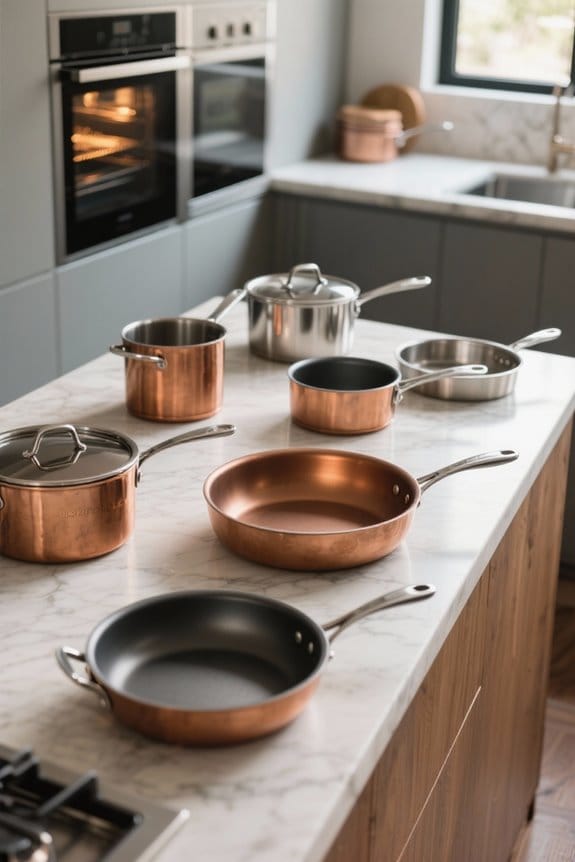
Understanding Oven Hot Spots and Pan Rotation

Understanding oven hot spots and pan rotation is essential for better baking results. Hot spots can be 20-30 degrees hotter than surrounding areas. Common hot spot locations are near heating elements and the oven’s back. Rotating pans halfway during baking promotes even cooking. Use the middle rack for best heat distribution. Testing can be done with bread or shredded coconut to identify these areas. Learning proper techniques leads to more consistent baking outcomes. More tips can enhance baking performance.
Key Takeaways
- Oven hot spots are areas that can reach temperatures 20-30 degrees hotter, primarily at the back and near heating elements.
- Conduct a bread test to identify hot spots by baking slices in a grid pattern.
- Rotate pans 180 degrees halfway through baking for more even cooking results.
- Place pans in the middle rack for optimal heat distribution, while the bottom rack is better for crisp finishes.
- Use an oven thermometer to ensure accurate temperatures for consistent baking outcomes.
Identifying Oven Hot Spots
You may be interested



Identifying oven hot spots is vital for achieving better baking results. These areas can reach temperatures 20-30 degrees hotter than the rest of the oven. Common locations include the back, sides, and near heating elements. Conducting a bread test is a practical way to identify these hot spots. By placing bread slices in a grid pattern, bakers can observe varying browning levels. In electric ovens, the top rack often holds more heat due to rising hot air. Proper rack placement is important for even cooking. Additionally, corners near heating elements may create extra hot zones. By recognizing these hot spots, bakers can enhance pan placement and choose to rotate the pans for best results, achieving a consistent golden brown finish. Nonporous glass bakeware is recommended for its resistance to staining and odors, which can also contribute to a cleaner cooking environment.
The Importance of Pan Rotation
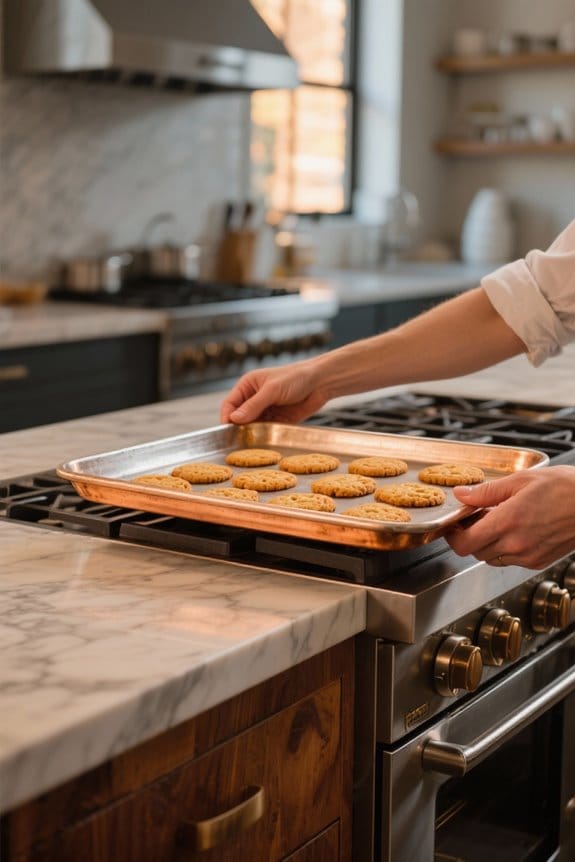
To achieve ideal baking results, pan rotation plays a significant role in guaranteeing even exposure to heat. Ovens often have hot spots that can lead to uneven cooking. Rotating a single pan 180 degrees helps counteract these areas. For multiple pans, rotating their positions is vital for uniform baking. It is best to rotate pans halfway through the baking process. This practice promotes consistent color and texture for all baked goods. Larger baking sheets may restrict air circulation, requiring more frequent rotation for maximum results. However, caution is necessary with delicate items like cakes, as opening the oven too often can disrupt their rising process. Monitoring these factors guarantees better baking outcomes. Using removable bottoms on tart pans can simplify extraction and serving, ensuring your baked goods maintain their shape.
Methods for Testing Hot Spots
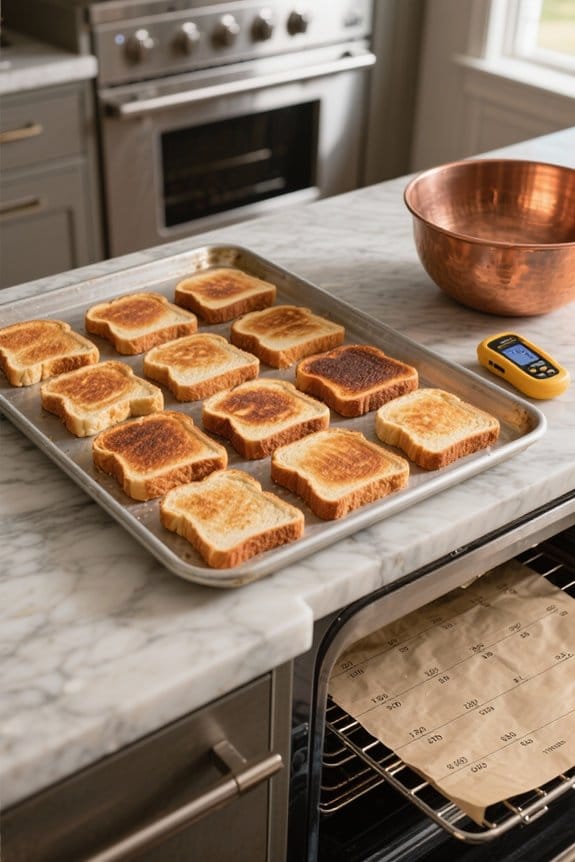
Testing for hot spots in an oven is essential for achieving even baking results. One effective method is to bake slices of plain white bread to check for browning patterns. Place the bread in a grid pattern across the oven racks and bake at 350°F (175°C) for 5-10 minutes. This technique reveals areas that may run 20-30 degrees hotter, often near heating elements or at the back of the oven. Observing the resulting browning patterns helps identify inconsistent results and uneven heating in the oven. Adjusting pan placements based on these findings can optimize baking, directing attention to hotter zones. Alternative methods, such as using shredded coconut, can also aid in identifying oven hot spots effectively. A carbon steel pan offers excellent heat conductivity, which can help mitigate the effects of oven hot spots by ensuring even heat distribution.
Best Practices for Rack Placement
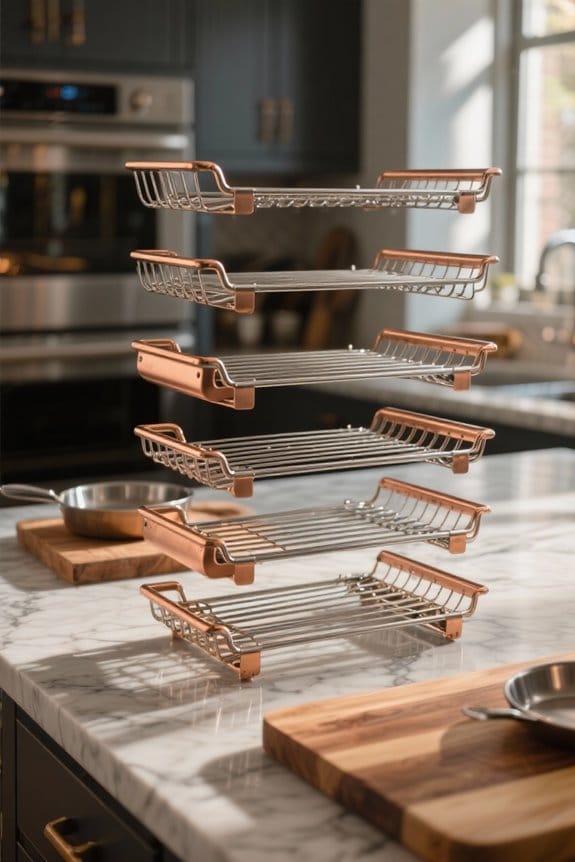
Understanding how to position oven racks can greatly impact baking results. The middle rack generally provides the best heat distribution for cakes and cookies. This minimizes the risk of over-browning or undercooked centers. For dishes like pizza or bread that need a golden finish, the bottom rack is most effective due to its proximity to the heating element. When baking multiple items, use the upper and lower thirds of the oven. Rotating the pans halfway through helps achieve even cooking despite oven hot spots. Stainless steel baking sheets offer excellent heat conductivity, which can further aid in achieving even baking results. Avoid placing pans too close together to allow for airflow. For recipes needing crispy tops, adjust rack positions toward the top at the end of baking while ensuring even cooking for the entire dish.
Adjusting to Your Oven Type
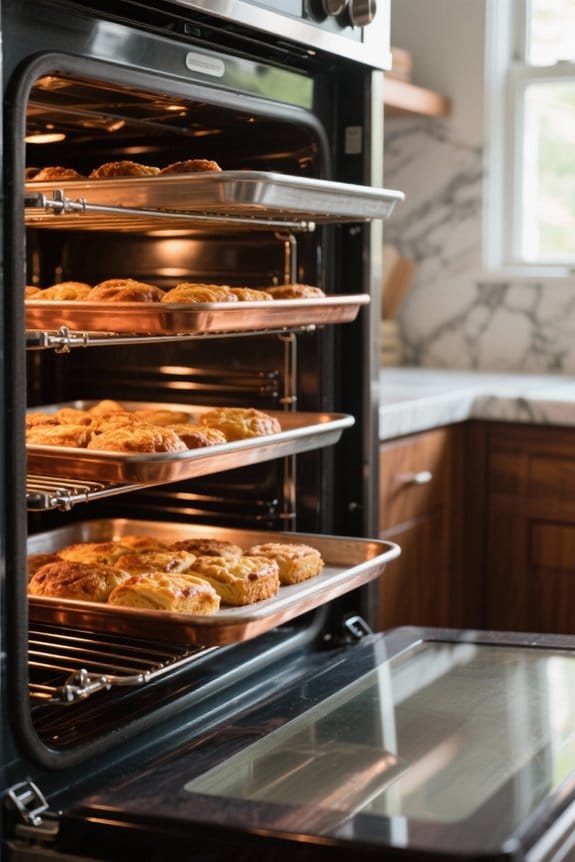
How can one adapt baking techniques to different oven types? Each oven type affects baking performance. Gas ovens tend to have temperature fluctuations and may produce moisture during cooking. This can impact baking results, particularly in the bottom of baked goods. Electric ovens provide more consistent heat, making them generally easier to use. Conventional ovens often have hot spots that require awareness. Rack placement is more critical in gas ovens to avoid over-browning. Convection ovens use fans to circulate hot air, promoting even baking and lessening the effect of hot spots. Using an oven thermometer is essential for maintaining accurate temperature settings across all oven types, ensuring consistent baking results regardless of oven choice. To enhance grilling results, it’s beneficial to use air fryer grill pans made from food-grade stainless steel, as they promote even cooking and are safe for high-temperature use.
Frequently Asked Questions
What Does Rotating the Pan Halfway Mean?
Rotating the pan halfway means adjusting food positioning by turning it 180 degrees during baking, optimizing heat distribution and oven temperatures. This technique enhances cooking consistency, contributing to baking success through effective timing strategies and possible recipe adjustments.
What Is a Hot Spot in an Oven?
A hot spot in an oven refers to areas with uneven baking due to inconsistent oven temperature and heat distribution. This affects food placement, rack position, and may require recipe adjustments or oven calibration for better results.
How Do You Adjust Cooking Times for Multiple Items?
To adjust cooking times for multiple items, one should consider item placement and temperature adjustment, modify recipes accordingly, and use a strategic timing method to enhance baking efficiency while ensuring proper dish layering and food arrangement.
How Can You Avoid Creating a Hot Spot When Baking?
Like a symphony, baking techniques rely on harmony. Ensuring proper heat distribution requires oven calibration, strategic placement of pans, and selecting quality materials to avoid temperature inconsistencies, allowing for seamless recipe adjustments and evenly baked treats.