As an Amazon Associate, we earn from qualifying purchases. Some links on this site are affiliate links at no extra cost to you. Our recommendations are based on thorough research and editorial judgment.


The Role of Thermal Mass in Baking Stones

Thermal mass is essential in baking stones. It stabilizes the oven temperature, preventing fluctuations during cooking. This results in even heat distribution, which avoids soggy bottoms in baked goods. Materials like cordierite excel in heat retention, allowing quick recovery after oven door openings. Preheating the stone adequately enhances its performance, particularly for pizza and artisan bread. For best results, proper care and maintenance extend the lifespan of your baking stone. More insights on ideal baking techniques await.
Key Takeaways
- Thermal mass in baking stones stabilizes oven temperature, minimizing fluctuations for consistent baking results.
- High thermal mass materials like cordierite absorb and radiate heat evenly, preventing soggy bottoms.
- Dense stones enable quick heat recovery after door openings, ensuring efficient baking even with frequent use.
- Proper preheating for 30-60 minutes maximizes the thermal mass benefits, enhancing crust quality for pizza and bread.
- The combination of heat retention and distribution from thermal mass improves overall baking performance significantly.
Understanding Thermal Mass in Baking Stones
You may be interested



Thermal mass plays an essential role in the performance of baking stones. It stabilizes the oven temperature, preventing drastic fluctuations when the door is opened. This stability is vital for achieving consistent baking results. Baking stones exhibit a temperature variation of only 10°F across their surface, outperforming aluminum baking sheets considerably. Their thermal mass allows them to absorb, store, and radiate heat uniformly, mimicking the conditions of traditional brick ovens. Materials like cordierite offer high thermal mass and can withstand temperatures up to 2000°F. Cordierite stones are ideal for baking up to 1,450°F, providing excellent heat retention and distribution. Proper preheating for 30-60 minutes is important to maximize these benefits. This process enhances the development of pizza crusts and guarantees even heating, contributing to a better baking experience overall.
The Importance of Heat Distribution and Retention
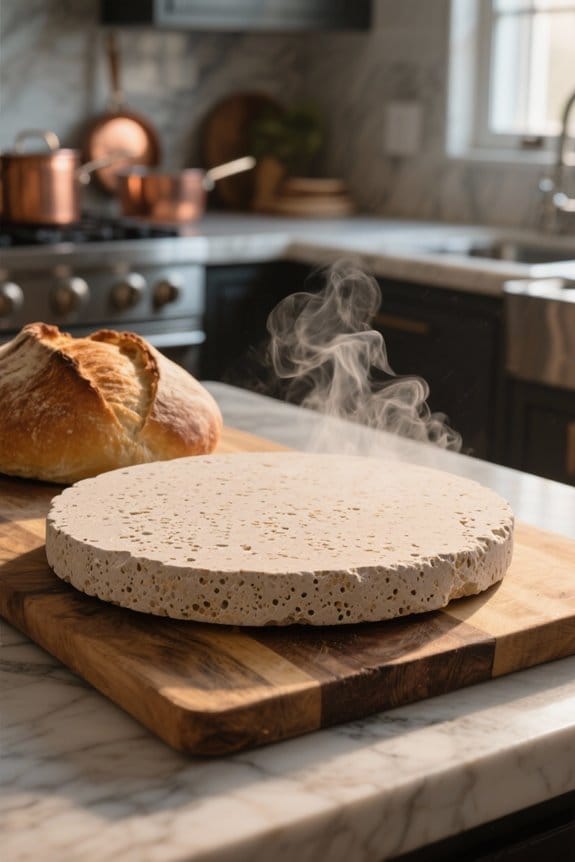
Heat distribution and retention are critical factors in the effectiveness of baking stones. These stones are designed to absorb, store, and radiate heat evenly. This uniform heat distribution prevents soggy bottoms and contributes to even baking. The thermal mass of baking stones also stabilizes cooking temperatures, reducing fluctuations when the oven door opens. Dense materials like cordierite are favored for their consistent temperature profiles, limiting variations to about 10°F across the cooking surface. Properly preheated pizza stones retain heat effectively, ensuring cool or wet dough heats up quickly. This capability enhances crust development in pizzas and artisan breads, outperforming aluminum sheets in maintaining oven temperature and recovering heat swiftly after door openings. Additionally, the high-temperature resistance of certain stones, such as those made from cordierite, ensures the stone’s durability and enhances the quality of baked goods.
Recommended Products

Power and style: cozze Elements Series Discover this 6.0kW pizza oven from the exclusive cozze Elements range. Ready in 20 minutes, it offers intense heat to grab the dough instantly. Get a crispy and airy crust, worthy of a real Italian pizzeria

Reaching temperatures up to 750 degrees, Breville's Pizzaiolo countertop oven is the smart, indoor pizza oven capable of cooking authentic, wood-fired style pizzas in only two minutes; Experience bold, pizzeria flavor from your home kitchen

[RESTAURANT-QUALITY PIZZA IN 60 SECONDS] – The Cozze 13" Classic outdoor pizza oven reaches up to 950°F (500°C) for a true fire and stone-baked taste. Cook authentic Neapolitan-style pizzas in 60 seconds.
Material Properties of Baking Stones
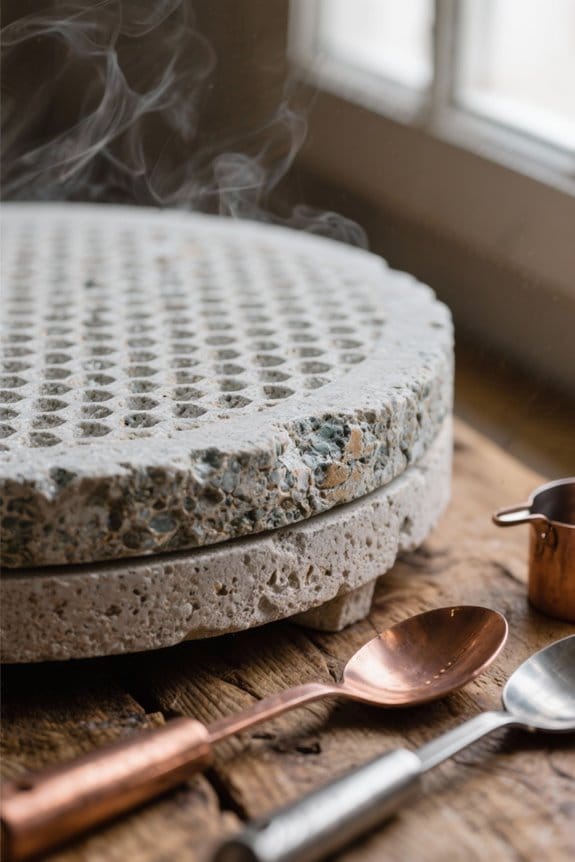
When selecting baking stones, understanding material properties is vital for ideal results. Baking stones made from cordierite offer high thermal mass and durability. They can withstand temperatures up to 2000°F and provide excellent heat retention. Thicker stones, ranging from ½ inch to 1 inch, enhance performance by promoting thermal stability. Ceramic stones are lightweight and provide decent heat distribution for consistent cooking. Marble baking stones are visually appealing but sensitive to temperature changes, requiring careful handling to avoid cracks. Proper preheating for 30-60 minutes is essential, as it allows the stone to reach the desired temperature. This guarantees even heat distribution, ultimately preventing soggy bottoms in baked goods and improving overall baking performance. Cordierite stones offer superior thermal properties, making them a preferred choice for achieving professional-grade baking results at home.
Applications for Perfect Pizza and Artisan Bread Baking
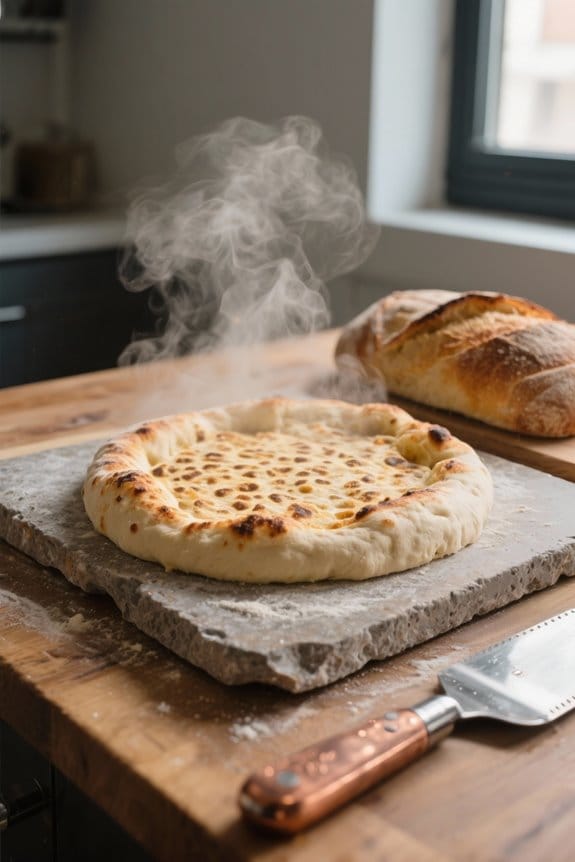
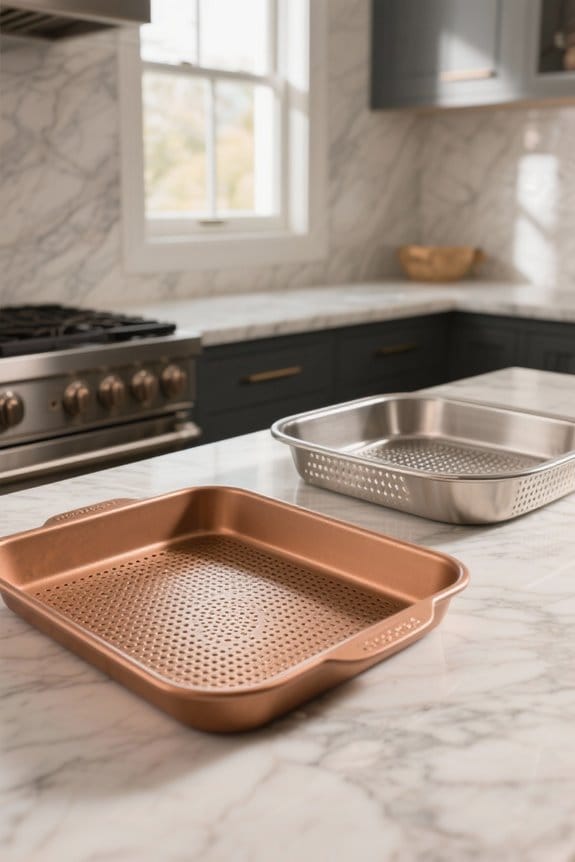
Achieving perfect pizza and artisan bread requires a well-prepared baking stone. Baking stones provide the necessary thermal mass to promote even heat distribution. For ideal pizza crusts, preheating a baking stone to 500°F for 30-60 minutes is vital. This process guarantees a hot surface that cooks the dough quickly and creates a crisp bottom. Artisan bread benefits from a baking stone that has been preheated for at least 45 minutes. This duration allows it to effectively transfer heat and create steam, aiding in the rise and browning of the loaf. When baking, smaller pizzas should be chosen to guarantee that heat circulates freely, optimizing cooking results and enhancing the overall quality of the final product. Perforated designs in pizza crisper pans enhance air circulation, further contributing to achieving crispier crusts and elevating the quality of homemade pizzas.
Recommended Products

OONI 5 YEAR WARRANTY - At Ooni, we stand by our products. All Ooni products come with a voluntary manufacturer’s warranty for 1 year as standard. We’ll extend the warranty by 5 years when you register your product with us within 60 days of purchase.

OONI 5 YEAR WARRANTY - At Ooni, we stand by our products. All Ooni products come with a voluntary manufacturer’s warranty for 1 year as standard. We’ll extend the warranty by 5 years when you register your product with us within 60 days of purchase.

OONI 5 YEAR WARRANTY - At Ooni, we stand by our products. All Ooni products come with a voluntary manufacturer’s warranty for 1 year as standard. We’ll extend the warranty by 5 years when you register your product with us within 60 days of purchase.
Care and Maintenance for Longevity
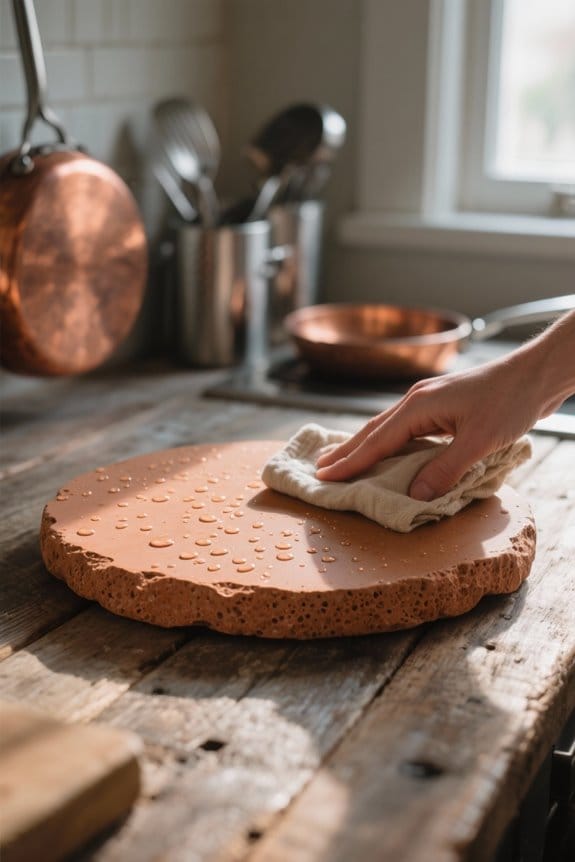
Baking stones play an essential role in achieving excellent results with pizza and artisan bread. To maintain a baking stone’s thermal mass and guarantee longevity, it is vital to follow proper care routines. Always allow the stone to cool completely before attempting to clean it. Avoid submerging the baking stone in water or using soap. Instead, simply scrape off food particles with a plastic scraper or stiff spatula. Effective moisture absorption results in crispy crusts, making these stones ideal for various baking needs. For storage, keep the stone in a dry environment at room temperature. Protect it with parchment paper to prevent scratches. If the stone gets wet, air dry it for 24 hours to eliminate moisture. Finally, use gradual heating by placing the stone in a cold oven to prevent cracks from sudden temperature changes.
Recommended Products

36-inch minimum base cabinet.

Make food prep effortless with a workstation sink that adapts to every task; nesting accessories slide along integrated ledges to create a custom workspace right where you need it
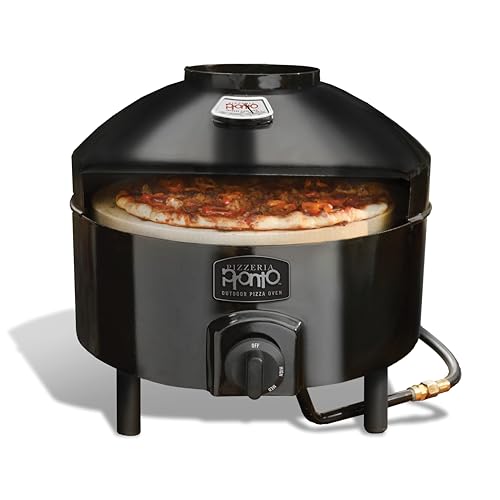
Included Components: The Pizzeria Pronto Outdoor Pizza Oven, A Specifically-Designed Cordierite Pizza Stones, Thermometer, Matchless Starter, 48" Gas Hose, And Standard Regulator For Type I Fitting.
Troubleshooting Common Issues With Baking Stones
How can bakers effectively address issues with their baking stones? To prevent thermal shock, bakers should always start with a cold oven. Gradually heating the baking stone protects it from cracking. Ensuring the stone surface is completely dry before use is essential, as moisture can cause damage during high temperatures. Spilling oils or liquids on a hot stone can lead to uneven heat distribution. Monitoring baking temperatures is important; keeping them within 500°F helps avoid stressing the stone. To promote even heat, items should be distributed evenly across the stone. This prevents concentrated heat spots, which can lead to uneven baking results or fractures, ensuring the baking stone performs at its best. Cordierite withstands high temperatures, making it an ideal material for baking stones due to its excellent heat retention and thermal shock resistance.
Recommended Products

Installs on 22.5" kettle grills with the KettlePizza insert to make a superior pizza cooking surface

Create food never thought possible in a grill with the Weber Crafted Outdoor Kitchen Collection Glazed Baking Stone.

ACCLAIMED FOR EXCELLENCE: FibraMent Pizza Stones have been recognized by top publications as the premier choice for achieving the best baking results.
Frequently Asked Questions
What Is the Purpose of Thermal Mass?
Thermal mass enhances baking efficiency by improving heat retention and temperature stability, affecting food texture and crust formation. Its material conductivity optimizes moisture control, while minimizing energy consumption contributes to overall oven performance in culinary science.
What Is the Thermal Mass of Stone?
The thermal mass of stone encompasses its heat retention and distribution properties. Certain stone types, with enhanced thermal conductivity, subtly influence baking efficiency, temperature regulation, and food flavor, ultimately refining various cooking techniques and outcomes.
What Role Does Heat Play in the Baking Process?
Heat plays an essential role in baking, influencing baking temperature, heat retention, and temperature consistency, which affects dough expansion, crust formation, and moisture release during baking time, interacting dynamically with ingredients in various oven types.
What Is the Heat and Mass Transfer During Baking?
Ironically, while meticulous bakers obsess over recipes, it’s heat conduction and thermal equilibrium that truly govern baking. High stone density enhances heat capacity, optimizing moisture retention, maximizing energy efficiency, and ensuring perfect crust development, cooking time, and flavor enhancement.