As an Amazon Associate, we earn from qualifying purchases. Some links on this site are affiliate links at no extra cost to you. Our recommendations are based on thorough research and editorial judgment.

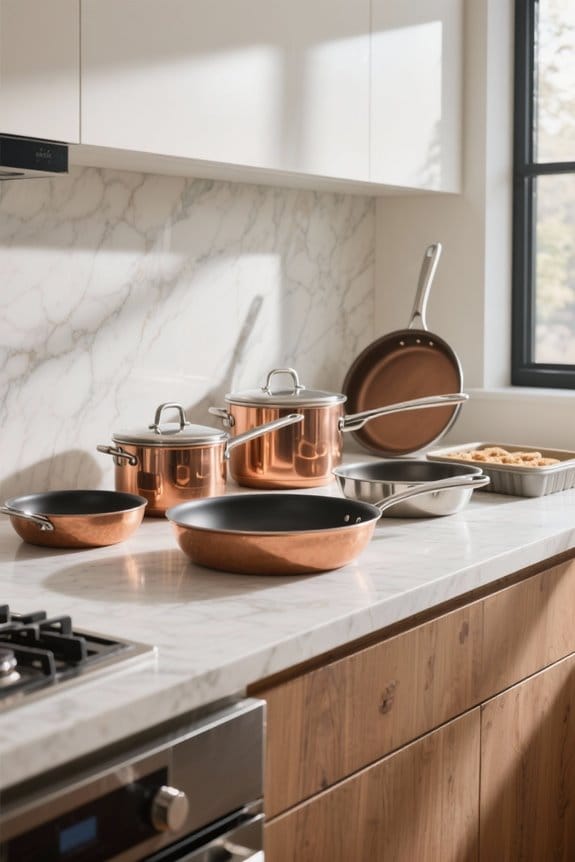
How Pan Size Affects Recipe Outcomes

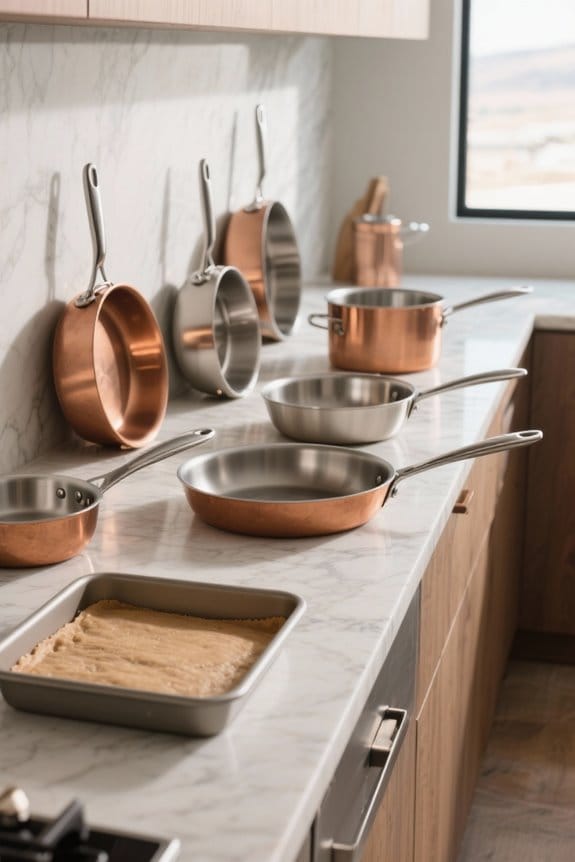
Pan size markedly influences baking outcomes. Smaller pans promote higher batter walls, preventing collapse, while larger pans offer faster moisture evaporation. Adjusting ingredient quantities is essential when changing pan sizes; larger pans may require a 25% increase in ingredients. Baking times also vary; deeper batters need longer cooking. The pan’s material affects heat conduction, with metal pans facilitating even baking. Understanding these factors can improve baking results, and additional tips can guarantee consistency in your baked goods.
Key Takeaways
- Pan size affects batter thickness and baking time, with larger pans requiring adjustments to ingredient quantities to maintain optimal consistency.
- A 9-inch round pan is 25% larger than an 8-inch, impacting baking outcomes like texture and moisture retention.
- Deeper pans may cause uneven baking, requiring longer times and careful monitoring to avoid undercooking or overbaking.
- Different pan materials influence heat conduction, with metal pans baking evenly, while glass or silicone may require extended baking times.
- Filling pans to no more than two-thirds full prevents overflow and ensures even rising for consistent baking results.
The Importance of Pan Size in Baking
You may be interested
When baking, the size of the pan plays an essential role in determining the final outcome. A pan’s size influences the thickness of the batter, affecting the baking time and texture. For example, a 9-inch round pan is 25% larger than an 8-inch round pan. This results in a thinner cake that cooks faster. If a recipe calls for a specific pan size, using a smaller one can lead to overflow. A larger pan may give a coarse texture due to quick cooking. Bakers should fill cake pans no more than 2/3 full. It’s crucial to adjust ingredients proportionally when changing pan sizes to maintain ideal results. The material of the pan also affects heat distribution.
Understanding Pan Volumes and Surface Areas
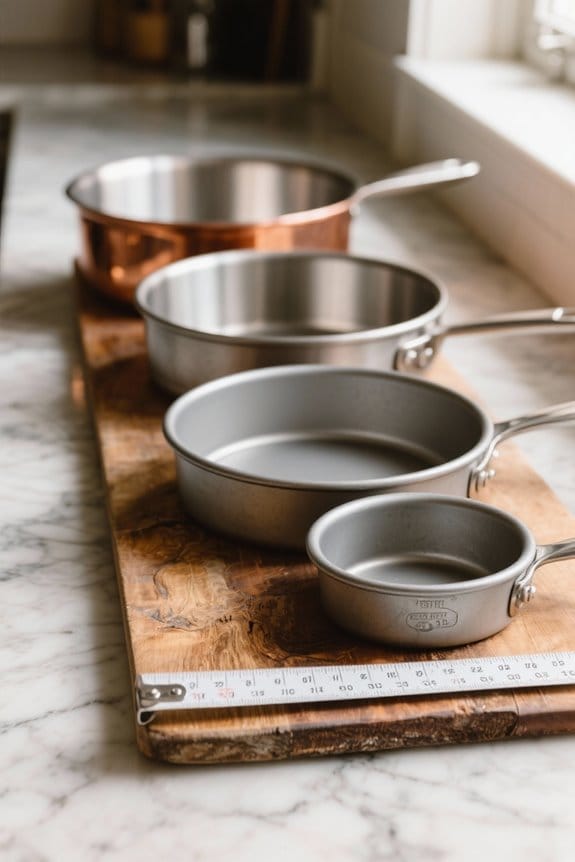
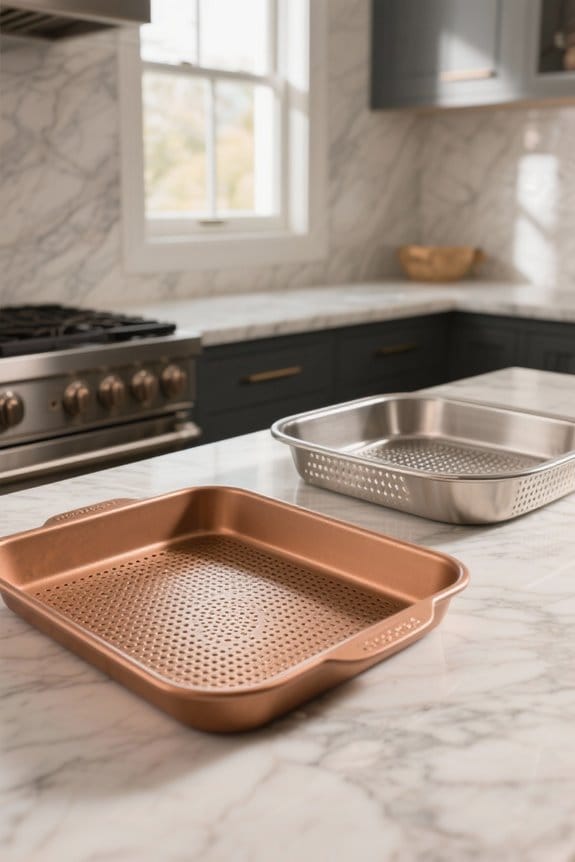
Understanding the volumes and surface areas of baking pans is essential for achieving desired baking results. Different pan sizes influence the amount of batter needed. For instance, a 9-inch round cake pan has a volume approximately 25% larger than an 8-inch pan. This affects how high the cake rises and its density. A larger surface area promotes faster moisture evaporation, leading to thinner cakes. Conversely, deeper pans can support more batter but require longer baking times to cook evenly. Additionally, smaller pans offer more wall support, preventing the cake from collapsing. Adjusting baking times and temperatures is vital when changing pan sizes. Recognizing these factors can lead to more successful baking outcomes. A stainless steel roaster with a nonstick rack, like the ones from All-Clad, is an example of how material and design can impact the effectiveness of the cooking process, leading to evenly cooked results.
Recommended Products

DURABLE HEAVY DUTY ALUMINUM PANS WITH LIDS: Made from a Heavy Duty Premium recycled aluminum foil material. Heavy duty roasting and reheating pan. Great for use as a chafing pan for all of your catering needs. With our Disposable Foil Lids easily close and seal leftover food items for reheating or refrigeration. No need to worry about cleaning, just throw them in your recycling bin when you are done! Freezer Safe, Refrigerator Safe, Oven Safe, and Dishwasher Safe.

Enameled cast iron delivers superior heat distribution and retention; Ready to use, requires no seasoning

This bundle includes (1) Le Creuset 4.5 qt. Round Dutch Oven with Lid, (1) Le Creuset 1 3/4 qt. Cast–Saucepan with Lid, and (1) Le Creuset 9" Signature Skillet.
How to Adjust Recipes for Different Pan Sizes
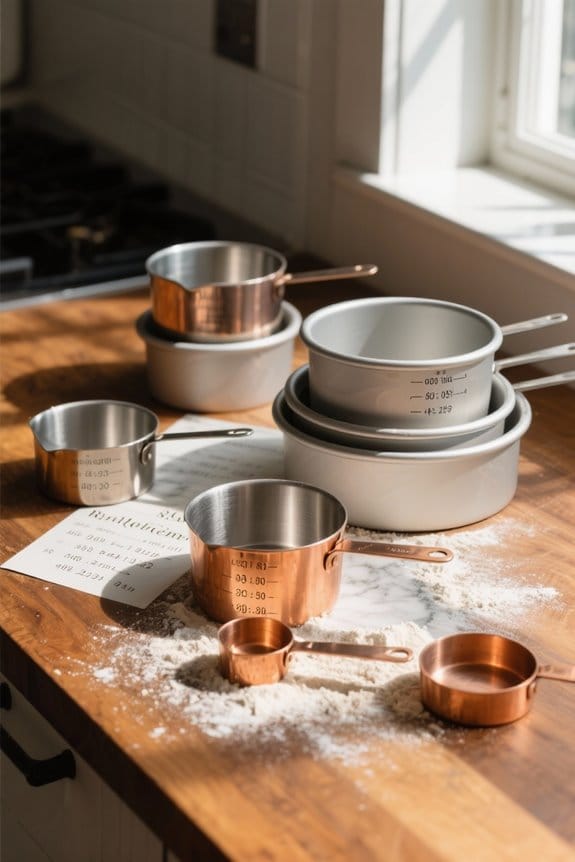
Adjusting recipes for different pan sizes is essential for achieving consistent baking results. When using a larger baking pan, increase ingredient quantities based on the size difference. For example, a 9-inch round pan is approximately 25% larger than an 8-inch round pan. In such cases, a 25% increase in ingredients is necessary. If opting for a deeper pan, consider reducing leavening agents, sugar, fat, and liquid, as this stabilizes the cake’s structure. It is important to keep smaller pans filled no more than 2/3 full. Monitor baking time closely, as deeper batters require longer baking times and may need lower temperatures for the best results. Use basic arithmetic to scale ingredients proportionally based on the baking pan’s volume. When selecting a pan, consider perforated designs as they enhance air circulation, contributing to crispier crusts.
Recommended Products

What's Included: 500 Count 9 Inch Aluminum Round Pans by EcoQuality - No Lids Included -

The information below is per-pack only

CREATE BEAUTIFUL CAKES: These round cake pans feature a straight-sided design that effortlessly creates symmetrical, smooth, and crisp edges for visually appealing cakes. Baking made easy!
Common Baking Pan Sizes and Their Uses
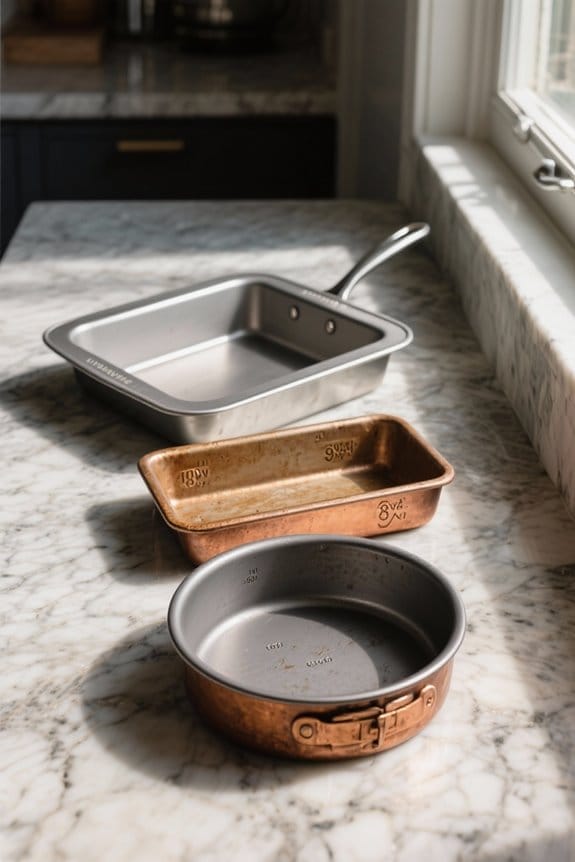
Baking pans come in various sizes, each serving specific purposes in the kitchen. The 10 x 15 sheet pan, also known as a jelly roll pan, is perfect for sheet cakes and cookie bars. It features raised edges to contain batters. The 9 x 9 square cake pan is useful for brownies and small cakes. Its shape makes portioning easy. A 9 x 5 loaf pan is standard for quick breads and pound cakes. This size pan allows for proper rising. Common baking tasks depend heavily on selecting the correct pan size. Additionally, different materials like metal, glass, or silicone can affect baking time and results. Choosing the right pan might enhance the overall texture of baked goods considerably. Using a bread baking cloche can trap steam and heat, creating perfectly crusty loaves with even heat distribution.
Recommended Products
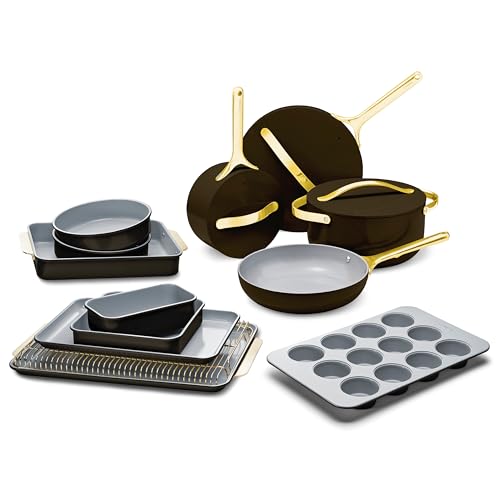
COMPLETE KITCHENWARE SET: Includes 23-piece cookware with 10.5” frying pan, 3 qt saucepan, 6.5 qt Dutch oven, 4.5 qt sauté pan, 3 lids, magnetic pan racks, canvas lid holder, baking sheets, muffin pan, loaf pan, cooling rack, and storage organizers.
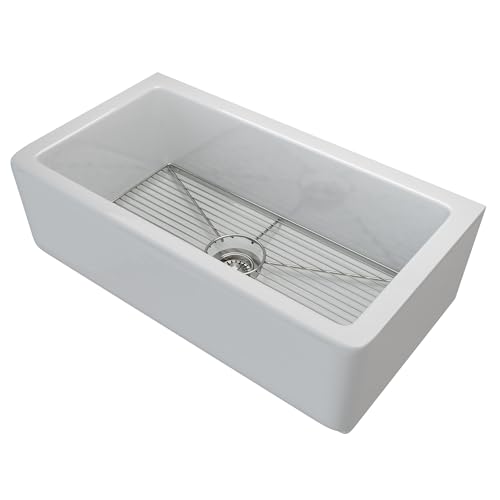
OUTER SINK DIMENSIONS: 33 in. L x 18 1/4 in. W x 10 in. D – BOWL DIMENSIONS: 30 1/4 in. L x 15 1/2 in. W x 8 7/8 in. D – Minimum Cabinet Size: 33 in. – INCLUDED STAINLESS STEEL BOTTOM GRID with soft rubber bumpers safeguards the surface of your sink

✅ Right hand installation only
Adapting Baking Times and Temperatures
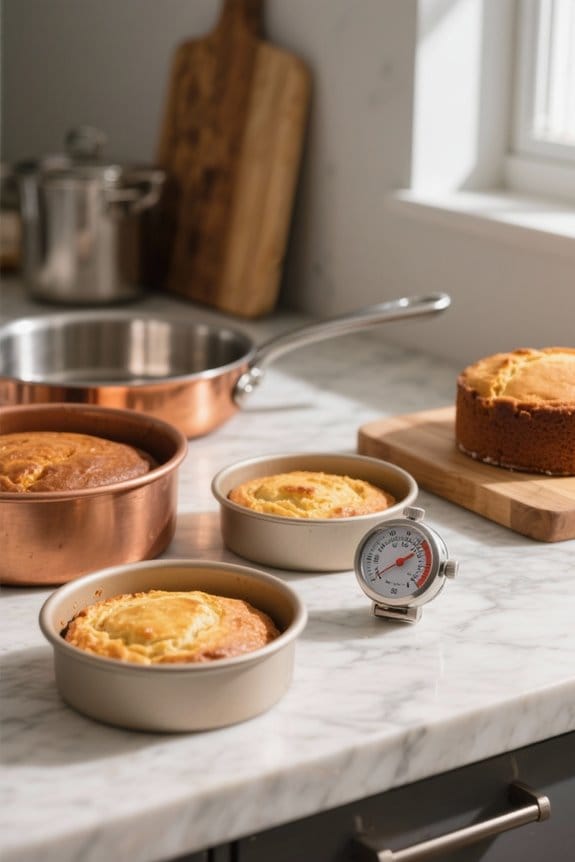
Selecting an appropriate baking pan size is just the beginning of achieving successful results in the kitchen. Different pan sizes require adjustments in baking times and temperatures. Thicker batters in deeper pans cook unevenly if not given longer baking times and lower temperatures. A good rule is to reduce the baking temperature by 25°F (15°C) for larger cakes. Conversely, thinner batters in shallower pans cook quickly at higher temperatures. These need careful attention to avoid overbaking. It is essential to closely monitor recommended baking times, as these can vary greatly with pan dimensions. Durable materials like aluminized steel prevent warping and enhance baking performance. Always test for doneness using a toothpick or cake tester, starting at the lower end of the baking time. This guarantees the batter is perfectly cooked.
The Role of Pan Material in Baking
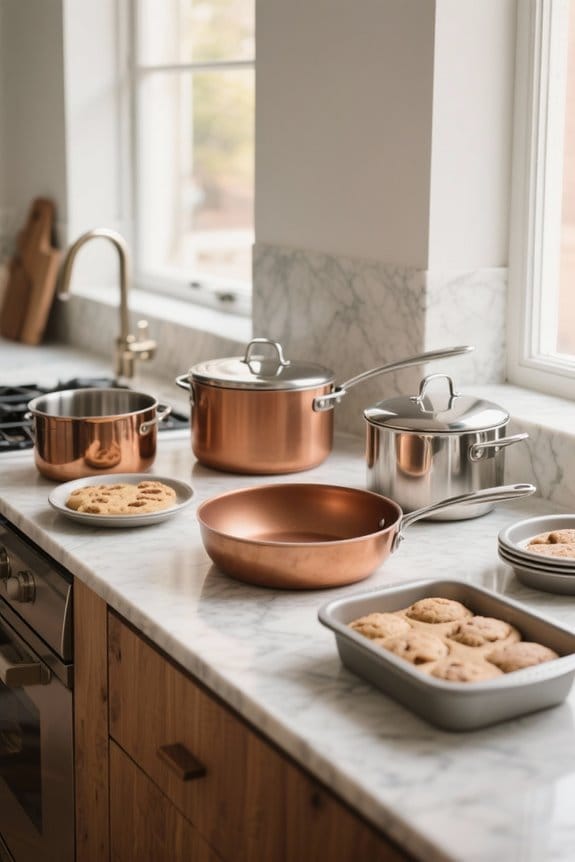
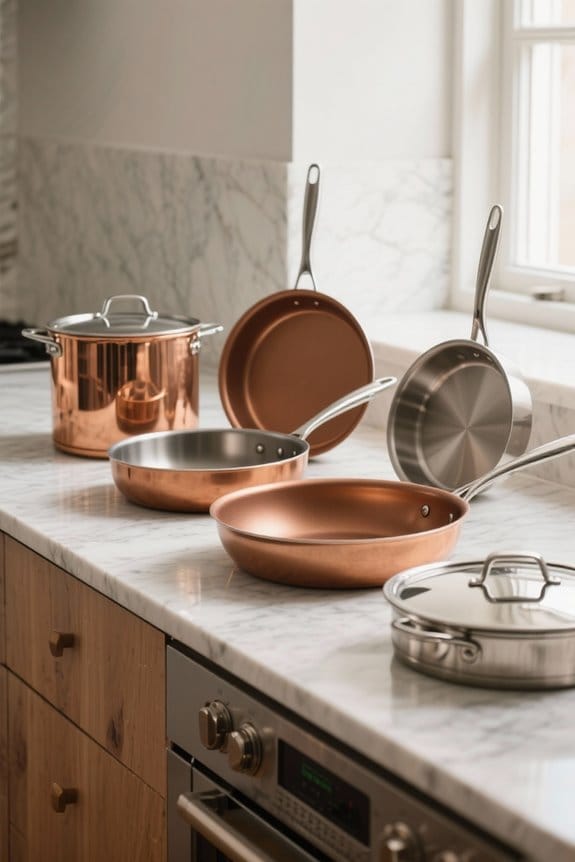
Choosing the right pan material is essential for successful baking outcomes. Metal pans are efficient heat conductors, leading to evenly baked goods and well-browned crusts. In contrast, glass pans retain heat, requiring longer baking times to achieve similar results. Silicone pans offer flexibility and non-stick properties but may result in less browning and longer baking times as well. The moisture retention differs by material too; metal pans tend to produce drier edges, while glass and silicone keep baked goods moist and tender. Bakers should consider pan size and material together, as both influence baking time and temperature settings, ultimately determining the texture and quality of the final product. Additionally, heavy gauge construction ensures durability and even heat distribution, which is vital for achieving consistent results in baking.
Recommended Products

Premium Construction: Crafted from 18-gauge stainless steel with a hand-hammered surface that softens reflections and helps disguise everyday wear

Pullout Kitchen Shelves: Revolutionize the way you organize your kitchen base cabinets with the 2-tier blind corner organizer rack
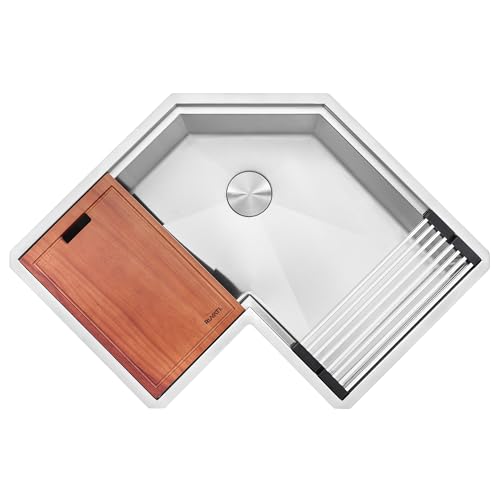
WORKSTATION SINK: Ledges on the front and back provide a track for the included accessories | LEDGEFIT: Sink is compatible with 40+ optional LedgeFit accessories that are interchangeable between different Ruvati workstation sinks, giving you endless kitchen customization options, now and into the future | UNIQUE INSTALLATION: Unique design allows you to install the sink either in-line with the cabinet or on the corner of an island.
Strategies for Successful Large Cakes
Large cakes present unique challenges that require attention to detail for best results. To achieve even baking, it is recommended to lower the baking temperature by 25°F (15°C). This adjustment helps maintain proper texture throughout the cake. For cakes larger than 12 inches, using a heat core can enhance baking efficiency and guarantee even heat distribution. Increasing flour content and adding an extra egg can improve structure and prevent a gummy texture. It is essential to monitor baking times closely, as larger cakes may require appreciably longer cook time than standard-sized recipes. Proper adjustments will prevent uneven baking and guarantee a successful outcome in large cake preparations. When preparing large batches, consider using durable aluminum stock pots for consistent and even heat distribution, which can aid in maintaining the desired cake structure.
Recommended Products

[High Speed RAM And Enormous Space] 32GB high-bandwidth RAM to smoothly run multiple applications and browser tabs all at once; 1TB PCIe NVMe M.2 Solid State Drive allows to fast bootup and data transfer

Intel Nuc Nuc6i5syh Desktop Computer - Intel Core I5 (6th Gen) I5-6260u 1.80 Ghz - Mini Pc - Ddr4 Sdram Ram - Intel Iris Graphics 540 - Ddr4 Sdram Graphics - Wireless Lan - Bluetooth - Hdmi - 6 X Total Number Of Usb Port(s) - 2 X Usb 2.0 Port(s) - 4 X Usb 3.0 Port(s)

Compatibility: Engineered to fit Ford F-250, F-350, F-450, and F-550 2008-2010 models equipped with the 6.4L Powerstroke engine for a straightforward installation
Modifications for Specialty and Unconventional Pans
Baking in specialty and unconventional pans requires specific adjustments to achieve ideal results. Specialty pans, such as bundt or heart-shaped ones, alter heat distribution. This often necessitates adjustments in baking time for even cooking. Unconventional pans, like silicone molds, usually hold heat longer, requiring extensions in baking time compared to metal pans. Springform and tart pans may need added support for crusts and adjustments in recipe ratios, especially with wet batters. Since specialty pans can vary notably in size, measuring their volume is vital. Accurate ingredient adjustments based on the recipe’s original pan size will enhance outcomes. Careful monitoring for doneness is essential when using these unique shapes to guarantee successful baking results. When using air fryer pans, ensure that the non-stick coating is protected during cleaning to maintain its functionality and longevity.
Tips for Perfect Baking Every Time
Achieving perfect baking outcomes requires attention to various factors beyond just following a recipe. Always fill pans half to two-thirds full to prevent overflow. Adjust baking times based on pan size; larger pans often need longer baking times at lowered temperatures. For smaller pans, decrease time while increasing temperature. When using a larger pan, increase ingredients by about 25% to maintain batter thickness. As baking time approaches, monitor closely and test for doneness with a toothpick. This helps avoid overbaking, which can result in dryness. For even baking, consider using baking strips around pans. These strips regulate temperature and reduce the risk of doming or overcooked edges, allowing cakes to bake well. For optimal results, stainless steel baking sheets are recommended because they provide even heat distribution and are resistant to warping under high heat.
Managing Excess Batter and Alternative Baking Methods
Managing excess batter is a common challenge for bakers. When a recipe’s batter exceeds the capacity of the chosen pan size, utilizing the excess for cupcakes is an effective solution. Cupcakes allow for versatile portioning and generally bake faster than larger cakes. Fill cupcake liners immediately to achieve ideal dome shapes and maintain leavening properties. For freshness, refrigerate leftover batter while the main cake is in the oven. Adjust baking time for cupcakes based on their size, typically starting to check for doneness around 10-12 minutes. It is important to remember that the leavening properties in cupcakes may differ from those in cakes, so minor ingredient or baking time adjustments may be necessary for best results. Nonstick surfaces ensure easy cupcake release, which is essential for maintaining the integrity of the cupcakes during removal from the pan.
Frequently Asked Questions
Does Pan Size Matter When Baking?
Yes, pan size matters when baking. Variations in pan depth influence baking temperature, altering cooking time. Additionally, changes to pan size necessitate recipe scaling to achieve consistent cake texture and avoid uneven baking results.
How Do You Adjust Baking Times for Different Pan Sizes?
When adjusting baking times, one should reduce or increase durations by about 10-25% based on pan volume impact. Baking conversion tips often include temperature adjustments for thickness versus baking time, ensuring successful recipe scaling methods.
What Is the 1234 Rule in Baking?
The 1:2:3:4 rule in baking establishes fundamental baking ratios, influencing cake textures, cookie shapes, bread volume, and muffin density. This balanced ratio guarantees consistent results and serves as a versatile foundation for countless baking endeavors.
What Happens if the Size of Pan Used Is Too Large?
What occurs when a pan is too large? Cake texture changes, ingredient ratios become insufficient, and cooking time variations may lead to uneven baking. Recipe success rates decline unless baking temperature adjustments are made accordingly.