As an Amazon Associate, we earn from qualifying purchases. Some links on this site are affiliate links at no extra cost to you. Our recommendations are based on thorough research and editorial judgment.

The Evolution of Nonstick Coating Technology

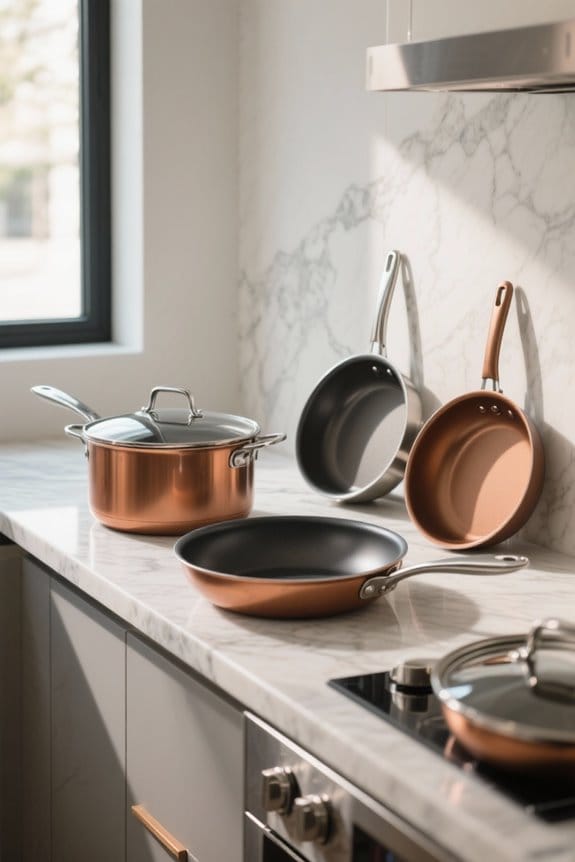
Nonstick coating technology has evolved since the discovery of PTFE in 1938. PTFE offers a low friction surface, enhancing cooking performance. In the 1970s, colorful exterior finishes emerged, followed by improved interior colors in the late 1990s. Today, alternatives like ceramic and diamond-reinforced coatings provide high-temperature resistance and durability. The focus now includes PFOA-free products and sustainable materials. Consumers can explore various options for effective and safe cooking surfaces. More insights are available on this topic.
Key Takeaways
- Nonstick cooking technology began in 1938 with the discovery of PTFE, revolutionizing cookware with its low-friction properties.
- Tefal introduced the first commercial nonstick cookware in 1956, making nonstick cooking accessible to households.
- Concerns over PFOA in the production of Teflon prompted a shift toward PFOA-free alternatives like ceramic coatings in the 1970s.
- The late 20th century saw advancements with vibrant colors and textures, improving both aesthetics and functionality in nonstick cookware.
- Future trends indicate a push for eco-friendly, durable coatings, exploring hybrid solutions and recyclable materials in nonstick cookware production.
The Historical Development of Nonstick Cookware
You may be interested


The historical development of nonstick cookware began with a significant accident. In 1938, Roy Plunkett discovered polytetrafluoroethylene (PTFE), which became the foundation of non-stick technology. The first commercial product using PTFE was introduced in 1956 by Marc Gregoire, marking the start of Tefal cookware. By the 1960s, PTFE received FDA approval, facilitating its common use in households. However, concerns about PFOA, a chemical linked to Teflon production, emerged during the 1970s and 1980s. This led to the rise of alternative options, including ceramic coatings, that are PFOA free. Today, ceramic nonstick cookware offers an eco-friendly option, often utilizing natural materials that reduce harmful emissions. The history of nonstick cookware includes a variety of materials, all designed to enhance cooking performance and provide the desirable non-stick characteristics sought by consumers.
Recommended Products

Exceptionally crafted, our stainless-steel cook-set with a copper core offers versatility, durability and optimal cooking performance to fuel your passion for cooking, for years to come

7-piece cookware set.
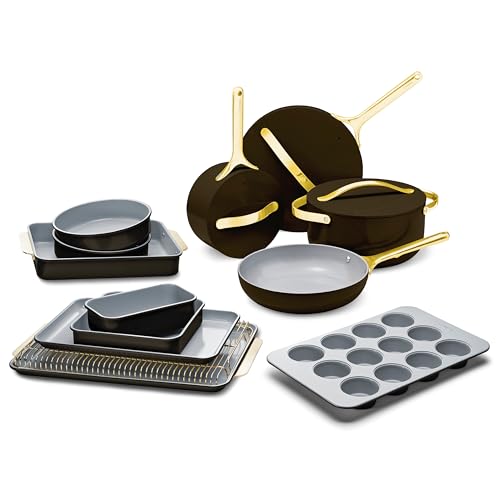
COMPLETE KITCHENWARE SET: Includes 23-piece cookware with 10.5” frying pan, 3 qt saucepan, 6.5 qt Dutch oven, 4.5 qt sauté pan, 3 lids, magnetic pan racks, canvas lid holder, baking sheets, muffin pan, loaf pan, cooling rack, and storage organizers.
Key Properties of PTFE Coatings
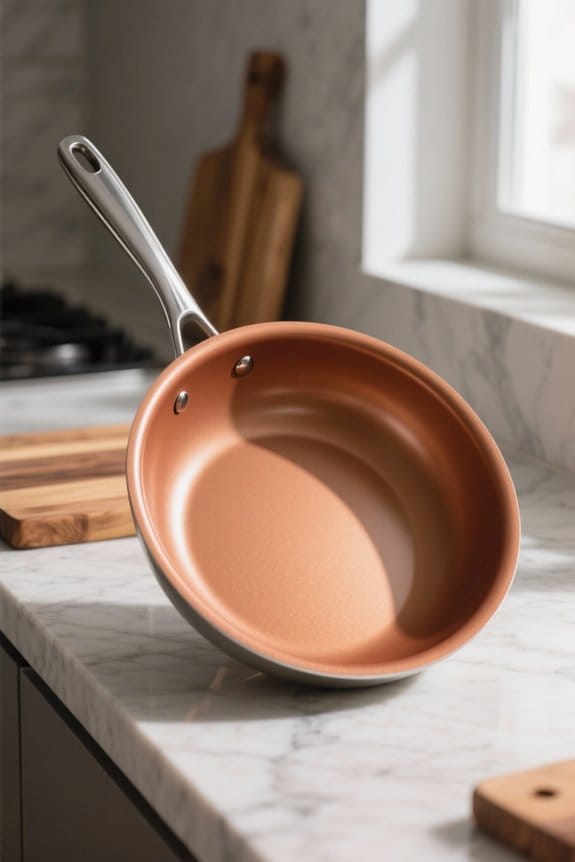
Often referred to as a game changer in cookware, polytetrafluoroethylene (PTFE) coatings provide significant advantages in everyday cooking. PTFE non-stick coatings feature an extremely low coefficient of friction. This design effectively prevents food from sticking, ensuring excellent non-stick performance. In addition, these coatings offer superior abrasion resistance, extending their lifespan and maintaining their effectiveness. Manufacturers began incorporating advanced coating technology that enhances the adhesion and durability of PTFE. Modern PTFE coatings are also resistant to high temperatures, making them suitable for various cooking methods. Moreover, these products are typically non-toxic and retain their nonstick characteristics over time. Their versatility extends beyond cookware, as they are also applicable in other fields like aerospace and machinery. A new sentence with PFOA-free and the rest of the sentence, ensuring safety and meeting international standards in nonstick cookware.
Recommended Products

Enjoy professional cooking with this 14 piece cookware set which includes 10 inch and 12 inch Fry Pans, 2 Quart and 3 Quart covered Sauce Pans, 3 Quart and 6 Quart covered Sauté Pans, 12 inch covered chef’s pan and an 8 quart covered stockpot

Durable resistium non-stick coating
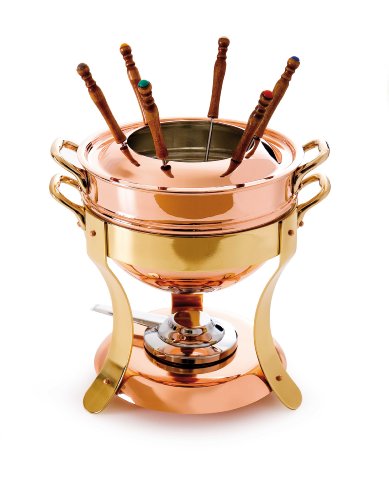
Attractive fondue pot with brass stand, copper lid, and 8 fondue forks
Advancements in Nonstick Coatings: 1970s to Present
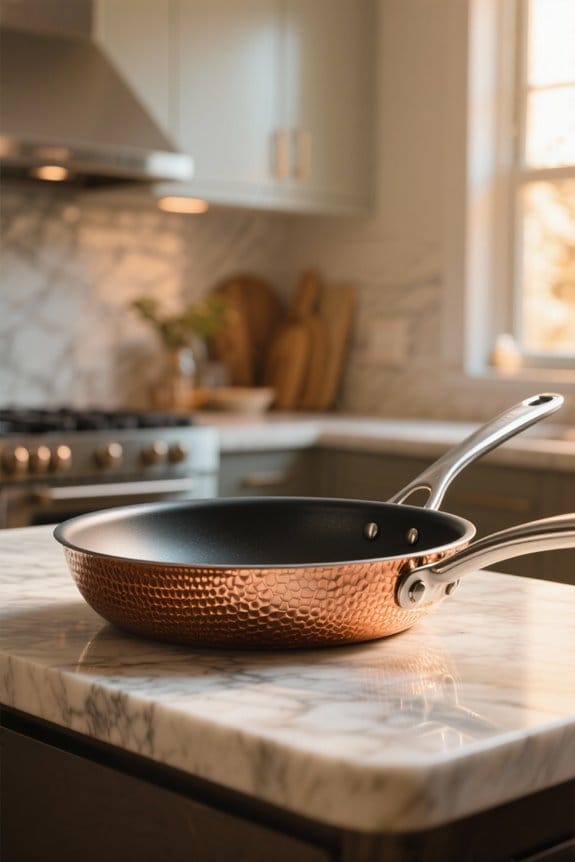
Significant advancements in nonstick coatings have evolved from the 1970s to the present. In the 1970s and 1980s, colorful exterior finishes appeared, emphasizing aesthetics over functionality. The late 1990s and early 2000s introduced vibrant interior colors, improving the performance of non-stick pans. Ceramic coatings emerged in the early 2000s, known for their high-temperature resistance and attractive colors. By the 2010s, non-stick coatings featured spattered and textured finishes, enhancing both durability and visual appeal. These advancements also complied with food-contact safety regulations. Today, consumers can choose from various materials, including PTFE coatings and ceramic options. Each offers unique cooking benefits and enhances the user experience, making modern nonstick technology versatile and efficient.
Recommended Products

HexClad’s patented Hybrid technology features a laser-etched hexagonal nonstick surface that combines both stainless-steel and our TerraBond ceramic coating for the ultimate sear and easy cleaning.
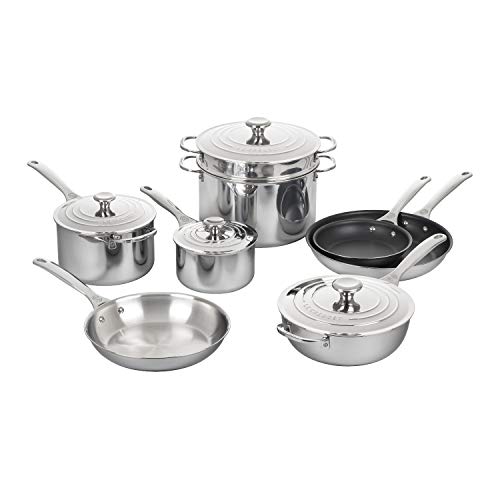
Triple layer construction with a full aluminum core from base to rim for superior heat distribution
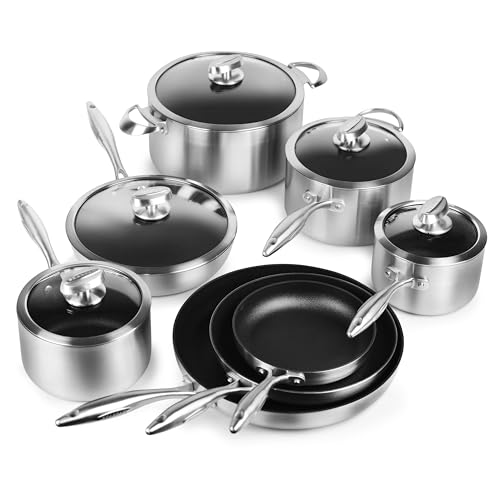
Scanpan CX+ Cookware Set includes 8" Fry Pan, 10.25" Fry Pan, 12.5" Fry Pan, 2-quart (6.5") Saucepan with Lid, 2.5-quart (10.5") Saute Pan with Lid, 2.75-quart (7.5") Saucepan with Lid, 4-quart (8") Saucepan with Lid & 7.5-quart (10.5") Dutch Oven with Lid
Alternatives to PTFE: Ceramic and Diamond-Reinforced Coatings
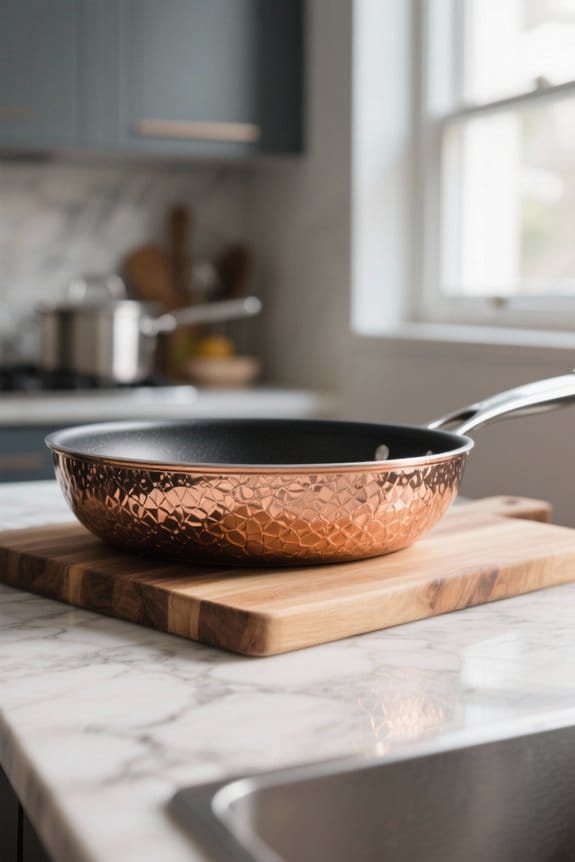
As consumers seek safer alternatives to traditional nonstick options, ceramic and diamond-reinforced coatings have gained attention. Ceramic non-stick coatings use inorganic materials like silica and offer high-temperature resistance. They are free from harmful chemicals commonly associated with PTFE, such as PFOA. Ceramic coatings provide a wide color palette, adding visual appeal to cookware. They do require more oil for effective nonstick performance but handle various cooking methods. Diamond-reinforced coatings incorporate diamond particles to enhance durability and scratch resistance. Both options are part of a growing trend toward environmentally friendly cookware. They maintain nonstick properties without relying on fluoropolymers, making them a practical choice for health-conscious consumers. Many ceramic frying pans, like the SENSARTE and CAROTE models, are designed with ergonomic handles to enhance comfort and safety during cooking.
Recommended Products

Healthy Cookware: PFAS-Free

22 PIECE SET: Includes 8” and 9.5” frying pans; 11” frying pan with lid; 11” grill pan with lid; 11” chef’s pan with lid; 11” square griddle pan; 1.5qt and 3.25qt saucepans with lids; 3.25qt sauté pan with lid; 5.4qt and 7.8qt stock pots with lids; small, medium, and large pan protectors.
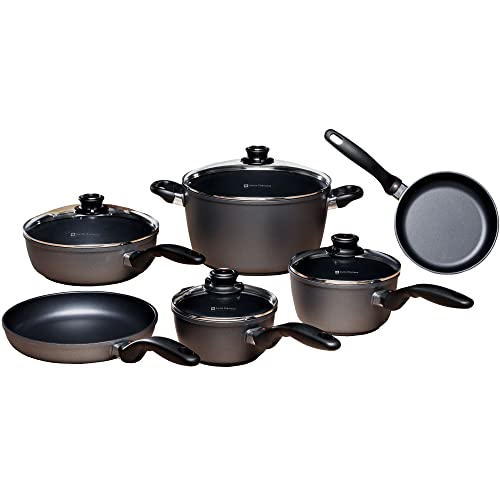
Effortlessly cook your favorite meals with this pots and pans set. Non stick cookware made in Switzerland and designed for easy cleanup and even cooking results.
The Impact of Nonstick Cookware on Modern Cooking
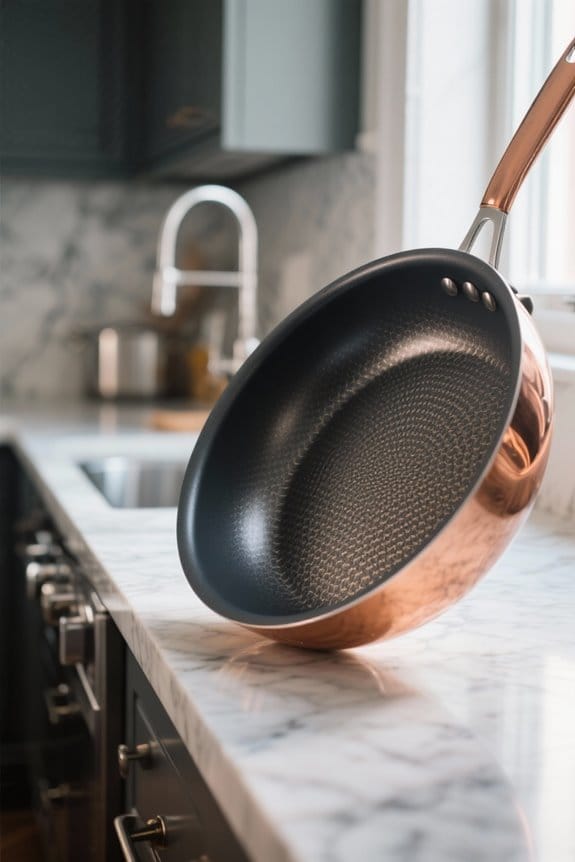
Nonstick cookware has transformed how people approach cooking in modern kitchens. This type of cookware simplifies meal preparation by allowing food to be cooked with minimal oil. This leads to healthier meal preparation and reduced cleanup time. The introduction of PTFE in nonstick coatings provided easy food release, maintaining the flavor of ingredients. Modern advancements have introduced enhanced durability in coatings like ceramic or diamond-reinforced finishes, extending the lifespan of nonstick cookware. Currently, nonstick options represent approximately 75% of all cookware sold, signifying their importance. Additionally, the development of PFOA-free coatings responds to consumer health concerns. The combination of functionality and safer materials makes nonstick cookware a staple in today’s culinary environment. Heavy-gauge construction ensures even heat distribution, which is crucial for achieving consistent cooking results and avoiding hot spots.
Recommended Products

Composition: 1 frying pan 24 cm, 1 frying pan 28 cm, 1 saucepan 20 cm, 1 saucepan 24 cm, 1 saucepan 28 cm, 3 saucepans 16 – 18 – 20 cm, 1 grill pan 24 cm, 1 frying pan 28 cm, 1 wok 32 cm, 5 glass lids with anti-fog valve, 7 removable handles, 4 pairs of silicone handles + 1 set of T

16-PIECE DELUXE COOKWARE SET: Included in this 16-piece cookware set is a 10.5" frying pan, 3 qt. sauce pan with lid, 6.5 qt. dutch oven with lid, 4.5 qt. sauté pan with lid, 4 modular magnetic pan racks and a canvas lid holder with hooks. Also includes Mini 8" Fry Pan, Mini 1.7qt Sauce Pan, and magnetic pan rack.
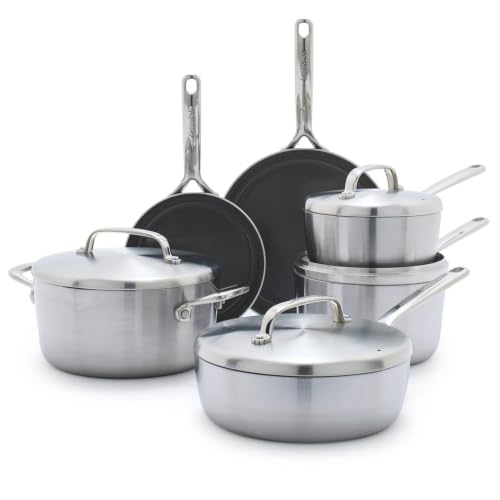
SET INCLUDES: 8” and 10” frying pan, 2.24QT and 3.25QT saucepan with lids, 5QT stock pot with lid, 3.25QT sauté pan with lid, 3 pan protectors, cleaning sponge
Future Trends in Nonstick Technology
Emerging trends in nonstick technology are shaping the future of cookware. Developers are focusing on creating nonstick cookware that is completely PFOA-free. This addresses safety and health concerns among consumers. New advances may lead to hybrid nonstick coatings. These coatings will combine ceramic and traditional PTFE properties for better performance. In addition, there is potential for temperature-sensitive nonstick surfaces. Such coatings would change color to indicate ideal cooking temperatures. Sustainability is also becoming essential. Manufacturers will likely prioritize recyclable materials** in production, promoting eco-friendly options such as those seen in CAROTE cookware. Moreover, efforts to enhance the durability of nonstick coatings** are expected. This will make them more resistant to scratches and abrasions while maintaining their nonstick qualities, ensuring long-lasting performance in the kitchen.
Frequently Asked Questions
How Was Non-Stick Coating Invented?
The invention history of non-stick coating began with early experiments by Roy Plunkett, leading to a patent for PTFE. Its unique coating materials enabled industrial applications, greatly impacting the cookware market and consumer convenience.
When Did They Stop Using Teflon in Pans?
In 2015, Teflon’s shadows began to lift under health regulations; while traditional cookware faced scratching concerns, vibrant eco-friendly options emerged. Amid Teflon’s history, consumers now find diverse alternatives, prioritizing safety and sustainable choices.
When Did People Start Using Non-Stick Pans?
Non-stick pans began being used in the 1950s, revolutionizing the history of cookware. Their benefits included easier cooking techniques and maintenance. As safety concerns emerged, alternative materials became popular, enhancing consumer confidence in their use.
What Are Nonstick Pans Coated With Now?
Nonstick pans today are coated with ceramic coatings and reinforced materials, addressing health concerns. Durable surfaces made from stainless steel and alternative materials offer effective cleaning methods, ensuring both safety and longevity in nonstick cookware.