As an Amazon Associate, we earn from qualifying purchases. Some links on this site are affiliate links at no extra cost to you. Our recommendations are based on thorough research and editorial judgment.

How Different Surfaces Affect Browning

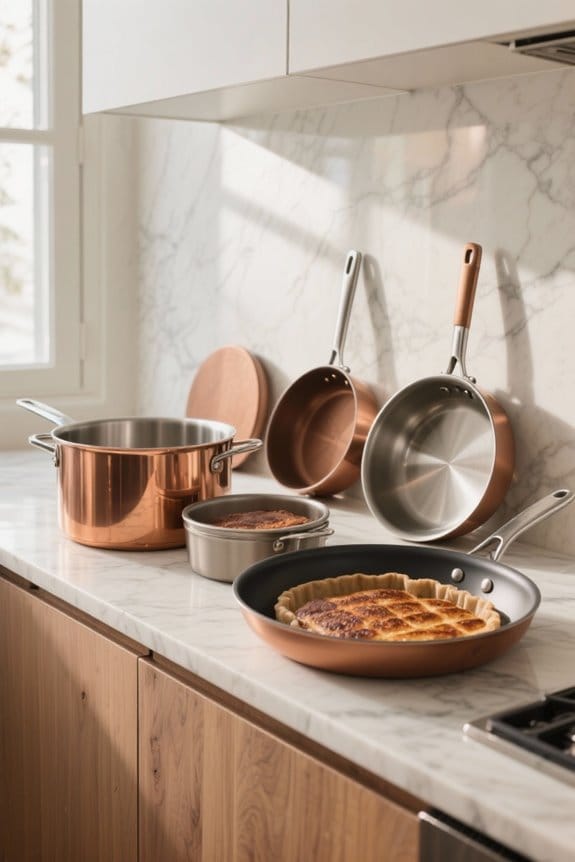
Different surfaces influence browning by affecting heat transfer and moisture evaporation. Textured surfaces enhance browning due to better heat retention and moisture evaporation. Darker pans absorb heat more effectively, promoting caramelization. Cast iron and aluminum conduct heat evenly, speeding up the Maillard reaction. In contrast, smooth and nonstick surfaces can hinder ideal browning. Understanding these factors helps in selecting appropriate cookware for better cooking results. Further insights into these effects follow.
Key Takeaways
- Textured surfaces enhance heat retention and moisture evaporation, leading to superior browning compared to smooth surfaces.
- Darker cooking surfaces absorb heat better, promoting effective caramelization and browning during cooking.
- Materials like cast iron and aluminum provide high heat conduction, facilitating faster and more even browning outcomes.
- Rough surface textures improve moisture evaporation, concentrating flavors and aiding in crust formation for better browning.
- Higher surface temperatures, achieved by preheating cookware, are essential for initiating the Maillard reaction, crucial for effective browning.
The Science of Surface Texture and Browning
You may be interested


When cooking, the surface texture plays an important role in the browning of food. Textured surfaces, like grill grates, facilitate the Maillard reaction, which is essential for desired browning. Rough surfaces improve heat retention and moisture evaporation, enhancing the overall browning effect. In contrast, smooth surfaces may hinder these processes, leading to less effective browning. Cooking on porous materials, such as stone or uncoated metal, offers better moisture absorption and evaporation. This promotes the Maillard reaction greatly. Non-stick surfaces limit heat retention and moisture evaporation, which reduces browning. Additionally, darker cooking surfaces are more effective at absorbing heat. This absorption can lead to more extensive caramelization and enhanced flavors compared to lighter materials. High-quality ceramic pie plates are known for their ability to promote even heat distribution, which can improve browning and result in perfect pies every time.
The Role of Material Composition in Heat Transfer
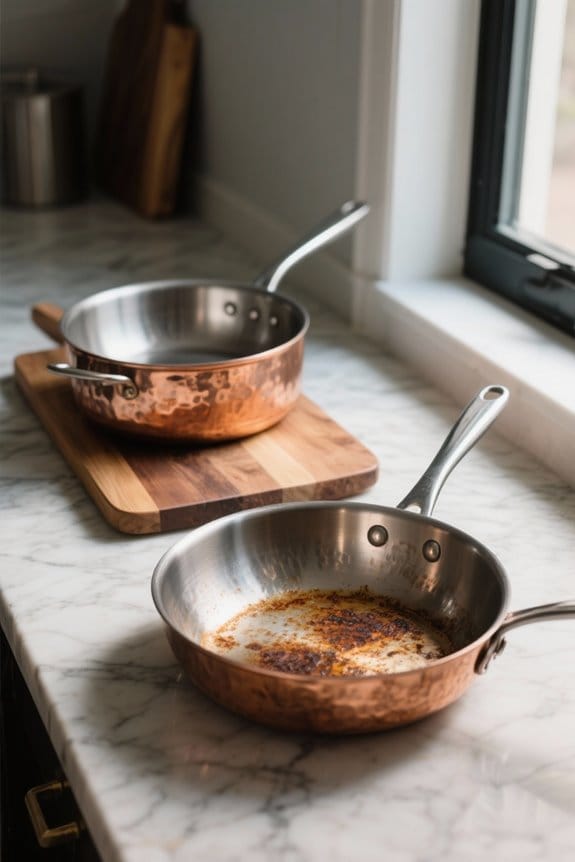
Material composition plays a crucial role in heat transfer during cooking. Different materials conduct heat at varying rates, affecting browning reactions. For instance, cast iron, with high heat conduction, promotes faster and more even browning compared to stainless steel. Aluminum offers quick and uniform heating, enhancing the Maillard reaction effectively. In contrast, ceramic surfaces may distribute heat less evenly, resulting in slower browning. Nonstick coatings can inhibit effective searing by preventing the necessary temperatures for optimum Maillard reactions. The choice of cookware materials greatly determines cooking times and overall results. Selecting the right material, such as those with efficient heat distribution, is essential for achieving desirable browning in food, optimizing both heat transfer and flavor development through precise craftsmanship.
Impact of Surface Roughness on Moisture Evaporation
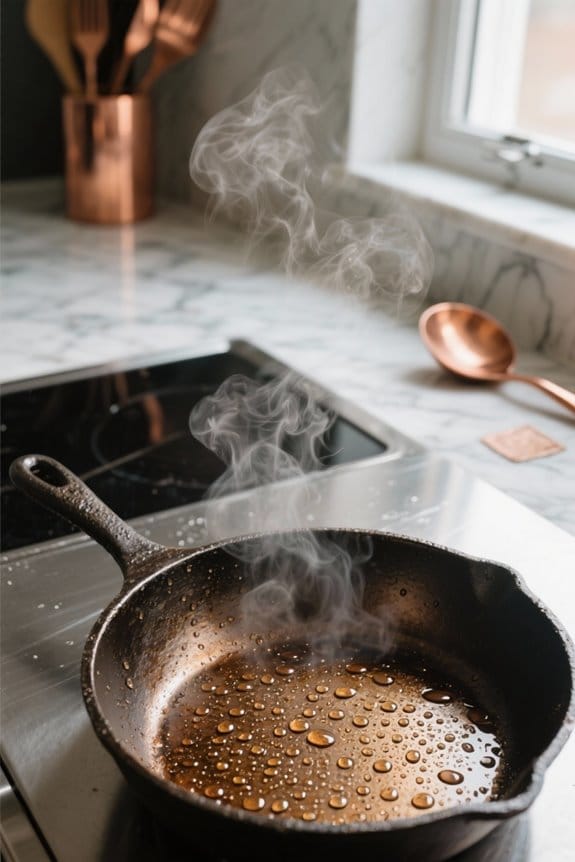
Surface roughness plays a crucial role in moisture evaporation during cooking. Rough cooking surfaces, such as cast iron or certain stainless steels, help moisture escape more efficiently. This enhanced moisture evaporation promotes better browning and activates the Maillard reaction. Studies show that increasing surface roughness can lead to a 20% increase in moisture loss. As moisture evaporates, it allows for the formation of flavorful crusts on foods. Higher evaporation rates concentrate flavors, resulting in a better caramelized appearance. Cookware with rough textures generally produces superior browning effects and improves overall cooking performance. For ideal results, selecting cooking surfaces that enhance surface roughness can greatly influence the quality of the final dish. A cast iron skillet’s heat retention and even distribution play a significant role in achieving optimal browning and cooking performance.
Recommended Products

Enamelled cast iron cocotte, ideal for one-pot dishes and roasts, to serve 4-5 people

Oven Stove Combo - 2 in 1 design, with three burner stoves(8,000 BTU+6500*2 BTU) and one oven(7,100 BTU). Achieve infinite cooking in a compact kitchen

SMOOTHER & LIGHTER: Field Company cast iron is machine polished using modern methods to replicate the lighter, smoother cast iron pieces produced during the golden age of vintage American cast iron. We dialed in the perfect weight to easily maneuver around the stovetop, oven, and grill, while retaining the heft needed for high-heat searing
How Heat Conduction Varies Across Different Cookware
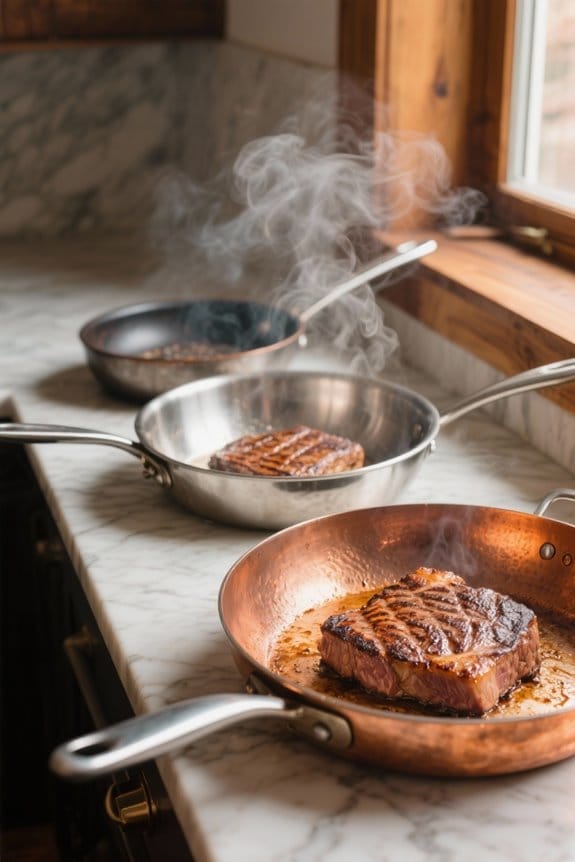
Heat conduction can greatly impact cooking outcomes, especially regarding browning. Different cookware materials offer varying levels of heat conduction. Metals like copper and aluminum conduct heat efficiently, which promotes faster browning. In contrast, ceramics and glass transfer heat less effectively. Cookware with thick bases, such as cast iron, retains heat longer and encourages even browning. However, thinner pans may create hot spots that lead to uneven results. Non-stick surfaces require lower cooking temperatures, often reducing the Maillard reaction’s intensity and limiting browning. Additionally, surface texture affects browning; rougher surfaces enhance the Maillard reaction by providing better food contact. Finally, cookware materials influence moisture loss, with well-seasoned cast iron helping improve overall browning outcomes. Reinforced handles in cookware like those found in Winco pots facilitate easy lifting, which aids in maintaining stability during the cooking process.
Recommended Products

Enameled cast iron delivers superior heat distribution and retention

Enameled cast iron delivers superior heat distribution and retention; Ready to use, requires no seasoning

Enameled cast iron delivers superior heat distribution and retention
The Effect of Color and Finish on Cooking Outcomes
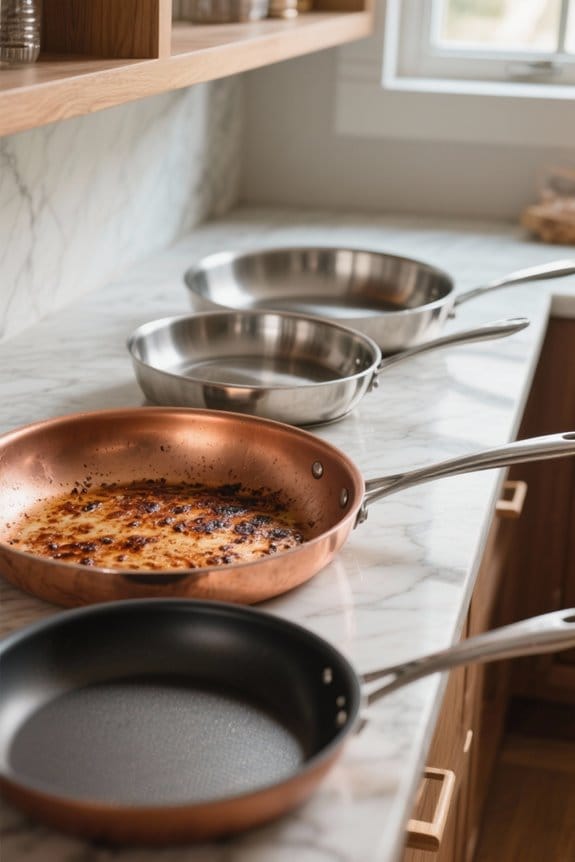
Cooking outcomes can be greatly influenced by the color and finish of cookware. Darker pans absorb more heat, enhancing browning potential. This is vital for achieving the desired Maillard reaction in foods. In contrast, shiny or light surfaces reflect heat, which can slow down browning. Non-stick finishes can also create barriers that reduce direct contact between food and the surface, affecting browning efficiency. Material composition plays an essential role as well; for instance, cast iron excels in heat retention and uniform browning, unlike stainless steel. Textured cooking surfaces improve airflow, contributing to better browning. Food technology research shows that material choice can also impact acrylamide formation during browning, influencing both flavor and safety. Stoneware baking dishes are widely recommended for their excellent heat retention capabilities, making them ideal for consistent cooking and enhancing browning.
Comparing Non-Stick vs. Traditional Cooking Surfaces
When evaluating non-stick and traditional cooking surfaces, clear differences emerge in their performance. Non-stick surfaces typically require lower temperatures for initial browning, which can inhibit the Maillard reaction. In contrast, traditional surfaces like cast iron or stainless steel excel at achieving deep browning and crust formation. They maintain higher temperatures, enhancing flavor through the Maillard reaction. Foods prepared on non-stick surfaces may have less surface dehydration, resulting in subdued browning effects. Conversely, traditional surfaces optimize moisture removal, creating ideal conditions for browning. Testing shows that meats and bread cooked on traditional surfaces yield more complex flavors and aromas. Cast iron skillets are particularly valued for their exceptional durability and heat retention, which contribute to their effectiveness in browning. Thus, the choice of cooking surface greatly impacts the quality and efficiency of browning in food preparation.
Recommended Products

This All-Clad HA1 Hard Anodized Nonstick cookware set includes 8 inch, 10 inch, and 12 inch Fry Pans, 2 quart and 3 quart covered Sauce Pans, 4 quart covered Sauté Pan, 4 quart covered Soup Pot, and 8 quart covered Stockpot

Set includes 4.2QT/4L cocotte, 3QT/2.9L braiser, 9.5”/24cm skillet and a lid that fits each piece of cookware

Enameled cast iron delivers superior heat distribution and retention
The Influence of Cooking Methods on Browning
Various cooking methods greatly affect browning in food preparation. Dry heat methods, such as grilling and roasting, promote the Maillard reaction effectively. These methods achieve high temperatures, essential for the browning process. When temperatures exceed 212°F, moisture evaporates quickly from the food’s surface. This quality enhances browning while preventing unappetizing textures. Techniques like searing accelerate surface temperatures, allowing meat to brown while keeping its interior moist. Additionally, using materials such as cast iron or stainless steel improves heat retention and distribution. This ideal heat management creates favorable conditions for developing rich flavors and appealing colors. In contrast, moist heat methods like boiling or steaming slow the browning process and yield less complex results. Moreover, the use of aluminum disc layer in cookware provides even and rapid temperature distribution, enhancing the efficiency of the browning process.
Exploring Surface Area and Its Relation to Browning
Surface area plays a significant role in the browning of food. A larger surface area facilitates a quicker Maillard reaction, leading to more pronounced browning. Cooking methods such as cutting, grating, or searing maximize surface area and enhance this reaction. Food products with a high surface-to-volume ratio, like thinly sliced meats or shredded vegetables, exhibit better browning. This occurs due to increased moisture evaporation and heating efficiency. Texture also matters; a drier surface promotes better browning rates compared to a moist one. Additionally, surface characteristics like roughness can influence browning outcomes. Rough surfaces may trap more air and heat, enhancing desirable browning effects. Understanding these factors can improve cooking results and flavor in various dishes. For optimal browning and baking results, using quality nonstick coatings in baking pans can enhance cooking efficiency and simplify cleanup.
How Surface Temperature Affects the Maillard Reaction
How does surface temperature impact the Maillard reaction? Surface temperature is essential for starting the Maillard reaction, which requires temperatures above 212°F (100°C) for effective browning. Ideal conditions exist between 280°F and 330°F. At these high heat levels, the Maillard reaction creates rich flavors and aromas. High temperatures also help evaporate moisture, enabling the reaction to work efficiently. Different cooking techniques play a significant role in achieving these temperatures. Grilling or roasting maintains higher surface temperatures than boiling, resulting in more pronounced browning. In addition, the material of the cooking surface affects performance. Metal surfaces heat quickly and evenly, leading to better browning than non-stick or ceramic options. Understanding these factors enhances cooking outcomes. Anodized pans are ideal for browning and searing foods, as they can handle high heat better and provide even heat distribution.
Recommended Products

Includes - One 8.5″ and 11″ Skillet, one 1.5qt and 3qt Saucepan with lids, one 3.5qt Sauté pan with lid, and a 6qt stockpot with lid. Handcrafted in Italy with a lifetime warranty; hand-wash and dry with a soft cloth.
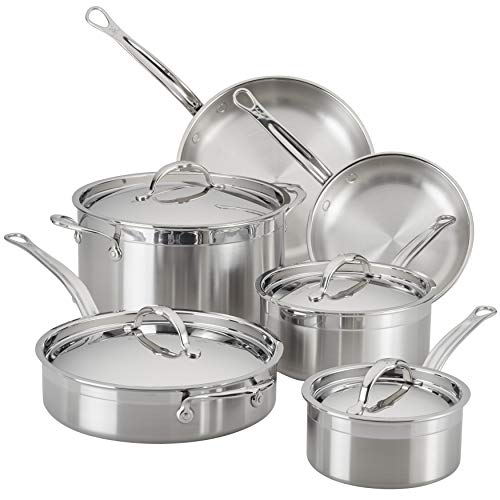
PROCORE ALUMINUM: ProBond Forged Professional Clad Stainless Steel pots and pans are handcrafted in Italy and feature a tri-ply body with a responsive pure aluminum core for optimum performance, maximum durability, and fast, even heat distribution

The All-Clad HA1 Expert Hard Anodized Nonstick cookware set includes a 8, 10 and 12 inch fry pan, 2.5 quart and 3.5 quart saucepan with lids, 4 quart sauté pan with lid, 4 quart soup pot with lid, and 8 quart stockpot with lid.
Understanding the Importance of Surface Protection
Protecting food surfaces is key to managing browning, especially in fruits and vegetables. Surface protection plays an important role in limiting oxygen access. This limitation reduces enzymatic browning, which is a common issue. Applying protective coatings like edible films or wax can help slow down browning rates. These coatings create barriers against moisture and oxygen. Using antioxidants, such as ascorbic acid, on cut fruits can inhibit polyphenol oxidase activity. Certain cooking surfaces, especially non-stick pans, facilitate better heat distribution and moisture retention. These features positively impact browning reactions while minimizing undesired effects. Additionally, choosing the right food packaging, like modified atmosphere packaging, can alter oxygen levels. This choice greatly affects browning rates and prolongs shelf life. Many granite frying pans provide eco-friendly nonstick coatings that are typically PFOA and PFOS-free for safer cooking.
The Chemistry Behind Browning Reactions
Browning reactions are influenced by the food’s interaction with its cooking surface. The Maillard reaction plays a key role in developing flavors and colors. Surface properties such as texture and heat conductivity determine how quickly surfaces heat up. Different materials, like cast iron or stainless steel, retain heat variably, affecting moisture evaporation rates. Non-stick surfaces can hinder browning by reducing heat transfer to proteins and sugars. This limits the development of rich flavors. Additionally, the surface area in contact with heat is essential. Thinner surfaces enhance reactions by allowing quick moisture release. Furthermore, oxygen exposure from cooking methods that circulate air promotes the Maillard reaction, facilitating the oxidation of sugars and amino acids on the food surface.
Practical Tips for Choosing Cookware for Optimal Browning
Choosing the right cookware can considerably impact the browning of food. For best results, food technologists recommend using dark-colored cookware. Dark surfaces absorb heat better, enhancing the Maillard reaction. Cast iron and stainless steel are ideal choices. They retain and distribute heat evenly, allowing for higher cooking temperatures. Thicker cookware also aids in browning by preventing hot spots that can burn food. Non-stick options may hinder browning as they generally require lower temperatures. To maximize browning, it is important to preheat cookware before adding food. This practice helps reach the necessary surface temperatures for effective browning. By selecting the proper materials and ensuring even heat application, anyone can achieve better browning results in their cooking.
Recommended Products

LIVE-FIRE PIZZA OVEN – This bundle is designed for high heat. It delivers restaurant-quality pizzas with crispy crusts and even cooking. Built for durability, it’s optimized for wood and charcoal, allowing you to achieve authentic wood-fired flavor. The included pizza stones retain and distribute heat efficiently for the perfect bake.
STAINLESS STEEL: This corrosion resistant stainless steel is the defacto finish for those looking to update their kitchen style with a new appliances. With its elegant and modern appearance, stainless steel is a perfect neutral tone that can fit into almost any kitchen design. Our premium stainless steel is easy to clean and maintain.
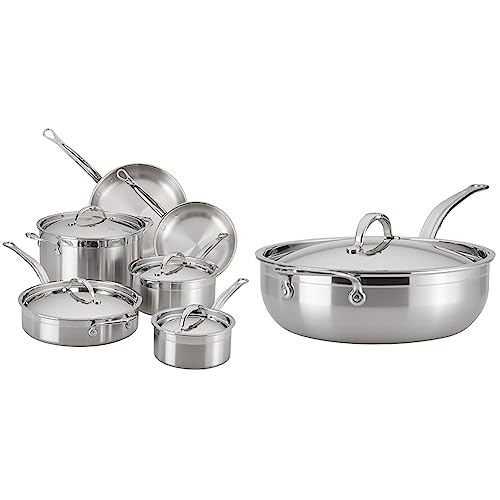
Set includes: 8.5" skillet, 11" skillet, 1.5qt saucepan with lid, 3qt saucepan with lid, 3.5qt saute pan with lid, 8qt stockpot with lid. (Hestan - ProBond Collection - Professional Clad Stainless Steel 10-Piece Ultimate Cookware Set)
Frequently Asked Questions
What Are the Factors Affecting the Browning Reaction?
“All that glitters is not gold.” Factors affecting the browning reaction include temperature control, moisture levels, ingredient quality, surface texture, and cooking time, each influencing the final color and flavor of the dish considerably.
What Factors Contribute to the Browning of the Crust?
The browning of the crust results from factors like crust temperature, surface texture, moisture content, heat distribution, and ingredient composition, all of which considerably influence the Maillard reaction and enhance flavor and texture development.
What Are the Factors That Affect the Maillard Reaction?
The Maillard reaction’s dramatic transformation hinges on precise temperature control, moisture levels, expansive surface area, ideal pH balance, and the right ingredient types. Each factor orchestrates a symphony of flavors and enchanting browning excellence.
What Conditions Promote the Browning Process?
Temperature control, low moisture levels, appropriate ingredient composition, effective surface material, and ideal cooking time are essential conditions that promote the browning process, enhancing flavor and color through the Maillard reaction during cooking.