As an Amazon Associate, we earn from qualifying purchases. Some links on this site are affiliate links at no extra cost to you. Our recommendations are based on thorough research and editorial judgment.

Why Some Metals Conduct Heat Better Than Others

Some metals conduct heat better due to their free electron count and atomic structure. Metals like silver and copper have higher free electron concentrations, allowing for efficient thermal energy transfer. In contrast, alloys and impure metals have irregular atomic structures that hinder electron movement. This results in increased collisions and lower thermal conductivity. Understanding these characteristics helps consumers choose the right metal for their needs. More insights on metal properties and their applications follow in the discussion.
Key Takeaways
- Metals with higher free electron concentrations, like silver and copper, conduct heat more efficiently due to better electron mobility.
- Purer metals have fewer atomic disruptions, allowing smoother electron flow and resulting in higher thermal conductivity.
- Well-ordered crystal structures facilitate efficient energy transfer, while irregular structures create collisions that impede electron movement.
- Alloys typically have lower thermal conductivity than pure metals because of variations in atomic arrangements that disrupt electron flow.
- Surface characteristics and material contact quality significantly influence heat conduction, affecting how heat is transferred in practical applications.
Factors Influencing Heat Conductivity in Metals
You may be interested



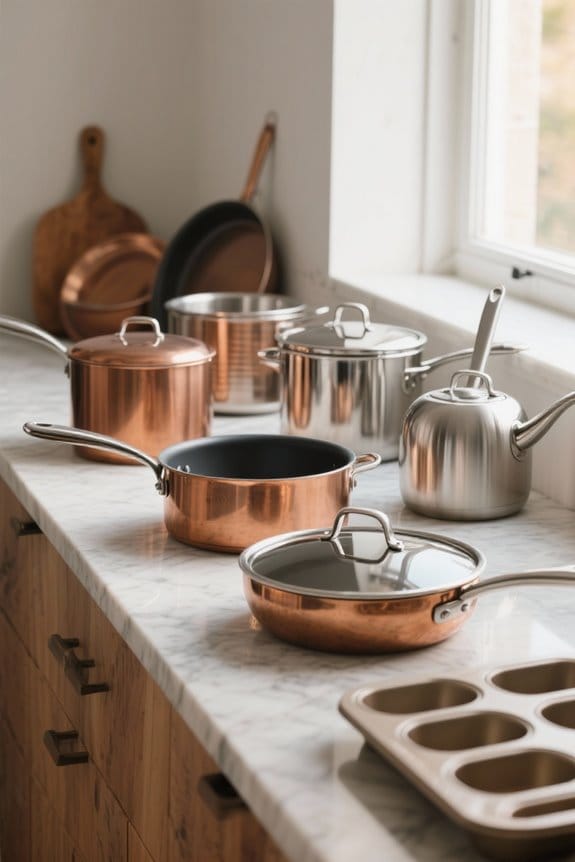
Several key factors influence heat conductivity in metals. The number of free electrons in a metal plays a critical role. Higher concentrations of free electrons lead to better thermal conductivity. For instance, purer metals like silver and copper have more freely moving electrons, enhancing their heat transfer abilities. Metal atoms are arranged in specific patterns that also affect this conductivity. A well-ordered crystal structure allows free electrons to flow smoothly. However, irregularities in the atomic structure can hinder their movement. Alloys, such as stainless steel, often have complex atomic arrangements that obstruct electron flow, resulting in lower thermal conductivity. Consequently, the arrangement of metal atoms and the presence of free electrons are pivotal in determining a metal’s heat conduction efficiency. The combination of copper and stainless steel in cookware helps achieve optimal heat retention and durability, demonstrating how material quality impacts thermal performance.
Key Metals Known for High Thermal Conductivity

Metals known for high thermal conductivity are essential in a variety of applications. Silver stands out as the best conductor, boasting a thermal conductivity of 406 W/m·K. This makes it ideal for electrical and thermal uses. Close behind is copper with 398 W/m·K, another excellent choice for practical applications. Aluminum is also significant at 237 W/m·K. Its lightweight nature and balance of conductivity make it suitable for heat exchangers and cooking utensils. Gold, with a thermal conductivity of 315 W/m·K, is favored in high-end electronics due to its superior performance and corrosion resistance. While stainless steel is stronger, it has lower thermal conductivity at about 16 W/m·K. Brass combines copper and zinc, resulting in 120 W/m·K. One of the top choices for baking is the Nordic Ware Naturals Half Sheet Baking Pan, renowned for its superior heat conductivity and evenly browned baked goods.
Recommended Products

Made in France. Mauviel is the leading cookware manufacturer for professional and household chefs throughout the world. High performance:

Made in France since 1830. Mauviel is the leading cookware manufacturer for professional and household chefs throughout the world

Rectangular Shape: A traditional tamagoyaki pan reimagined in cast iron, offering exceptional heat control for everything from Japanese rolled omelets and golden toast to seared vegetables and beyond.
The Role of Free Electrons in Heat Transfer
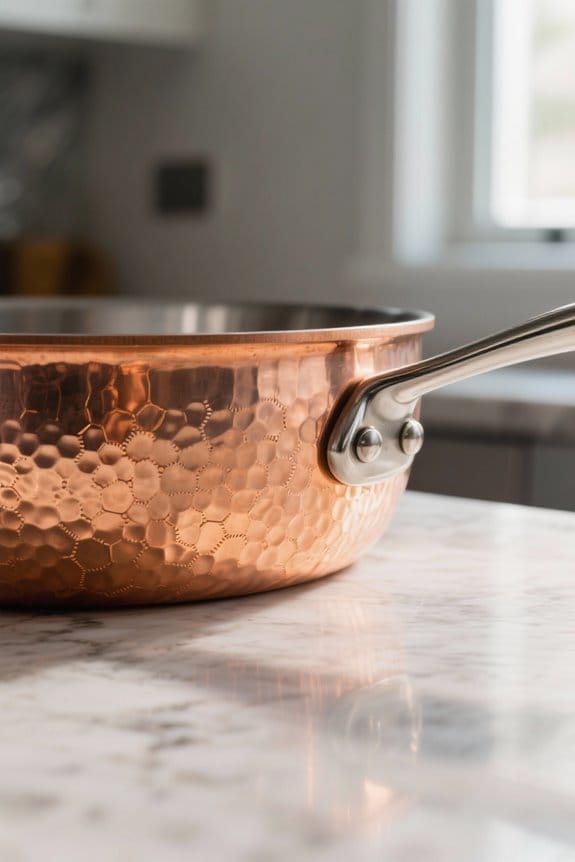
Free electrons play an important role in heat transfer within metals. These delocalized electrons are not fixed to any specific atom. They can move quickly throughout the metal, transferring thermal energy efficiently. The number of free electrons greatly influences thermal conductivity. For instance, silver has one free electron per atom, making it highly conductive. In contrast, aluminum possesses three free electrons per atom but does not conduct heat as well. This difference stems from how effectively electrons can move without interference. Increased collisions with atoms or structural irregularities can impede free electron movement. Metals with higher electrical conductivity typically exhibit better thermal performance, underlining the crucial role of free electrons in heat transfer. The aluminum core found in many multi-ply cookware sets enhances heat transfer and minimizes hot spots, demonstrating the importance of effective heat distribution in culinary applications.
Understanding Alloys and Their Conductive Properties
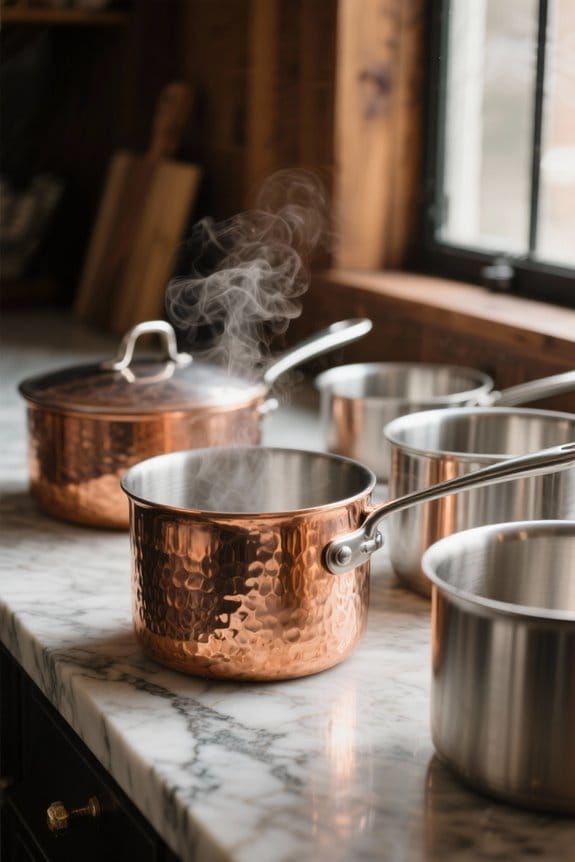
Alloys are combinations of different metals, and they often have distinct conductive properties compared to pure metals. Generally, alloys conduct heat less efficiently than pure metals due to their varied atomic structures. For example, pure copper showcases higher thermal conductivity than its copper alloys. The introduction of other elements creates a bumpy environment that disrupts electron movement. This leads to increased collisions that hinder the flow of free electrons, markedly reducing overall conductivity. Stainless steel, known for its strength, exemplifies this with a thermal conductivity much lower than that of pure metals like silver. Understanding the composition of alloys is essential for evaluating their thermal performance. The arrangement of atoms directly affects their ability to conduct heat effectively. Stainless steel designs typically require less maintenance, while drip pans minimize oil overflow mess.
Recommended Products

『Pure Titanium Alloy Material』: This frying pan and handle are made of premium titanium alloy. Superior to stainless steel, ceramic and cast iron, it features outstanding durability and comfortable grip. The stylish titanium hammered surface resists scratches and burns for a healthier daily cooking lifestyle.

『Pure Titanium Alloy Material』: This Au Gratin Pan and handle are made of premium titanium alloy. Superior to stainless steel, ceramic and cast iron, it features outstanding durability and comfortable grip. The stylish titanium hammered surface resists scratches and burns for a healthier daily cooking lifestyle.

Product size (frying pan): Diameter 10.2 inches (26
Practical Tests to Measure Heat Conductivity

Understanding how different materials conduct heat can be achieved through practical tests. One effective method involves using two spoons made of different metals, such as stainless steel and silver or copper. To carry out the test, heat a cup of tea and stir using the stainless steel spoon first. Then, switch to the silver or copper spoon. Participants can compare the sensations felt in their fingers. This experiment clearly shows that metals like silver and copper are better conductors of heat than stainless steel. The differences in heat transfer become tangible through this simple hands-on activity. Engaging in such practical tests enhances understanding of conduction and the varying thermal conductivity among different metals. Additionally, exploring the versatility of cookware can provide insights into how different materials affect cooking efficiency and performance.
Recommended Products

HexClad’s Hybrid technology features a laser-etched hexagonal nonstick surface that combines both stainless-steel and our TerraBond ceramic coating for the ultimate sear and easy cleaning.

Bouillon spoons have a round shallow bowl which are great for eating any type of soups and chili.

Durable and high quality stainless steel, vacuum insulation with excellent heat retention keeps Soup and main bowls hot or cold.
The Impact of Temperature on Solid Particles
When solid materials are heated, their particles start to vibrate more intensely. Increased kinetic energy leads to larger vibrations among atoms. This affects the forces that atoms exert on their neighbors, impacting the rigidity of the solid structure. Elevated temperatures can cause phase changes, resulting in melting or softening as thermal energy overcomes atomic binding forces. The motion of outer electrons becomes more dynamic, influencing heat conduction and altering electrical conductivity. Higher temperatures may also result in increased electrical resistance and potential loss of magnetism in metals. Understanding these effects is essential for recognizing how the conductivity properties of different metals vary with temperature, which directly affects their performance in practical applications. Additionally, cookware with nonstick coatings, such as those free from PFAS and PFOA, ensures that health-conscious cooking is achievable without compromising food safety.
How Engine Cooling Systems Utilize Thermal Conductivity
Efficient heat management is critical in automotive engineering. Engine cooling systems rely on thermal conductivity to transfer heat away from the engine. As the engine operates, it generates significant heat that must be removed to prevent damage. Coolant solutions are carefully selected based on their thermal properties, enabling them to absorb heat effectively. Conductive metals found in engine components enhance this process by facilitating heat transfer. These metals allow for efficient contact with the coolant, which then carries the heat to the radiator for expulsion. Maintaining this thermal conductivity is essential; without it, engines risk overheating, leading to potential failures. Consequently, both engine components and coolant must guarantee high thermal conductivity for peak cooling performance. Similar to how food-grade silicone is used in baking pans to ensure even heat distribution and prevent sticking, conductive metals in engine components optimize heat transfer for effective cooling.
Recommended Products

Direct fit for Hino 238 258 268 338 2005-2010 16400E0070 16400E0230

Premium Quality: It is made of superior aluminum alloy and has strong thermal conductivity, which helps to dissipate heat quickly, improve engine fuel economy and ensure the performance and efficiency of the engine.

Direct fit for John Deere Tractor JD300 JD301 820 920 1020 1120
The Importance of Surface Characteristics in Heat Transfer
Surface characteristics profoundly influence heat transfer in materials. Smooth and even surfaces enhance heat conduction by providing better contact between materials. This maximizes the area available for thermal conductivity. In metals, smoother surfaces reduce air pockets and improve energy transfer efficiency. Conversely, rough and uneven surfaces create gaps that disrupt heat flow. Materials like wood have numerous microscopic gaps, which hinder their heat conduction ability. To optimize thermal conductivity in metal components, polishing is often used. This process reduces surface imperfections, allowing for improved heat transfer. The quality of contact between two materials greatly impacts the rate of heat conduction. Better surface characteristics mean more efficient heat transfer in applications that require reliable thermal performance. A thick construction in certain cooking tools eliminates hot spots and ensures consistent cooking, which is essential for maintaining food flavor during the cooking process.
Comparing Metals: Structure and Conductivity
Different metals exhibit varying levels of heat conductivity based on their crystal structures. The conductivity of pure metals, such as silver and copper, reveals notable differences. Silver has the highest thermal conductivity, measured at 6.30 × 10^6 S/m. Its efficient crystal structure allows free electrons to move smoothly. Copper follows closely behind at 5.96 × 10^6 S/m, benefiting from similar atomic arrangements and high electron mobility. In contrast, impurities and alloy formation disrupt crystal structure. This results in reduced conductivity, as seen in copper alloys compared to pure copper. Irregularities in the arrangement of atoms also hinder electron flow. As a result, the type of metal and its purity play critical roles in determining heat conductivity. Stainless steel fry pans offer excellent heat retention for optimal cooking, demonstrating the impact of material composition on heat management.
Recommended Products

THE ULTIMATE 8-PIECE SET: A classic set featuring a variety of styles and sizes, including the Copper Casserole Pot, Copper Sauce Pan, Copper Flared Sauce Pan, Copper Heavy Sauté Pan, along with all matching lids

Includes - One 8.5″ and 11″ Skillet, one 1.5qt and 3qt Saucepan with lids, one 3.5qt Sauté pan with lid, and a 6qt stockpot with lid. Handcrafted in Italy with a lifetime warranty; hand-wash and dry with a soft cloth.

Experience professional cooking with this 10 piece cookware set that includes 8 inch and 10 inch Fry Pans, 2 Quart and 3 Quart covered sauce pans, 3 Quart covered Sauté pan and an 8 Quart covered Stockpot.
Frequently Asked Questions
Why Are Some Metals Better Heat Conductors Than Others?
Some metals exhibit superior thermal conductivity due to factors including atomic structure influence and electron mobility effects. Higher free electron count and efficient movement enhance energy transfer, determining their effectiveness as heat conductors compared to others.
Why Are Some Materials Easier to Heat Than Others?
Materials vary in heating ease due to thermal conductivity differences. While atomic structure influences heat transfer, increased electron mobility factors enhance energy movement, making certain materials heat more efficiently compared to less conductive counterparts with restricted electron flow.
Why Are Some Metals Better Than Others?
Some metals outperform others due to conductivity factors influenced by atomic structure and electron mobility. High electron density and orderly arrangement enhance energy transfer efficiency, while impurities and irregularities in alloys hinder conductivity compared to pure metals.
What Does It Mean if Something Conducts Heat Well?
Like a skilled dancer, materials with high thermal conductivity glide through heat transfer effortlessly. Their electron mobility weaves a tapestry of rapid energy movement, ensuring warmth spreads swiftly, enchanting those who rely on efficient thermal exchange.