As an Amazon Associate, we earn from qualifying purchases. Some links on this site are affiliate links at no extra cost to you. Our recommendations are based on thorough research and editorial judgment.

Understanding Dishwasher Effects on Different Cookware Materials

Different cookware materials react uniquely to dishwasher cleaning. Stainless steel tends to warp and discolor in dishwashers. Non-stick pans can lose their coating with repeated washings. Cast iron should never be washed in a dishwasher due to moisture issues. Copper can tarnish and corrode, while aluminum is reactive to detergents. Maintaining their longevity often requires hand washing. Knowing the specific needs of each material leads to better care and performance, helping to extend their lifespan. More details follow.
Key Takeaways
- Stainless steel cookware may warp or discolor in a dishwasher; hand washing is recommended for durability and appearance.
- Non-stick pans can degrade with frequent dishwasher use due to harsh detergents; hand washing prolongs their lifespan.
- Cast iron should never be washed in a dishwasher, as moisture and heat damage the material; hand wash only.
- Aluminum cookware is reactive to detergents and may corrode; hand washing with mild soaps is essential to maintain its quality.
- High-temperature dishwasher settings and strong detergents can harm more delicate materials, like copper and enameled cookware, necessitating gentle cleaning methods.
Stainless Steel Cookware: The Basics
You may be interested
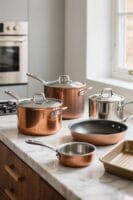


Stainless steel cookware is a popular choice among home cooks and professional chefs alike. It offers excellent corrosion resistance due to its composition, especially in 18/10 stainless steel, which contains 18% chromium and 10% nickel. Although many consider stainless steel cookware dishwasher safe, using such appliances may lead to warping and discoloration over time. This risk is higher for cladded stainless options with aluminum cores. Hand washing is generally recommended to preserve the cookware’s appearance and longevity. Regular maintenance, including mild detergents and polishing, can further enhance the cookware’s visual appeal. For peak performance and durability, careful consideration of washing methods is advised, ensuring that stainless steel cookware maintains its functionality and aesthetic value. Additionally, it’s important to note that multi-ply construction of stainless steel cookware enhances heat distribution, preventing hot spots and improving cooking efficiency.
Non-Stick Pans: A Delicate Balance
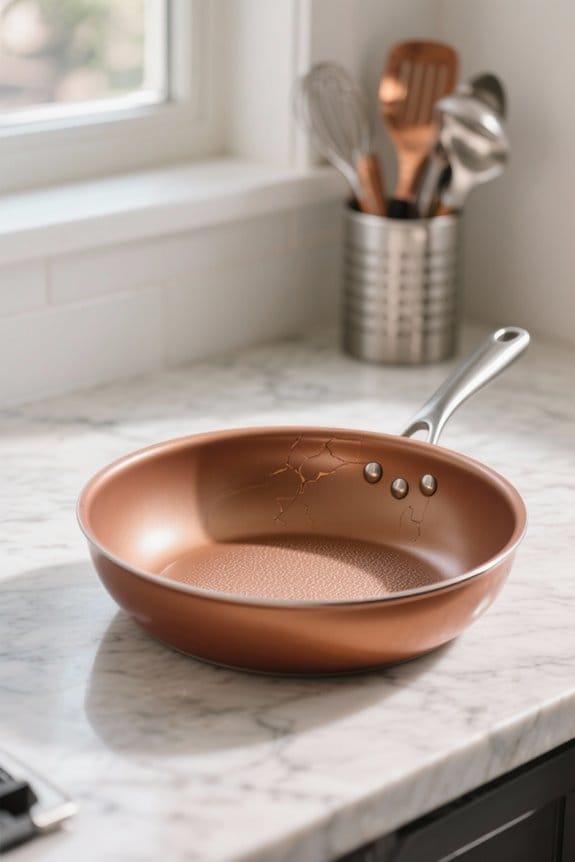
When considering the best way to care for non-stick pans, it is important to recognize their unique requirements. These pans often feature a Teflon coating that can be sensitive to harsh detergents used in dishwashers. Though some non-stick cookware is marked as dishwasher safe, frequent use may degrade the coating. High temperatures can also damage the non-stick surface. It is advisable to choose lower temperatures and gentler cycles if dishwashing is necessary. For ideal longevity, hand washing non-stick pans with mild soap and a soft sponge is recommended. This method helps maintain performance and extends the lifespan of the cookware. Proper care guarantees that the non-stick surface remains effective and free from peeling. Additionally, consider stovetop compatibility when selecting non-stick pans to ensure their versatility and effectiveness across different cooking methods.
Recommended Products

Enjoy professional cooking with this 14 piece cookware set which includes 10 inch and 12 inch Fry Pans, 2 Quart and 3 Quart covered Sauce Pans, 3 Quart and 6 Quart covered Sauté Pans, 12 inch covered chef’s pan and an 8 quart covered stockpot

Made in France. Mauviel is the leading cookware manufacturer for professional and household chefs throughout the world. The 16-piece set includes 1.8-qt Saucepan with lid, 2.6 qt. Saucepan with lid, 3.3-qt Saucepan with lid, 3.3-qt. Sauté pan with lid, 3.6-qt Curved splayed Sautepan, 7.87" Frying pan, 10.24" Frying pan, 3.2-qt Rondeau with lid, 6.1-qt Stew pan with lid and 0.2-qt Copperbrill

Made in France. Mauviel is the leading cookware manufacturer for professional and household chefs throughout the world. The 12-piece set includes 1.8-qt Saucepan with lid, 2.6 qt. Saucepan with lid, 3.4-qt Saucepan with lid, 3.2-qt. Sauté pan, 3.4-qt Curved splayed Saute pan, 7.87" Frying pan, 10.24” Frying pan, and a 6.2 qt Stew Pan with lid
Cast Iron and Enameled Cast Iron: What You Need to Know
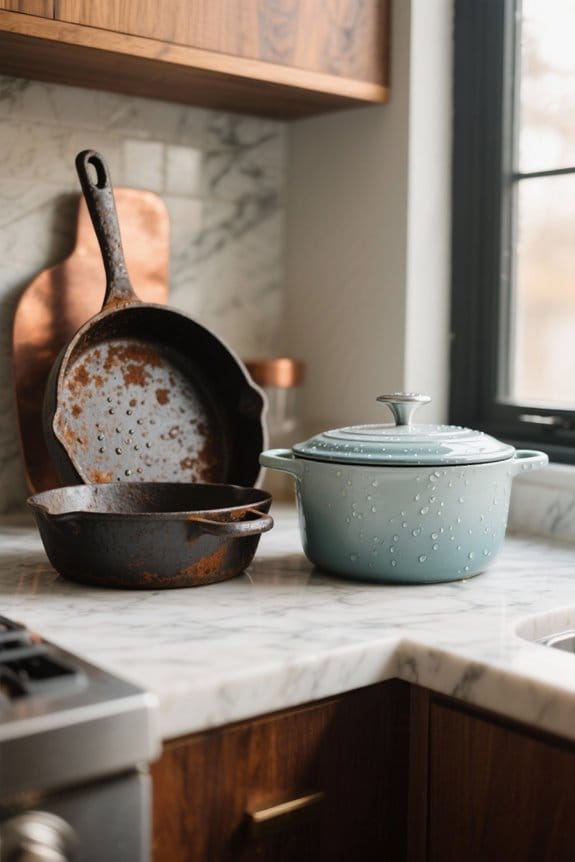
Cast iron and enameled cast iron cookware are popular choices for many cooks due to their durability and heat retention. Cast iron should never enter a dishwasher. The high heat and moisture can strip away the seasoning, leading to rust. Enameled cast iron is somewhat more resilient but can still be damaged by harsh detergents and extreme temperatures. Both types require careful drying to avoid moisture retention, which can result in mold or rust. For ideal care, hand wash with mild soap and warm water. Regular seasoning of bare cast iron is essential to maintain its non-stick properties. Avoiding the dishwasher completely will guarantee the longevity and performance of both cast iron and enameled cast iron cookware. Additionally, hard anodized cookware is known for its durability and nonstick surface, making it a reliable choice for cooks seeking easy food release and efficient cleanup.
Recommended Products

Smooth enamel bottom works on all stovetops, including gas, electric, glass, ceramic, induction, and halogen

Enameled cast iron delivers superior heat distribution and retention; Ready to use, requires no seasoning

Enameled cast iron delivers superior heat distribution and retention
Copper Cookware: Pros and Cons in the Dishwasher
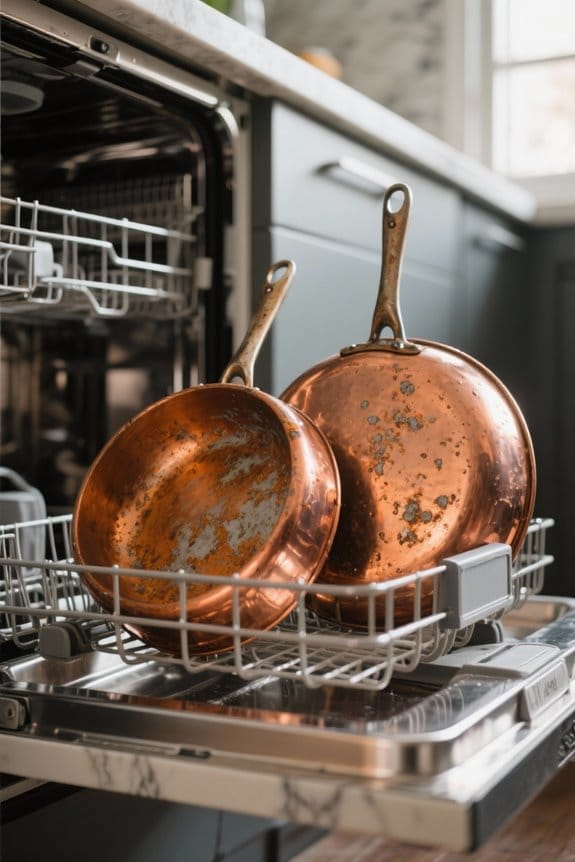
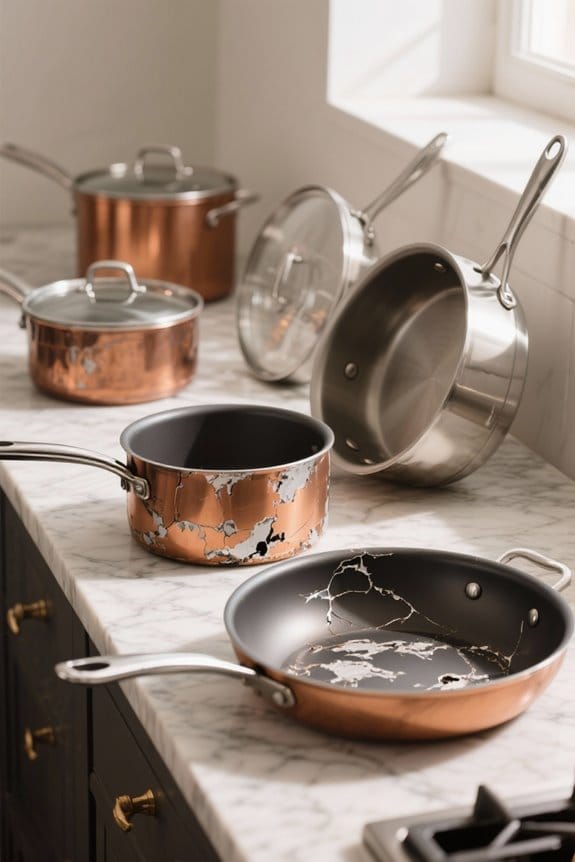
Copper cookware is highly regarded for its exceptional heat conductivity. However, its maintenance in a dishwasher can present challenges. While some copper cookware is marketed as dishwasher safe, frequent cleaning can lead to a tarnished appearance. Harsh detergents combined with high heat can dull the finish and even risk corrosion. This deterioration can compromise the cookware’s performance over time. It is generally recommended to hand wash copper cookware with mild detergent and a soft sponge. This approach better preserves its aesthetic appeal and functionality. Consequently, while convenience may tempt some to use a dishwasher, hand washing is the safest option for extending the life of copper cookware. Additionally, non-stick copper cookware provides effective heat distribution and enhances cooking performance, but it still benefits from careful hand washing to maintain its non-toxic surfaces.
Recommended Products

Includes - One 8.5″ and 11″ Skillet, one 1.5qt and 3qt Saucepan with lids, one 3.5qt Sauté pan with lid, and a 6qt stockpot with lid. Handcrafted in Italy with a lifetime warranty; hand-wash and dry with a soft cloth.

Exceptionally crafted, our stainless-steel cook-set with a copper core offers versatility, durability and optimal cooking performance to fuel your passion for cooking, for years to come

Made in France. Mauviel is the leading cookware manufacturer for professional and household chefs throughout the world.
Aluminum Cookware: Risks and Best Practices
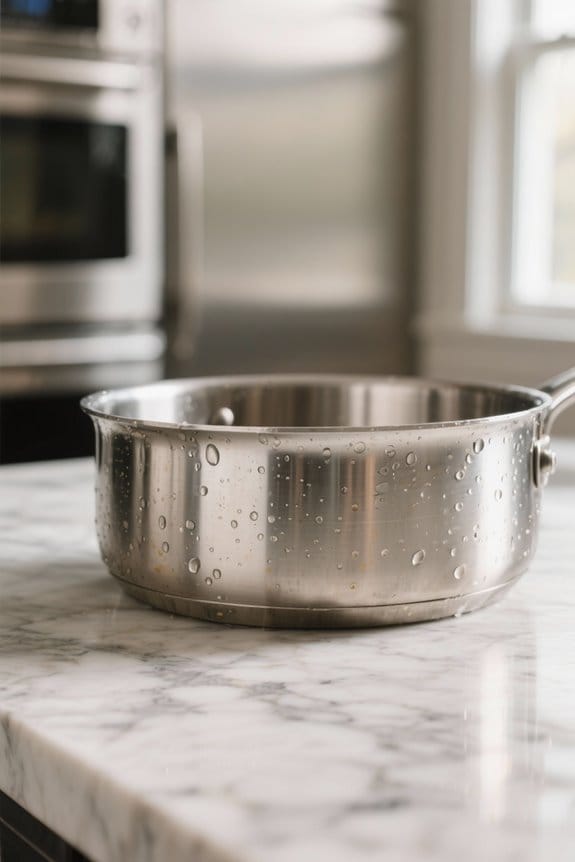
Aluminum cookware is popular for its lightweight and excellent heat distribution. However, it is highly reactive to dishwashing detergents. Alkaline chemicals in these soaps can lead to corrosion over time. The high temperatures of dishwashers may also cause aluminum cookware to warp and develop sharp edges. Anodized aluminum cookware offers some protection, but frequent dishwasher use can diminish its quality. To enhance the longevity of aluminum cookware, handwashing with mild detergents is strongly recommended. Avoid harsh chemicals, as they can worsen corrosion. Additionally, investigating the impact of chlorination in water supplies is important. This can exacerbate corrosion issues during dishwashing. Stainless steel options often provide easier maintenance compared to aluminum, as they are usually dishwasher safe and more durable. By following these best practices, users can maintain their aluminum cookware’s performance and appearance.
Recommended Products

Complete 10 piece set includes 8 inch and 10 inch Fry Pans, 1.5 quart and 3 quart Sauce Pans with lids, 3 quart Sauté Pan with lid, and an 8 quart Stockpot with lid.t

5-PLY STAINLESS STEEL COOKWARE HEATS EVENLY – Five layers of steel and aluminum spread heat evenly and retain heat. No hot spots. Food cooks perfectly edge to center.
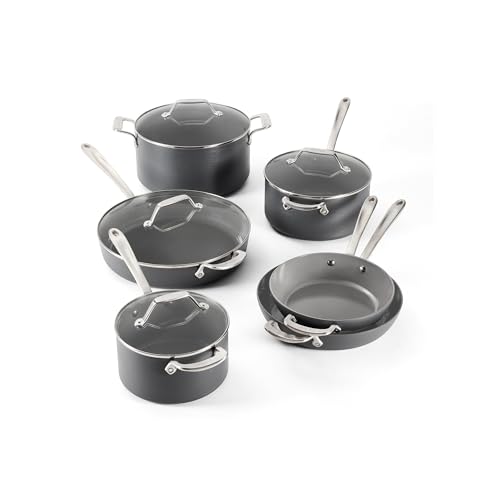
The All-Clad HA1 Ceramic Nonstick 10-Piece Cookware Set includes 8.5 and 10.5-inch fry pans, 2.5 and 4-quart saucepans with lids, a 4-quart sauté pan with lid, and a 7-quart stockpot with lid. This set is perfect for frying, simmering, steaming, and boiling
Fragile and Delicate Items: Handling With Care
Fragile and delicate items require extra attention to maintain their beauty and functionality. Fine china is particularly vulnerable in dishwashers. High pressure and harsh detergents can cause breakage and damage over time. Gilded and hand-painted plates risk losing their decorative features if washed in this manner. Printed measuring cups may fade or have markings erased in the intense washing environment. Delicate crystal and stemware are also at risk. They often develop cloudiness and scratches that diminish their elegance. Hence, the potential for damaging these valuable items typically outweighs the convenience of a dishwasher. Hand washing is the preferred method for cleaning fragile and delicate items, ensuring their longevity and maintaining their original appeal. For nonstick cookware, diamond-infused surfaces can enhance durability, but they are still best preserved with gentle hand washing.
Wooden Kitchenware: The Case for Handwashing
While many kitchen items are dishwasher-safe, wooden kitchenware is not one of them. The conditions inside a dishwasher can warp and crack wood. High heat and moisture compromise the structure over time. Additionally, harsh detergents can strip away the natural finish of wooden utensils. These chemicals may lead to irreversible damage. Wood also absorbs moisture, increasing the risk of mold growth and other hygiene issues. To protect wooden kitchenware and guarantee their longevity, handwashing is essential. This method maintains the wood’s natural appearance and prevents health hazards. Historical practices show that proper cleaning methods for wood are vital. Ultimately, handwashing wooden utensils will keep them functional and safe for food preparation. Many kitchen items, like cast iron pans, also require proper maintenance to ensure longevity and performance.
Mechanical Parts and Insulated Items: Avoiding Damage
Mechanical parts and insulated items are commonly found in many kitchens. These items can be sensitive to high heat in dishwashers. Mechanical parts, such as whisks and utensils with moving parts, may suffer irreparable damage. Harsh detergents also impact their longevity. Insulated containers are not safe in the dishwasher. Water can get trapped in sealed areas, leading to mold growth and possible explosions when heated. Hollow-handle items are particularly prone to issues from water accumulation. This creates risks of damage and bacteria growth. Hand washing is advised for these items. It helps maintain their integrity and cleanliness effectively. By avoiding the dishwasher, users can extend the lifespan of their mechanical and insulated kitchenware. Additionally, many stainless steel frypans are dishwasher-safe, making them a convenient choice for those looking to simplify post-cooking cleanup.
Understanding Cleaning Agents and Their Effects
Cleaning agents play an essential role in maintaining the cleanliness and longevity of cookware. Dishwashing detergents generally contain surfactants, enzymes, and alkaline agents. Surfactants help lift grease but can leave residues if not rinsed well. Enzymes target food particles like proteins and starches. However, their enzyme interaction with materials may cause wear or loss of finish. High-temperature settings can intensify the negative effects of strong detergents, especially on sensitive items. Aluminum cookware is particularly vulnerable. High alkaline environments in some detergents may lead to corrosion over time. Users should choose cleaning agents carefully to avoid damaging specific cookware materials. Considering the thermal shock resistance of stoneware pans can also help prevent damage during cleaning. Proper usage helps preserve the quality and functionality of kitchen items for longer-lasting performance.
Frequently Asked Questions
What Cookware Is Not Dishwasher Safe?
Non-dishwasher safe cookware includes cast iron due to seasoning loss, copper pans prone to tarnishing, silicone bakeware that can degrade, ceramic cookware that may crack, and glass cookware susceptible to thermal shock and breaking.
Why Shouldn’t You Put Stainless Steel Pots in the Dishwasher?
Amid the clatter of steel and steam, one learns: stainless steel pots in the dishwasher invite damage, compromising cookware longevity. Understanding proper care guarantees kitchen maintenance, preserving both beauty and efficiency in everyday cleaning rituals.
Does the Dishwasher Ruin Non-Stick Pans?
The dishwasher can ruin non-stick pans, as dishwasher heat and cleaning residues accelerate wear, compromising non-stick longevity. Alternative cleaning methods, such as hand washing, are recommended for better cookware care and longer-lasting surfaces.
Why Shouldn’t You Put Aluminum Pans in the Dishwasher?
One might wonder if they should send their aluminum pans on a joyride through the dishwasher. Alas, aluminum corrosion and heat exposure often lead to decreased cookware lifespan, thanks to harsh dishwasher detergents causing severe surface damage.