As an Amazon Associate, we earn from qualifying purchases. Some links on this site are affiliate links at no extra cost to you. Our recommendations are based on thorough research and editorial judgment.

How to Identify Damaged Nonstick Coatings

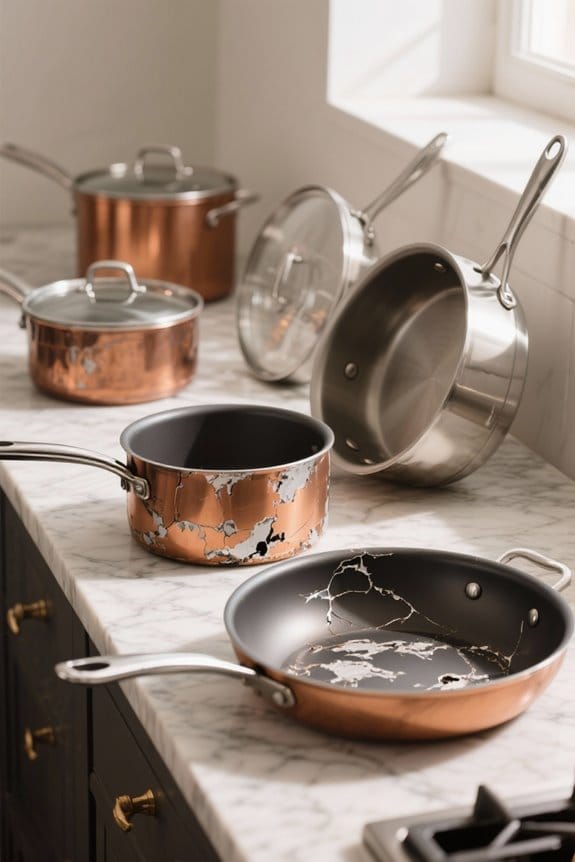
To identify damaged nonstick coatings, look for visible signs like flaking or deep scratches. Discoloration and dark patches also indicate wear. If food sticks more than usual, it suggests the coating’s effectiveness is compromised. Uneven cooking or an increased need for oil can signal deterioration. Check for chips and peeling, as these can pose health risks. Regularly inspect your cookware to guarantee safety and performance. More detailed guidance on maintenance is available.
Key Takeaways
- Look for flaking or chipping in the coating, indicating immediate need for replacement to prevent health risks.
- Check for deep scratches that expose metal, signaling coating deterioration and increased food sticking likelihood.
- Observe any discoloration or dark patches, which suggest ongoing degradation of the nonstick surface.
- Monitor for persistent food sticking despite proper care, as this indicates a failure of the nonstick coating.
- Inspect the cookware regularly, ideally every 5-7 years, to identify signs of wear and maintain safety.
Visual Indicators of Coating Wear
You may be interested



Visual indicators of coating wear are important to identify for maintaining cookware safety. One clear sign is flaking, where pieces of the nonstick coating chip away, exposing the metal underneath and raising health risks. Deep scratches often result from using metal utensils and can greatly compromise the nonstick surface. Discoloration, such as dark patches or staining, may signal ongoing deterioration. An increased tendency for food sticking, despite using oil or fat, suggests the nonstick surface is failing and requires replacement. Chips or peeling sections of the coating can also lead to the release of microplastics, which poses additional health hazards if ingested. Regularly inspecting these visual indicators can help guarantee safe cooking practices.
Recommended Products

Durable stainless steel construction sandwiched with an aluminum base for superb heat conductivity

This All-Clad HA1 Hard Anodized Nonstick cookware set includes 8 inch, 10 inch, and 12 inch Fry Pans, 2 quart and 3 quart covered Sauce Pans, 4 quart covered Sauté Pan, 4 quart covered Soup Pot, and 8 quart covered Stockpot

3-PLY CLAD STAINLESS STEEL CONSTRUCTION: Viking's PureGlide Pro induction cookware is compatible with all cooktops and oven-safe up to 600 degrees. Versatile for any kitchen setup, allowing you to use from stovetop to oven, expanding your culinary possibilities. For optimal results, use low-to-medium heat - high heat is rarely needed and may lead to scorching
Changes in Cooking Performance
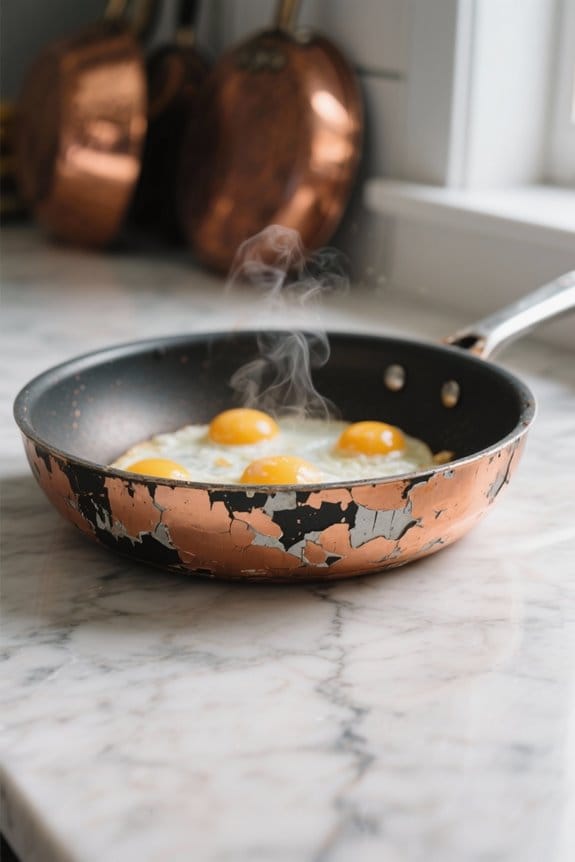
Cooking performance can reveal critical changes that signal a failing nonstick coating. A significant increase in food sticking is a primary indicator of deterioration. If more oil or butter is needed than before, the nonstick properties are likely compromised. Uneven cooking is another sign, where some areas of food become overcooked, while others remain undercooked. This issue suggests the development of hot spots due to wear in the coating. Additionally, signs of nonstick pan degradation include changes in color, such as dark patches or dry spots. Persistent sticking issues, despite proper care, indicate that the nonstick capabilities are failing. In such cases, replacement is necessary for ideal cooking performance. A new sentence with rust-resistant materials and the rest of the sentence.
Physical Damage and Its Impact
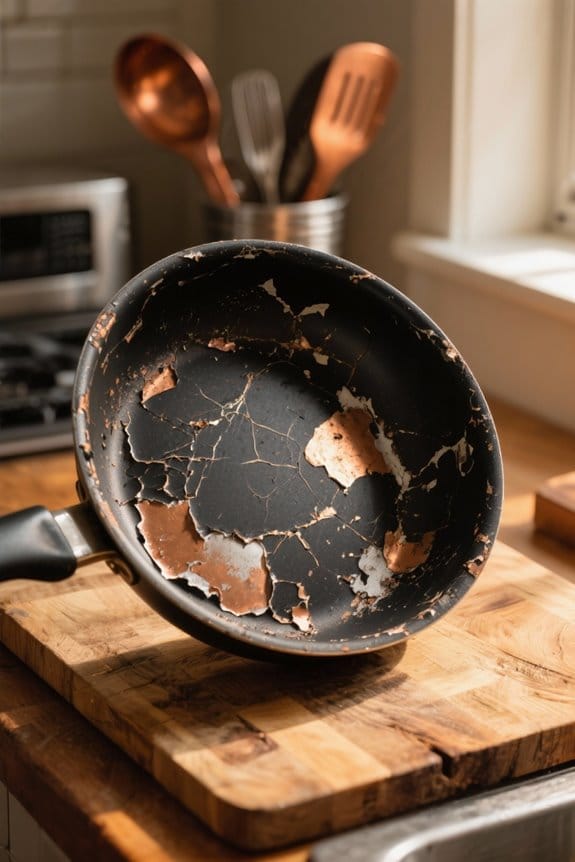
Physical damage to nonstick cookware can greatly affect its performance and safety. Flaking and chips in nonstick coatings lead to decreased effectiveness. Deep scratches often expose the underlying metal, indicating severe deterioration. This compromise can increase the likelihood of food sticking to the surface. Visual indicators such as discoloration and uneven texture suggest the coating may be degrading. A warped bottom disrupts even heating, creating hot spots that further damage the coating. Additionally, improper cleaning methods often cause greasy residue to accumulate. This residue not only affects nonstick performance but may also harbor bacteria. Proper maintenance is crucial to prevent these issues and guarantee the longevity of nonstick cookware. Regular checks can help identify damaged coatings early. Nonstick pans with diamond-infused surfaces offer enhanced durability and heat conductivity, reducing the risk of physical damage over time.
Safety Concerns With Aging Nonstick Cookware
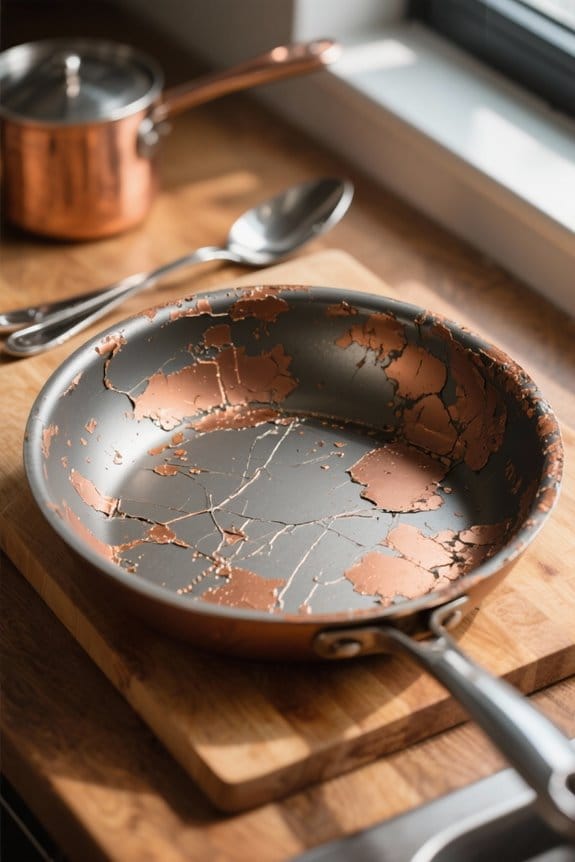
Aging nonstick cookware often raises several safety concerns that consumers should be aware of. Damaged coatings can release harmful particles into food, increasing health risks. Scratched surfaces allow microplastics to contaminate meals. These concerns are heightened with aging nonstick pans, as compromised coatings may flake off during use. When overheated, nonstick cookware can emit toxic fumes that pose respiratory dangers. This risk includes polymer fume fever, which mimics flu-like symptoms. Additionally, prolonged exposure to perfluorooctanoic acid from deteriorated pans can impact long-term health. It is essential to monitor the condition of nonstick cookware. Signs of wear, like food sticking or visible damage, should prompt consumers to evaluate safety before continued use. To ensure long-term satisfaction, it’s advisable to invest in nonstick pans with warranties over 12 months to guarantee durability and manufacturer confidence.
Recommended Products

Effortless Nonstick Interior: 1.5x more durable than Calphalon Classic, guarantees effortless food release

9-quart round-shaped French oven made of enameled cast iron

Stainless Steel knob will be Personalized with up to TWO lines of Text
When to Replace Your Nonstick Pan
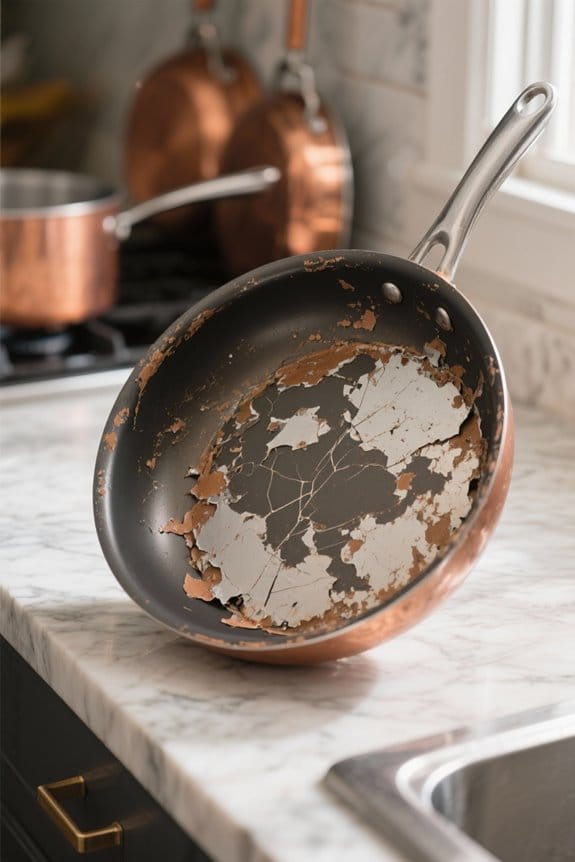
How can one determine the right time to replace a nonstick pan? If the coating is flaking or chipping, it’s necessary to replace nonstick pans immediately. Such damage often indicates health issues from ingested particles. Persistent food sticking despite oil use means the coating has deteriorated beyond repair. Deep scratches that reveal the base metal suggest the pan’s coating has failed, warranting disposal. Additionally, nonstick pans manufactured before 2015 should be replaced, as they may contain harmful PFOA. Regular inspections every 5-7 years can help identify signs that the coating has failed. Heavy-duty materials such as carbon steel or aluminum are preferred for durability, which can prolong the life of nonstick pans. Keeping an eye on these aspects guarantees safety and performance in cooking, preventing future problems and maintaining kitchen hygiene.
Recommended Products

[Replacement OE Number] Camshaft - 53022263AF 53022263AE | Lifters - 53021726AC 53021726AD 53021726AE 53021726AD 53021720AB 53021720AD 53021720AE 53021720BB 53021572AC 53022372AA 5038785AD 5038684AA 5038785AA 5038785AB 5038785AC | Head Gaskets - L5701K-16 HB228 CR345HS-C.
Replacement OE Number - 53021726AC, 53021726AE, 53021726AF, 53021726AD. Please confirm that the old part number matches the one listed before making a purchase

COMPATIBILITY — Fits 2006-2015 Lexus IS250.
Frequently Asked Questions
How to Tell if Nonstick Coating Is Damaged?
To determine nonstick coating damage, look for peeling coating indicators, visible scratches, food sticking issues, discoloration warning signs, and heat damage symptoms. Regular maintenance and brand quality comparisons help inform lifespan expectations and replacement guidelines.
What Does a Ruined Non-Stick Pan Look Like?
A ruined nonstick pan exhibits flaking, deep scratches, dark discoloration, and warping. Users often report food release issues, while color fading clues and heat resistance checks indicate compromised performance, ultimately affecting the product lifespan.
Is It Safe to Use a Non-Stick Pan After Coating Is Damaged?
When the chips are down, using a damaged non-stick pan poses health concerns. Alternatives available, such as stainless steel or cast iron, guarantee food safety and minimize exposure to harmful chemicals. Regular maintenance extends nonstick lifespan.
How to Repair Nonstick Coating?
Repairing nonstick coatings is not feasible; DIY repairs often worsen deterioration. Instead, consider replacement options for safe cookware. Maintenance tips can enhance cookware longevity, while professional restoration might offer cost-effective solutions for preserving nonstick properties.