As an Amazon Associate, we earn from qualifying purchases. Some links on this site are affiliate links at no extra cost to you. Our recommendations are based on thorough research and editorial judgment.


How Searing Works: The Maillard Reaction Explained

Searing is a cooking technique that utilizes the Maillard reaction. This reaction occurs when proteins and sugars combine at high temperatures. It typically requires heat above 300°F for best results. Properly drying meats before searing enhances browning. High-sugar ingredients, like soy sauce, can boost flavor development. Avoiding overcrowding in the cooking area guarantees even heat circulation. Understanding these factors can enhance your cooking skills and create more flavorful meals. Further insights on the Maillard reaction follow.
Key Takeaways
- The Maillard reaction occurs when amino acids and reducing sugars react at high temperatures, enhancing flavor and color in cooked food.
- Effective searing requires high heat (above 300°F/150°C) and minimal moisture to create a desirable crust.
- Proteins play a crucial role in the Maillard reaction, forming flavor compounds through their interaction with sugars during cooking.
- Techniques like dry brining and avoiding overcrowding can boost browning and improve flavor through optimal heat circulation.
- While enhancing taste, be cautious of acrylamide formation from high-temperature cooking, which can be a health risk if overdone.
Understanding the Maillard Reaction
You may be interested



The Maillard reaction is a key process that enhances the flavor and appearance of cooked foods. This chemical reaction occurs when amino acids react with reducing sugars at high temperatures, usually around 285°F (140°C). It leads to the browning process that creates complex flavors in various dishes, such as seared steaks. During this cooking process, melanoidins form, contributing to both color and taste. Higher cooking temperatures accelerate the Maillard reaction, intensifying flavor development. However, excess moisture can hinder browning, making a dry surface essential. The Maillard reaction differs from caramelization, as it involves proteins and sugars, generating a variety of new aromatic flavor compounds. This reaction is vital for achieving deep, savory tastes in many cooked foods. Cast iron pans are ideal for recipes requiring high heat applications, as they promote the Maillard reaction through excellent heat retention.
Key Factors Influencing Searing
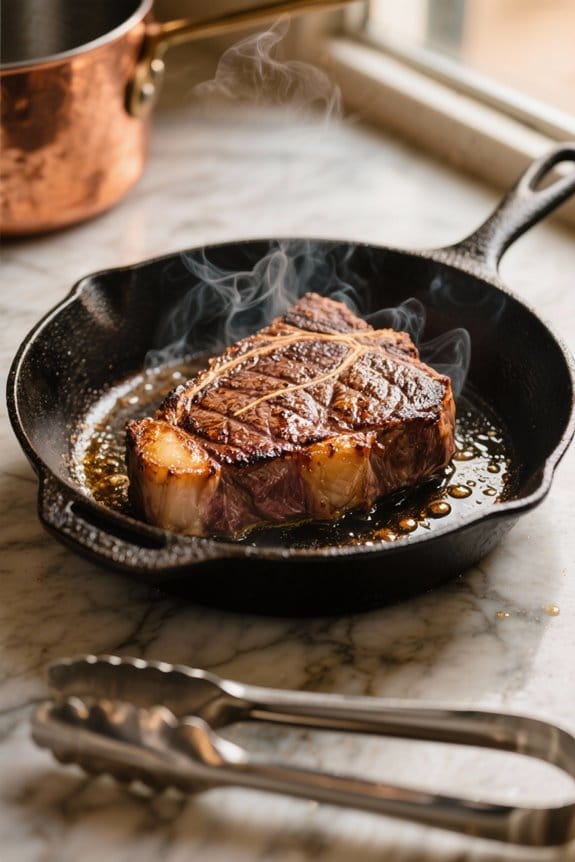
Searing is influenced by several key factors vital for achieving a flavorful crust on meats. The Maillard reaction requires high heat above 300°F (150°C) for effective browning reactions. Minimizing moisture is essential; patting meats dry enhances surface browning and prevents steaming. A higher pH can accelerate the Maillard reaction; adding a bit of baking soda can improve browning in some recipes. Cooking techniques such as reverse-searing allow for low and slow cooking before finishing at high heat, promoting ideal crust formation. Overcrowding the cooking surface stifles heat circulation. This hinders the chemical process involved in the Maillard reaction. Proper attention to these factors guarantees that meats develop the desired rich, brown crust while retaining their juices. Using nonstick pans helps prevent the meat from sticking and makes cleanup easier, enhancing the overall cooking experience.
The Role of Proteins and Sugars
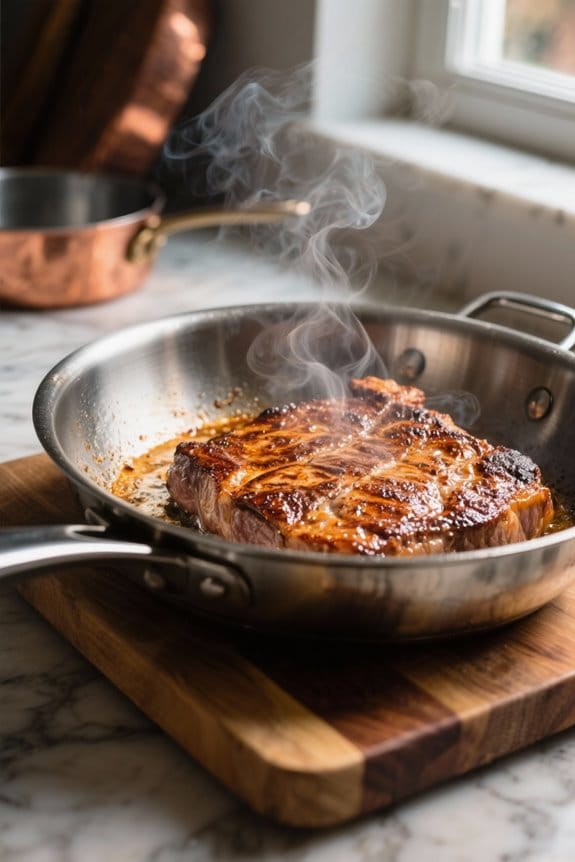
Understanding the role of proteins and sugars is essential for achieving a well-seared exterior on meats. Proteins, made of long chains of amino acids, are critical for the Maillard reaction. Only specific proteins effectively bond with reducing sugars, which are simpler forms of sugars. This bonding initiates chemical reactions that create new flavor compounds, enhancing taste and aroma. The Maillard reaction occurs most effectively when proteins are exposed to heat between 140-165°C (280-330°F). During this process, the interaction of proteins and sugars leads to browning, producing melanoidins. These compounds contribute to the characteristic brown color and complex flavors in cooked food. Understanding these elements helps in mastering the art of cooking. For optimal searing results, consider using a skillet with premium heat distribution to ensure even cooking and enhance the Maillard reaction.
Techniques for Maximizing Browning
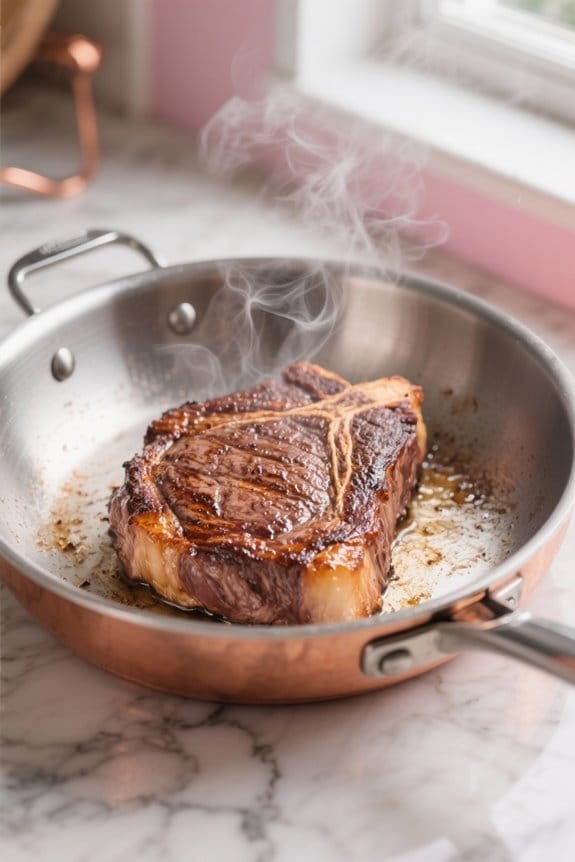
Achieving ideal browning on meats requires careful attention to cooking techniques. The Maillard reaction occurs best at high temperatures, ideally over 300°F. Patting the meat dry before searing is essential. This removes excess moisture, promoting better crust formation and avoiding steaming. Using dry brine techniques by salting the meat ahead of time enhances flavor penetration and encourages moisture evaporation. To guarantee even browning, avoid overcrowding the cooking surface. Each piece of meat needs space for heat circulation. Additionally, incorporating high-sugar ingredients, such as soy sauce in marinades, can boost the Maillard reaction. This leads to deeper flavors and richer browning. These techniques collectively improve cooking outcomes and elevate the quality of the final dish. When choosing durable nonstick pans, ensure that they are free from harmful chemicals like PFOA and PFOS to prioritize health and safety.
Health Considerations of the Maillard Reaction

How does the Maillard reaction impact health during cooking? The Maillard reaction can produce acrylamide, a potential carcinogen. This is especially concerning when cooking starchy foods at high temperatures. Research indicates that acrylamide levels rise considerably when food is cooked above 120°C (248°F) for long durations. As a result, consumers should consider their cooking techniques. Heavy gauge carbon steel is recommended for its durability and heat distribution, which can help in maintaining optimal cooking temperatures to minimize the formation of harmful compounds. Avoiding excessive browning or charring can help reduce the formation of acrylamide. Understanding this chemical reaction is essential for balancing flavor enhancement with health risks. Awareness of acrylamide’s effects has led to recommendations for safer cooking practices. By adopting these safety practices, one can minimize exposure to harmful compounds while still enjoying tasty meals prepared through the Maillard reaction.
Searing vs. Other Cooking Methods
Searing stands out among cooking methods for its ability to enhance flavor and texture through high-heat techniques. The Maillard reaction occurs at temperatures above 300°F, generating a browned crust on meat. This process activates a chemical reaction between amino acids and sugars, creating complex flavors. In contrast, boiling does not achieve this browning and can lead to bland, gray food. Searing quickly transforms the meat’s surface, producing melanoidins and other flavorful compounds. Although roasting and grilling also utilize the Maillard reaction, they require longer cooking times and can vary moisture levels, affecting texture. Searing is a fast method that seals in juices, providing a unique depth of flavor not easily replicated by other cooking methods. Additionally, using high-temperature ceramics like those in the Sweejar Casserole Dishes ensures heat resistance and durability, enhancing the effectiveness of searing techniques.
Frequently Asked Questions
Is Searing a Maillard Reaction?
Searing is closely linked to the Maillard reaction, employing cooking techniques that enhance flavor development and browning benefits. High cooking temperatures facilitate essential surface chemistry and ingredient interactions, ultimately improving meat tenderness through effective heat application and food reactions.
What Happens in the Maillard Reaction in Simple Terms?
In the dance of Maillard chemistry, heat application ignites flavor development as proteins break down and sugars interact, creating a symphony of color change and aroma creation essential for food science and culinary applications.
What Is the Maillard Reaction Step by Step?
The Maillard reaction involves heat application, initiating protein interactions with reducing sugars. This sugar chemistry leads to flavor development and enhanced food texture, showcasing its culinary applications and scientific principles through careful ingredient combinations in various cooking techniques.
What Causes the Browning Reaction That Is Seen in Maillard Reactions?
In the culinary theater, browning factors dance harmoniously, with temperature influence igniting flavor development. Ingredient interaction transforms protein structure and sugar roles, altering surface chemistry to evoke vibrant color changes, enhancing culinary applications with delectable charm.