As an Amazon Associate, we earn from qualifying purchases. Some links on this site are affiliate links at no extra cost to you. Our recommendations are based on thorough research and editorial judgment.

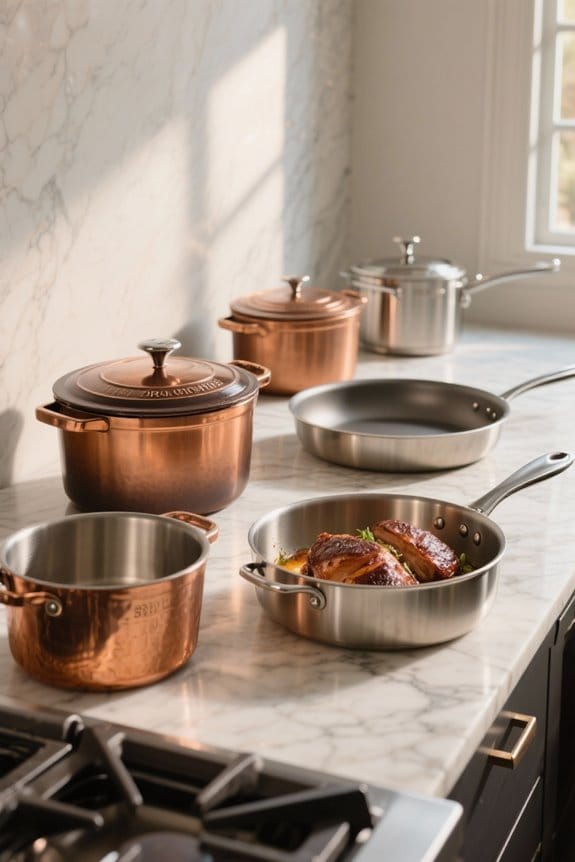
How Braising Combines Different Cooking Methods

Braising combines moist and dry heat cooking methods for enhanced flavor and tenderness. It starts with searing meat to create a flavorful crust through the Maillard reaction. This is followed by slow cooking in liquid, which partially submerges the meat. The liquid’s acidity helps tenderize the meat while aromatics like onions and garlic add depth. The result is a rich, complex dish. Further insights into braising techniques and ingredient choices can enhance your culinary skills.
Key Takeaways
- Braising merges dry heat from searing meat with moist heat from cooking in liquid to enhance flavors and tenderness.
- The initial searing creates a flavorful crust via the Maillard reaction, crucial for depth in braised dishes.
- Slow cooking in a partially submerged liquid breaks down tough fibers, resulting in tender meat and complex sauces.
- Unlike roasting, which lacks moisture, braising retains juiciness while developing rich flavors through combined cooking methods.
- Aromatics and acidic components in the braising liquid further elevate flavor profiles, benefiting from both moist and dry cooking techniques.
Understanding Braising: A Cooking Technique
You may be interested


Braising is a cooking technique that combines dry heat and moist heat to achieve ideal results. This method is particularly suitable for tough cuts of meat. The first step involves searing the meat in a hot pan, which develops a flavorful crust through the Maillard reaction. After browning, a small amount of liquid, like stock or wine, is added. The liquid should partially submerge the meat, typically reaching two-thirds to three-quarters up the food. A tight-fitting lid seals in moisture, preventing evaporation. During slow cooking, the heat gradually breaks down connective tissues, resulting in tender, juicy meat. Braising excels in creating rich, complex sauces as the flavors meld throughout the cooking process. For optimal results, consider using a tempered glass dish, which can withstand high temperatures and provide even heat distribution during the braising process.
The Braising Process: Searing and Slow Cooking
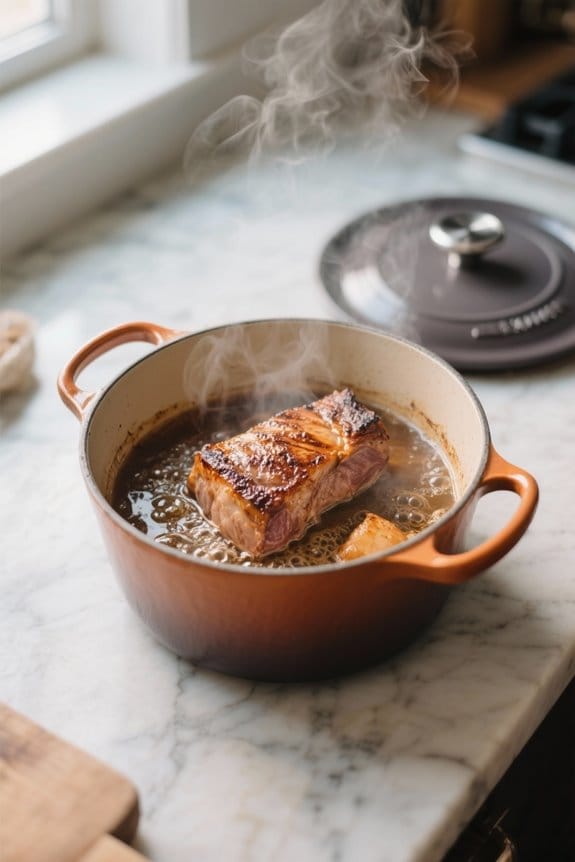
To begin the braising process, searing the meat is essential for developing deep flavors. This step involves cooking the meat in a hot pan. The high temperature creates a rich brown crust through the Maillard reaction, enhancing the flavor. After searing, onions and garlic are sautéed in the same pot to capture the flavorful browned bits. Next, the pot is deglazed with wine or stock. The meat is then partially submerged in the liquid, coming up to about two-thirds of its height. Covered tightly, this allows for moisture retention during the slow cooking phase. The process typically takes several hours at low temperatures, transforming tough cuts of meat into tender, flavorful morsels with a rich, velvety sauce. To ensure even cooking and prevent hot spots, it’s essential to use a heavy-duty pan that promotes uniform heat distribution.
Differences Between Braising and Other Cooking Methods
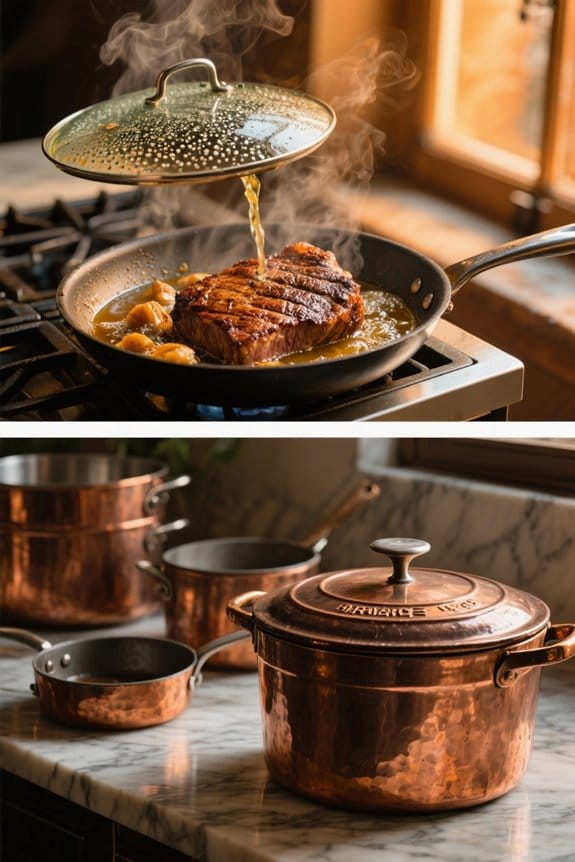
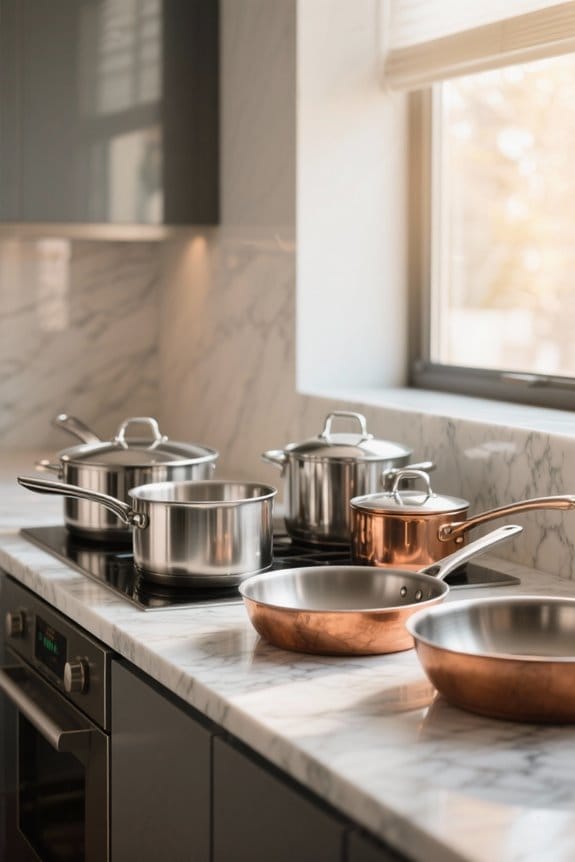
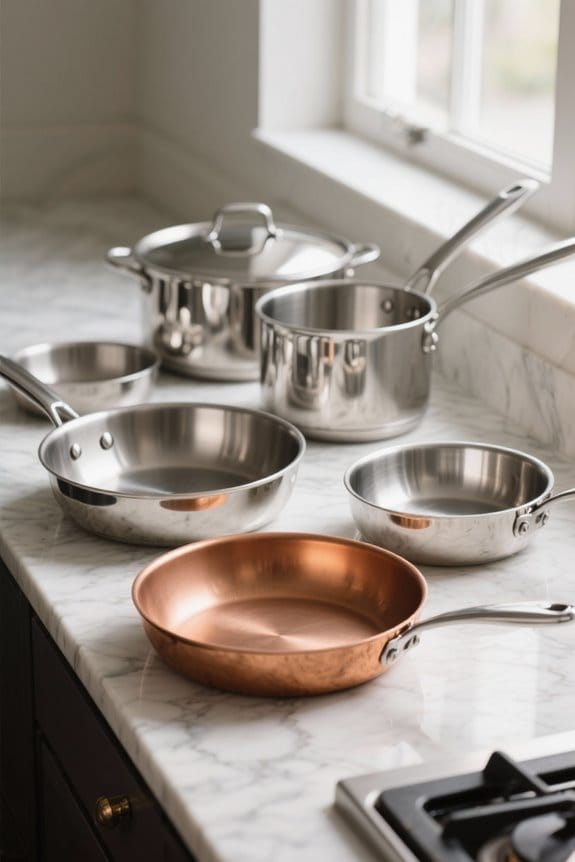
Cooking methods can vary markedly in technique and outcome. Braising cooking methods uniquely combine dry-heat and moist-heat techniques. This involves searing meat at the start and then simmering it at low heat for hours. Unlike grilling, which uses high heat for tender cuts, braising transforms tough connective tissue into tender meat through prolonged cooking. Roasting, on the other hand, employs direct heat without liquid, leading to a drier result. Sautéing utilizes high heat and short cooking times, failing to fully tenderize tough ingredients. In contrast, braising allows the flavors to deepen over time while retaining moisture. Steaming aims to preserve food’s natural texture, whereas braising enhances flavors, producing a richer overall taste in the final dish. Stainless steel options offer durability, resisting rust and bending, which makes them ideal for cookware used in braising.
The Role of Liquid and Aromatics in Braising
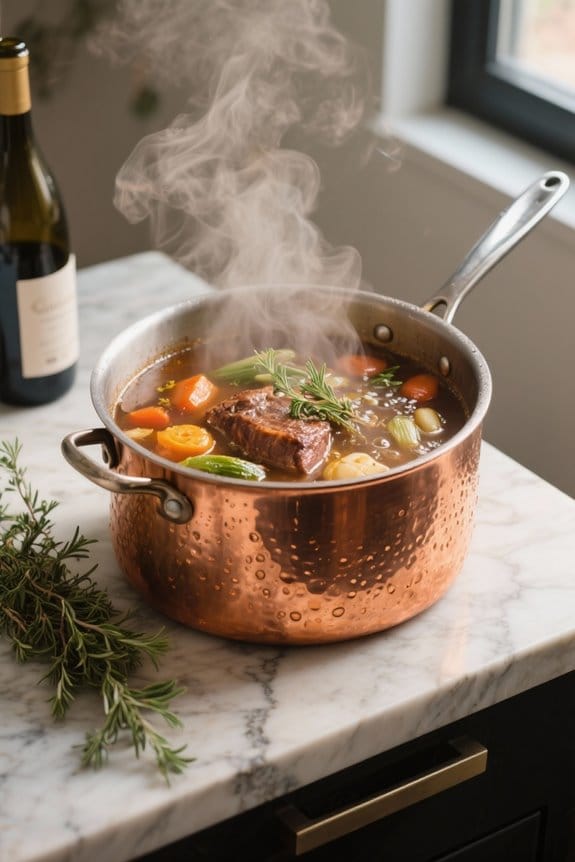
Liquid and aromatics play an essential role in achieving a successful braising process. The braising liquid typically includes acidic components like wine or vinegar. These acids help tenderize the meat. Functional liquids, such as stock or water, create depth in the sauce. Aromatics like onions, garlic, and herbs are vital for flavor. They are sautéed first to release their essential oils. The liquid should rise two-thirds to three-quarters up the food, allowing proper steam circulation. During braising, the liquid reduces and thickens, forming a rich sauce that enhances the dish’s flavor. Adding spices and seasoning at different stages can further boost the dish’s complexity. Their balanced use is essential in achieving effective results in braising.
Suitable Cuts of Meat and Vegetables for Braising
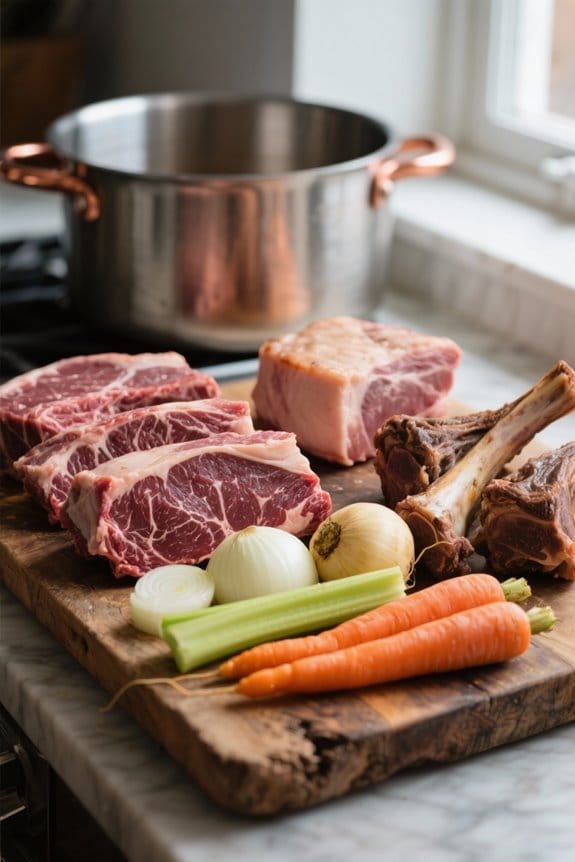
Braising requires selecting the right cuts of meat and vegetables to guarantee ideal results. Suitable cuts of meat for this method include beef chuck, short ribs, lamb shanks, and pork shoulder. These tougher, more affordable options become tender and flavorful through slow cooking. Chicken thighs and legs are preferred over leaner cuts since they maintain moisture, enhancing the overall richness of the dish. Hearty vegetables like carrots, leeks, and potatoes are ideal companions for braising. They withstand long cooking times and absorb the flavors of the braising liquid. Root vegetables can either complement the meat or serve as the main focus, contributing to the meal’s depth. Cast iron pans are highly beneficial for braising due to their excellent heat distribution and ability to create crispy crusts. This careful selection affirms a successful braising experience.
Global Examples of Braising in Culinary Traditions
Many global cuisines utilize the braising method to create rich and flavorful dishes. French “Bœuf Bourguignon” features beef cooked in a braising liquid of red wine, resulting in depth of flavor. Spanish “Cocido” is a hearty stew that employs slow cooking principles for tender cuts. In the Philippines, “Chicken Adobo” highlights traditional braising by marinating chicken in vinegar and soy sauce, which enhances its richness. Colombian “Sudado Di Pollo” combines chicken with spices and vegetables for a comforting experience. Brazilian “Feijoada,” a black bean stew, illustrates how braising is key for tenderizing pork. Finally, Italian “Osso Buco” braises veal shanks, transforming tough cuts into gourmet dishes full of flavor and texture. Additionally, the versatile functionality of fondue pots, which accommodate both sweet and savory recipes, can be likened to the adaptability of braising in various culinary traditions.
Essential Cookware for Effective Braising
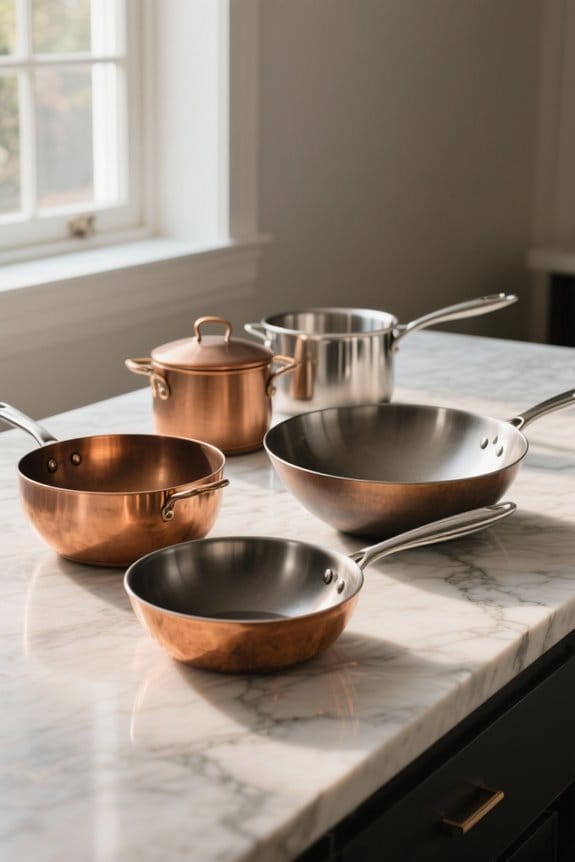
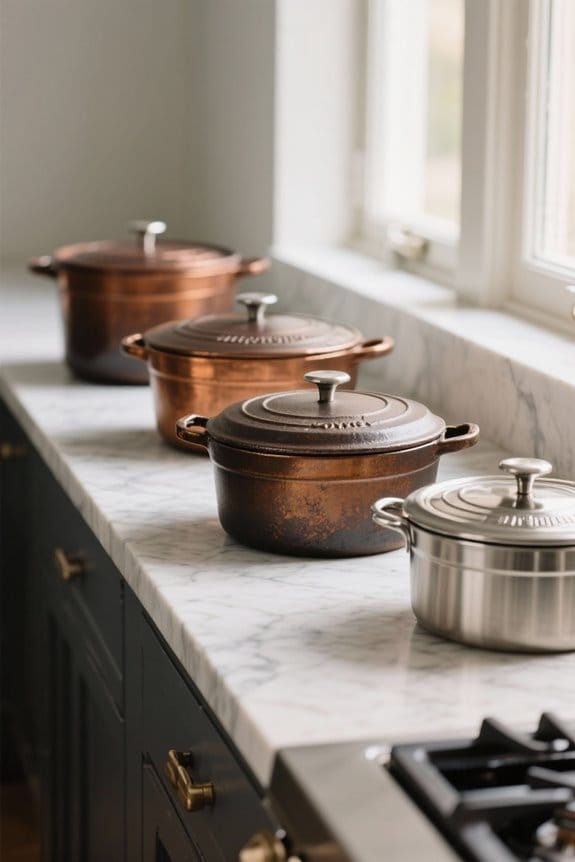
Effective braising requires the right cookware to achieve the best results. Heavy, oven-safe pots, such as Dutch ovens and braisers, are essential cookware for this cooking method. They guarantee even heat distribution and promote moisture retention. A tight-fitting lid is important to trap steam. This prevents moisture loss, tenderizing the meat and enhancing flavor integration. Enamel-coated cast iron cookware is ideal for its ability to endure high temperatures during searing, while also retaining heat during slow cooking. Pre-seasoned cast iron enhances non-stick performance over time, making it a valuable option for braising. Tools such as a flat-edged wooden spoon or silicone spatula can help deglaze the pot. Finally, heat-resistant oven mitts are advisable for safe handling, as the cookware becomes extremely hot during the braising process.
Tips for Successful Braising at Home
Success in braising at home hinges on a few key techniques. First, thoroughly sear the meat in a hot pan. This develops a rich crust through the Maillard reaction before any liquid is added. Choose tougher cuts of meat, such as chuck roast or pork shoulder, as these become tender over slow cooking. Use a heavy, lidded pot, like a Dutch oven, to retain moisture. Make certain the lid fits tightly to trap steam. Incorporate aromatic vegetables and herbs during the process to enhance flavor. Maintain a liquid level that covers about two-thirds of the meat. This guarantees proper cooking and flavor absorption while the dish is braised over a long period. Dutch ovens excel in heat retention, making them perfect for slow cooking and braising, ensuring even heat distribution without hot spots. These tips will yield satisfying, delicious results.
Frequently Asked Questions
What Is Braising Combines Two Methods of Cooking?
Braising combines dry and moist cooking methods, utilizing slow cooking to infuse flavors deeply. This technique creates a tender texture, enhancing the dish’s richness as flavors meld over extended cooking, resulting in a satisfying culinary experience.
How Are Combination Cooking Methods Braise and Stew Different?
In the simmering cauldron of culinary contrasts, braising techniques evoke depth via partial liquid immersion after searing, while stewing flavors embrace full submersion, creating a harmonious broth. Each method uniquely transforms textures and flavors to delight.
What Cooking Method Is Used When Braising?
The cooking method used during braising involves searing meat followed by simmering at low temperatures. Cooking liquids enrich the dish while promoting meat tenderness through the breakdown of connective tissues, enhancing flavor and texture.
What Are the Two Combination Cooking Methods?
The two combination cooking methods are sous vide, which involves vacuum-sealing food and cooking it in a water bath, and pressure cooking, which uses steam and high pressure to cook food quickly and retain moisture.