As an Amazon Associate, we earn from qualifying purchases. Some links on this site are affiliate links at no extra cost to you. Our recommendations are based on thorough research and editorial judgment.

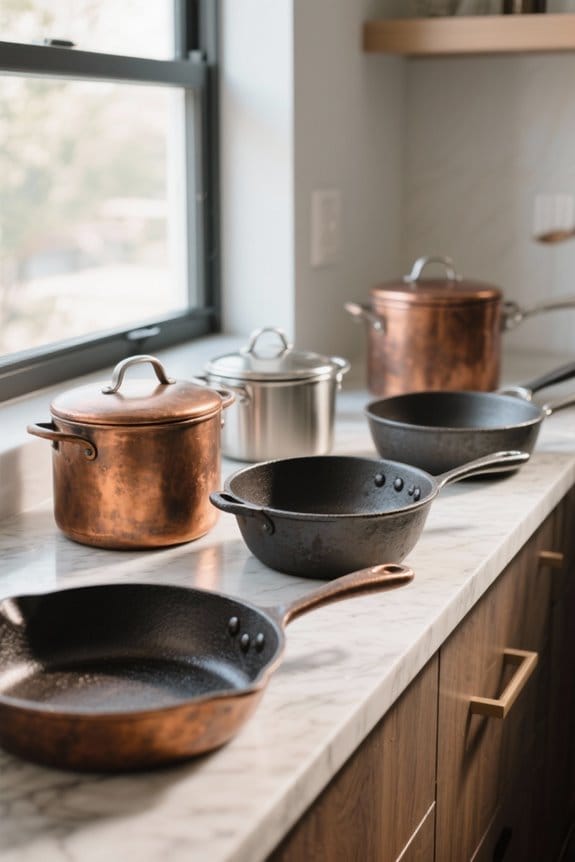
Understanding the Porosity of Cast Iron

Porosity consists of small voids inside cast iron that affect its strength and durability. It mainly occurs due to gas pockets during cooling or shrinkage during solidification. High porosity reduces tensile strength and fatigue resistance while increasing the risk of corrosion. Different types of porosity include gas and shrinkage porosity, each impacting the material’s quality differently. Effective mold design, high-quality materials, and regular testing can help minimize porosity in cast iron. More details can enhance understanding of this important aspect.
Key Takeaways
- Porosity in cast iron consists of tiny voids that can significantly weaken mechanical properties like tensile strength and ductility.
- Types of porosity include gas porosity, shrinkage porosity, and dendritic shrinkage, each affecting the material’s integrity differently.
- Detection methods such as X-ray, CT scanning, and microscopy effectively identify and assess the extent of porosity in cast iron.
- High porosity diminishes corrosion resistance, leading to reduced lifespan and aesthetic appeal of cast iron products.
- Preventative strategies, like improved mold design and quality materials, are essential to minimize porosity during the casting process.
Definition and Impact of Porosity in Cast Iron
You may be interested



Porosity in cast iron refers to the tiny holes or voids formed within the structure of the material. This characteristic can arise from Gas Porosity or Shrinkage during the solidification process. Cast iron is not typically viewed as porous; however, trapped gases can lead to these voids. The presence of porosity can severely impact mechanical properties, including tensile strength. A cast iron material with high porosity often shows reduced fatigue resistance and ductility. Additionally, increased porosity can make the material more susceptible to corrosion, decreasing its lifespan. As a result, careful management of porosity is crucial during casting processes to guarantee ideal performance in various applications. Proper control can enhance both functionality and aesthetic appearance in finished products. Pre-seasoned options such as those found in cast iron pizza pans offer non-stick surfaces right out of the box, demonstrating how careful treatment of cast iron can improve its performance and usability.
Types of Porosity Found in Cast Iron
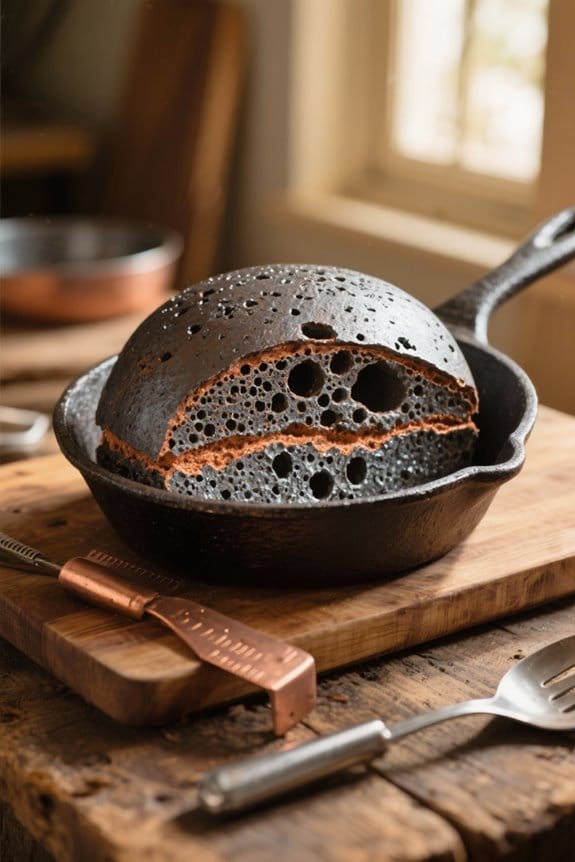
When examining cast iron, various types of porosity can influence its overall quality. Gas porosity features air pockets or voids within the cast iron. These form during cooling and can compromise the material’s integrity. Shrinkage porosity occurs during solidification when there is insufficient liquid metal. It is characterized by angular surfaces, weakening the structure. There are two types: closed shrinkage, which remains within the casting, and open shrinkage, which creates visible defects on the surface. Dendritic shrinkage is another subtype, displaying narrow, random voids that affect structural integrity. The type of porosity greatly influences mechanical properties, aesthetic finish, and corrosion resistance. Careful control during the casting process and monitoring the cooling rate are essential for minimizing defects. Additionally, pre-seasoned options like those from Lodge and Cuisinel can help in maintaining the non-stick performance and longevity of cast iron cookware.
Recommended Products

SUPERIOR NONSTICK PERFORMANCE: Anolon Advanced square sauté pan features long-lasting, incredibly smooth, premium nonstick so culinary creations glide with ease from pot to...
Detection and Measurement Techniques for Porosity
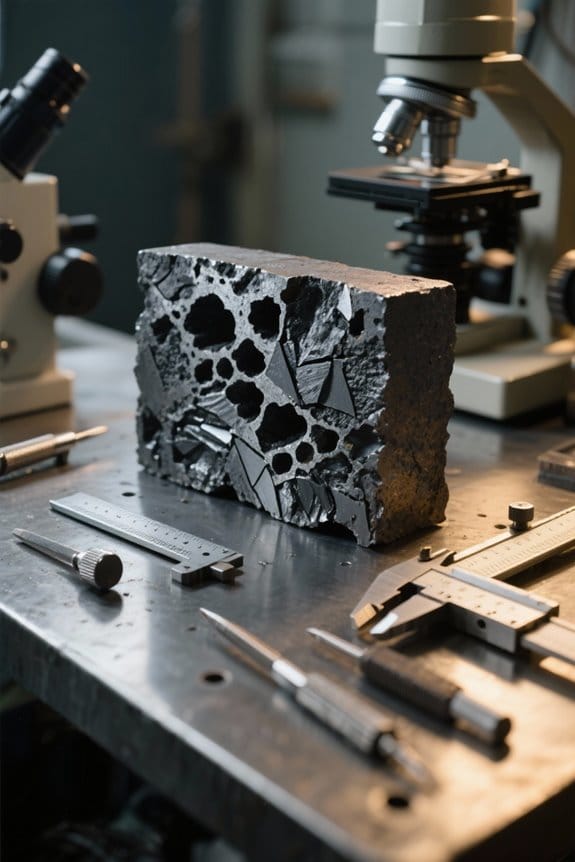
Effective detection and measurement of porosity in cast iron are essential for ensuring quality and performance. Visual inspection is a cost-effective method for identifying surface porosity. This technique highlights visible holes and porosity defects. Non-destructive testing methods, such as X-ray and CT scanning, allow for detailed internal analysis without damaging the casting. Microscopic analysis can examine micro porosity and its formation, important for understanding material properties. Scanning electron microscopy utilizes secondary electron imaging to explore the inner surfaces of pores and provide insights into their structure. Additionally, optical microscopy combined with image analysis helps capture the surrounding microstructure, facilitating assessment of casting porosity and gas entrapment issues, ultimately impacting overall quality. The choice of stainless steel or aluminum in cookware, as discussed in the knowledge section, emphasizes the importance of material quality and durability, paralleling considerations in cast iron porosity analysis.
Recommended Products

COMPREHENSIVE HEAVY METAL URINE TESTING: The HMT General Kit allows you to test for eight harmful heavy metals in human urine: Cadmium, Lead, Mercury, Copper, Nickel, Zinc, Manganese, and Cobalt. Our at home heavy metal test kit offers a simple and reliable solution for detecting metal contamination in your urine. It’s an easy-to-use metal testing kit that gives you peace of mind about your health, all from the comfort of your own home.

✔EASY TO USE: Single dip and read test strip procedure and optimized color chart make the product ideal for technical and non technical users alike for detection of ferrous Iron (Fe+2) in water
Effects of Porosity on Cast Iron Quality and Performance

Cast iron quality and performance are distinctly impacted by the presence of porosity. High levels of porosity can weaken mechanical properties, especially tensile strength and fatigue resistance. This reduction may lead to failures in vital applications. In addition, porosity can diminish corrosion resistance, allowing harmful substances to penetrate and degrade the material over time. Visual signs of porosity, such as blisters and blowholes, can affect the aesthetic appeal and market value of cast products. Moreover, increased scrap rates in foundries arise from excessive porosity, raising costs and contributing to waste. To enhance reliability in demanding uses, effective mold design and quality materials are essential. Managing porosity is essential for best cast iron performance and longevity. Additionally, the use of non-toxic ceramic coatings in cookware can promote healthier cooking practices, similarly emphasizing the importance of material quality and safety in kitchenware.
Strategies for Preventing and Reducing Porosity in Cast Iron
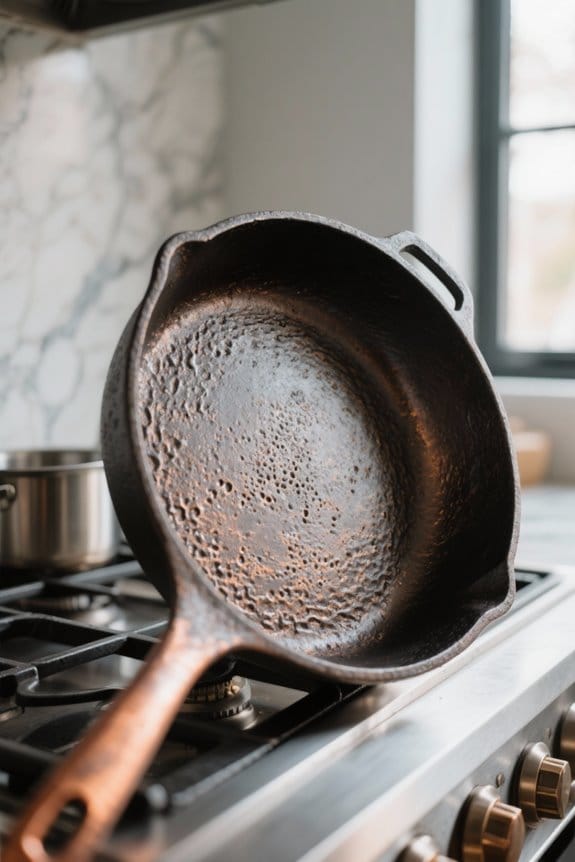
Porosity in cast iron can greatly affect both its performance and durability. Implementing proper mold design with adequate mold venting reduces gas porosity. This allows gases to escape during the casting process. Controlling cooling rates during solidification prevents shrinkage porosity. Gradual cooling helps maintain molten metal fluidity, leading to uniform solidification. Using high-quality raw materials decreases porosity by minimizing impurities. Regularly employing non-destructive testing methods allows early detection of porosity, enabling timely corrections. Additionally, vacuum impregnation can seal voids in cast iron castings effectively. This technique achieves high recovery rates for porosity issues. By integrating these strategies, manufacturers can enhance the quality and longevity of cast iron components. In addition, the use of pre-seasoned cast iron, such as those seasoned with natural vegetable oil, can further improve the material’s durability by preventing rust and maintaining a non-stick surface.
Frequently Asked Questions
How Much Porosity Is Acceptable in Casting?
Acceptable porosity levels in casting vary considerably, often allowing defects up to 12 mm. Visual inspection methods alongside rigorous testing techniques help assess the impact on strength and identify porosity distribution patterns for compliance with industry standards.
Does Cast Iron Have Porosity?
Cast iron generally does not exhibit true porosity, maintaining structural integrity through manufacturing processes. However, material defects may arise, impacting mechanical properties. Quality control and effective heat treatment are essential in industrial applications to mitigate these issues.
How to Avoid Porosity in Casting?
To avoid porosity in casting, one must orchestrate process optimization through meticulous mold design, careful material selection, temperature control, effective degassing techniques, proper pouring methods, and rigorous post-treatment processes alongside diligent quality inspection to guarantee integrity.
What Are the Four Types of Porosity?
The four types of porosity, including gas and shrinkage porosity, micro porosity, and open versus through porosity, greatly affect casting defects and material properties, necessitating stringent quality control and metallurgical analysis during manufacturing processes and testing methods.