As an Amazon Associate, we earn from qualifying purchases. Some links on this site are affiliate links at no extra cost to you. Our recommendations are based on thorough research and editorial judgment.

Why Granite Coatings Differ From Ceramic

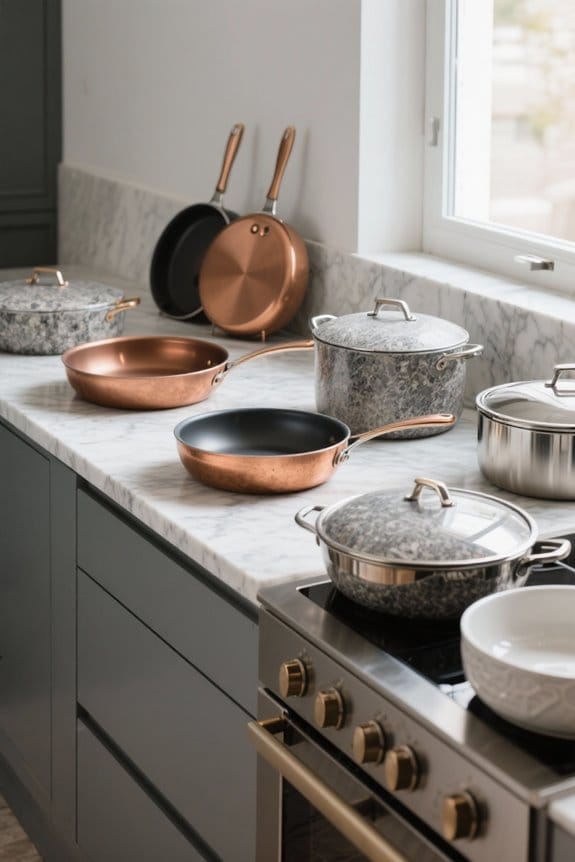
Granite coatings are made from a metal base coated with porcelain enamel, while ceramic cookware has a glaze made primarily from natural materials like clay. Granite offers better scratch resistance and is less prone to chipping, making it more durable. It also provides superior heat distribution. In contrast, ceramic cookware is known for its natural non-stick properties. Each type has unique maintenance requirements and performance characteristics. Further insights can enhance your understanding of these cookware options.
Key Takeaways
- Granite coatings utilize a porcelain enamel that provides better durability and scratch resistance compared to ceramic’s silica-based coatings.
- Ceramic cookware has natural nonstick properties but is more prone to chipping and cracking than granite cookware.
- Granite cookware allows the use of metal utensils without damage, while ceramic requires softer utensils to maintain its nonstick surface.
- Heat distribution is superior in granite cookware, making it ideal for quick meals, while ceramic performs better for sustained heat.
- Granite coatings generally have a longer lifespan, often exceeding a decade, unlike ceramic which typically lasts 3 to 5 years.
What Is Granite Cookware?
You may be interested



Granite cookware is designed with a metal base, typically aluminum or steel, that is coated with a glossy porcelain enamel. This coating gives granite cookware a non-stick surface, reducing the need for excessive oil or butter during cooking. The lightweight design makes it easy to handle, suitable for daily meal preparation. Granite cookware is durable and resistant to scratches and abrasions, ensuring longevity even with frequent use. It also promotes efficient heat distribution, allowing for uniform cooking results. Importantly, granite cookware is free from harmful chemicals like PTFE and PFOA, making it a healthy cooking option. The layer of enamel enhances both safety and performance for users seeking reliable cookware. Compared to other cookware, cast iron skillets offer exceptional heat retention and even distribution, making them ideal for various cooking techniques.
Pros of Granite Cookware
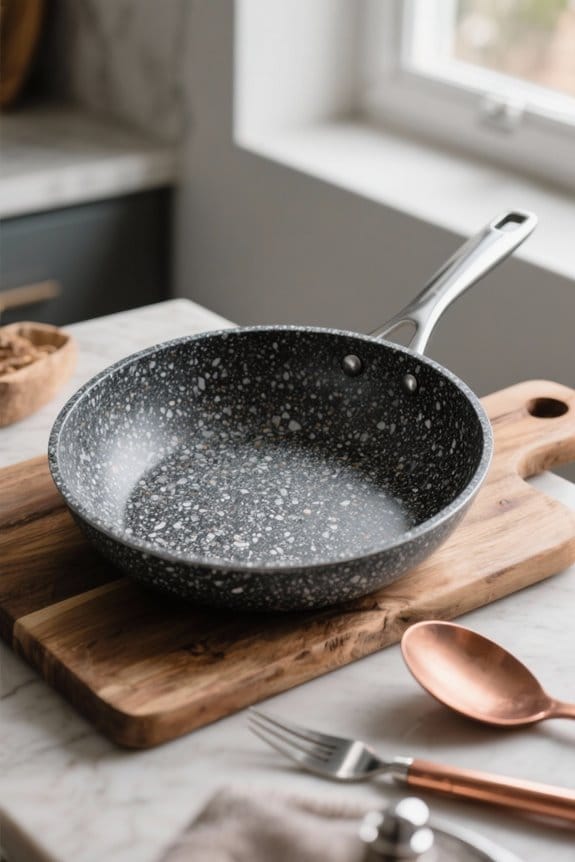
Cookware made with granite often provides several advantages for daily meal preparation. Granite cookware features a metal base coated with durable porcelain enamel. This guarantees scratch resistance and enhances longevity. Its non-stick surface promotes healthier cooking, requiring less oil or butter for food to release easily. The lightweight design makes granite cookware easier to handle than heavier options, like cast iron. Additionally, it offers even heat distribution, resulting in consistent cooking results across various dishes. The aesthetic appeal of granite cookware, characterized by a glossy and speckled finish, enhances kitchen decor. Overall, it serves as a stylish choice for home cooks looking for both functionality and visual charm in their cooking tools. A key feature is that granite cookware often comes with reinforced aluminum, which contributes to its durability and performance.
Cons of Granite Cookware
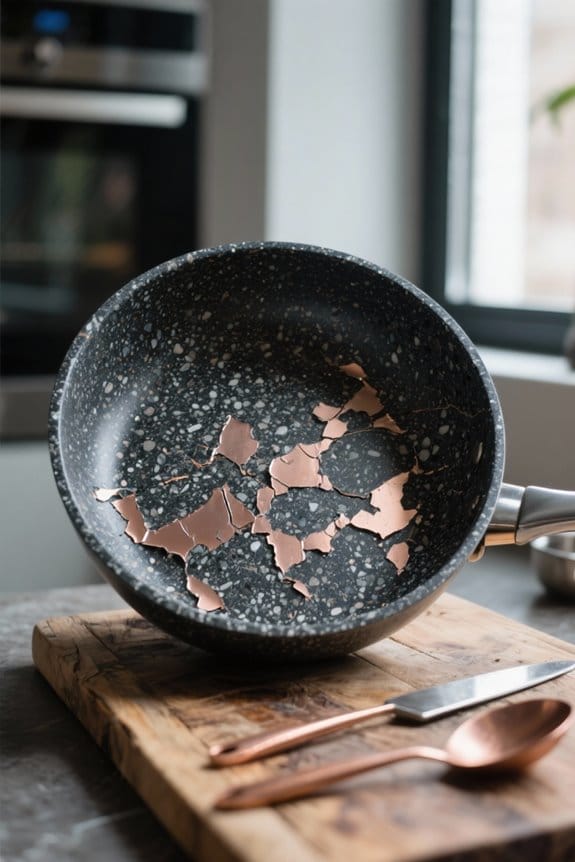
While granite cookware has its advantages, it also comes with several drawbacks that consumers should consider. The non-stick coating can wear off with frequent use, resulting in food sticking if not properly maintained. Granite cookware is durable, but it is sensitive to extreme temperatures. Overheating or rapid temperature changes can cause damage. Additionally, it requires special utensils, such as silicone or wooden tools, to prevent scratching the surface. Compared to materials like cast iron, granite cookware has a shorter lifespan when subjected to heavy use. It also has less heat retention, making it less effective for slow cooking or prolonged heating applications. These factors can affect the overall cooking experience and longevity of the cookware. Furthermore, selecting toxic-free options is crucial to ensure safety and health benefits when using cookware with nonstick coatings.
What Is Ceramic Cookware?

Ceramic cookware offers a unique cooking surface made primarily from natural materials like clay. It is coated with a glaze that guarantees a non-reactive and non-toxic cooking experience. This type of cookware is renowned for its excellent heat retention, making it ideal for dishes that require consistent temperatures over time. The natural nonstick properties of ceramic cookware do not include harmful chemicals like PTFE and PFOA, enhancing its appeal for non-toxic cooking. However, ceramic cookware can be prone to chipping and cracking if not handled with care. Although aesthetically pleasing, users should note that it typically has a shorter lifespan and may degrade with heavy use. Mindful maintenance is essential for the best performance. Additionally, diamond-infused ceramic surfaces can enhance durability and nonstick performance, offering a longer-lasting option for those concerned about longevity.
Pros of Ceramic Cookware
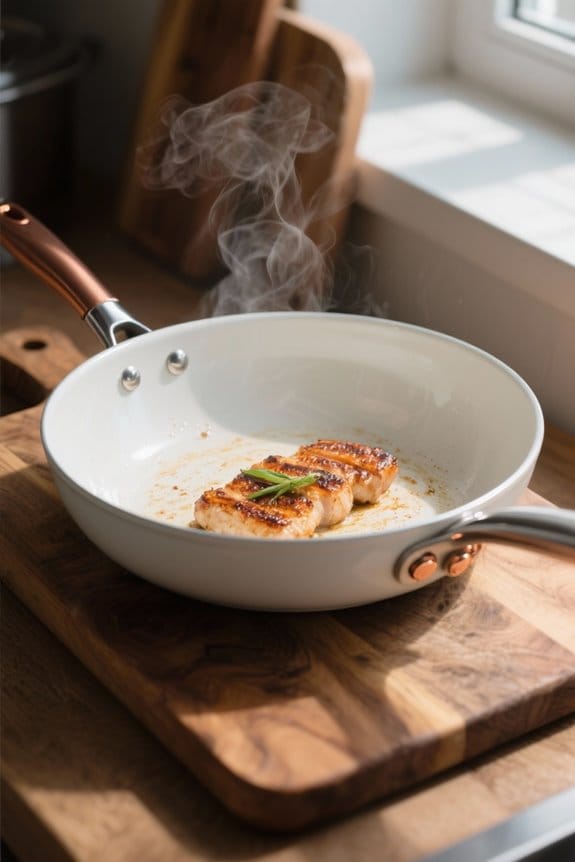
The advantages of ceramic cookware make it a favored choice among health-conscious consumers. Ceramic cookware is 100% non-toxic and free from harmful chemicals like PFOA and PTFE. This safety feature guarantees peace of mind during cooking. Its naturally nonstick surface promotes easy food release and simplifies cleaning tasks. The excellent heat retention of ceramic cookware enhances the cooking of slow-cooked dishes for even results. Additionally, it is lightweight, making it easy to handle for individuals with limited strength. Ceramic cookware is available in various colors, adding aesthetic value to kitchens. However, careful use is necessary to maintain its durability, as it can chip or crack if mishandled. Overall, ceramic cookware supports eco-friendly cooking practices. Most ceramic sauté pans, like the Redchef Ceramic Sauté Pan, are dishwasher safe, further adding to their convenience.
Cons of Ceramic Cookware
Many consumers may find that ceramic cookware has notable drawbacks. One significant issue is that it is prone to chipping if not handled carefully. Rapid temperature changes can also lead to cracks, which can shorten its lifespan. With heavy use, the glaze may wear down, diminishing its non-stick properties and requiring more oil during cooking. Additionally, ceramic cookware typically has lower heat tolerance, limiting cooking options at high temperatures. Its lifespan is generally shorter compared to materials like granite, often lasting only 3-5 years. To guarantee longevity, users must adopt cautious handling and consistent maintenance. Overall, while ceramic cookware can be effective, these factors should be carefully considered before making a purchase. Additionally, ceramic cookware often lacks the durable heat distribution found in materials such as cast iron or enameled cast iron, which can be crucial for evenly cooked dishes.
Key Differences in Non-Stick Coating
Differentiating between granite and ceramic coatings reveals distinct features in their non-stick properties. Granite coatings often utilize a tough porcelain enamel that offers durable, scratch-resistant surfaces. This design permits the use of metal utensils without damage. In contrast, ceramic coatings are made from silica-based materials, providing an eco-friendly, chemical-free alternative. However, they may chip or crack, requiring softer utensils during cooking. While both coatings are free from harmful chemicals, granite may contain some synthetic compounds. Ceramic coatings deliver excellent initial non-stick capabilities but can wear down faster with heavy use. Granite coatings typically provide better heat distribution, enhancing cooking performance by ensuring even heat throughout the cookware. Various options include sizes and components to fit different cooking needs. Therefore, each coating has unique advantages and limitations.
Heat Distribution and Retention
Heat distribution and retention are significant factors when considering cookware. Granite cookware promotes even heat distribution due to its aluminum or steel core. This design allows for efficient cooking without hotspots. It heats up quickly, making it suitable for quick cooking methods. In contrast, ceramic cookware excels in heat retention. Its thicker layer enables it to maintain temperature longer, ideal for slow cooking. While granite can lose heat rapidly when removed from the heat source, ceramic retains warmth effectively. Both cookware types are non-toxic and free from harmful chemicals. Consumers should consider these differences when selecting cookware based on their cooking needs. Granite is better for fast meals, while ceramic is preferable for dishes requiring sustained temperature maintenance. Additionally, Swiss nonstick granite coatings offer high-level nonstick performance, making them convenient for easy maintenance and durability.
Durability Comparison
Durability is a key factor when choosing between granite and ceramic cookware. Granite cookware features a porcelain enamel coating that offers superior scratch resistance. It can withstand high temperatures without significant wear. In contrast, ceramic cookware’s glaze may degrade and chip over time, especially with heavy use. The lifespan of granite cookware often exceeds a decade, provided it is properly cared for. Ceramic cookware generally has a shorter lifespan of about 3 to 5 years. Granite is less prone to chipping during normal cooking conditions, making it suitable for everyday use. Additionally, granite’s non-stick properties tend to last longer than those of ceramic, which may lose effectiveness faster with regular exposure to high temperatures. Cast iron skillets, like the Lodge 10.25 Inch Cast Iron Skillet, also offer exceptional durability and heat retention, making them a versatile option for various cooking methods.
Price and Maintenance Considerations
When considering cookware options, price and maintenance are essential factors. Granite cookware generally has a higher price point than ceramic. Single pieces can range from $15 to $150. In contrast, ceramic cookware starts around $20 and can exceed $200 for complete sets. Maintenance for granite cookware includes gentle care, such as hand washing and using non-metal utensils. This preserves its non-stick surface. Ceramic also requires careful handling to avoid chipping. Granite offers superior longevity, lasting longer with proper upkeep. Its durable nature protects against scratches. Conversely, ceramic typically lasts 3-5 years due to wear. Both types require mindful temperature management, with granite best used on medium to low heat, while ceramic is sensitive to sudden changes. Many modern frying pans like those from Blue Diamond pans utilize advanced coatings to enhance durability and heat distribution efficiency.
Frequently Asked Questions
Can I Use Ceramic Coating on Granite?
Applying ceramic coating on granite is possible, but may affect ceramic durability and granite maintenance. Consider coating lifespan, heat resistance, surface texture, and application techniques to guarantee aesthetic appeal, cost comparison, and environmental impact are acceptable.
Which Is Healthier, Granite or Ceramic?
Granite cookware offers durability and chemical resistance, enhancing cooking performance, while ceramic emphasizes safety and eco-friendliness, providing non-stick properties. Ultimately, both have health benefits, but ceramic is perceived as healthier due to its natural materials.
What Are the Disadvantages of Granite Cookware?
Granite cookware presents durability issues akin to a fading painting, with scratching concerns and heat retention problems undermining non-stick effectiveness. Its weight can complicate use, while cleaning difficulties and price comparison against alternatives warrant careful consideration.
Is Granitestone Ceramic?
Granitestone is not ceramic; it features a granite surface with ceramic properties. While offering granite durability and aesthetic appeal, it differs in maintenance requirements, heat resistance, and construction from traditional ceramic coatings, ensuring distinct safety standards and environmental impact.