As an Amazon Associate, we earn from qualifying purchases. Some links on this site are affiliate links at no extra cost to you. Our recommendations are based on thorough research and editorial judgment.

Why Preheating Pans Matters for Cooking Results

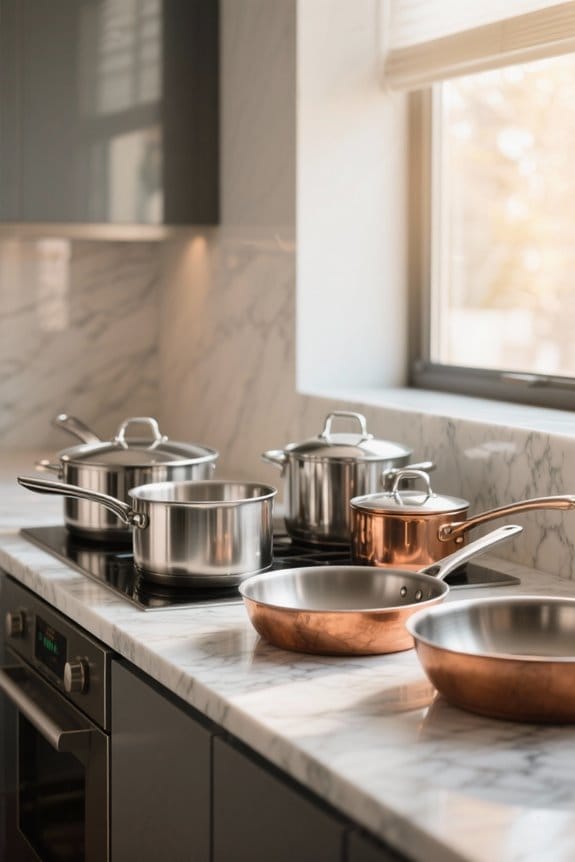
Preheating pans is essential for ideal cooking results. It activates the Maillard reaction, which enhances flavor and browning. Proper heat levels help maintain crisp textures, especially for vegetables and meats. Cold pans can lead to sogginess and uneven cooking. Recommended preheating temperatures vary: around 350°F for delicate proteins and up to 450°F for searing. Understanding cookware materials, such as stainless steel and cast iron, further improves heat distribution. Exploring these techniques can elevate cooking quality.
Key Takeaways
- Preheating pans initiates the Maillard reaction, essential for achieving browning and enhancing flavor in cooked food.
- Cold ingredients can release moisture, leading to steaming rather than proper browning, affecting texture and taste.
- Proper preheating minimizes cold spots, ensuring even cooking and avoiding gray, chewy meats.
- Preheating contributes to rapid moisture evaporation, resulting in crispy textures rather than soggy dishes.
- Using the right preheating temperature enhances caramelization, ensuring consistent flavor development across various ingredients.
The Science Behind Preheating Your Pan
You may be interested

When cooking, the importance of preheating a pan cannot be overlooked. Preheating triggers the Maillard reaction, which is crucial for browning and flavor enhancement. This chemical process improves taste and texture in various dishes. Proper preheating results in even heat distribution, ensuring consistent cooking without hot or cold spots. The ideal preheating temperature varies; delicate proteins need around 350°F, while steaks require 400-450°F for the best searing. When using cooking oil, a preheated surface helps create a layer of air, reducing the chances of food sticking. For those seeking multifunctional cooking, appliances like the Instant Pot Duo 7-in-1 can aid in efficient meal prep. Achieving proper preheating is key to maximizing cooking results and preventing steaming, which can compromise the quality of meats and vegetables. Consequently, mastering this step is essential for successful culinary outcomes.
Benefits of Using a Hot Skillet
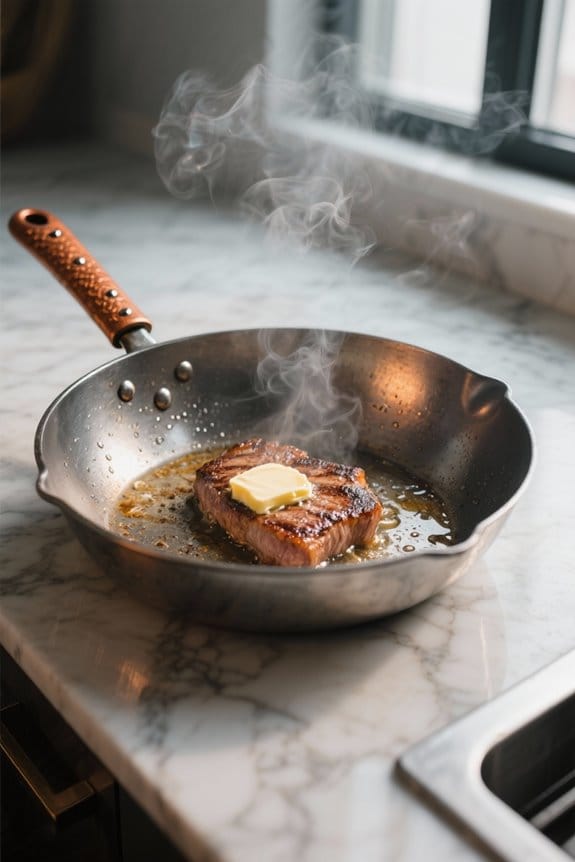
Utilizing a hot skillet offers numerous benefits that enhance cooking quality. First, pre-heating a skillet promotes rapid evaporation of moisture. This process prevents food from becoming soggy, ensuring a desirable texture. Additionally, cooking in a hot skillet allows the Maillard reaction to occur effectively. This enhances browning and flavor in ingredients. A hot skillet also reduces the likelihood of food sticking to the surface. This leads to easier food release and simpler cleanup. Furthermore, high temperatures create ideal conditions for an oven spring effect, crucial for airy textures in pancakes and naan. Finally, using a hot skillet activates leaveners effectively, producing better rise and texture in various dishes. These advantages make pre-heating a skillet a significant step in the cooking process. Heavy gauge aluminum ensures even heat distribution and prevents hot spots, further enhancing cooking efficiency.
Recommended Products

This All-Clad HA1 Hard Anodized Nonstick cookware set includes 8 inch, 10 inch, and 12 inch Fry Pans, 2 quart and 3 quart covered Sauce Pans, 4 quart covered Sauté Pan, 4 quart covered Soup Pot, and 8 quart covered Stockpot
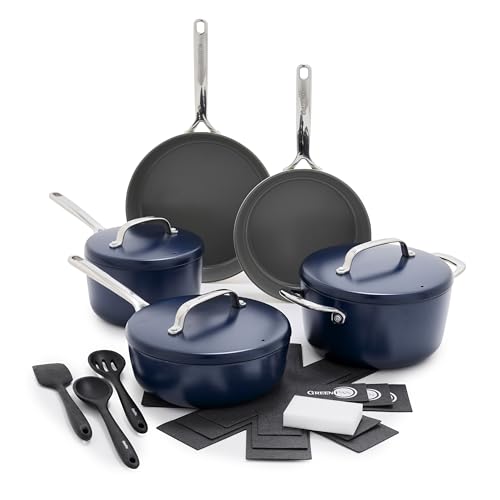
COOKWARE SET INCLUDES: 9.5” and 11” frying pans, 3.25QT sauté pan with lid, 3.25QT saucepan with lid, 5QT stock pot with lid, 3 pan protectors, silicone slotted spoon, silicone solid spoon, silicone spatula, Wonder Sponge

Set includes: 8, 10, & 12-inch fry pans, 2 & 3-quart sauce pans w/ lids, 4-quart saute pan w/ lid, 4-quart soup pot w/ lid, and an 8-quart stockpot w/ lid
Consequences of Skipping Preheating
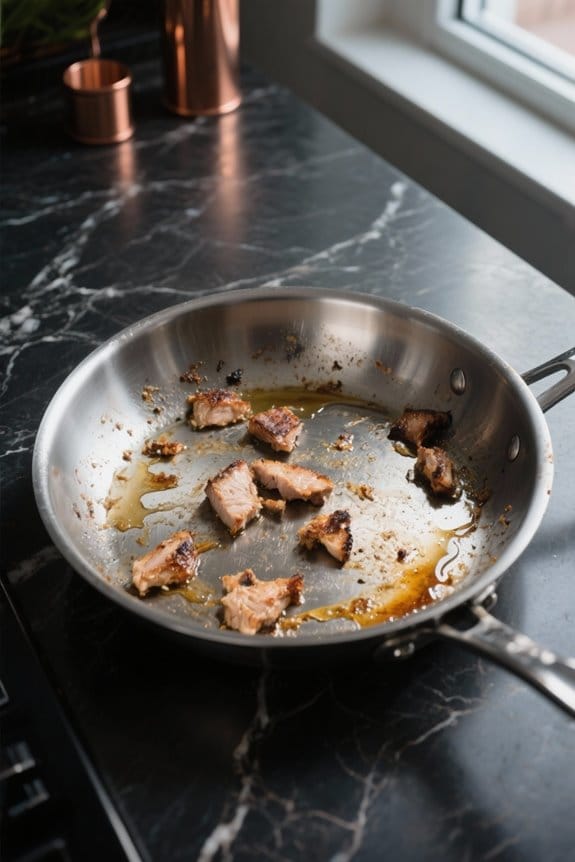
Skipping the preheating step can lead to several negative outcomes in cooking. When you don’t preheat your skillet, cold food releases excess moisture. This results in steaming instead of proper searing, impacting both texture and flavor. Additionally, failure to properly pre-heat can turn vegetables soggy and meats grey and chewy. This compromises the quality of the dish. A cool pan also increases the chance of food sticking, making for difficult clean-up. Furthermore, omitting this step prevents the Maillard reaction, essential for developing rich flavors and browning. Understanding the importance of preheating guarantees that cookware, like All-Clad, will perform at their best and deliver the desired results in your cooking endeavors. Stainless steel pans offer excellent heat retention for optimal cooking, which makes preheating even more critical to achieve the best results.
Ideal Heat Levels for Different Cooking Needs
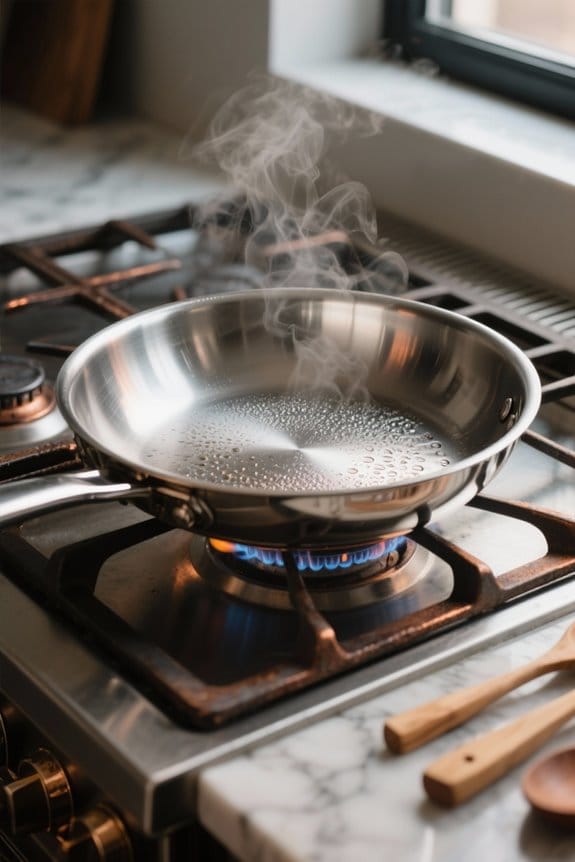
Achieving the right heat level is crucial for successful cooking. The ideal heat levels vary depending on food types. Delicate proteins, like fish, should be cooked at approximately 350°F. This temperature preserves tenderness and prevents overcooking. For vegetables or chicken, a target heat of 375°F promotes maximal caramelization. Higher temperatures, between 400-450°F, are necessary for meats like steaks or duck breasts to form a flavorful crust through effective searing. To guarantee proper cooking, it is essential to preheat your pan until the oil shimmers, indicating it has reached the desired temperature. Matching the heat level to specific cooking requirements ensures consistent outcomes and enhances the development of flavors in each dish. Glass casserole dishes are versatile and reliable for various cooking methods, making them an essential addition to any kitchen.
Recommended Products

GERMAN-MADE PERFORMANCE: Backed by 180 years of expertise, Fissler cookware delivers German precision and is built to last for generations.

【3-Ply Sturdy Construction】P&P CHEF pots and pans set which made of non-toxic materials protect your health, Overall stainless steel surface doesn't react with food or alter flavors, All set have 3-ply structures that consists of 18/10 stainless steel interior and 18/0 stainless steel exterior & aluminum core (it ensures a quick and even heating, but will not in contact with food) , Offering long-lasting performance that can withstand daily use

MULTIPLY CLAD STURDY CONSTRUCTION: Multiply cladding technology produces the highest-quality 3 ply stainless steel cookware set in your kitchen. 304 stainless steel interior for safe, easy-clean cooking; a thick aluminum core for even heating; 430 stainless steel exterior for use on all cooktops. Allows heat to pass through the entire pan, bottom to sidewall, with quick & even heat.
Techniques for Effective Preheating
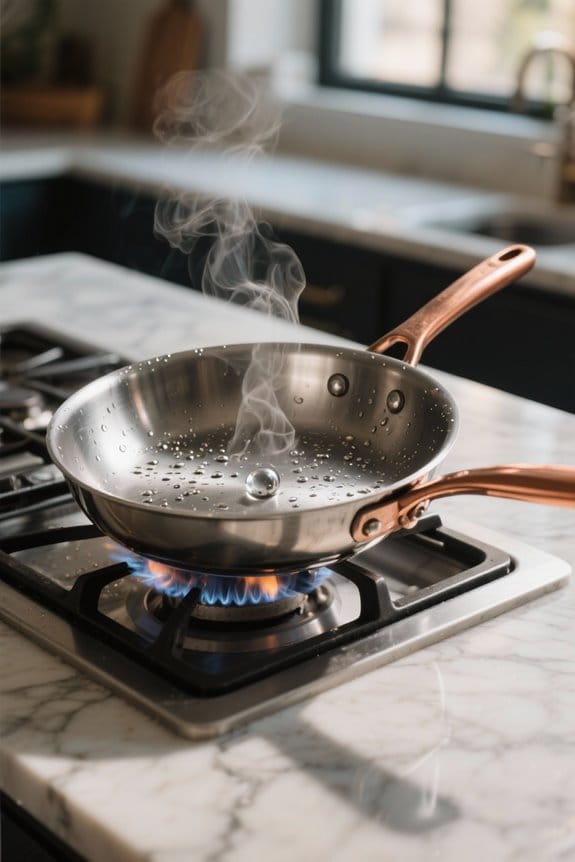
An effective preheating technique is essential for perfect cooking results. To begin, preheat the pan on medium heat for about two minutes. This allows for even heating across the surface. The water bead test is a reliable method to check if the pan is ready. Dropping a few water droplets on the pan should result in sizzling and gliding without immediate evaporation. For nonstick pans, consider using medium-low heat to protect the coating while reaching the desired temperature. Larger pans may need extra time to preheat all areas properly. Once the pan is preheated, avoid adjusting the temperature during cooking. This helps maintain consistent heat, ensuring peak cooking performance. For optimal results, choose the right size of pan, as it can significantly improve efficiency and ensure even cooking.
Recommended Products

10-Piece Set Includes: 6-quart stock pot with metal lid, 3-quart sauté pan with metal lid, 3-quart and 1.5-quart saucepans with metal lids, and 8-inch and 10-inch frying pans.

Five layers with copper core for controlled, even heating

5-PLY STAINLESS STEEL COOKWARE HEATS EVENLY – Five layers of steel and aluminum spread heat evenly and retain heat. No hot spots. Food cooks perfectly edge to center.
Common Preheating Mistakes to Avoid
Mistakes during the preheating process can lead to poor cooking results. Using a high heat setting to preheat pans can create uneven cooking. This may result in burnt areas on food. Adding cold oil to a pan that hasn’t reached the proper temperature can obscure true readiness. This makes effective cooking more difficult. Nonstick pans should be preheated on medium-low heat. Failure to do so can damage their coatings and hinder performance. Additionally, larger pans must be preheated adequately. Insufficient preheating can lead to cold spots. Rushing the preheating process by increasing heat too quickly prevents moisture evaporation. This often results in soggy food instead of a desirable crispy texture. Attention to these details can improve overall cooking results. For exceptional durability and heat retention, cast iron frying pans are a reliable choice that can withstand high temperatures and offer consistent performance.
When to Start in a Cold Skillet
Certain cooking techniques benefit from starting in a cold skillet. Using a cold skillet is ideal for delicate ingredients like thinly sliced garlic. This method allows gentle warming, preventing burning and preserving flavor. Fatty ingredients, such as bacon or chicken thighs, also benefit from this approach. The gradual fat rendering achieved helps achieve crispiness. Furthermore, starting in a cold skillet maintains the integrity of delicate components, avoiding overcooking. It can prevent immediate high temperatures that cause undesirable texture or flavor outcomes. In addition, using a cold skillet often results in easier cleanup. This reduces the risk of burnt residues that can stick to heated pans, making the cooking process more efficient. Stainless steel skillets, especially those with multi-ply construction, are ideal for this technique due to their even heat distribution and durability.
Cooking Temperature Management
Managing cooking temperatures is essential for successful meal preparation. Properly preheating a pan guarantees it reaches the desired cooking temperature quickly. This step is critical for achieving ideal browning and texture in food. When a pan is not preheated, food starts at a lower temperature, leading to undesirable steaming instead of frying. Maintaining a consistent cooking temperature is important once food is added, as fluctuations can impact the dish’s texture and moisture retention. Using cold ingredients in a cool pan prolongs cooking time, making it difficult to achieve necessary temperatures for flavor development. For the best results, match the preheating method to the food type. Different ingredients may require specific cooking temperatures to confirm the quality of the final dish. Stainless steel baking sheets provide excellent heat conductivity, ensuring even baking and maintaining consistent temperatures for optimal cooking results.
Understanding Heat Distribution in Different Cookware
When selecting cookware, understanding heat distribution is vital for achieving the best cooking results. Different materials have unique thermal properties that affect performance. A cast iron pan requires longer preheating times but retains heat well, allowing for steady cooking temperatures. This consistent heat enhances cooking performance. In contrast, stainless steel pans require moderate preheating to avoid sticking. Stainless steel does not develop a natural non-stick layer like cast iron, making even heat distribution essential. Non-stick pans should be preheated at low to medium heat to prevent damage to their coating. Each type of pan demands specific handling for ideal results, emphasizing the importance of understanding heat retention in cookware choices.
Enhancing Flavor and Texture Through Preheating
Preheating pans greatly improves the flavor and texture of cooked foods. It triggers the Maillard reaction, which enhances browning and develops rich flavors in meats and vegetables. A preheated skillet encourages rapid moisture evaporation, guaranteeing crispy textures and preventing sogginess in sautéed ingredients. Proper preheating allows for even heat distribution, which minimizes cold spots that can lead to uneven cooking results. To achieve ideal preheating temperatures, aim for around 350°F for delicate proteins and up to 450°F for steaks. This practice guarantees the desired sear and finish. Consistent preheating contributes to caramelization, enhancing flavor profiles and improving presentation in various dishes. As a result, preheating pans is essential for achieving the best cooking results. Multi-ply construction, often found in German stainless cookware, ensures optimal heat distribution, further enhancing cooking efficiency and results.
Frequently Asked Questions
Why Is It Important to Preheat a Pan Before Cooking?
Preheating a pan is essential for ideal pan temperature, enhancing cooking efficiency by promoting ingredient searing, minimizing food sticking, and ultimately improving flavor enhancement. Achieving the right temperature leads to better overall cooking results.
What Happens if I Bake Without Preheating?
Baking without preheating can lead to a 25% increase in cooking time. Ingredient reactions explained show that improper baking temperature affects flavor and dessert texture differences, often necessitating recipe adjustments and highlighting oven accuracy importance.
Is Heating a Pan With Nothing in It Bad?
Heating a pan empty can be detrimental; pan heating effects include potential warping and seasoning longevity issues. Additionally, energy waste impact and metal expansion physics can negatively influence food cooking times and overall cookware durability.
What Ruins Nonstick Pans?
Nonstick pans can suffer from nonstick coating damage due to overheating consequences, usage of metal utensils, and improper cleaning techniques. These factors greatly impact their functionality and considerably shorten the lifespan extension of the pans.