As an Amazon Associate, we earn from qualifying purchases. Some links on this site are affiliate links at no extra cost to you. Our recommendations are based on thorough research and editorial judgment.

The Physics of Heat Retention in Heavy Cookware

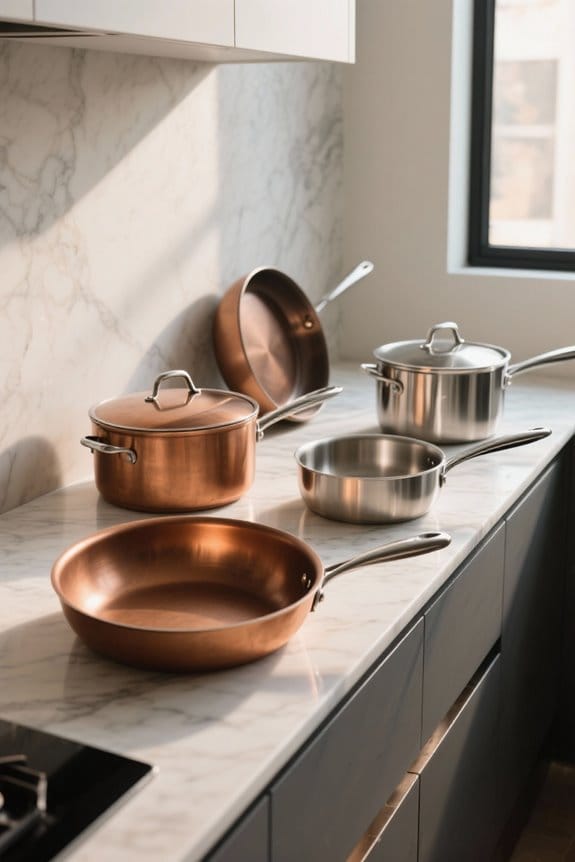
Heavy cookware, especially cast iron, is renowned for its heat retention and distribution. Its dense composition allows it to absorb heat slowly while maintaining consistent temperatures. This is essential for techniques like searing and slow cooking. Cast iron also features excellent thermal conductivity, leading to even cooking without hot spots. Proper care, including seasoning, enhances its longevity. Innovations in materials design further improve heat efficiency. Understanding these aspects can greatly impact cooking performance and outcomes.
Key Takeaways
- Heavy cookware, like cast iron, has a high thermal mass, allowing it to absorb and retain heat effectively during cooking.
- The dense composition of cast iron guarantees consistent temperatures, enhancing heat distribution and minimizing hot and cold spots for uniform cooking.
- Excellent thermal conductivity in heavy cookware helps preserve nutrients and intensify flavors by evenly distributing heat across the cooking surface.
- Slow heat absorption of cast iron improves browning and crisping, contributing to better texture and overall flavor in cooked dishes.
- Proper maintenance, such as seasoning and gradual cooling, ensures longevity and optimal heat efficiency of heavy cookware.
Understanding Heat Retention
You may be interested



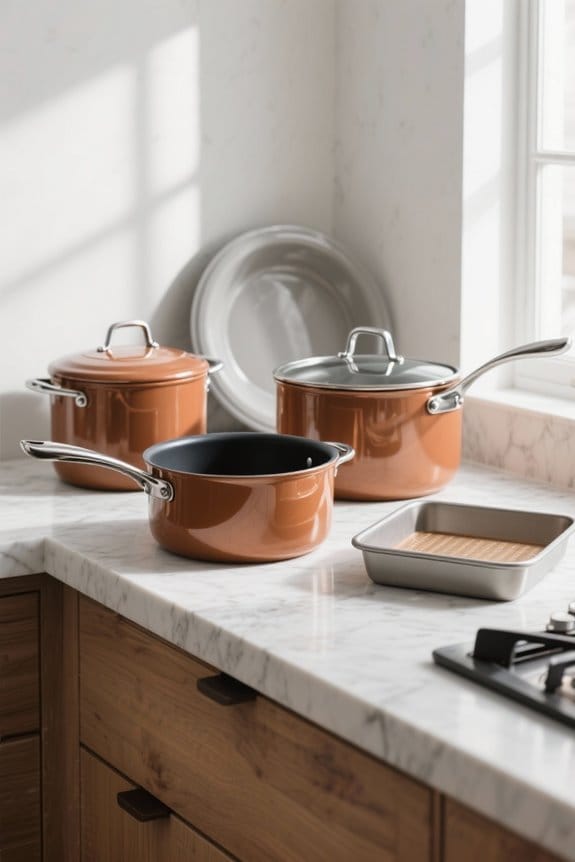
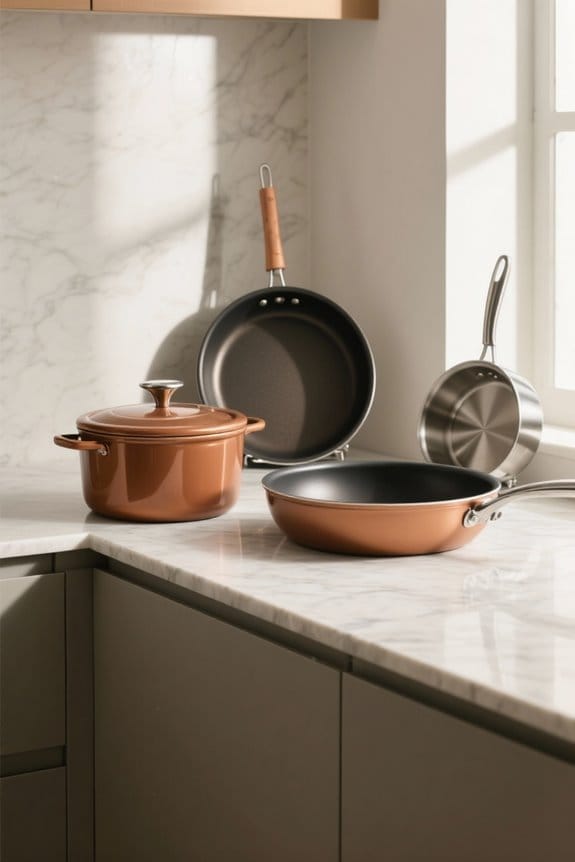
Heat retention is a crucial aspect of cookware performance. Cast iron is known for its exceptional heat retention due to its dense composition. This allows it to absorb heat slowly and maintain consistent temperatures during cooking. The thermal mass of cast iron is considerably higher than that of lighter materials like aluminum. This feature makes cast iron ideal for searing meats and slow-cooking dishes. Once heated, it effectively maintains temperature, which is useful for simmering without fluctuations. The heat retention properties of cast iron also enhance the browning and crisping of foods, improving their texture and flavor. Properly maintained cast iron cookware continues to improve over time, further enhancing its cooking performance and heat retention capabilities. Additionally, enameled options offer less maintenance and easier cleaning, making them a popular choice for those who prefer convenience without sacrificing performance.
Importance of Heat Distribution in Cooking
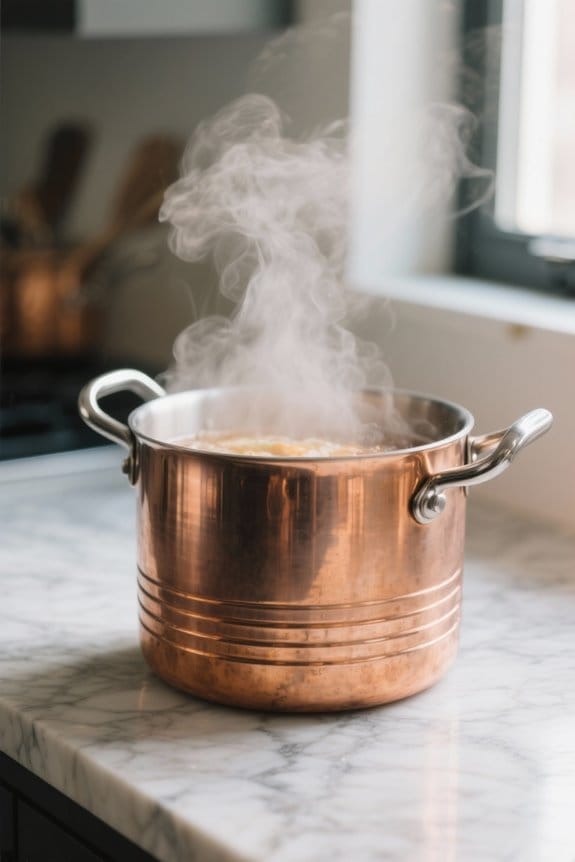
Proper heat distribution is vital for successful cooking. It guarantees even heat across cookware surfaces, preventing hot and cold spots. This consistency is significant for dishes like roti and curry, which require uniform cooking for ideal texture. Cast iron cookware is particularly effective due to its excellent thermal conductivity and heat retention. Efficient thermal transfer reduces cooking time, preserving nutrients and enhancing flavors. Multi-layered cookware, especially those combining metals like stainless steel and aluminum, further improves heat distribution by minimizing temperature fluctuations. Proper preheating and avoiding overcrowding are key practices. These strategies enhance cooking efficiency and deliver consistent heat, helping to avoid uneven cooking and achieving desirable culinary results. Effective heat distribution is a cornerstone of proficient cooking techniques. Additionally, cast iron pizza pans ensure even heat distribution for crispy crusts, highlighting the versatility and efficiency of cast iron in cooking.
How Heavy Cookware Enhances Cooking Techniques
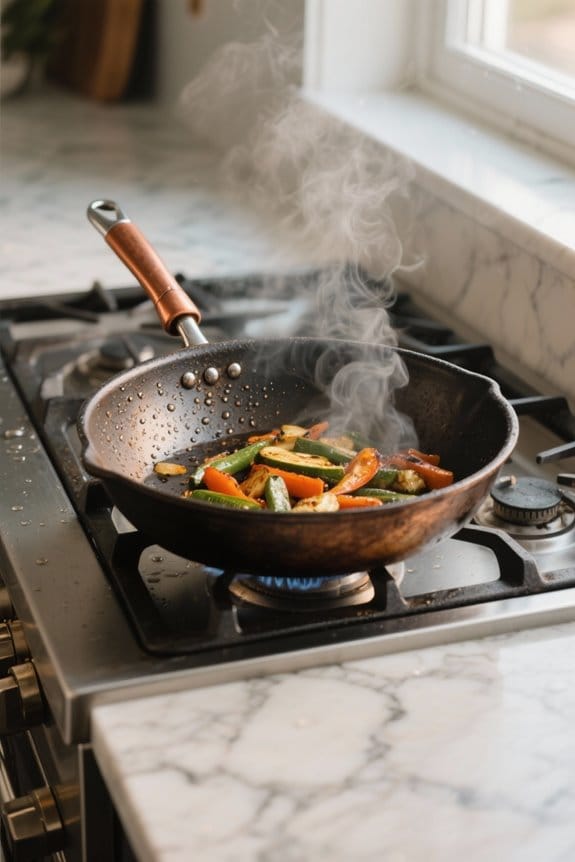
Heavy cookware plays a significant role in enhancing cooking techniques. Its heat retention properties guarantee consistent temperatures during cooking. This allows for even heat distribution across the cookware’s surface, which minimizes hot spots. Dishes such as stir-fries and stews benefit from better browning and caramelization. These processes are essential for developing flavors. The thermal mass of heavy cookware absorbs heat slowly, maintaining high temperatures over longer cooking times. This minimizes temperature drops that can interrupt the cooking process. As a result, ingredients can achieve their desired doneness effectively. Utilizing heavy cookware improves cooking outcomes by enhancing textures and flavors, particularly in recipes like braises and roasts that require extended cooking periods. The enamel coating on some heavy cookware like Dutch ovens simplifies cleaning and eliminates the need for seasoning. Overall, it is a valuable tool for any cook.
Recommended Products


Enameled cast iron delivers superior heat distribution and retention; Ready to use, requires no seasoning

Made in France , Heavy weight tight-fitting lid retains moisture spikes on the lid create a rain-forest effect evenly returning juices back onto food
Cast Iron: The Gold Standard for Heat Retention
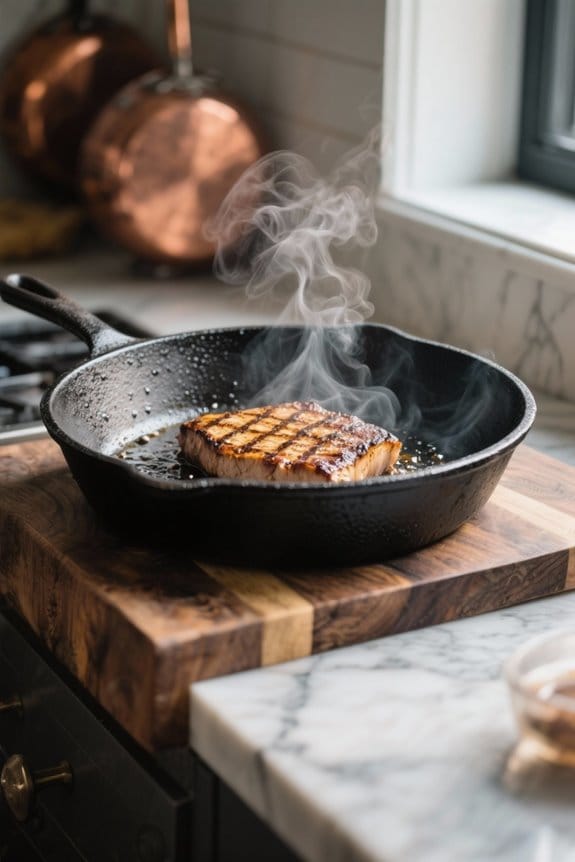
Cast iron cookware is widely recognized for its outstanding heat retention capabilities. Its dense and heavy construction allows for excellent heat retention even with fluctuating heat sources. Cast iron absorbs heat slowly but retains it for long periods. This characteristic makes it ideal for even heat distribution in slow cooking and searing methods. Professional chefs appreciate how cast iron prevents temperature drops during cooking, ensuring a perfect golden-brown crust on meats and baked goods. Furthermore, well-maintained cast iron develops a natural non-stick surface. It can withstand high temperatures and direct flames, making it a durable choice among cookware materials. Overall, cast iron stands as the gold standard for heat retention in culinary applications. Many cast iron skillets are PFAS-free, made without synthetic chemicals, promoting natural cooking methods.
Recommended Products

Enameled cast iron delivers superior heat distribution and retention

Enameled cast iron delivers superior heat distribution and retention; Ready to use, requires no seasoning

Enameled cast iron delivers superior heat distribution and retention
The Role of Thermal Conductivity in Cookware
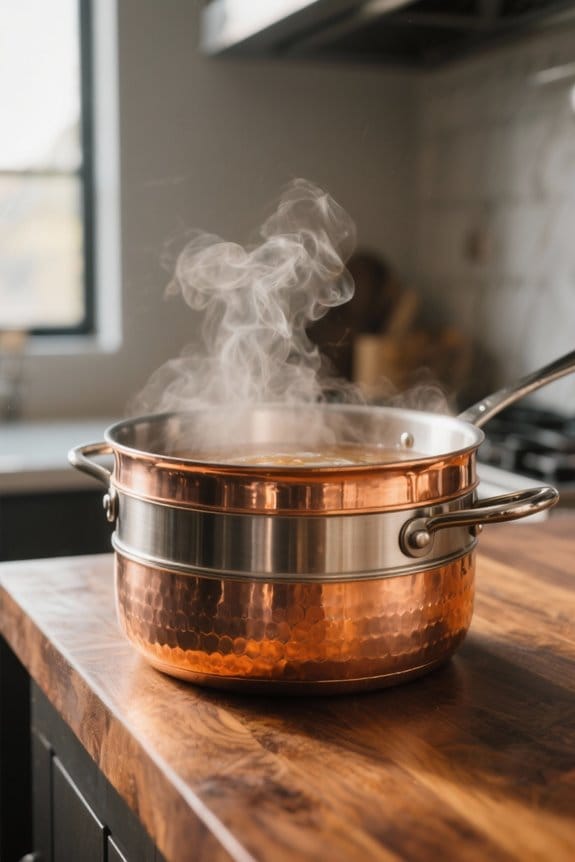
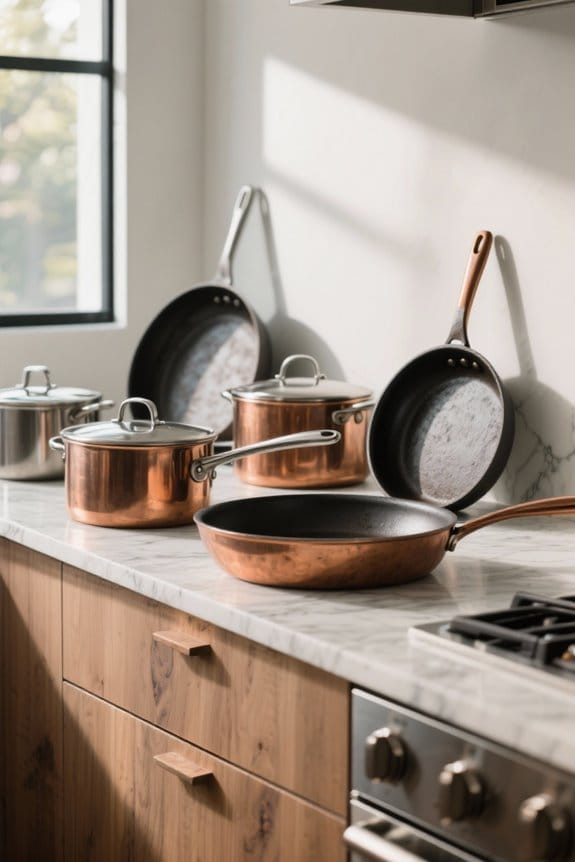
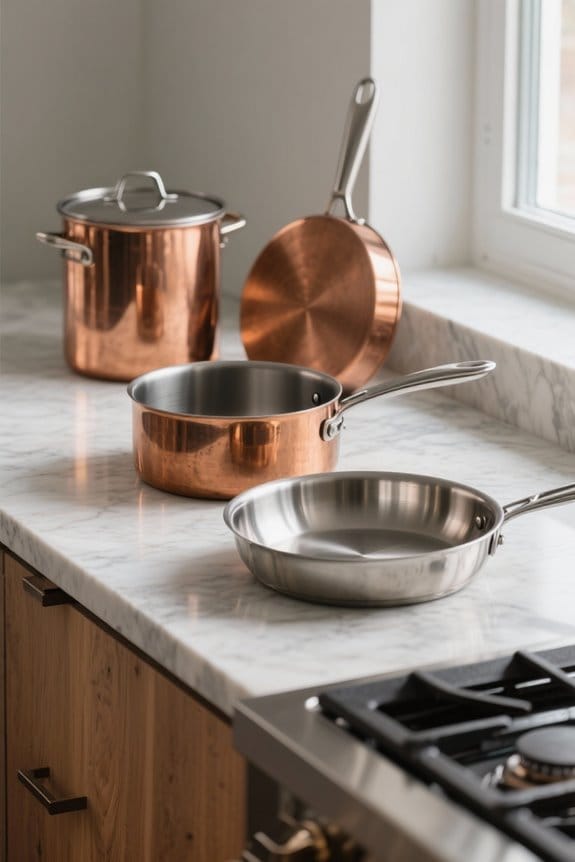
Thermal conductivity plays an essential role in how cookware heats up and cooks food. Copper is highly conductive, making it ideal for precise cooking. It heats quickly and evenly, benefiting delicate dishes. Aluminum is lightweight and affordable, but it may cause temperature fluctuations without better heat retention from other materials. Stainless steel has low thermal conductivity, which complicates cooking unless combined with aluminum or copper. Cast iron, while slow to heat, excels at retaining heat and providing consistent cooking temperatures. Each material’s physical characteristics affect how they perform in the kitchen. Consumers should consider these properties when selecting cookware to maximize efficiency and achieve desired cooking results. Understanding thermal conductivity can enhance cooking experiences considerably. Copper cookware enthusiasts value its exceptional heat conductivity, which allows for precise temperature control and minimizes food burning.
Comparing Cookware Materials: Cast Iron vs. Stainless Steel vs. Aluminum
In the kitchen, the choice of cookware material greatly affects cooking outcomes. Cast iron cookware excels in heat retention. Its dense material maintains consistent temperatures, making it ideal for slow cooking and searing. Stainless steel offers durability and non-reactivity. However, its lower thermal conductivity can lead to uneven cooking unless paired with aluminum or copper. Aluminum is lightweight and heats quickly, but it lacks the heat retention of cast iron. This rapid heating ability makes it suitable for quick tasks like sautéing. Each material serves a unique purpose: cast iron for steady heat retention, stainless steel for versatility, and aluminum for fast, even cooking. Chefs choose based on their specific cooking needs. For those prioritizing health safety, glass bakeware does not leach harmful chemicals into food, making it a healthier choice in the kitchen.
Recommended Products

This All-Clad HA1 Hard Anodized Nonstick cookware set includes 8 inch, 10 inch, and 12 inch Fry Pans, 2 quart and 3 quart covered Sauce Pans, 4 quart covered Sauté Pan, 4 quart covered Soup Pot, and 8 quart covered Stockpot

Set includes: 8, 10, & 12-inch fry pans, 2 & 3-quart sauce pans w/ lids, 4-quart saute pan w/ lid, 4-quart soup pot w/ lid, and an 8-quart stockpot w/ lid

This bundle includes (1) Le Creuset 4.5 qt. Round Dutch Oven with Lid, (1) Le Creuset 1 3/4 qt. Cast–Saucepan with Lid, and (1) Le Creuset 9" Signature Skillet.
Advantages of Heavy Cookware in Professional Kitchens
Heavy cookware, such as cast iron and enameled cast iron, is a staple in many professional kitchens. Its heat retention is unmatched, making it ideal for maintaining consistent cooking temperatures. This property allows chefs to achieve optimal results in their dishes. The thermal mass of heavy cookware guarantees even heat distribution, preventing hot spots during cooking. This capability is particularly important for recipes requiring precise temperature control. Furthermore, the durability of heavy cookware minimizes the risk of warping, guaranteeing it performs consistently over time. Additionally, its ability to shift from stovetop to oven enhances its versatility in the kitchen. Professional chefs rely on heavy cookware for its dependable performance in complex culinary tasks. Some modern cookware, like the Cooks Standard Dutch Oven Casserole, uses advanced materials like 18/10 stainless steel and aluminum disc capsules to achieve similar heat distribution and retention properties as traditional heavy cookware.
Recommended Products

Enamelled cast iron cocotte, ideal for one-pot dishes and roasts, to serve 4-5 people

CAST IRON ADVANTAGE: Smooth ceramic surface distributes and retains heat evenly for perfect results, ready to use- no seasoning required
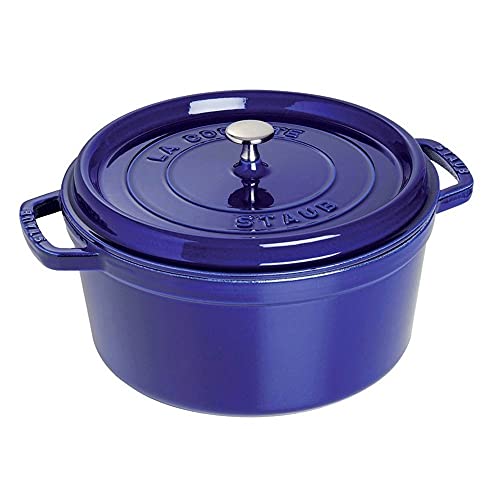
Round enameled cast iron coaster with a volume of 3.8 liters, ideal for gilding, slow cooking and trendy serving of meat, fish, fruit or vegetables
Cooking Techniques Best Suited for Heavy Cookware
When engaging in various cooking techniques, professionals find that cast iron and enameled cast iron cookware greatly enhance their culinary results. Heavy cookware excels in slow cooking, providing excellent heat retention that deepens flavors in stews and braises. Its density allows for effective searing, creating a crispy, golden-brown crust on meats and vegetables. The thermal mass of heavy cookware simulates a brick oven environment, delivering even cooking for baked goods. When frying, the heat retention minimizes temperature drops, ensuring efficient cooking. Techniques like stovetop-to-oven shifts leverage this heat retention, allowing for versatile cooking preparation. Overall, heavy cookware is suited for a range of cooking techniques that benefit from its unique properties. Enameled Dutch ovens are oven safe up to 500°F, making them versatile for roasting, baking, and more.
Maintenance and Care for Heavy Cookware
Proper maintenance and care for heavy cookware can greatly extend its lifespan and enhance cooking performance. For cast iron cookware, clean it with warm water only. This prevents rust and guarantees the heat efficiency it is known for. After cleaning, dry it immediately and apply a light coat of oil. Enamel-coated cast iron should be cleaned with mild soap and a soft sponge to protect the surface. Stainless steel cookware also requires gentle handling; use non-abrasive pads and mild detergents. To combat burnt spots, gentle scrubbing with baking soda or vinegar helps. Regularly check the handles and knobs to confirm they are secure. Adequate drying helps prevent corrosion, maintaining both efficiency and appearance. A well-designed pasta pot insert can improve cooking efficiency by ensuring even heat distribution and fast drainage.
Recommended Products

COMPLETE CAST IRON SET: Includes a 10.5” skillet, matching grill pan, 3.5 qt braiser pan, and 6.5 qt cast iron Dutch oven with lid, perfect for frying, searing, baking, grilling, braising, and simmering with steady, even heat.

Enameled cast iron delivers superior heat distribution and retention; Ready to use, requires no seasoning

Enameled cast iron delivers superior heat distribution and retention
The Science Behind Seasoning Cast Iron Cookware
Seasoning cast iron cookware is essential for achieving ideal cooking performance. This process involves applying oil and heating the cookware. It creates a polymerized layer that provides a natural non-stick surface. This layer also protects against rusting, enhancing both longevity and usability. The seasoning allows fat molecules to bond with the porous cast iron. This improves heat retention and supports even cooking over time. Ideal oils for this process include flaxseed, grapeseed, and vegetable oil because of their high smoke points. Regular maintenance is important. A thin layer of oil should be applied after each use and heated. A well-seasoned cast iron pan greatly enhances the culinary experience by aiding in heat distribution and minimizing food sticking. Proper care and maintenance of cast iron pans, such as hand washing and drying thoroughly, are crucial in preserving seasoning and preventing rust.
Heat Efficiency: Tips for Optimal Cooking Results
How can heat efficiency enhance cooking results? Using heavy cookware, such as cast iron, guarantees even heat distribution during cooking tasks. It is essential to preheat the cookware on medium heat for 3-5 minutes before adding ingredients. This step promotes ideal temperature from the start. Adjust heat gradually while cooking to maintain precise temperatures, especially for delicate recipes. Overcrowding the pan can lower temperature and create uneven cooking. Cook in batches for better results. When preparing acidic dishes, opt for enameled cast iron to avoid reactivity. Allow heavy cookware to cool down slowly after use. This practice prevents damage, guaranteeing longevity and consistent performance, particularly in cast iron, which is known for its slow heat retention properties.
The Future of Cookware: Innovations in Heavy Cookware Design
As the demand for effective cookware continues to rise, innovations play an essential role in enhancing performance. Heavy cookware designs now integrate advanced materials like forged aluminum or copper. These materials improve heat distribution while guaranteeing durability. The introduction of non-stick coatings enhances release properties, making cookware more versatile. Thermal sensors in some designs provide real-time temperature monitoring, allowing precise cooking control. Additionally, ergonomic handles are being included to guarantee user comfort and safety during cooking. These handles also aid in weight distribution. Manufacturers are prioritizing eco-friendly materials and sustainable production methods. These innovations cater to environmentally-conscious consumers while delivering improved performance and durability in heavy cookware.
Frequently Asked Questions
What Retains Heat Better, Cast Iron or Stainless Steel?
Cast iron retains heat better than stainless steel due to its higher thermal mass and superior heat conduction properties. This cookware comparison highlights cast iron’s efficiency in heat distribution, leading to enhanced cooking effectiveness, particularly for slow cooking.
Which Metals Retain Heat the Longest?
“Good things come to those who wait.” Among cooking metals, cast iron excels in heat retention, while copper’s conductivity aids quick heating. Aluminum guarantees efficiency, but steel’s weight compromises its temperature regulation and cooking performance.
Why Does a Larger Pan Heat up Faster Than a Small Pan?
A larger pan heats up faster due to enhanced heat transfer, increased surface area for energy absorption, and better heat saturation. Additionally, ideal pan materials and size improve thermal conductivity and overall cooking efficiency, boosting cooking performance.
What Pans Can Go in a 500 Degree Oven?
Most cast iron and enameled cast iron cookware safely withstand 500 degrees, highlighting impressive cookware durability. Additionally, high-quality stainless steel pans guarantee excellent heat conductivity, making them suitable for roasting techniques and perfecting baked goods at high temperatures.