As an Amazon Associate, we earn from qualifying purchases. Some links on this site are affiliate links at no extra cost to you. Our recommendations are based on thorough research and editorial judgment.

Why Hand Washing Preserves Nonstick Coatings Longer

Hand washing nonstick cookware preserves its coatings by minimizing exposure to high heat and pressure found in dishwashers. Using mild soap and a soft sponge prevents scratches that can degrade the nonstick surface. Cooling pans before cleaning avoids thermal shock, which can warp them. Rinsing thoroughly guarantees no soap residue remains. Quick drying with a soft towel protects against rust. These practices enhance durability and maintain the cookware’s effectiveness over time, revealing more maintenance tips ahead.
Key Takeaways
- Hand washing reduces exposure to high heat and water pressure, preventing warping and damage to nonstick coatings.
- Mild soaps and soft sponges used in hand washing minimize the risk of scratches that can degrade nonstick surfaces.
- Cooling pans completely before washing prevents thermal shock, preserving the structural integrity of nonstick cookware.
- Gentle cleaning methods during hand washing help maintain food release properties and overall nonstick efficiency.
- Regular inspection for scratches during hand washing allows for prompt maintenance, prolonging the lifespan of nonstick coatings.
Understanding Nonstick Cookware and Its Maintenance
You may be interested



Nonstick cookware is designed for easy cooking and cleaning. To maintain nonstick coatings effectively, care should be taken during the cleaning process. Hand washing is the preferred method as it minimizes risks associated with pressure and heat, extending the life of the cookware. Users should clean nonstick cookware with warm water and mild dish soap using a soft sponge or cloth. This method helps preserve the nonstick surface by avoiding scratches that abrasive tools may cause. Nonstick pans enhance the baking experience by ensuring easy food release. After washing, drying with a soft towel prevents water spots and reduces moisture that could lead to rust. Regularly inspecting for scratches or wear is also essential to guarantee the cookware remains safe for continued use and cooking.
The Importance of Proper Care for Nonstick Surfaces
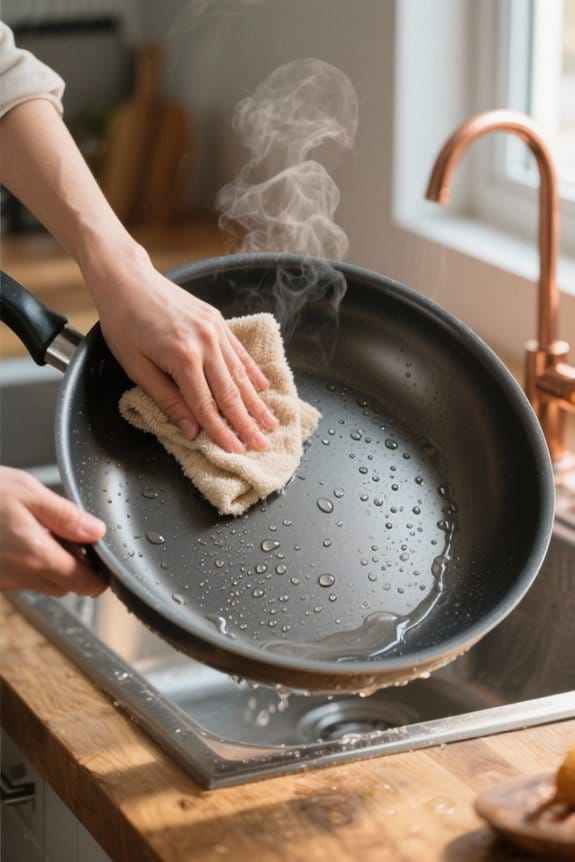
Proper care for nonstick surfaces is essential to guarantee their longevity and performance. Nonstick pans require hand washing to minimize damage. Dishwashers expose these cookware items to high-pressure water and high heat, which can degrade the coating. Using mild dish soap and a soft sponge helps remove food residues without scratching. It is vital to let pans cool before cleaning to prevent thermal shock, which may cause warping. Regular inspection during hand washing is important for detecting scratches early. After washing, thorough drying prevents moisture retention that could lead to rust. Following these steps properly prolongs the life of nonstick coatings, ensuring they continue to function effectively for years to come. Additionally, using silicone, wood, or plastic utensils helps prevent damage to nonstick surfaces, which further extends their lifespan.
Benefits of Hand Washing Nonstick Cookware
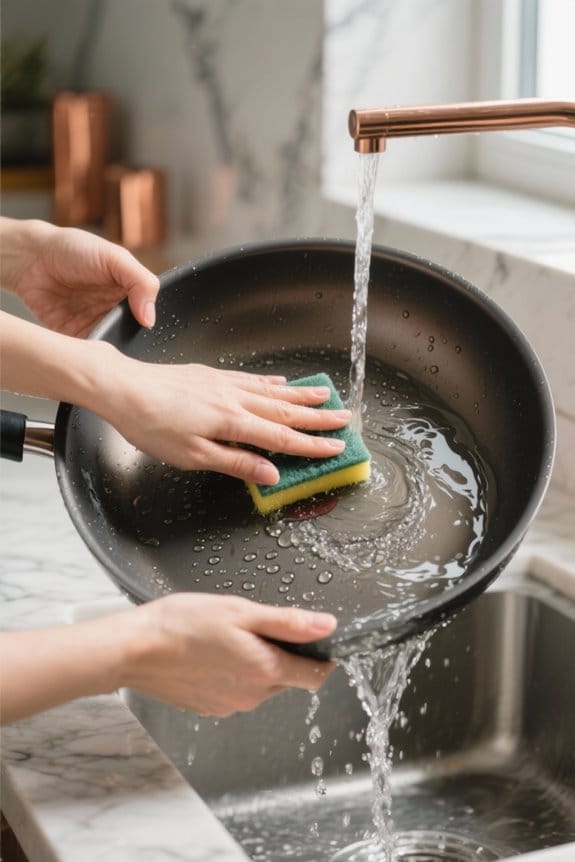
Hand washing nonstick cookware offers several advantages that directly enhance its longevity and performance. This method uses gentler techniques, reducing the risk of damage from high temperatures and contact with other dishes. Hand washing minimizes warping and scratching, which are common in dishwashers. A soft sponge and mild dish soap protect the nonstick coating better than harsh detergents and abrasive pads. Regular hand washing also prevents the buildup of food residue, which can negatively affect nonstick properties. Furthermore, maintaining cookware in this manner helps preserve its aesthetic appeal. It’s important to note that nonstick coatings like PFOA-free options are safer for health, and taking care of them ensures their continued effectiveness. This process guarantees that nonstick pans remain a convenient and attractive addition to any kitchen. Overall, hand washing is a reliable choice for effective care of nonstick cookware.
How Hand Washing Prevents Scratches
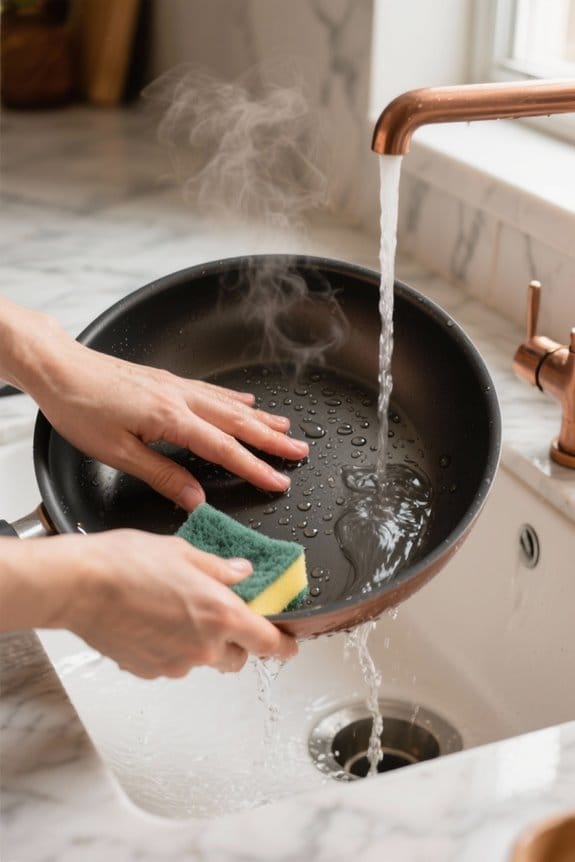
Using gentle cleaning techniques considerably reduces the risk of scratches on nonstick cookware. Hand washing prevents the harsh pressure and friction that often occurs in dishwashers. A soft sponge or cloth is essential because it avoids the abrasive wear linked to scouring pads. This method allows for controlled movements, minimizing contact with other dishes that might scrape the nonstick surface. Unlike dishwashers, hand washing uses low water pressure. This gentler approach helps maintain the integrity of the nonstick coating. By choosing to hand wash, cooks can effectively keep their nonstick cookware scratch-free, prolonging its lifespan and ensuring peak performance. Adopting these practices is vital for maintaining the cookware’s quality over time. Non-toxic ceramic coatings promote healthier cooking and are found in products like Gotham Steel and SENSARTE, ensuring a safe cooking environment.
Temperature Control: Avoiding Thermal Shock
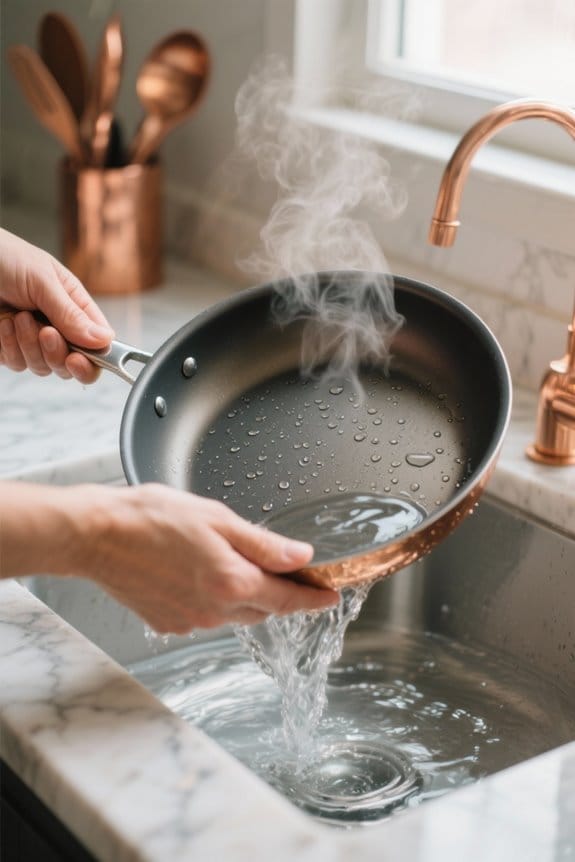
Maintaining the longevity of nonstick cookware involves careful management of temperature during the cleaning process. Proper temperature control prevents thermal shock, which can warp or damage the nonstick coating. Rapid temperature changes, such as placing a hot nonstick pan directly into cold water, create structural stress. This stress compromises the cookware’s integrity. Instead, allow the pan to cool completely before washing. Hand washing with warm water helps maintain temperature consistency and avoids extremes that could harm the coating. Additionally, prolonged exposure to high heat in dishwashers may degrade nonstick finishes. By managing temperature effectively, users can maximize the lifespan and performance of their nonstick cookware, ensuring it remains functional for many uses. Heavy gauge materials in the construction of nonstick skillets also help in preventing warping, ensuring durability and resistance over time.
Recommended Hand Washing Techniques
Effective cleaning techniques are essential for preserving the quality of nonstick cookware. Hand washing nonstick pans is the best method to avoid potential damage from dishwashers. Start by using warm water and mild dish soap. Choose a soft sponge or cloth to clean the surfaces gently. It is important to allow pans to cool completely before washing. This prevents thermal shock that can warp the cookware. After washing, rinsing thoroughly is vital to remove all soap residue. Soap left on the surface can lead to food sticking. Finally, immediate drying with a soft towel is recommended. This step prevents water spots and rust, further extending the lifespan of nonstick cookware. Adopting these techniques enhances performance and durability. Many nonstick saucepans require hand washing to maintain their longevity.
Common Mistakes When Cleaning Nonstick Pans
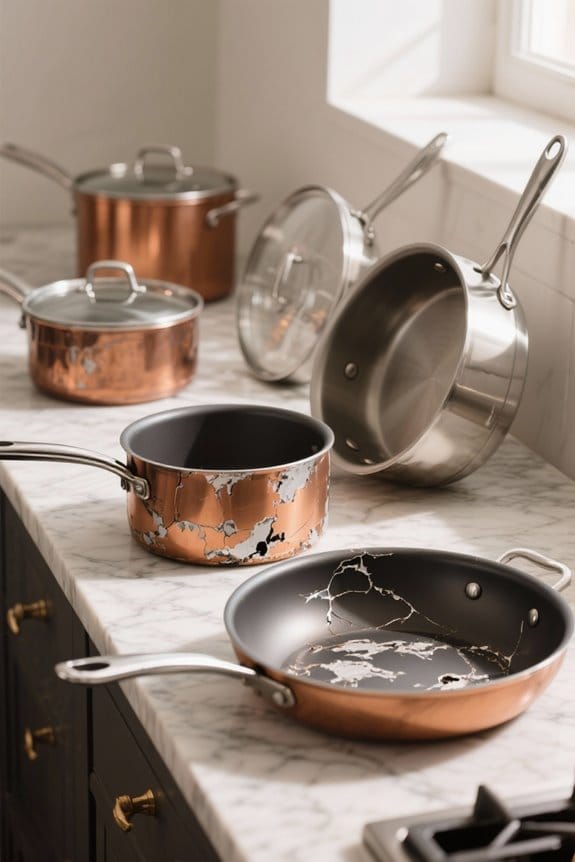
When cleaning nonstick pans, many individuals overlook simple yet significant mistakes that can impair their cookware’s performance. Using abrasive scrubbers can scratch the surface and damage the nonstick coating. It is essential to use a soft sponge or cloth instead. Additionally, rinsing a hot pan in cold water can cause thermal shock, leading to warping. Consequently, waiting for the pan to cool before washing is vital. A thorough rinse after using soap is also necessary, as soap residue can degrade the nonstick surface. Finally, when storing nonstick pans, avoid stacking them without protection. Placing paper towels between pans can help prevent scratches from contact with other cookware. Proper care will prolong the life of nonstick pans. Stainless steel baking sheets are a durable alternative, offering excellent heat conductivity and resistance to warping.
Comparing Hand Washing and Dishwasher Use
Hand washing offers distinct advantages over using a dishwasher for nonstick cookware. Hand washing minimizes exposure to high heat and water pressure, reducing the risk of warping. It allows for gentle care using mild dish soap and a soft sponge, which prevents scratches that dishwasher detergents may cause. Additionally, dishwashers can expose cookware to harsh chemicals that degrade nonstick coatings. Proper hand washing techniques, such as allowing the pan to cool first, protect the coating’s integrity. Regular hand washing extends the lifespan of nonstick surfaces by preventing the buildup of residues from cooking sprays and harsh detergents. Overall, hand washing proves to be a more effective method for maintaining the quality of nonstick cookware. Heavy gauge aluminum ensures even heating and contributes to the durability of nonstick pans, making hand washing a practical choice for preserving these features.
Recognizing Dishwasher Risks for Nonstick Coatings
Many consumers may overlook the risks that dishwashers pose to nonstick cookware. The high heat and water pressure of a dishwasher can warp nonstick pans. This compromises the integrity of their coatings over time. Additionally, harsh detergents can break down nonstick surfaces. This reduces both effectiveness and longevity. Nonstick pans often come into contact with other dishes, leading to scratching and further damage. Furthermore, frequent dishwasher use creates temperature fluctuations that contribute to warping. Such conditions negatively impact the lifespan of nonstick cookware. In contrast, hand washing offers a gentler approach. It minimizes abrasive interactions and avoids harsh cleaning agents. Therefore, hand washing is a safer choice to preserve the quality of nonstick coatings. To ensure consistent heating across all stovetops, select pans compatible with induction.
Tips for Maintaining Nonstick Cookware Longevity
To guarantee the longevity of nonstick cookware, proper care and maintenance practices are necessary. Hand washing with warm water and mild dish soap is essential. This reduces the risks that high heat and harsh detergents pose to the nonstick coating. Always use a soft sponge or cloth to clean. This helps to avoid surface scratches that compromise the cookware’s effectiveness. After washing, thoroughly dry the pans with a soft towel to prevent water spots and rust. Regularly inspect for scratches or peeling, addressing issues early on. When storing nonstick cookware, use paper towels or pan protectors between stacked items. This minimizes scratches and extends the life of the nonstick coating for a longer period. It is also beneficial to choose nonstick skillets made from safe materials free from harmful chemicals, as these offer enhanced durability and safety.
Alternatives for Cleaning Stubborn Residues
Stubborn residues on nonstick cookware can be challenging to clean, but effective alternatives exist. A mixture of baking soda and water forms a paste that can be applied to tough spots. This method allows for gentle scrubbing without damaging the surface. Soaking nonstick pans in warm, soapy water helps loosen food particles. This approach makes it easier to remove residues without harming the coating. It is important to use a non-abrasive scrubber, like a soft sponge or nylon brush. Harsh chemicals, such as oven cleaners, should be avoided, as they can degrade the nonstick coating. Thorough cleaning after using any cleaning agents is essential to prevent residue buildup that may affect future cooking performance.
Conclusion: Making the Best Choice for Your Cookware
Cleaning nonstick cookware properly can greatly influence its longevity and performance. Hand washing is recommended because it prevents damage from thermal shock and reduces the risk of warping. Using a soft sponge and mild dish soap helps protect the nonstick coating, ensuring food releases easily. In contrast, abrasive scrubbers and harsh dishwasher detergents can scratch the surface and degrade its effectiveness. By avoiding the dishwasher, home cooks also protect their cookware’s aesthetic appeal from potential scratches caused by contact with other dishes. Following hand washing guidelines is essential; it can remarkably extend the lifespan of nonstick cookware. This choice not only preserves functionality but also contributes to a more sustainable kitchen environment for all home cooks.
Frequently Asked Questions
Should You Hand Wash Non-Stick Pans?
Statistics reveal that hand washing non-stick pans can extend their lifespan by up to 50%. Emphasizing hand washing benefits over dishwashing myths guarantees enhanced non stick durability, ideal cookware maintenance, and improved kitchen safety for pan longevity.
How to Preserve Nonstick Coating?
To preserve nonstick coating, follow nonstick maintenance tips: use safe cleaning methods, avoid metal utensils, adhere to heat exposure guidelines, implement scratching prevention techniques, and apply oil regularly, ensuring proper storage for lifespan extension strategies.
Why Is Hand Washing More Effective?
Hand washing reigns supreme for coating longevity, like a gentle spa day for nonstick pans. It avoids abrasive materials, minimizes heat exposure, prevents surface scratches, and banishes soap residue, ensuring effective maintenance tips for cherished cookware.
Why Is My Non-Stick Pan Sticky After Washing?
A non-stick pan may feel sticky due to residual cooking oil, inadequate cleaning methods, or using abrasive sponges. Additionally, heat exposure and dishwasher effects can cause surface damage, leading to unpleasant sticky residue during cooking.