As an Amazon Associate, we earn from qualifying purchases. Some links on this site are affiliate links at no extra cost to you. Our recommendations are based on thorough research and editorial judgment.

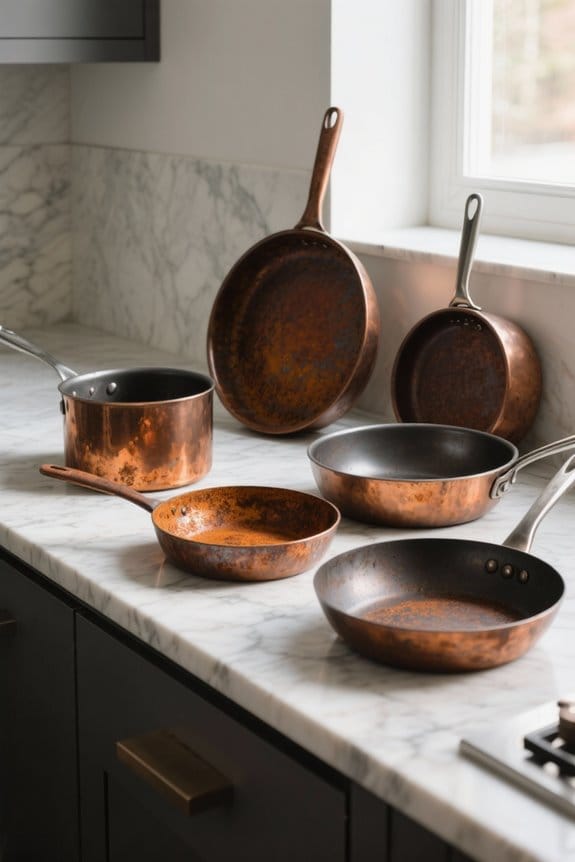
Understanding Carbon Steel Seasoning and Patina Development

Proper seasoning of carbon steel cookware is vital for peak performance. It creates a natural nonstick surface through polymerized oils. Regular reseasoning maintains this protective layer, fostering durability and enhancing flavor. A well-developed patina forms from continuous use and prevents rust. To maintain a good patina, avoid moisture and use high smoke-point oils. Cleaning without soap and applying oil after each use are essential practices. For further insights into seasoning techniques and patina maintenance, more information is available.
Key Takeaways
- Seasoning carbon steel creates a nonstick surface through heating oil, which polymerizes to form a protective layer against rust.
- A well-developed patina enhances cooking performance and flavors by bonding polymerized fats with the pan’s surface.
- Proper maintenance, including light oil application and avoiding acidic foods, is crucial for preserving and developing the patina.
- Avoid using soap for cleaning; instead, use coarse salt or oil, and always dry the pan completely before storing.
- Reseasoning may be needed if rust appears or if there are signs of bare metal due to wear or improper care.
The Importance of Seasoning Your Carbon Steel Cookware
You may be interested



When it comes to carbon steel cookware, seasoning is an essential step for effective use. Seasoning creates a natural nonstick cooking surface that enhances performance. The process involves applying oil and heating it to its high smoke-point, which allows the fats to polymerize. This forms a protective layer that prevents rust and helps maintain the pan’s quality over time. Regularly reseasoning is vital, especially after cooking acidic foods. Such foods can strip away the seasoning, diminishing its effectiveness. Properly maintained pans develop a dark patina, which not only improves non-stick qualities but also enhances the flavors of dishes. Carbon steel woks provide a non-toxic cooking experience and are thus a healthy choice for culinary enthusiasts. Overall, proper seasoning guarantees that carbon steel cookware remains functional and durable for frequent culinary use.
Recommended Products

Chinese wok, made in China. Our woks have been through 12 processes, 36,000 times of hand-hammering. It shines like a mirror. You can see all the hammer prints but hardly feel them. Mirror surface allows ingredients to slide smoothly inside the wok.

Hand-hammered iron for even, intense heat every time; Flat-bottom design fits all stovetops, including induction; Sturdy iron handle for safe, confident cooking; Crafted for durability and authentic wok flavor.

Includes: 8" Seasoned Blue Carbon Steel Frying Pan | 10" Seasoned Blue Carbon Steel Frying Pan | 12" Seasoned Blue Carbon Steel Frying Pan
What Is Patina and How Is It Developed?
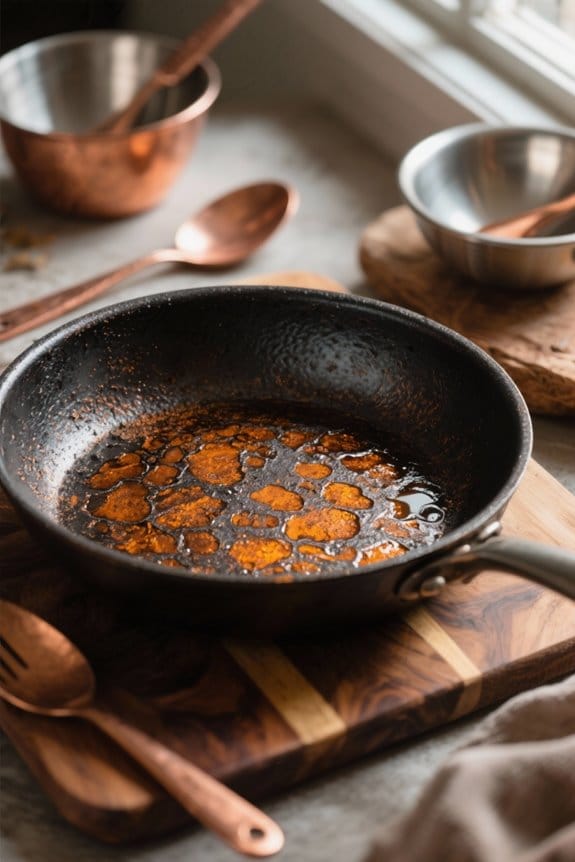
Patina is a key feature of carbon steel cookware that greatly influences its performance. This seasoned surface develops through consistent use and proper maintenance. It is formed by polymerized fats that bond with the pan’s surface. A beautiful patina provides a natural non-stick layer, enhancing cooking properties and flavor profiles. With a well-formed patina, carbon steel pans achieve higher quality results, especially when cooking at high heat. Initial hard seasoning is essential for non-pre-seasoned woks to establish a durable protective layer. Regularly cleaning and seasoning after each use helps maintain and improve an existing patina. Utilizing high smoke-point oils during the seasoning process further protects against rust and enhances the cooking experience. Cast iron woks, like carbon steel, benefit from high heat retention which is crucial for optimal cooking results.
Tips for Maintaining a Good Patina
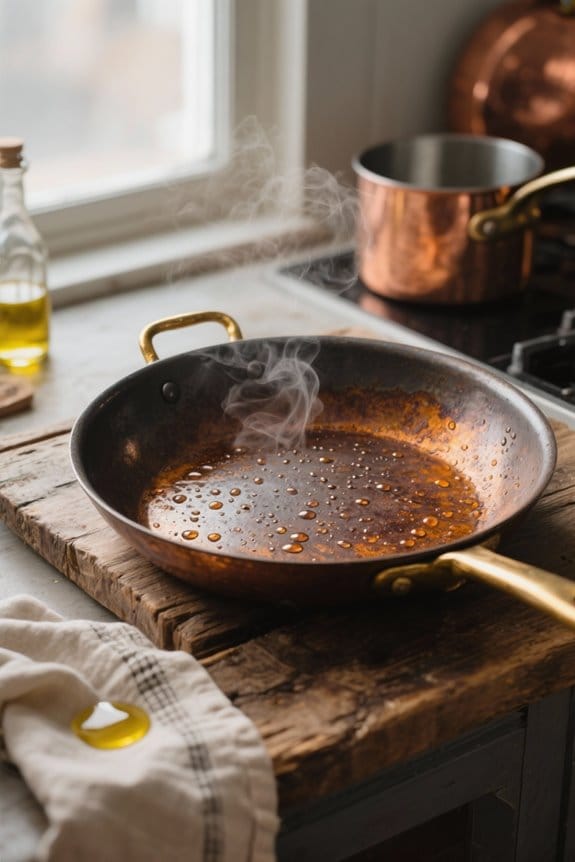
Maintaining a good patina on carbon steel cookware requires careful attention and consistent practices. Regular use of high smoke-point oils is essential. Cooking techniques like stir-frying help develop a patina that enhances the surface. After each use, it is vital to clean and dry the wok with water and a brush to remove food residue. This cleaning preserves the patina. After cleaning, heat the wok until it is completely dry, then apply a light layer of oil before storage. This protects the seasoned surface. Avoid stacking other pots and pans on the wok, as this may damage the patina. In professional kitchens, consistent cooking encourages the formation of polymerized fats, improving both color and non-stick properties. When selecting a carbon steel wok, consider options with pre-seasoned surfaces for immediate nonstick functionality, as mentioned in the knowledge.
Troubleshooting Common Seasoning Issues
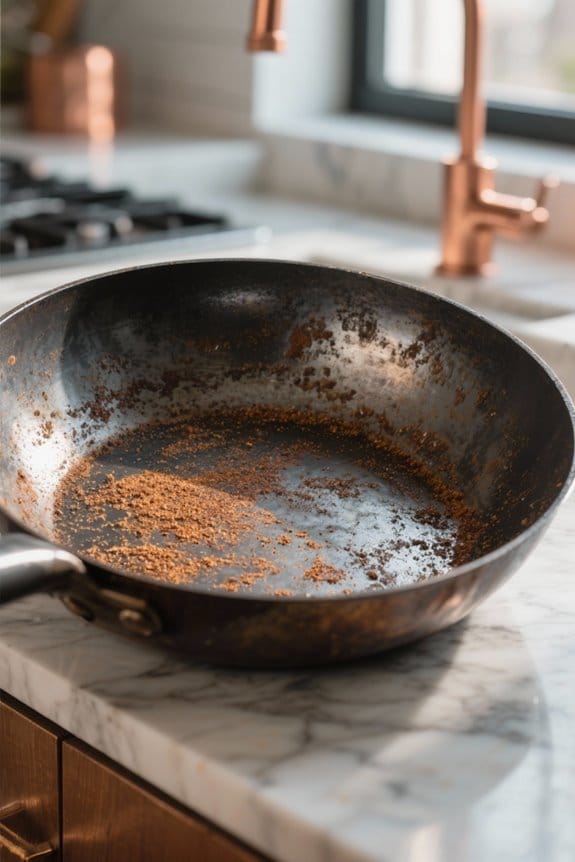
Cooking with carbon steel can lead to enjoyable results, but issues may arise with the seasoning over time. Common seasoning issues include rust problems, often caused by high humidity or improper storage. If visible bare metal appears, it is time to reseason the pan. A sticky surface might occur from over-seasoning where oil builds up. Continued use can help, but reseasoning may be necessary. Cooking with acidic ingredients can strip away the patina. For these dishes, stainless steel is a better choice. Regular oil applications are essential for maintaining patina and preventing rust. Proper care enhances nonstick properties and extends the lifespan of carbon steel frying pans, ensuring better performance and usability. Tri-clad cookware like the Cuisinart 12-Piece MultiClad Pro set is known for its even heat distribution, which can help achieve consistent seasoning results across the pan.
Best Practices for Cleaning and Storing Your Pan
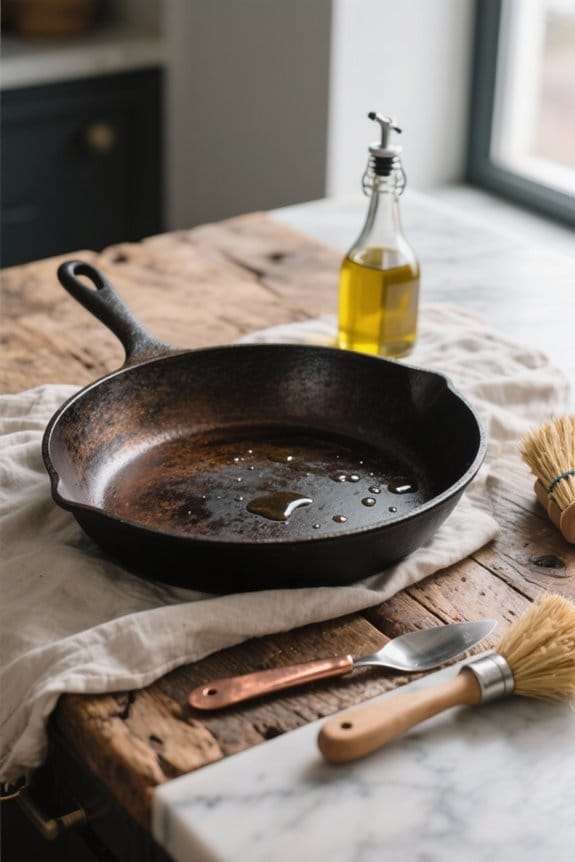
Proper cleaning and storage are essential for preserving the quality of a carbon steel pan. To clean the pan, avoid dish soap. Instead, wipe out excess oil with a paper towel or scrub stubborn residues using coarse salt and oil. After cleaning, always apply a thin layer of oil to reseason the pan and prevent rust formation. Guarantee the pan is completely dry before storing by using low heat on the stove to eliminate any moisture. When stacking pans, use a pan protector, dish towel, or trivet between them to avoid scratching the seasoning. Store the carbon steel pan in a cool, dry location to minimize humidity exposure and maintain its protective layer. For scratch-resistant cookware, it’s important to use non-metal utensils to prevent damage to the nonstick surfaces.
Frequently Asked Questions
How to Properly Season Carbon Steel?
To properly season carbon steel, use high smoke-point oils, apply thin layers, and heat through stovetop or oven methods. Maintenance tips include regular reseasoning and following cleaning guidelines to enhance cooking benefits and non-stick properties.
What Color Should Seasoned Carbon Steel Be?
Seasoned carbon steel should display a rich, dark brown to black patina color. Proper seasoning techniques enhance cooking benefits and surface textures, while maintenance tips can prevent common mistakes that lead to a lighter, inadequate patina.
How to Know if Carbon Steel Is Seasoned?
To identify seasoned signs on carbon steel, look for a smooth surface texture, oil residue, and effective cooking performance. Proper maintenance tips include avoiding bare metal exposure while ensuring ideal food release during cooking.
What Happens if You Don’t Season a Carbon Steel Pan?
Without seasoning a carbon steel pan, rust formation occurs, food sticking becomes prevalent, and cooking efficiency declines. A maintenance routine using oil alternatives can help preserve the pan’s lifespan and enhance performance over time.