As an Amazon Associate, we earn from qualifying purchases. Some links on this site are affiliate links at no extra cost to you. Our recommendations are based on thorough research and editorial judgment.

The Purpose of Ridges in Grill Pans

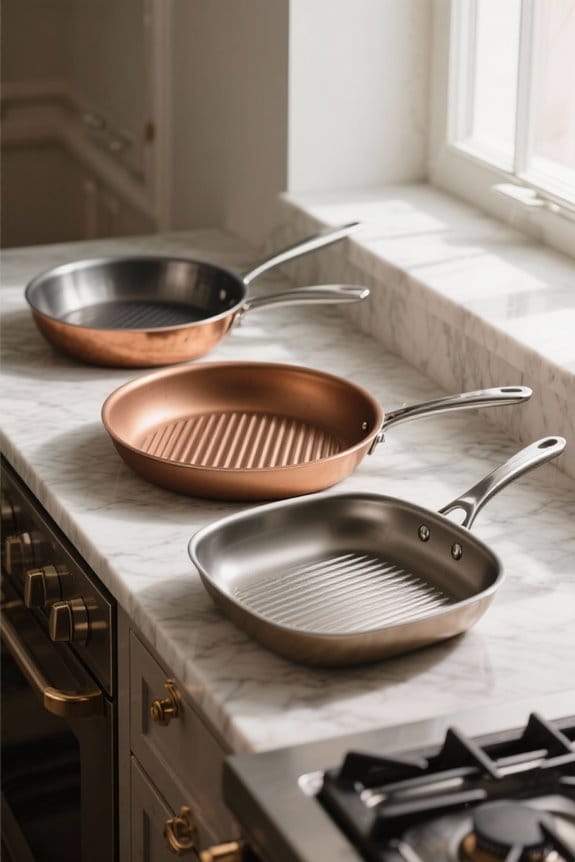
Ridges in grill pans serve multiple essential purposes. They elevate food above excess grease, allowing for better drainage and preventing steaming. This design promotes even cooking by reducing direct contact with the hot surface. Ridges also help create appealing grill marks and enhance the Maillard reaction, intensifying flavor and texture. Materials like cast iron improve heat retention for effective searing, while nonstick surfaces aid in cleanup. Further insights reveal various techniques and recipe ideas for grill pans.
Key Takeaways
- Ridges elevate food, allowing grease to drain away and preventing steaming during cooking.
- They enhance heat distribution for even cooking by reducing direct contact with the cooking surface.
- Grill marks created by ridges improve food presentation and intensify flavors through the searing effect.
- Raised ridges facilitate healthier cooking by allowing fat to drip away, reducing the need for added oils.
- Ridges help achieve a desirable charred texture through the Maillard reaction, enhancing the overall flavor profile of grilled foods.
Understanding the Design of Grill Pan Ridges
You may be interested


Grill pans are designed with ridges that play an essential role in cooking. These ridges elevate food above cooking juices, allowing grease to drain away. This design prevents steaming and promotes even cooking. Cast iron grill pans excel in heat retention, ensuring that food is seared effectively. The height and spacing of the ridges facilitate better heat distribution while minimizing direct contact between the food and pan surface. This helps achieve a desirable seared effect by increasing the surface area for heat transmission. Additionally, the unique design of the ridges creates textures that can mimic outdoor grilling. Overall, the ridges in grill pans enhance both function and versatility for indoor cooking. When choosing a grill pan, look for nonstick coatings to ensure easier food release and cleanup, as well as to prevent sticking.
Enhancing Flavor With Grill Marks
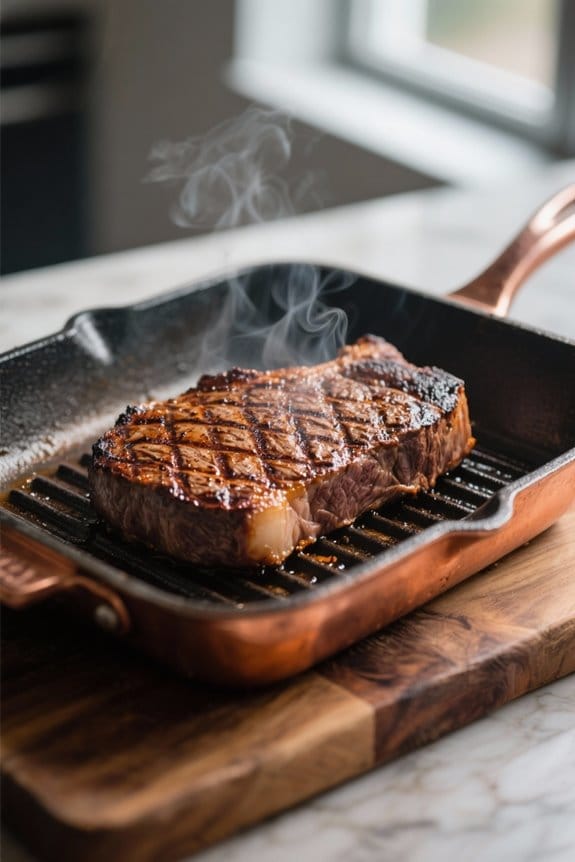
Creating appealing grill marks on food markedly enhances its aesthetic and flavor. Grill marks are achieved through the elevated ridges of grill pans. These ridges create a searing effect that helps develop a rich, caramelized crust. This process intensifies the natural flavors of meats and vegetables. The marks also contribute to the Maillard reaction, producing distinctive, smoky flavors similar to outdoor grilling. The ridged surface minimizes food contact, allowing for enhanced airflow and moisture reduction. This technique not only improves the cooking process but also enhances flavor retention. Grill marks make dishes visually attractive while elevating taste. Overall, grill pans transform ordinary cooking into an enjoyable experience, making food more delectable and appealing. Additionally, pans like the Blue Diamond utilize a diamond-infused surface to ensure durability and quick heat distribution, which aids in achieving consistent and effective grill marks.
Reducing Fat for Healthier Cooking
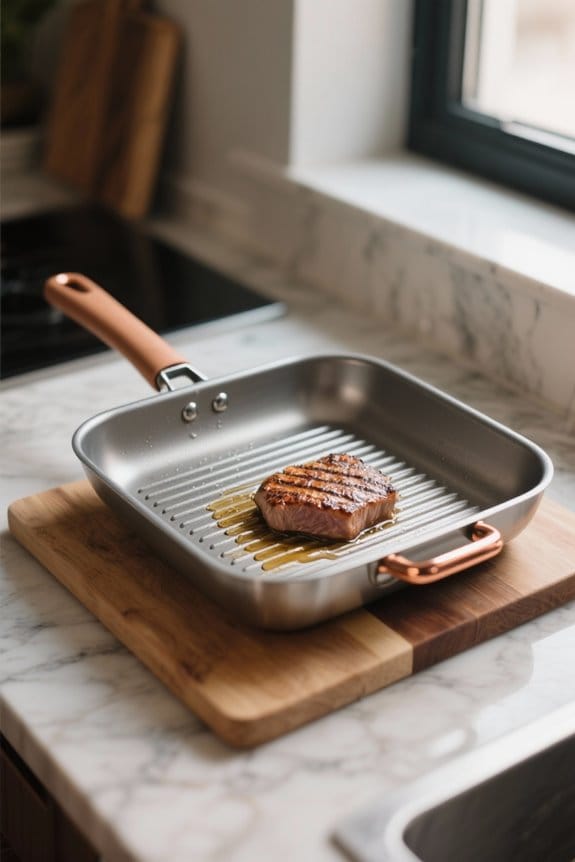
Ridges on grill pans serve a practical purpose beyond aesthetics. The raised ridges elevate food, allowing fat to drip away during cooking. This design helps reduce fat content in meals, making them healthier. By promoting the drainage of excess grease, grill pans are ideal for preparing lean proteins. Using a grill pan can also minimize the need for additional oils or fats, enhancing natural flavors instead. The high-heat cooking methods encouraged by these pans promote a flavorful char while maintaining lower fat levels. Grilling vegetables and meats on this ridged surface creates appealing grill marks without heavy reliance on oily ingredients. This simple technique leads to healthier, delicious meals that align with health-conscious cooking practices. One of the best options for healthier cooking is the Circulon Nonstick Roasting Pan, which features a nonstick surface for easy food release and cleanup.
Recommended Products

COMPLETE CAST IRON SET: Includes a 10.5” skillet, matching grill pan, 3.5 qt braiser pan, and 6.5 qt cast iron Dutch oven with lid, perfect for frying, searing, baking, grilling, braising, and simmering with steady, even heat.

First electric indoor grill that cooks by adapting its grilling cycles to the thickness of the foods

Set includes recycled aluminum 8" Fry Pan, 9.5" Fry Pan, 10" Grill Pan, 10" Pancake Pan, 13.75" Slotted Turner, featuring non-stick, healthy CeraGreen ceramic coating and ergonomic soft-touch handles. Slotted Turner features a recycled PP handle.
Elevating Food for Better Drainage
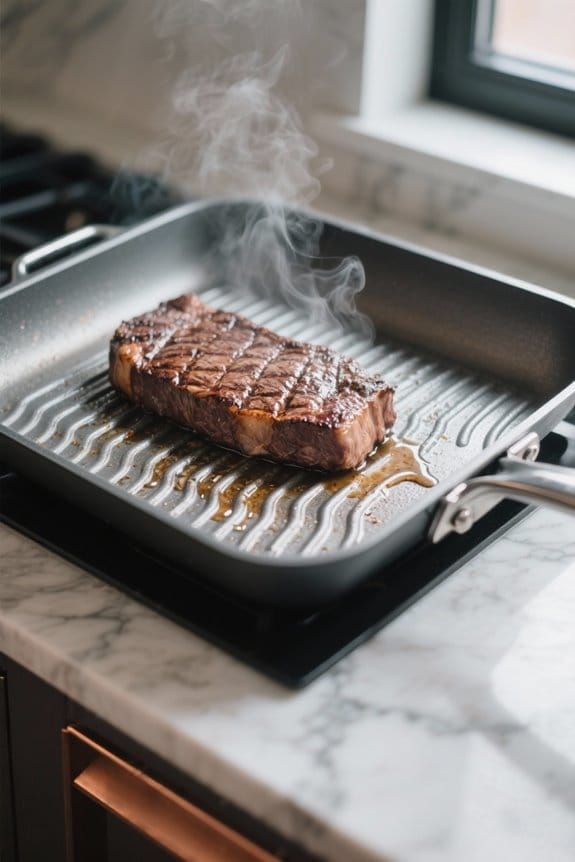
When food is elevated above its own fat and juices, it cooks more effectively. The ridges in grill pans play an essential role in achieving this. They lift food, preventing it from sitting in moisture during cooking. This design minimizes the chances of braising, allowing for a superior sear and enhanced flavor through direct heat exposure. The raised surfaces created by the ridges promote better airflow around the food. By allowing excess grease to drain away, these pans contribute to healthier cooking outcomes. Less fat results in lighter dishes. Additionally, the elevation supports the formation of grill marks, which improve visual appeal and add flavor through caramelization. Features that enhance usability, such as heat-resistant handles and deep sides, also play a significant role in ensuring a more pleasant and efficient cooking experience. Using ridged grill pans enhances cooking efficiency and promotes better drainage.
Recommended Products
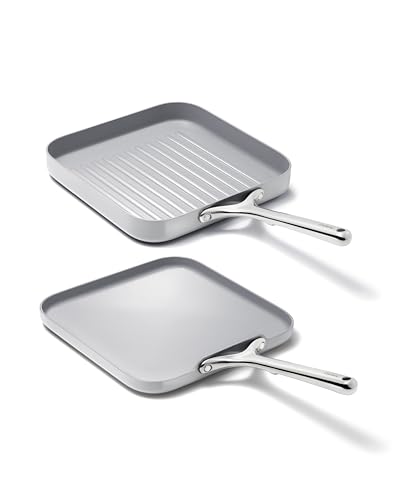
GRILL TIME, ALL THE TIME: Bring the barbecue indoors with our Square Grill Pan, featuring a non-stick surface adorned with grill lines for perfect sear marks. Enjoy the convenience of grilling your favorite veggies, meats, and paninis anytime.

GRILL TIME, ALL THE TIME: Bring the barbecue indoors with our Square Grill Pan, featuring a non-stick surface adorned with grill lines for perfect sear marks. Enjoy the convenience of grilling your favorite veggies, meats, and paninis anytime.

DURABLE ENAMEL COATING: Featuring a 3-layer enamel coating, this cast iron square Grill Pan offers superior heat retention and even cooking. This naturally non-stick, scratch-resistant indoor Grill Pan is easy to clean and requires no seasoning.
Achieving Even Cooking Temperature
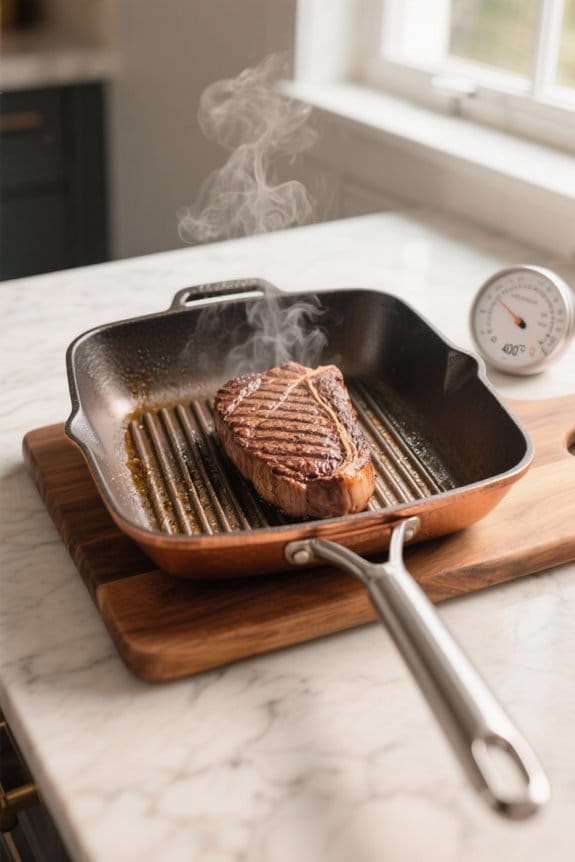
Grill pans are designed to promote even cooking temperatures through their unique structure. The raised ridges create distinct cooking surfaces that minimize contact with food. This design allows for better heat distribution across the pan. Elevating food above the surface traps hot air around it. This results in a consistent cooking temperature throughout the cooking process. The ridges help reduce moisture accumulation, allowing grease and juices to flow down. This enhances cooking temperature, promoting better browning and caramelization. Additionally, the direct heat exposure on the ridges offers a seared effect without the risk of stewing. Overall, the design of grill pans guarantees that heat remains concentrated on the food, achieving more uniform cooking results. A high-quality grill pan, like CAROTE Nonstick Cookware Set, ensures even heat distribution and retention due to its durable materials like heavy gauge aluminum.
Recommended Products


Set includes recycled aluminum 9.5" frying pan, 7" saucepan, 8" stockpot 3qt., 9.5" stockpot 5.9qt. and 3x glass lids. Layered with non-toxic, non-stick CeraGreen coating and features ergonomically designed stay-cool handles.
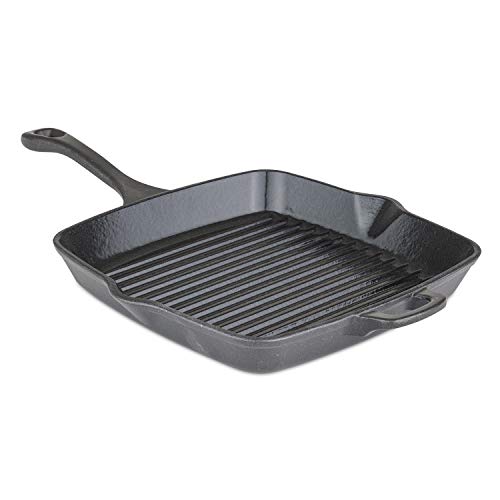
CAST IRON GRIDDLE PAN: Elevate your home kitchen experience with the Viking Cast Iron Grilling Pan! This stove top griddle pan features a non-reactive glossy charcoal enamel interior which protects against chips and cracks, and is safe for use with utensils. This stovetop griddle pan features exceptional heat retention perfect for searing, braising, and roasting, and features raised grill ridges which produce quality grill marks and elevate food above juices and fats while cooking
Creating a Charred Texture
Achieving a charred texture is a crucial aspect of grilling that enhances both flavor and presentation. The ridges in grill pans play an important role in this process. By elevating food above the pan surface, they reduce contact and allow fats to drain away. This promotes a delightful charred texture instead of steaming. The raised design creates distinctive grill marks, adding to the visual appeal. Increased surface area improves heat transfer, leading to faster cooking times and efficient searing. As moisture is reduced during grilling, better caramelization occurs, deepening flavors. Ultimately, the geometry of the ridges guarantees ideal conditions for achieving that desirable charred effect, making grill pans a necessary tool for any cooking enthusiast. Cast iron grill pans, known for their excellent heat retention, further enhance the searing process, ensuring that meats and vegetables achieve the perfect charred finish with even cooking.
The Role of Ridges in Moisture Retention
Ridges in grill pans serve an essential function in moisture retention during cooking. The elevated ridges keep food away from excess grease and juices. This design allows moisture to drain away, preventing steaming. As a result, the food achieves a crispier texture and enhanced flavor. In addition, the reduced contact with food minimizes moisture retention. This promotes better caramelization and searing, benefiting the overall taste. Grill pans with ridges pool surplus liquid away from the cooking surface. Consequently, finished dishes are drier and less soggy. Moreover, the ridges encourage fat to drip away from meats, leading to healthier meals with less retained moisture. Such features underscore the practicality of using ridged grill pans for various cooking needs. For instance, multi-ply construction in cookware offers superior heat distribution, which improves cooking results.
Recommended Products

BUNDLE & SAVE - Field Skillet No.8 Starter Set includes a No.8 Skillet, Our Cast Iron Care Kit, and the matching No.8 Cast Iron Lid.

Square grill pan made of even-heating enameled cast iron

Square grill pan made of even-heating enameled cast iron
Comparing Ridged and Flat Pans
When considering cookware, the differences between ridged and flat pans become clear. Ridged pans create defined grill marks, enhancing both flavor and presentation. The raised ridges allow grease to drain away, preventing soggy food. This contrasts with flat pans that may trap moisture. Ridged pans can reach higher cooking temperatures due to their limited contact area with the food. Consequently, they promote a crisp texture, reducing the likelihood of stewing in juices. However, flat pans excel in even heat distribution, making them better suited for delicate foods. As a result, the choice between ridged and flat pans depends on the desired cooking method and type of food being prepared. Each offers unique advantages based on its cooking surface design. Additionally, using efficient drainage features in cookware like pasta pot inserts can significantly enhance the overall cooking experience by allowing for quick water removal.
Recommended Products

6-IN-1 MULTI-GRILL: contact grill, contact griddle, panini press, mixed grill/griddle, open grill, and open griddle—it’s a full short-order kitchen in one place

Made in Switzerland: This square fry pan has a patented non-stick coating, that is made and reinforced with diamonds. Designed with healthy cooking in mind, you'll never need unnecessary oil or fats.

HexClad’s Hybrid technology features a laser-etched hexagonal nonstick surface that combines both stainless-steel and our TerraBond ceramic coating for the ultimate sear and easy cleaning.
Cleaning and Maintenance of Grill Pans
Proper cleaning and maintenance are essential for extending the life of grill pans. To effectively clean these pans, use hot water and a mild detergent. Avoid abrasive tools that scratch the surface. Regularly scraping the grill ridges helps remove food residue and maintain the seasoning, particularly in cast iron pans. For stubborn food remnants, soak the pan in warm soapy water to loosen stuck particles. After cleaning, the grill pan must be thoroughly dried to prevent rust, especially in cast iron models prone to moisture damage. Additionally, periodically re-oiling seasoned grill pans enhances their non-stick surface and cooking performance. Following these practices guarantees the longevity and functionality of grill pans, making them a reliable kitchen tool. To ensure durability and handling in your kitchen tools, consider using high-quality materials like those found in the Mora 9x13in Porcelain Baking Dish.
Versatile Cooking Techniques With Grill Pans
Grill pans serve as versatile kitchen tools that enhance cooking without the need for a traditional grill. A grill pan made with ridges allows for effective grilling and searing. The raised marks lift food above its juices, promoting a desirable crust. This design also prevents meat from stewing in moisture, leading to leaner dishes. For vegetables, using a grill pan minimizes fat requirements while achieving crisp textures. The structure promotes better caramelization and flavor retention, making every meal tastier. Beyond grilling, users can explore a range of cook methods, including preparing meats and breakfast foods. This flexibility makes grill pans an essential addition to any kitchen looking to elevate cooking techniques. When selecting a grill pan, consider choosing one made from cast iron for its excellent heat distribution and durability.
Tips for Optimal Use of Grill Pans
To achieve the best results with grill pans, users should focus on proper preheating. Set the grill pan on medium-high heat for ideal searing. This enhances flavor and texture. Lightly oil both the food and the ridges of the grill pan to prevent sticking. This method guarantees an even cooking surface without excess fat. Avoid overcrowding the grill pan. This can lead to steaming rather than grilling, diminishing the quality of the grill marks. Use a high smoke point oil, like canola or grapeseed oil, to endure higher temperatures. Regularly clean the grill pan by scraping residual food from the ridges. This maintains seasoning and guarantees heat retention for future cooking sessions.
Popular Recipes for Grill Pans
What makes certain dishes ideal for cooking in grill pans? Recipes that benefit from direct heat and searing are well-suited for grill pans. Grilled chicken breasts and steak achieve distinct grill lines and rich flavor from the cast iron grill pan. Thick-cut vegetables, such as zucchini and bell peppers, also cook well, gaining a desirable charred taste. Marinades like teriyaki or garlic herb improve the taste of meats, enhancing caramelization on the ridges. Shrimp skewers marinated in citrus offer a perfect charred finish as moisture escapes. Firm fruits like peaches and pineapples caramelize nicely, enhancing salads or desserts. Grilling sandwiches, like paninis or grilled cheese, creates crunchy textures and defined grill marks, minimizing added fats.
Frequently Asked Questions
Why Do Some Pans Have Ridges?
Like the lines on a well-marked map, pans with ridges create grill marks, ensuring ideal heat distribution. They facilitate fat drainage, enhancing flavor and providing a healthier cooking method while elevating food for better results.
What Is a Ribbed Pan Used For?
A ribbed pan, utilizing grill pan benefits, is ideal for various cooking techniques. Its ribbed surface advantages include elevating food, enhancing flavors, promoting even heat distribution, and allowing fat drainage, resulting in perfectly seared meats and vegetables.
What to Cook on a Ridged Griddle Pan?
A ridged griddle pan is perfect for a veggie stir fry, grilled sandwiches, and marinated chicken. The ridges guarantee even cooking, enhance flavor, and create appealing grill marks for a visually enticing presentation.
What Is a Ridged Griddle Used For?
A ridged griddle is utilized for grilling, providing significant griddle surface benefits such as enhanced heat retention and effective food release. This results in deliciously charred meats and vegetables while minimizing excess fat during cooking.