As an Amazon Associate, we earn from qualifying purchases. Some links on this site are affiliate links at no extra cost to you. Our recommendations are based on thorough research and editorial judgment.

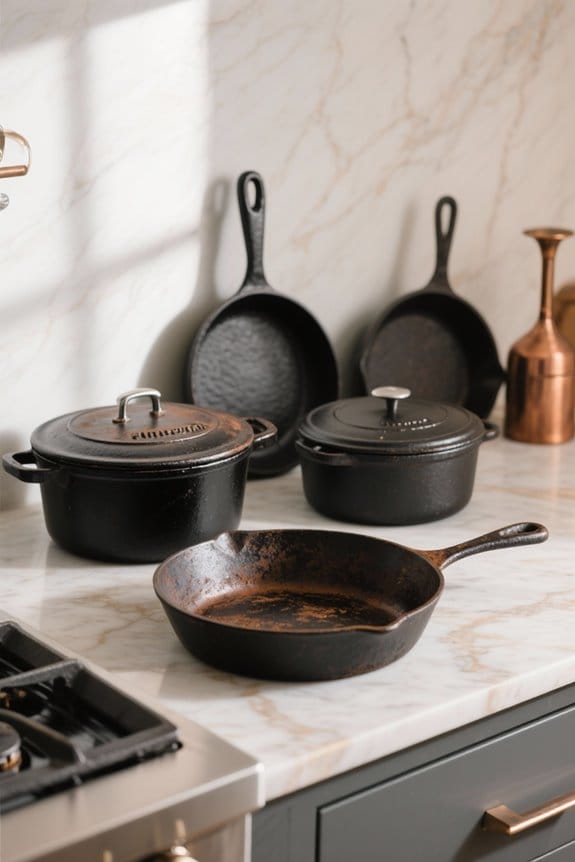
How to Restore Rusty Cast Iron Cookware

To restore rusty cast iron cookware, start by scrubbing the rusty areas with steel wool. Wash the pan with warm, soapy water and dry it thoroughly. Heat the pan on the stovetop to remove moisture. Apply a thin layer of neutral cooking oil. Bake the pan upside down at 450–500°F for one hour. This process creates a protective seasoning layer. Regular maintenance is essential. Continue beyond for effective rust removal techniques and preventative measures.
Key Takeaways
- Scrub rusty areas with steel wool, then wash the pan in warm, soapy water to remove any debris.
- Dry the pan thoroughly with a lint-free cloth and heat it on the stovetop to eliminate residual moisture.
- Apply a thin layer of neutral cooking oil evenly and bake the pan upside down at 450–500°F for one hour to season it.
- For heavy rust, soak the pan in distilled white vinegar for up to 24 hours, scrub, and re-season to prevent future rusting.
- Regularly inspect and maintain your cast iron cookware by applying oil and storing it in a moisture-free environment.
Understanding Rust on Cast Iron
You may be interested

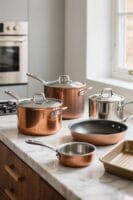

Rust on cast iron cookware is a common issue that cooks may encounter. This rust forms due to the unique materials in cast iron, which include pig iron, steel, and alloys. When the cookware is not properly seasoned, it is vulnerable to moisture. Factors such as leaving cast iron wet after cleaning, soaking it, or exposing it to humidity can lead to rust growth. Additionally, failing to apply oil after washing increases the risk of rust. Environments that allow air-drying can also contribute to this problem. Despite rust formation, cast iron cookware can be restored to its original condition. With routine maintenance and care, it remains a durable and long-lasting cooking option for many households. Exceptional heat retention is one of the key advantages of cast iron, making it ideal for consistent cooking temperatures.
Steps to Remove Rust
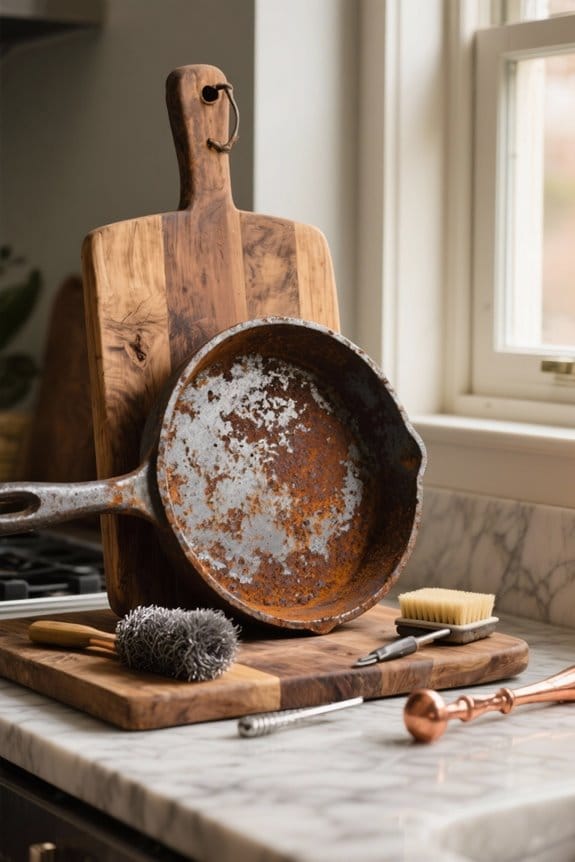
Removing rust from cast iron cookware is a straightforward process that can restore its functionality. First, scrub the rusty areas with steel wool or a specialized tool like the Lodge Rust Eraser. After scrubbing, wash the pan with warm, soapy water to remove any debris. This step may strip some existing seasoning. Next, guarantee the pan is thoroughly dried using a paper towel or lint-free cloth. Heat the pan on the stovetop to eliminate any residual moisture. After drying, apply a very thin layer of cooking oil to the surface using a cloth or paper towel. Finally, bake the oiled cast iron in a preheated oven at 450-500 degrees Fahrenheit for one hour to establish a new layer of protection. Pre-seasoned skillets are a convenient option as they come with a ready-to-use non-stick surface, reducing the need for frequent re-seasoning.
Recommended Products
[Complete Outdoor Kitchen in One] Modular 3-piece system with a 5-burner gas grill, flat-top griddle, dual-zone cooktop, and 800°C infrared sear burner—plus a stainless steel sink prep station

Removes highest levels of iron & sulfur from your water without chemicals or air injection!

【SLEEK STAINLESS STEEL FRAME FOR LASTING OUTDOOR USE】Featuring a rust-resistant, this premium barbecue grill combines durability with a stylish look. Its smooth, easy-to-clean surface minimizes maintenance while standing up to dirt and grime
Applying Oil for Seasoning
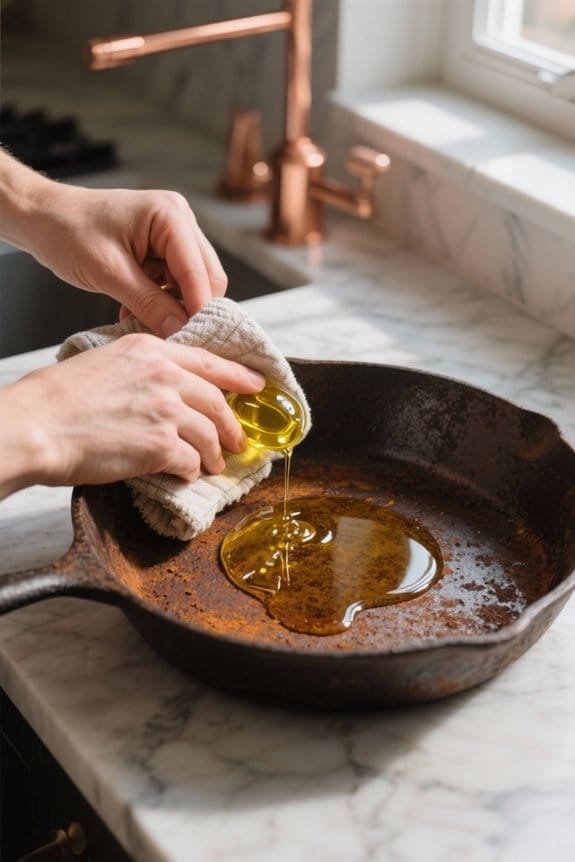
To maintain the longevity and performance of cast iron cookware, applying oil for seasoning is essential. First, a cloth or lint-free paper towel should be used to apply a very thin layer of cooking oil to the surface of the cast iron skillet. This guarantees even coverage without excess oil that could drip or run. A neutral cooking oil, such as grapeseed or canola oil, is recommended because it has a high smoke point. The goal is to create a protective layer of cooking oil that will carbonize during the baking process. After oil application, preheat the oven to 450–500°F, place aluminum foil to catch drips, and position the skillet upside down for effective seasoning. For best results, use durable lead-free ceramic dishes when transferring the seasoned skillet to the oven, as they provide excellent heat retention and are safe for high temperatures.
Recommended Products
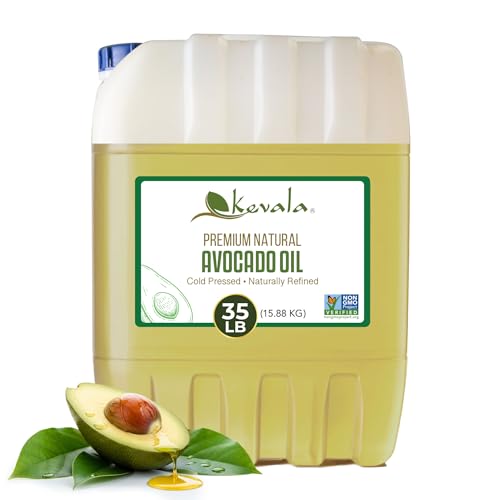
NATURAL AND COLD PRESSED - Cold pressed from select avocados without hexane or solvents. Minimally processed to help retain natural properties. Ideal clean cooking oil option for frequent use.

100% Pure Avocado Oil, Expeller Pressed, All Natural & Hexane-Free

EXTRA VIRGIN AVOCADO OIL, FIRST COLD PRESSED & UNREFINED: Six bottles of single-origin Mexican avocado oil, gently cold pressed in small batches from perfectly ripe avocados with the skin and seed removed. A true unrefined extra virgin avocado oil, bottled just as it's pressed with nothing added.
Baking and Curing Process
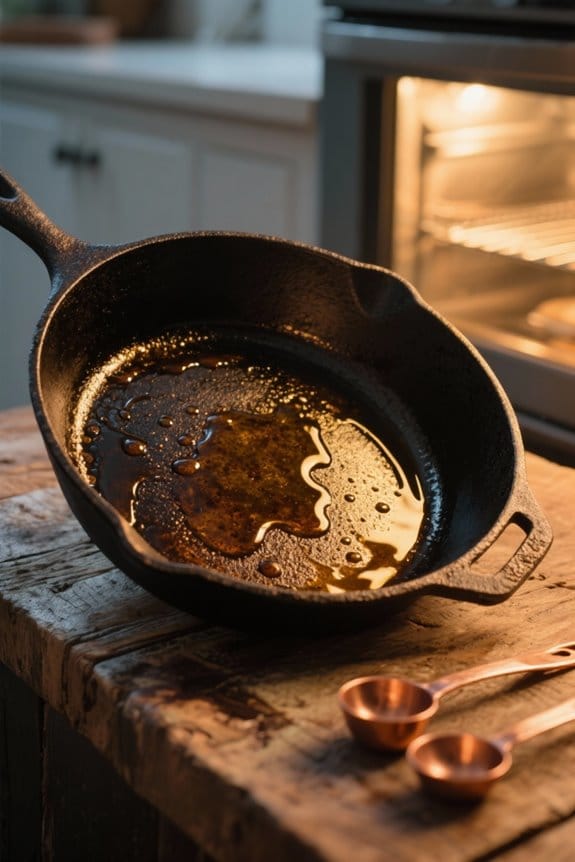
The baking and curing process is a vital step in restoring cast iron cookware after applying oil for seasoning. First, preheat the oven to a temperature between 450–500 degrees Fahrenheit. This high heat guarantees proper bonding of the seasoning to the cast-iron pan. To catch any excess oil, place aluminum foil on the bottom rack of the oven. Next, position the cast iron cookware upside down on the center rack. This arrangement allows for even heat distribution and prevents pooling of oil. Bake the cast-iron pan for one hour to secure the seasoning. After baking, turn off the oven and let the pan cool inside. This additional curing period enhances the durability and nonstick properties of the seasoned surface. Pre-seasoned options provide a non-stick surface right out of the box, making them a convenient choice for users.
Troubleshooting Seasoning Issues
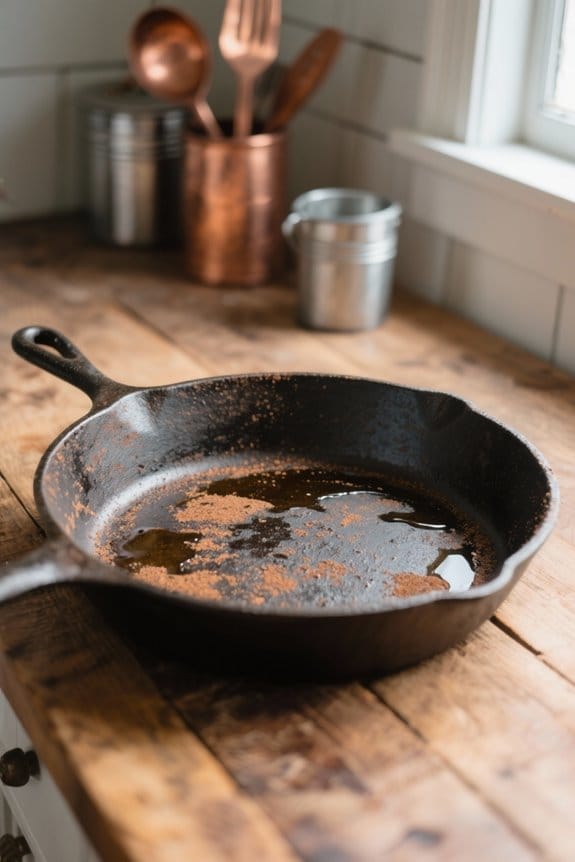
Addressing seasoning issues with cast iron cookware is vital for achieving a reliable nonstick surface. A sticky or gummy texture often stems from applying too much oil or insufficient heating during the seasoning process. If the seasoning appears dull or burnt, this indicates overheating without enough oil, necessitating complete re-seasoning. For persistent stickiness, the skillet should be returned to a preheated oven at 450-500°F for an hour. This will help eliminate excess oil and enhance the seasoning. Regular inspection of the skillet’s surface is required; a glossy sheen indicates proper seasoning while a dull appearance suggests re-seasoning is needed. Applying thin, even layers of oil is essential to guarantee effective adhesion and a smooth finish. Additionally, regular maintenance and care such as hand washing and applying oil after each use, can significantly prolong the lifespan and performance of your cast iron cookware.
Tips for Buying Vintage Cast Iron
When looking to buy vintage cast iron cookware, collectors should prioritize quality and brand reputation. Established names like Griswold and Wagner are known for their durability and craftsmanship. Familiarizing oneself with the brand logos can help determine the cookware’s age and authenticity. Inspect each piece carefully for visible cracks, as these can affect performance. Using the finger tap method is advisable; a ringing sound suggests solid construction. It is best to choose plain cast iron pans. These are easier to season compared to enameled versions. Additionally, check for signs of excessive pitting or heat damage, as these can interfere with the seasoning process and the cooking surface’s evenness. Collectors should aim for high-quality vintage cast iron. Proper care and maintenance can significantly extend the life of baking pans, ensuring optimal performance over time.
Recommended Products

COMPLETE CAST IRON SET: Includes a 10.5” skillet, matching grill pan, 3.5 qt braiser pan, and 6.5 qt cast iron Dutch oven with lid, perfect for frying, searing, baking, grilling, braising, and simmering with steady, even heat.


VERSATILE COOKING POWER: This 8", 10.5”, and 12" Enameled Skillet Set is perfect for a wide range of dishes, from searing meats and frying eggs to baking cornbread and sautéing vegetables. The heavy-duty construction of this cast iron cookware ensures consistent results every time.
Detecting Cracks
Inspecting vintage cast iron cookware for cracks is a critical step in ensuring quality and performance. First, visually examine the pan for visible cracks that could affect its structural integrity. The handle and rim are common areas for cracks due to stress during use. Next, utilize the finger tap method. Lightly tap the pan; a ringing sound indicates solid materials, while a dull sound suggests hidden cracks. Check the cooking surface for jagged edges or unevenness, which may reveal damage. It is essential to scrutinize underneath any rust. Rust can conceal flaws that compromise the cookware’s quality. Properly detecting cracks will enhance the longevity and reliability of vintage cast iron pieces during cooking. A well-maintained piece can also offer excellent heat retention and distribution, similar to modern cast iron cookware.
Pitting and Other Flaws
Pitting is a common issue found in cast iron cookware. It appears as small depressions on the cooking surface, indicating corrosion. While a certain degree of pitting may be acceptable in vintage pieces, excessive pitting can negatively impact seasoning and cooking quality. Consumers should carefully inspect potential purchases for pitting, as significant flaws may signal long-term degradation. Personal tolerance for pitting can vary, but it is advisable to choose pans with minimal or no pitting for ideal use. If extreme pitting is identified, restoration may not be feasible. In such cases, it may be best to wash the pan and reassess its overall condition, as aesthetic and functional compromises may undermine its effectiveness in the kitchen. Non-stick coating benefits can prevent pitting in some modern cookware, ensuring longevity and ease of maintenance.
Restoring Cast Iron
Restoring Cast Iron
Rusty cast iron cookware can be revitalized through a systematic restoration process. First, scrub the rusty areas using steel wool or a Lodge Rust Eraser. This is crucial for removing loose rust and debris. Next, wash the pan with warm, soapy water and guarantee it is thoroughly dried. Moisture can lead to further rusting. Following the cleaning process, apply a very thin layer of cooking oil to the entire surface. It is important to avoid excess oil. Preheat the oven to 450–500 degrees Fahrenheit, place aluminum foil on the bottom rack, and position the cookware upside down on the center rack. Bake for one hour to let the oil form a protective seasoning layer. Let it cool inside the oven afterward. Using non-stick coatings on cookware can enhance food release and simplify cleaning, which is beneficial for maintaining the pan’s condition.
Not Recommended: Naval Jelly
Although some may consider using naval jelly for rust removal, it is not advisable for cast iron cookware. Naval jelly contains phosphoric acid, which can aggressively strip away the protective seasoning layer. This chemical reaction may lead to pitting, damaging the cast iron surface and increasing future rust susceptibility. Additionally, it can leave a harmful residue that hinders the seasoning process critical for proper use. Alternatives such as vinegar or electrolysis provide safer and more effective options for rust removal. These methods are specifically designed to restore cast iron without compromising its integrity. For best results, stick to techniques tailored for cast iron restoration instead of relying on chemical solutions like naval jelly. Pre-seasoned cookware eliminates initial preparation time and enhances flavor profiles, making it a valuable choice for those looking to avoid rust issues from the start.
How to Remove Old Seasoning: Lye
Removing old seasoning from cast iron cookware can breathe new life into a neglected piece. Lye, a strong alkaline substance, effectively strips away old seasoning, making restoration easier. To begin, wear heavy-duty rubber gloves and eye protection to avoid burns. Create a lye solution by mixing lye with water. Soak the cast iron pan in this solution for several hours to break down the old seasoning. After soaking, scrub the pan with a stiff brush or steel wool to remove the loosened buildup. Rinse the cookware thoroughly afterward. It is important to dry the pan completely to prevent rust. Finally, applying a thin layer of oil immediately after cleaning will protect the cast iron from re-rusting.
Removing Rust: Vinegar
Vinegar serves as an effective solution for removing rust from cast iron cookware. To use vinegar, soak the rusty pan in a solution of cheap distilled white vinegar for six to twelve hours. This duration effectively dissolves rust without damaging the cast iron. However, do not exceed a 24-hour soaking period. Longer exposure may cause pitting on the surface. After soaking, scrub the cookware with steel wool or a stiff brush to remove loosened rust and old seasoning. Rinse the pan thoroughly with water and dry it immediately to prevent further rust. To protect the cast iron from immediate rusting, apply a thin layer of mineral oil before re-seasoning. This process guarantees the cookware remains functional and preserved.
Recommended Products

OPTIMIZER SET | Clean & Season your Cast Iron creating non-stick surfaces that makes cooking and cleaning cast iron easier and your food tasting great!
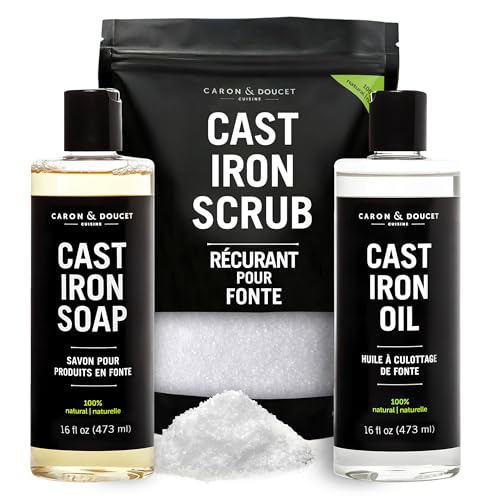
RESTORES & RESEASONS | Includes our Cast Iron Scrub designed to restore & remove stubborn rust spots. Helps to remove burnt & stuck on food spots that develop over time. Made with high quality coconut oil to help season & enhanced with essential oils to eliminate odours.

CLEANS CAST IRON | Includes our Cast Iron Soap unlike detergent based soaps, this soap is formulated with 100% natural plant-based oils & free of sulfates, phosphates, parabens & petrochemicals! Gentil on cast iron seasoning & on your hands!
Frequently Asked Questions
Recommended Products

RUST ENCAPSULATOR: Iron oxide is no match for our original Eastwood Rust Encapsulator. This paint-over-rust solution quickly stops surface rust before it can compromise the part’s structural integrity. Rust Encapsulator penetrates deep into the metal

High performance media for iron, hydrogen sulfide, and manganese removal.

MADE IN THE USA - Proudly made right here in the USA at our Wisconsin headquarters and formulated with cutting-edge German ingredients, Flitz delivers unbeatable quality you can trust. Our brass cleaner & metal polisher is made to last and perform each time
Can Rusted Cast Iron Be Restored?
Yes, rusted cast iron can be restored through careful rust removal and re-seasoning. Regular cast iron maintenance, including proper cleaning and rust prevention techniques, guarantees longevity and peak performance of the cookware.
How Do You Remove Rust From Cast Iron Pans?
To remove rust from cast iron pans, one should scrub with steel wool, wash with soap, dry thoroughly, and apply a thin oil layer. Regular maintenance helps prevent future rust issues. Effective care revitalizes cookware longevity.
Is It Better to Sand or Soak Rusty Cast Iron?
When addressing rust removal, soaking is generally preferred over sanding. Soak to minimize damage and guarantee rust prevention, while sanding can swiftly eliminate rust but risks compromising the cast iron’s integrity and seasoning.
What Is the Best Rust Remover for Cast Iron?
The best rust remover for cast iron includes a vinegar solution for effective rust removal, often complemented by baking soda to neutralize acidity. This combination efficiently restores cookware while ensuring minimal damage to its surface.