As an Amazon Associate, we earn from qualifying purchases. Some links on this site are affiliate links at no extra cost to you. Our recommendations are based on thorough research and editorial judgment.

How Stainless Steel Maintains Its Appearance

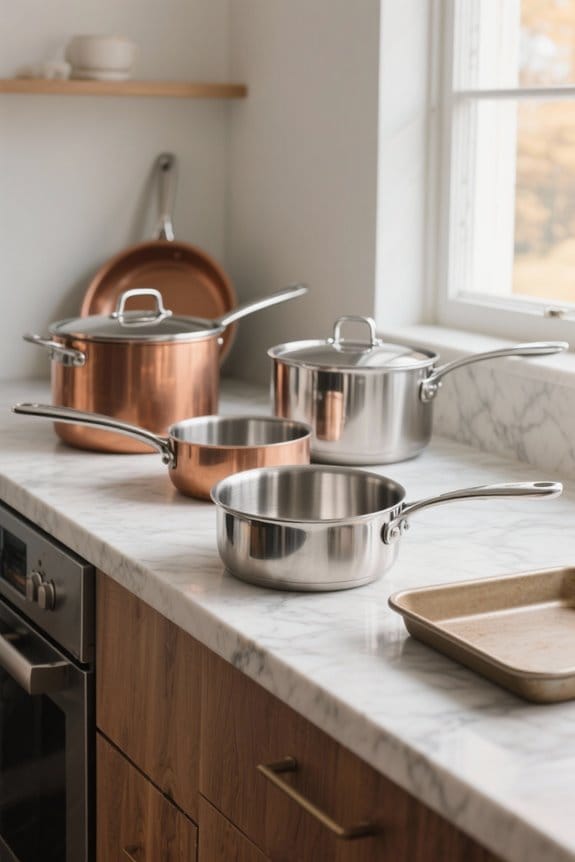
Stainless steel maintains its appearance through its protective chromium layer. This layer prevents rust and corrosion, enhancing durability. Regular maintenance is vital for keeping the surface in good condition. Cleaning with mild soap and warm water is effective. Using soft cloths prevents scratches. Special cleaners can help maintain a polished look. Proper ventilation and moisture control also play a role in preventing tarnishing. Understanding these factors guarantees stainless steel stays attractive for years to come. More insights follow.
Key Takeaways
- Stainless steel maintains its appearance through a protective oxide layer formed by a minimum of 10.5% chromium content.
- Regular cleaning with mild soap and warm water prevents rust and tarnishing, preserving its shine.
- Specialized cleaners and gentle abrasives like baking soda can effectively tackle tough stains without damaging the surface.
- Routine inspections identify scratches and debris, preventing long-term damage and maintaining aesthetics.
- Proper care includes avoiding harsh chemicals and using soft cloths to prevent scratches during cleaning.
The Properties of Stainless Steel
You may be interested



Stainless steel is known for its unique combination of durability and resistance to corrosion. It contains at least 10.5% chromium, which helps form a protective oxide layer. This layer prevents staining and enhances corrosion resistance. Alloying elements like nickel and molybdenum further improve its strength and durability. Various grades of stainless steel are available, each offering different levels of corrosion resistance and aesthetic appeal. The surface finish plays a significant role in its appearance and resistance to tarnishing. Options range from polished to brushed finishes, allowing consumers to choose based on style preference. Regular cleaning and maintenance are essential for preserving the shine and structural integrity of stainless steel, preventing tarnish and buildup from contaminants. Among the top cookware choices, Cuisinart’s design provides a comfortable grip for stability, making it a popular option for home cooks.
Importance of Routine Maintenance
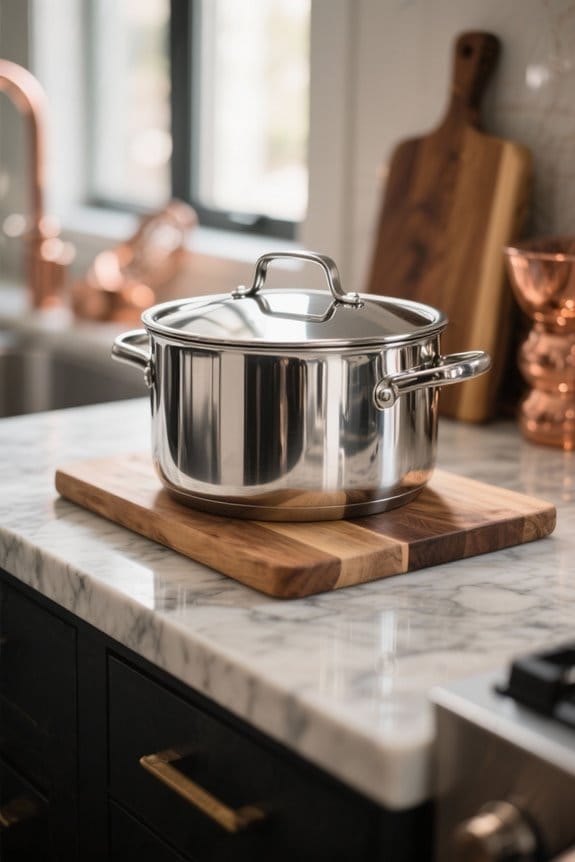
Maintaining the appearance of stainless steel is important for both aesthetics and longevity. Routine stainless steel maintenance prevents rust and corrosion while preserving its sleek appearance. Regular cleaning and maintenance, such as using mild soap and warm water, helps maintain the protective oxide layer. This layer protects against tarnishing, especially in humid conditions or areas with harsh chemicals. Scheduled inspections for scratches and debris are necessary. They identify potential issues early, preventing deterioration. Using specialized cleaning solutions can effectively remove fingerprints and stubborn stains without damaging the surface. Establishing a routine cleaning schedule is significant in high-use areas like kitchens or restrooms to guarantee hygiene standards and maintain a professional appearance. Consistency is key for lasting results. Quality construction ensures long-lasting durability, which is crucial for maintaining the pristine look of stainless steel over time.
Effective Cleaning Techniques
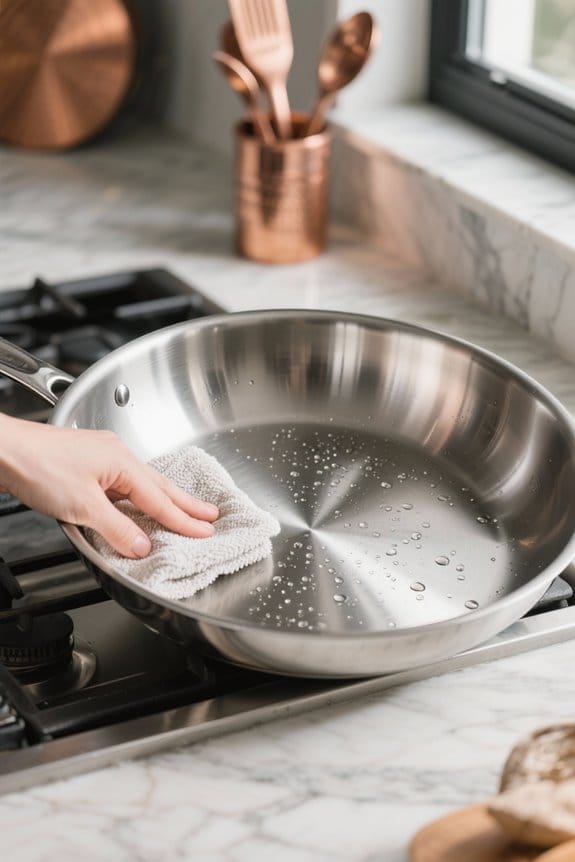
Cleaning stainless steel requires effective techniques to maintain its appearance. Regular cleaning with warm water and mild detergent effectively removes dirt and fingerprints. Using soft cloths or sponges helps prevent scratches. Rinsing with clean water is essential to eliminate soap residues that can cause streaking. For tough stains, a baking soda paste can be applied and allowed to sit before scrubbing. This method promotes effective stain removal without damaging the surface. It is also important to wipe surfaces in the direction of the metal grain to enhance shine. Using specialized stainless steel cleaners is recommended to maintain its pristine condition. These cleaners are formulated to prevent water spots, streaks, and tarnishing, ensuring long-lasting performance. When selecting stainless steel cookware, consider opting for tri-ply construction to enhance heat distribution and cooking performance.
Preventative Care Strategies
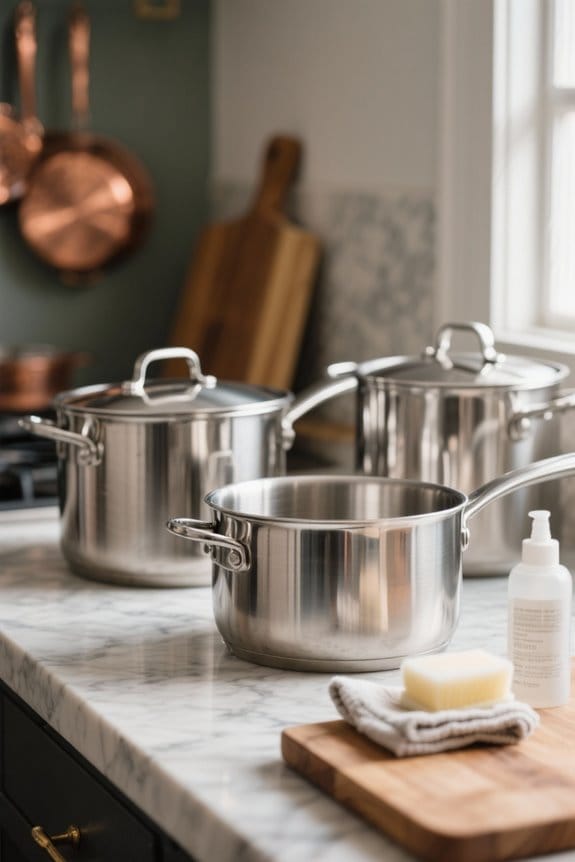
Effective care of stainless steel surfaces involves proactive measures to maintain their appearance and prevent deterioration. Regularly clean stainless steel items with mild dish soap and clean water to eliminate dirt and avoid tarnishing. Maintenance is key; avoid harsh chemicals like bleach or ammonia that can damage the protective oxide layer and increase corrosion risk. Utilize specialized cleaners and soft microfiber cloths for a shiny, scratch-free surface. Implement a routine inspection schedule to check for signs of surface contamination, such as rust or scratches. Additionally, guarantee proper ventilation and manage moisture levels in areas like kitchens and pools. These best practices help maintain the surface’s appearance, extending the lifespan of stainless steel items. Incorporating ergonomic, heat-resistant handles into stainless steel cookware enhances user safety and contributes to maintaining the integrity of the cookware over time.
Addressing Stains and Discoloration
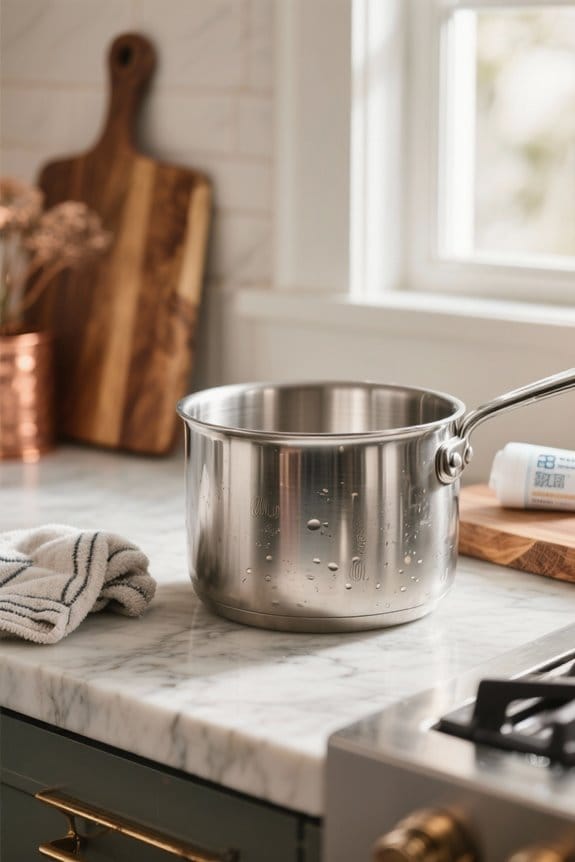
Stainless steel surfaces frequently face challenges from stains and discoloration. To effectively clean stainless steel, start with a solution of mild dish soap and warm water. This method not only maintains appearance but also prevents grime buildup. For stubborn stains, a paste made from baking soda can be applied. This acts as a gentle abrasive without damaging the surface. Additionally, a mixture of equal parts vinegar and water can help remove discoloration. It is essential to avoid abrasive cleaners and steel wool, as they can scratch the surface. Instead, dedicated stainless steel cleaners are recommended for tough stains and discoloration. These products help to preserve the metal’s integrity and can restore its luster effectively. Stainless steel pots, such as the CAROTE 8QT, are not only durable but also designed to be dishwasher safe, facilitating easy maintenance.
Environmental Considerations
Environmental factors greatly influence the appearance and longevity of stainless steel. In marine settings, salt and humidity increase corrosion risks. This necessitates more frequent maintenance for stainless steel. Humid environments like swimming pools can accelerate surface discoloration and require regular cleaning to maintain appearance. Chemical exposure and temperature fluctuations also impact stainless steel. These environmental conditions highlight the requirement for tailored maintenance routines according to specific settings. Areas with aggressive atmospheres may benefit from protective coatings to enhance resistance to corrosion. Monitoring stainless steel surfaces for pollutants is essential. Pollutants can contribute to surface contamination and tarnishing. Proper care guarantees that stainless steel retains its aesthetic and functional qualities over time. Additionally, high-temperature resistance in materials like borosilicate glass and lead-free ceramics, as seen in quality casserole dishes, can also be a consideration in environments with fluctuating temperatures, ensuring durability and longevity.
Long-term Care and Inspection
Long-term care and inspection are vital for maintaining the appearance of stainless steel. Regular inspections of stainless steel surfaces are important to identify early signs of tarnishing or corrosion. A consistent cleaning schedule guarantees the surfaces remain visually appealing. Using appropriate cleaning products, such as non-abrasive cleaners, prevents damage to the protective oxide layer. This layer is essential for resisting corrosion. Frequent checks in high-humidity or chemically aggressive environments are especially important, as these conditions can accelerate tarnishing. Training staff on effective maintenance procedures and the significance of inspections reinforces proper care. Stainless steel baking sheets are resistant to warping under high heat, ensuring durability and longevity. Such practices help sustain the visual and functional integrity of stainless steel installations, guaranteeing they remain clean and well-maintained over time.
Frequently Asked Questions
How to Maintain the Shine of Stainless Steel?
To maintain the shine of stainless steel, individuals should utilize effective polishing techniques, safe cleaning solutions, and protective coatings. Regular everyday maintenance, avoiding scratches, preventing tarnish, and applying restoration methods enhance appliance care and longevity.
Is It Okay to Use Dawn Dish Soap on Stainless Steel?
Using Dawn dish soap on stainless steel is a gentle caress, providing safe cleaning benefits. It enhances surface protection and minimizes soap residue. Regular use offers an eco-friendly alternative compared to harsher cleaners, ensuring diligent stainless steel care.
How Is Stainless Steel Maintained?
Maintaining stainless steel involves employing effective cleaning techniques, selecting appropriate household cleaners, and using protective coatings. Regular maintenance frequency includes polishing methods and rust prevention strategies to guarantee scratches removal and preserve distinct stainless steel grades.
Can I Take a Shower With Stainless Steel Jewelry?
One might whimsically envision stainless steel jewelry frolicking in a shower. Indeed, it’s shower safe, boasting rust resistance. However, continuous water exposure raises wearability concerns; diligent jewelry maintenance remains essential amidst everyday activities to preserve its charm.