As an Amazon Associate, we earn from qualifying purchases. Some links on this site are affiliate links at no extra cost to you. Our recommendations are based on thorough research and editorial judgment.

Why Cast Iron Storage Location Matters

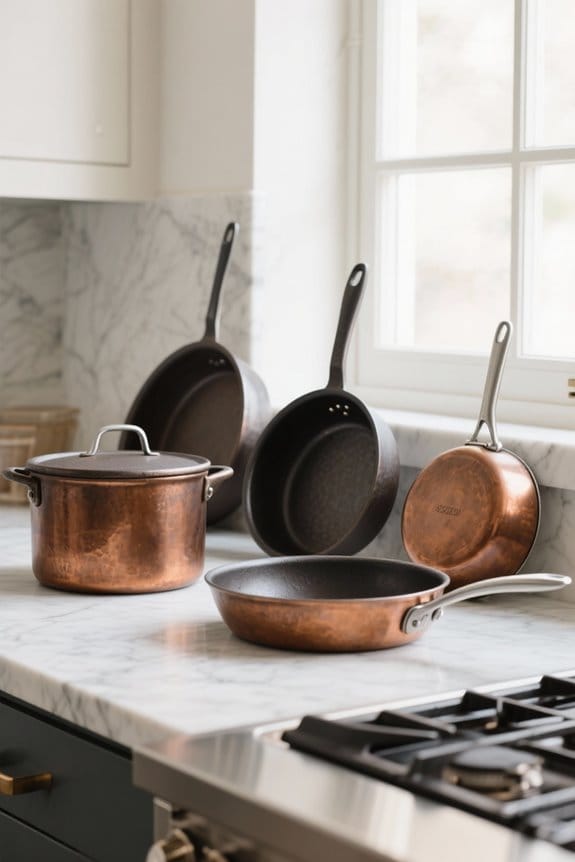
The storage location of cast iron cookware is essential for its durability and performance. A cool, dry environment prevents rust and preserves seasoning. Humidity can cause corrosion, leading to diminished cooking quality. Clean and dry skillets before storing them to avoid mold or moisture buildup. Using protective layers, like paper towels, can minimize scratches. Proper storage methods guarantee the longevity of cast iron. More effective strategies for organizing and maintaining your cookware can enhance its use.
Key Takeaways
- Proper storage location prevents moisture exposure, reducing the risk of rust and damage to cast iron cookware.
- Storing cast iron in cool, dry areas preserves seasoning and enhances cooking performance over time.
- Humidity can promote corrosion; thus, avoiding humid spaces is vital for maintaining cookware integrity.
- Accessible storage minimizes lifting strain, making it easier to retrieve and maintain cast iron skillets.
- Organized storage methods, such as vertical solutions, enhance air circulation and prevent scratching, contributing to longer skillet lifespan.
The Importance of Proper Cast Iron Storage
You may be interested

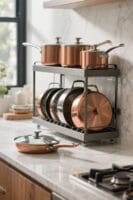

Proper storage of cast iron cookware is essential for its longevity and performance. Proper storage maintains seasoning, prevents rust, and extends the lifespan of the cookware. Storing your cast iron in a cool, dry location is important to avoid moisture accumulation. Moist environments can lead to mold and rust formation. When stacking skillets, using protective layers like paper towels helps prevent scratches. It also preserves the integrity of the seasoning. Additionally, avoid storing cast iron in humid areas to minimize the risk of corrosion. Guaranteeing easy access to cookware facilitates regular use, which promotes effective maintenance. By following these guidelines, one can prevent damage and guarantee that cast iron cookware performs efficiently for many years. Enameled cast iron options require less maintenance and are easier to clean than traditional cast iron, making them a suitable choice for those who prioritize convenience.
Common Mistakes When Storing Cast Iron Cookware
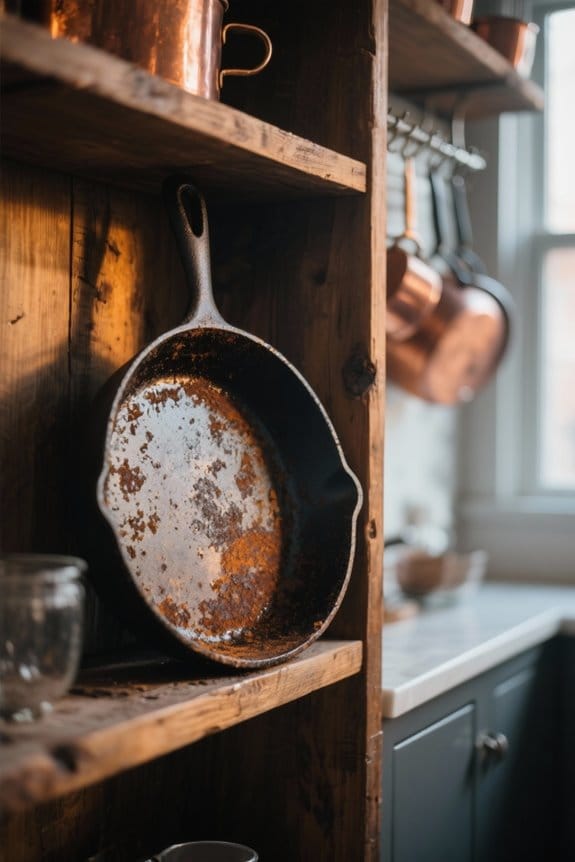
Many homeowners unknowingly make mistakes when storing cast iron cookware. Failing to clean a cast iron skillet before storage leaves food remnants that can cause mold and rust. Storing your cast iron while still wet promotes rust, which deteriorates its quality. Neglecting a protective layer of oil after drying exposes the skillet to rust since seasoning creates a barrier. Avoid stacking non-enamel-coated skillets without protective layers, as this can lead to scratches that damage the skillet’s seasoning. Additionally, improper storage in humid or damp environments greatly increases the risk of rust and corrosion. These common missteps can compromise the longevity and performance of cast iron cookware. Awareness of these issues is essential for effective cast iron storage. For those who enjoy baking, it’s important to consider lead-free ceramic casserole dishes as an alternative that offers durability and resistance to high temperatures.
Best Practices for Cleaning Cast Iron Before Storage
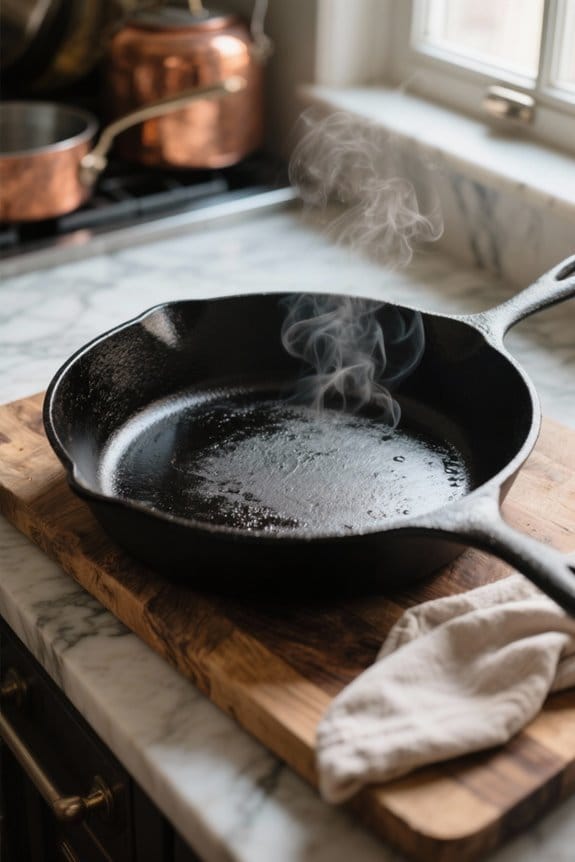
Cleaning cast iron skillets effectively is essential for maintaining their longevity and performance. To clean cast iron skillets, use warm water and a mild dish soap. This method removes food residues without harming the skillet’s seasoning. Avoid abrasive sponges, as they can scratch the surface and damage the seasoned finish. After cleaning, promptly dry the skillet with paper towels to prevent moisture buildup. Moisture can lead to rust, which damages cast-iron cookware. To guarantee thorough drying, briefly heat the skillet on the stove. Once dry, apply a thin layer of oil to protect against rust. Wipe off any excess oil to maintain the seasoning. Following these practices will help guarantee superior performance when ready to store cast iron skillets. Additionally, the majority of cast iron skillets, like those from Utopia Kitchen and Lodge, come pre-seasoned with vegetable oil, which aids in creating a natural non-stick surface that enhances cooking and requires minimal preparation before the first use.
Recommended Products
STAINLESS STEEL: This corrosion resistant stainless steel is the defacto finish for those looking to update their kitchen style with a new appliances. With its elegant and modern appearance, stainless steel is a perfect neutral tone that can fit into almost any kitchen design. Our premium stainless steel is easy to clean and maintain.

This All-Clad HA1 Hard Anodized Nonstick cookware set includes 8 inch, 10 inch, and 12 inch Fry Pans, 2 quart and 3 quart covered Sauce Pans, 4 quart covered Sauté Pan, 4 quart covered Soup Pot, and 8 quart covered Stockpot

EASY TO START: Starting a charcoal grill can be quite an effort and time-consuming. With the help of this propane gas grill’s Electronic Ignition System, you can quickly start grilling with the convenience of just pressing a button
Optimal Locations for Storing Your Cast Iron Skillets
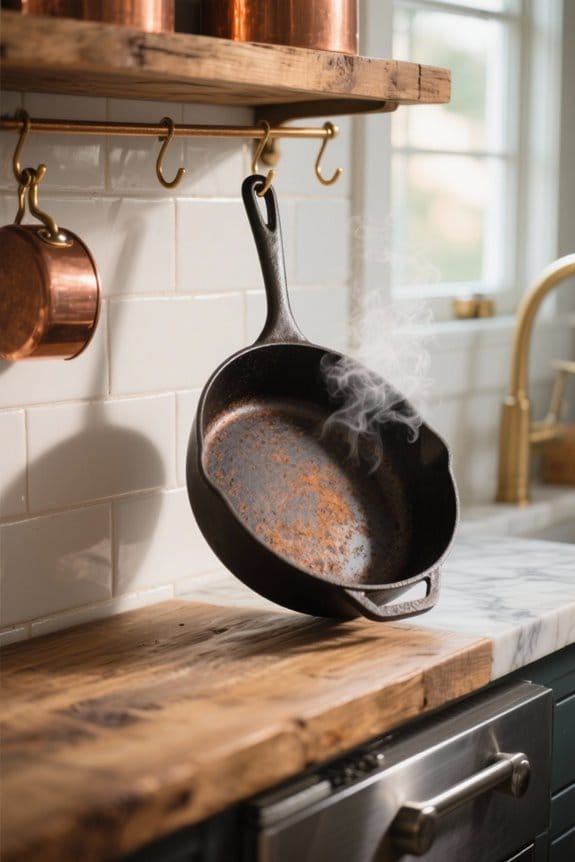
Finding the right location for storing cast iron skillets is essential for their longevity. A cool, dry pantry or cupboard prevents rusting and preserves seasoning. Low-level shelves are preferable, as they support the weight of cast iron skillets while minimizing accident risk. Accessible storage locations reduce strain on wrists when lifting, especially given the weight of these skillets. Avoid storing them in humid areas, as moisture promotes corrosion and can damage the cast iron. Utilizing a dedicated storage rack or pegboard also enhances accessibility, allowing items to be easily reached. This method showcases the collection beautifully while ensuring that the skillets remain in prime condition for cooking and serving. Cast iron skillets, known for their exceptional durability and heat retention, are best maintained through proper storage to ensure they continue performing effectively over time.
Recommended Products

8-tier cookware stand keeps pots within easy reach when ceiling or wall space isn't available

Pull out in cabinet cookware organizer - designed to fit any standard depth base cabinet
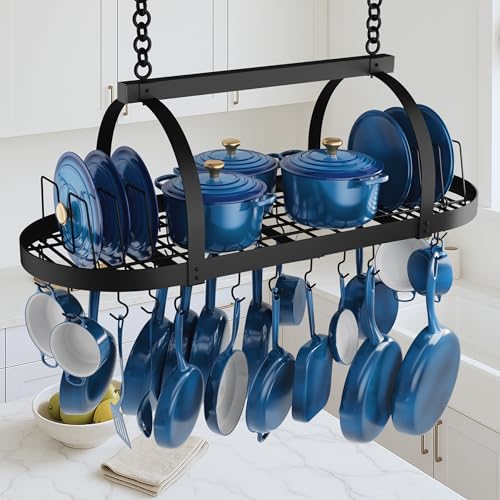
130Lb Extra Large Capacity: Holds 30% more than others, this robust pot rack supporting up to 130 lbs with ease, including 3 Dutch ovens, 6 cast-iron pans, 14 skillets, and 6 lids. By storing bulky cookware overhead, you could free up cabinet space, making your kitchen more organized
Advantages of Vertical Storage Solutions
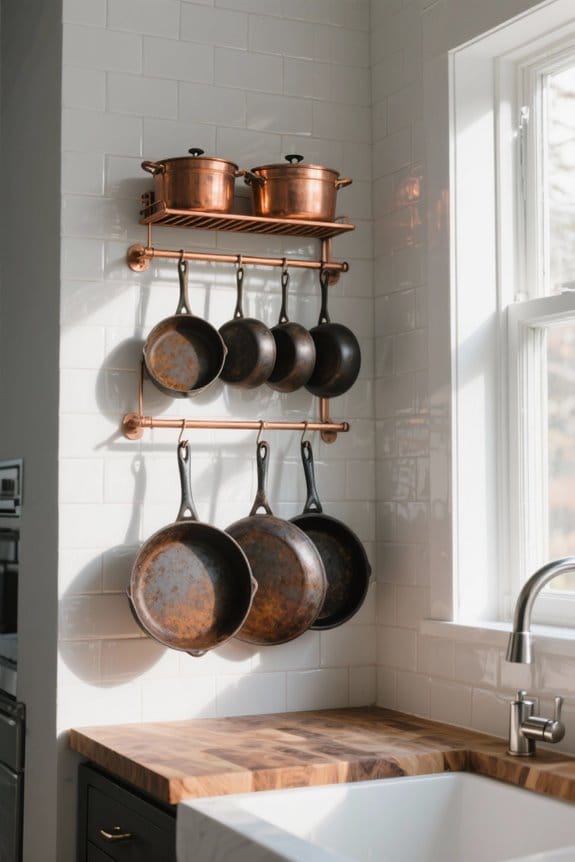
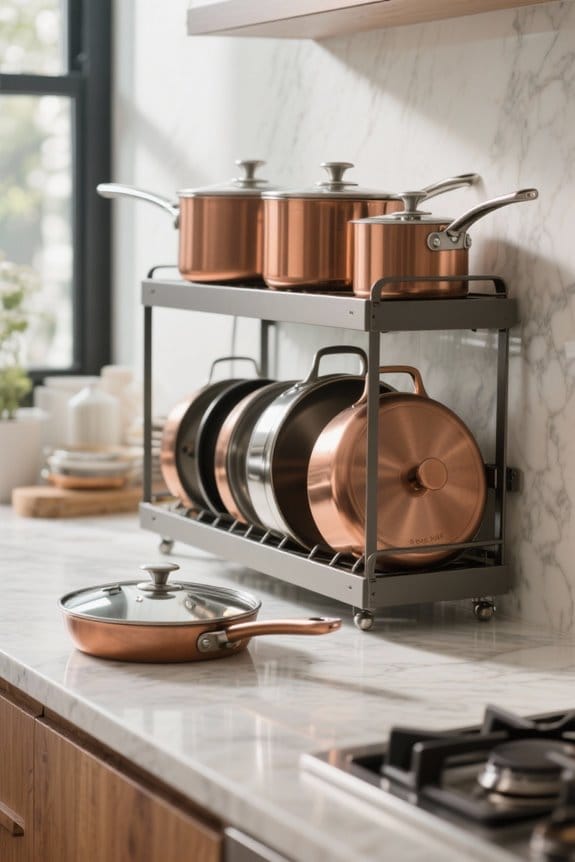
Vertical storage solutions offer several practical advantages for organizing cast iron cookware. Hanging cast iron skillets minimizes lifting strain and makes them more accessible. This system allows heavy items to be stored on walls, reducing the risk of injury. Vertical storage also prevents scratching and damage to the seasoning on skillets, preserving their non-stick properties. Utilizing wall-mounted systems optimizes available space, keeping kitchens organized and clutter-free. Enhanced air circulation around cookware reduces the risk of rust formation. Additionally, displaying cast iron pieces vertically not only increases accessibility but also serves as functional decor, showcasing vintage and cherished cookware. Overall, these solutions improve organization and maintain the integrity of cast iron skillets effectively. For those considering new cookware options, it’s important to verify cookware compatibility with various stovetops to ensure flexibility in cooking methods.
Recommended Products

STURDY & DURABLE - This industrial pipe shelving is built to support up to 440 lbs of clothes & books. Perfect for use as an industrial pipe shelf with metal shelves or as a bookshelf with industrial wall shelves

4 layer storage space:the wall mounted wine rack is the height is store most wines or spirits. the wine glass hooks at the bottom of the rack are strong accommodate types of wine glasses

Faucet Not Included and No pre drilled holes.
Installation Supplies for Peg Board Storage
Installing peg board for cast iron storage requires specific supplies and careful planning. A 2ft x 3ft peg board fits most kitchens well, allowing efficient use of space. Wall covering materials, like old newspaper or sheets, protect the wall and enhance appearance. To guarantee durability, applying a sample-size paint followed by a protective polyurethane coat is recommended. Essential tools for installation include a drill, a 7/64” drill bit, a Phillips screwdriver, a level, and a stud finder. Properly locating wall studs is vital for mounting. Using sheet rock anchors at corners without studs will support the weight of the cast iron cookware effectively. These supplies and tools guarantee a secure and functional peg board installation. When choosing cookware for your kitchen, consider options like Cuisinart’s design which provides a comfortable grip for stability.
Recommended Products

PREMIUM SILVER ANODIZED FINISH: Crafted with a professional 1-inch aluminum front profile in a sleek silver anodized finish. This modern, front-loading design provides an elegant look for certificates, posters, and office signage, resistant to fingerprints and scratches.

Versatile Installation - It is suitable for wall-adjacent or intermediate positions in showers, allowing flexibility in placement and tile design.

Versatile Installation - It is suitable for wall-adjacent or intermediate positions in showers, allowing flexibility in placement and tile design.
Step-by-Step Guide to Installing Peg Board Racks
A well-executed peg board installation can greatly enhance kitchen organization. First, identify suitable wall space for mounting. Use a stud finder to locate the studs, guaranteeing a secure installation. Gather supplies, including a 2ft x 3ft peg board, paint for aesthetics, and tools such as a drill and screwdriver. Apply two layers of paint for a clean finish and allow enough drying time between coats. Next, add a coat of polyurethane to protect the board. Position the peg board on the wall using screws. For added strength, use sheet rock anchors in corners where there are no studs. This will guarantee the installation can support the weight of cast iron skillets and any additional storage towers. When selecting tools for the installation, consider durable materials to ensure the longevity and stability of the setup.
Recommended Products

Proslat Slatwall Panels include all required trims and hardware for installation

Meets NCA Tournament Specifications: The Royal Red Board, crafted in Canada, meets all the National Crokinole Association standards in terms of size, dimension, and play. The playing surface is 26 inches

Excellent Craftsmanship: The Crokinole Canada board is crafted in Canada. The ditch is sanded smooth and painted black. A multi-step waxing process is used to make the board very smooth and fast
Organizing Your Cast Iron Collection
Efficient organization of a cast iron collection is essential for maintaining kitchen functionality. Properly organizing cast-iron skillets and Dutch ovens enhances accessibility. Using racks or stacking cookware with protective layers prevents scratches and preserves seasoning. Implement vertical solutions like peg boards or wall-mounted hooks to maximize space. This reduces strain when handling heavy items. Store cast iron in a cool, dry environment to prevent rust. Use methods that guarantee proper airflow and moisture control during storage. Regularly revisiting the organization of the collection allows for easy access to essential cookware. This seamless integration into daily cooking routines simplifies meal preparation and guarantees that each piece is properly maintained and ready for use. Additionally, many Lodge cast iron skillets come pre-seasoned with natural vegetable oil, providing a non-stick finish that makes cooking and cleaning easier.
Tips for Maintaining Your Cast Iron Cookware
Maintaining cast iron cookware requires consistent care to guarantee longevity and performance. Clean cast iron skillets by hand, using warm water and a soft sponge. Avoid harsh detergents to protect the seasoning. Ascertain the skillet is completely dry before you store it, as moisture promotes rust. After drying, apply a thin layer of cooking oil to the surface. This helps maintain the seasoning and protects against rust. Store your cookware in a cool, dry place to avoid humidity. If stacking, use protective layers like paper towels or cork spacers between skillets. This prevents scratching and damage. These simple steps will keep cast iron cookware in prime condition for years. Remember, nonstick coatings on other cookware types can promote healthier meals and easier cleaning, but cast iron requires its own unique care routine to maintain its natural nonstick properties.
Frequently Asked Questions
Where Should Cast Iron Be Stored?
Cast iron should be stored in ideal conditions—cool, dry areas. Moisture control and temperature stability are paramount, ensuring these beloved skillets avoid rust. Otherwise, they’ll throw an iron-themed tantrum, ruining dinner plans.
What Ruins a Cast Iron Skillet?
Rust can ruin a cast iron skillet through inadequate cleaning best practices, neglecting rust prevention techniques, and failing to follow seasoning maintenance tips. Improper storage ultimately exacerbates these issues, compromising the skillet’s performance and longevity.
What Is the Best Place to Store Pots and Pans?
In the quest for ideal pan storage solutions, a cool, dry cabinet emerges as the ultimate hiding place. Kitchen organization tips suggest hanging racks to enhance accessibility, while careful maintenance advice guarantees cookware longevity through careful humidity management.
Can You Store Cast Iron on Top of Each Other?
Stacking cast iron cookware is possible but not ideal. To guarantee seasoning preservation, using protective layers like paper towels between pieces is recommended, preventing scratches and residue transfer that can compromise the cookware’s integrity.