As an Amazon Associate, we earn from qualifying purchases. Some links on this site are affiliate links at no extra cost to you. Our recommendations are based on thorough research and editorial judgment.

Why Some Cookware Should Not Be Nested

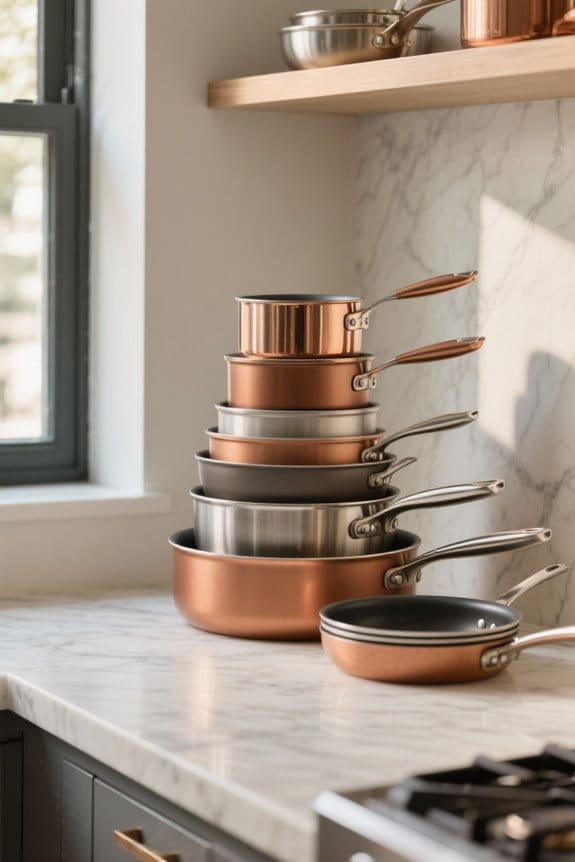
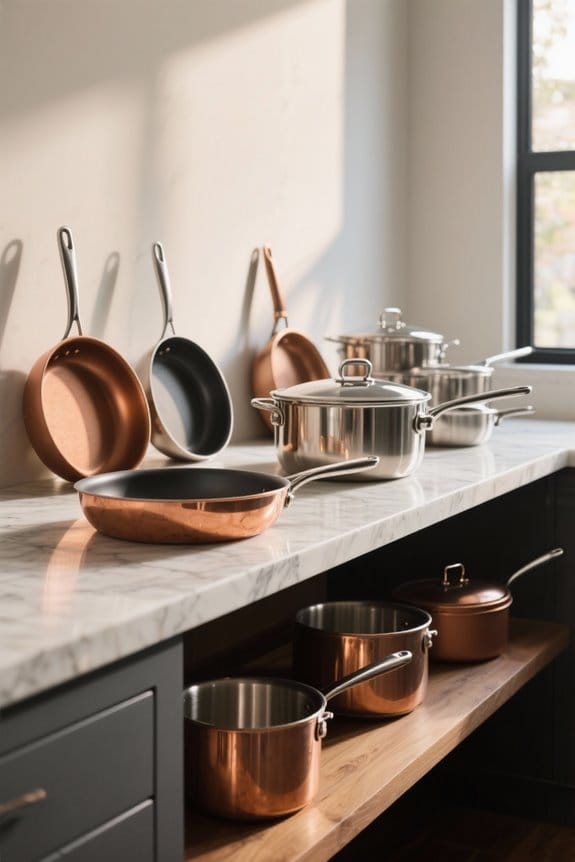
Some cookware should not be nested, particularly non-stick pans. Nesting can lead to scratches that damage the coating. Scratched surfaces may allow harmful chemicals to leach into food. Cast iron and ceramic cookware also risk chipping when stacked. Scratches compromise the performance of stainless steel and cast iron cookware. Avoiding nesting helps preserve the integrity of these materials. Understanding the risks and proper care is essential for safe cooking. More insights are available on effective cookware management.
Key Takeaways
- Nesting non-stick cookware risks scratching the surface, compromising its non-stick performance and releasing harmful chemicals into food.
- Scratches on non-stick surfaces can lead to food sticking and decreased cooking efficiency.
- Stacking can damage the seasoning of cast iron pans, reducing their durability and non-stick qualities.
- Protective layers like paper towels may reduce risks but are not foolproof against scratching and damage.
- Stainless steel cookware can discolor and rust when scratched, impacting its longevity and overall performance.
Understanding Cookware Materials
You may be interested

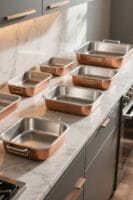

Cookware materials play an essential role in kitchen performance and longevity. Stainless steel is known for its durability and resistance to scratching. It provides even heat distribution and is less likely to warp over time. Non-stick pans, often coated with PTFE, require careful handling. They are convenient for cooking but can be easily damaged by abrasive tools or rough use. Cast iron is highly durable but demands regular maintenance to prevent rust. Proper seasoning is key to its longevity. Ceramic cookware is non-toxic and viewed as a safer option, yet it must be handled gently to avoid chips. Choosing rounded edges and protective layers between pieces can greatly enhance the lifespan of different cookware types. Enameled cast iron cookware, known for its excellent heat distribution, is versatile for various cooking methods and simplifies cleaning due to its non-stick surface.
Risks of Nesting Non-Stick Cookware
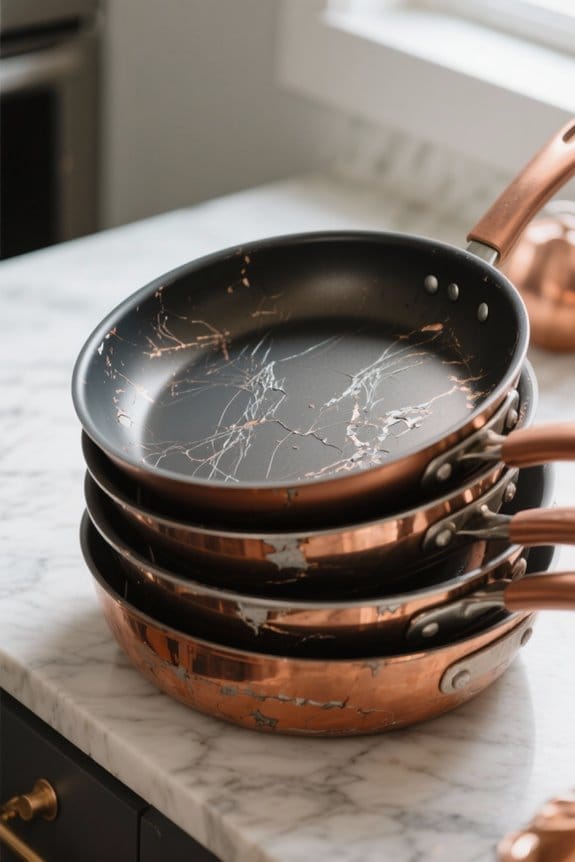
Nesting non-stick cookware poses notable risks that consumers should consider. When stacked, the surfaces can easily scratch, damaging the non-stick coating. This deterioration can reduce the cookware’s effectiveness over time. Scratched coatings may release harmful chemicals, such as PFOA, into food. Additionally, the friction between stacked pans increases the risk of chipping or flaking. These particles could inadvertently mix with meals during cooking. To mitigate these risks, using protective layers like paper towels between stacked non-stick cookware is advisable. However, even with precautions, the potential hazards still suggest that alternatives like ceramic or stainless steel cookware may provide safer storage options. These materials avoid the associated risks of non-stick coatings. It is important to choose pans free from PFOA and PFOS to prevent exposure to harmful chemicals.
Recommended Products

COMPLETE CERAMIC COOKWARE SET: Includes fry pans, saucepans, sauté pan, Dutch oven, petite cooker, stir fry, rondeau, stock pot, 11" grill pan, 11" griddle pan, roasting pan with rack, double burner griddle, lids, racks, and organizers.

COMPLETE KITCHENWARE SET: Includes 23-piece cookware with 10.5” frying pan, 3 qt saucepan, 6.5 qt Dutch oven, 4.5 qt sauté pan, 3 lids, magnetic pan racks, canvas lid holder, baking sheets, muffin pan, loaf pan, cooling rack, and storage organizers.

NON-TOXIC COATING: Clean cooking gets squared away with Caraway’s ceramic-coated Squareware Set. These spacious pans are perfect for recipes that need a bit more room and are free from harmful materials such as PFOA, PTFE, lead, cadmium, or toxic metals.
Impact of Scratches on Performance
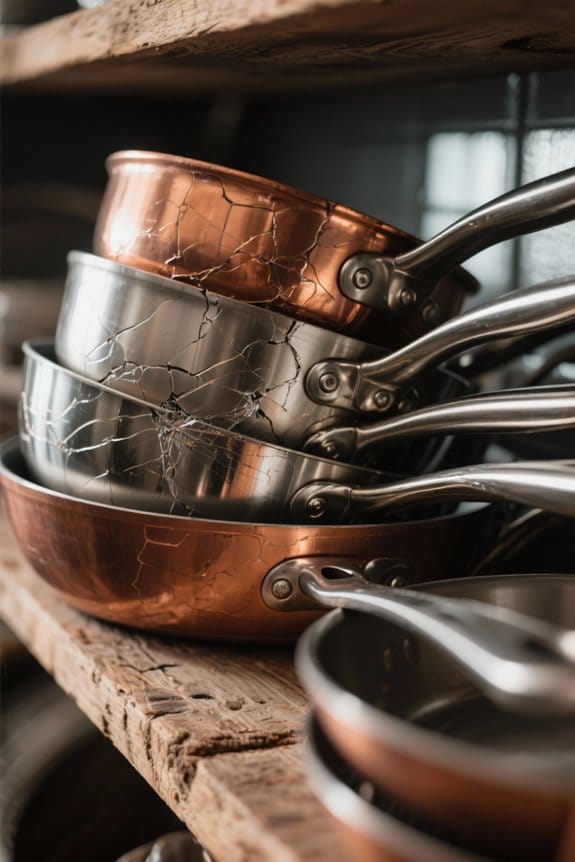
When non-stick cookware develops scratches, its performance can be markedly affected. Scratches compromise the non-stick coating, causing food to stick during cooking. This reduces the effectiveness of the cookware, making meal preparation more challenging. Stainless steel cookware with scratches may also suffer in performance. Discoloration can occur, and the surface becomes more susceptible to rust and corrosion. Cast iron pans experience deteriorated seasoning due to scratches, which harms their cooking efficiency and non-stick qualities. Over time, the continual formation of scratches can diminish the lifespan of any cookware. Consequently, damaged items may need replacing sooner, leading to higher costs. Taking care to avoid nesting can help maintain performance and prolong the life of cookware. Cast iron skillets, like the Utopia Kitchen Saute Pan, are known for superior performance in frying, baking, and braising, delivering delicious results in various dishes.
Health Concerns With Cookware Damage
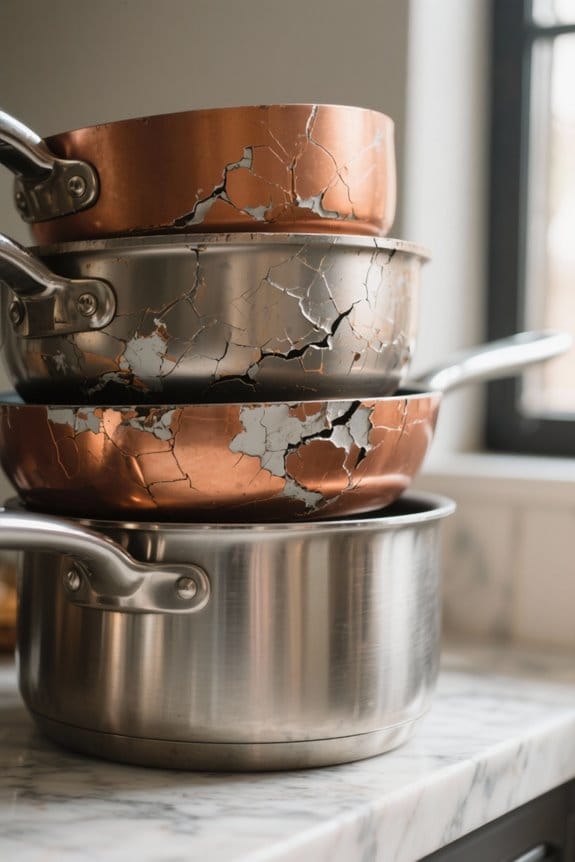
Damage to cookware can pose significant health concerns. Scratches on non-stick cookware can lead to harmful substances being released. PFOA and other toxic materials may leach into food, raising health risks for consumers. Ingesting particles from scratched surfaces can negatively affect digestive health. Moreover, older non-stick coatings might still contain PFOA, which has been linked to serious health issues like cancer and reproductive harm. Regularly inspecting cookware is essential to identify any scratches or chips that could threaten safety. To maintain both cookware integrity and personal health, it is advisable to avoid nesting non-stick cookware. Nonstick coatings that are free from PFAS and PFOA are designed for safer cooking experiences. This simple practice can help prevent scratches that compromise the cookware and potentially impact user health. Keeping cookware in good condition is crucial for safe cooking.
Recommended Products

COMPLETE COOKWARE SET: Includes 8" & 10.5" fry pans, 1.05 qt. & 3 qt. saucepans, 4.5 qt. sauté pan, 6.5 qt. Dutch oven, 2 qt. petite cooker, 12" stir fry, 6 qt. rondeau, 12 qt. stock pot, 6 lids, magnetic racks, lid holder, and storage organizer.

7-piece cookware set.
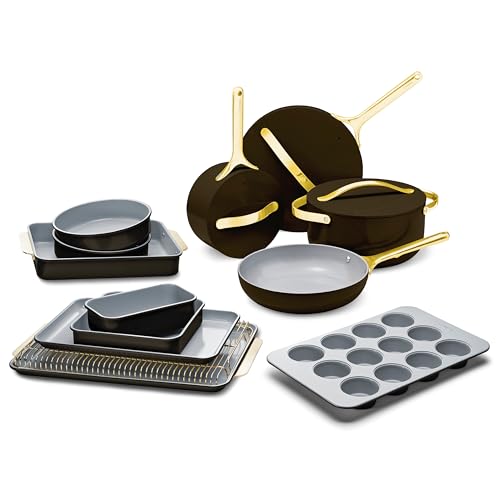
COMPLETE KITCHENWARE SET: Includes 23-piece cookware with 10.5” frying pan, 3 qt saucepan, 6.5 qt Dutch oven, 4.5 qt sauté pan, 3 lids, magnetic pan racks, canvas lid holder, baking sheets, muffin pan, loaf pan, cooling rack, and storage organizers.
Alternative Storage Solutions
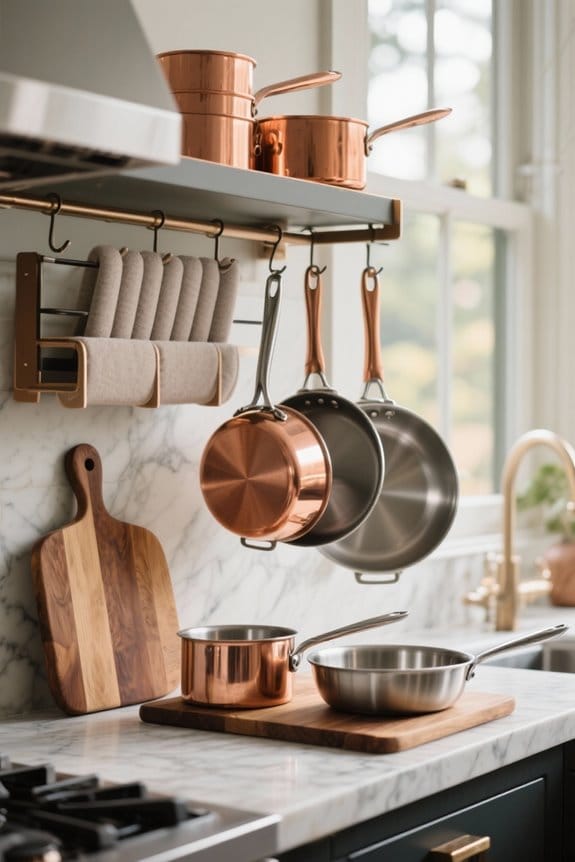
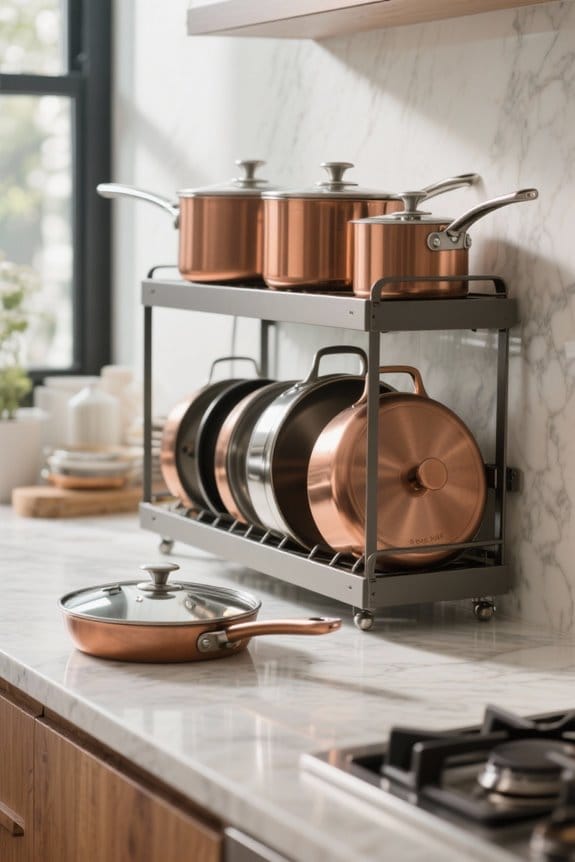
Various alternative storage solutions can effectively organize cookware while avoiding the risks associated with nesting. Wall-mounted pegboards offer easy access and keep pots and pans visible. Magnetic pan racks eliminate scratches by allowing cookware to hang freely. Canvas lid holders provide a way to keep lids organized and accessible. Modular shelving accommodates different cookware shapes and minimizes contact, enhancing longevity. Drawer organizers optimize space, ensuring pots and pans are separated for easy retrieval. Nonstick features in cookware can be preserved by avoiding stacking, which prevents abrasion and extends the life of the coating. These storage solutions not only protect cookware from damage but also improve kitchen aesthetics. Investing in these systems can reduce clutter, promoting a functional workspace. Proper organization of cookware will lead to a more efficient cooking experience and longer-lasting products.
Recommended Products

【3-in-1 Space-Saving Design】 Maximize floor space with this 71" tall vertical unit. Featuring a slim footprint of 31.5"W x 15.8"D, it consolidates wine racks, display shelving, and drawers into one streamlined profile, making it a practical fit for compact apartments and home offices

8 ft. x 4 ft. Installed (32 sq. ft.) includes all required trims and hardware for installation. 8x4 Section is composed of 10 single slatwall panels

130 lbs Large Capacity: One‑piece ceiling pot rack with reinforced chains supports up to 132 lbs of heavy cookware like cast-iron skillets and Dutch ovens; holds 30 % more than standard pot and pan hanging racks for storage peace of mind
Benefits of High-Quality Cookware
High-quality cookware offers several advantages that greatly enhance cooking experiences. This type of cookware is often made from durable materials like stainless steel or heavy-duty ceramic. These materials resist scratches and chips better than cheaper options. Premium cookware features multi-layer construction, leading to even heat distribution and minimizing hot spots. This results in improved cooking performance, allowing better browning and flavor development. Many high-quality cookware sets prioritize safety by being free from harmful chemicals like PFOA and cadmium. Additionally, they often come with warranties, underscoring the manufacturer’s confidence in their longevity. Investing in high-quality cookware can save money on replacements over time and contribute to better meal preparation overall. Many sets, like the Cuisinart MultiClad Pro, are designed with professional triple-ply construction, ensuring even heat distribution and durability.
Tips for Proper Cookware Care
Proper care of cookware is essential to extend its lifespan and maintain performance. To prevent scratches, use protective layers like felt mats or potholders when nesting pots and pans. Regularly inspect cookware for wear, especially for non-stick coatings. This guarantees safety and functionality. Opt for non-coated stainless steel pans, as these are less likely to scratch and more durable. Hand-wash all cookware instead of using a dishwasher to maintain the integrity of materials and non-stick coatings. Avoid stacking pans with rough surfaces or made from softer metals, as this increases the likelihood of damage over time. Many pans work on gas, electric, and induction cooktops, which ensures versatility and proper heating across different stovetop types. These simple practices help to keep cookware in good condition and enhance its longevity.
Frequently Asked Questions
Is It Bad to Stack Pans on Top of Each Other?
Stacking pans on top of each other can lead to cookware damage, including scratches and compromised non-stick surfaces. Implementing proper stacking safety techniques, like using protective layers, helps maintain cookware integrity and prolongs its lifespan.
What Type of Cookware Should I Avoid?
Cookware to avoid includes non-stick options due to their limitations with scratching and coating damage, as well as stainless steel, which can also suffer noticeable scratches without proper nesting practices to protect surfaces during storage.
What Is the Healthiest Type of Cookware to Use?
The healthiest type of cookware includes ceramic cookware for its non-toxic properties and stainless steel for its durability. Both options eliminate harmful substances, making them excellent choices for health-conscious individuals looking to enhance their cooking experience.
What Cookware Can You Not Use With Induction?
Approximately 30% of households use induction cooktops, but cookware lacking induction compatibility—such as glass, copper, and some stainless steel—lacks the necessary magnetic properties, rendering it ineffective for efficient heat generation on these cooking surfaces.