As an Amazon Associate, we earn from qualifying purchases. Some links on this site are affiliate links at no extra cost to you. Our recommendations are based on thorough research and editorial judgment.


How Stacking Affects Cookware Longevity

Stacking cookware can greatly reduce its longevity. Scratches often develop on non-stick surfaces, decreasing their effectiveness and increasing the need for grease. Warping may occur due to pressure from stacked items, which leads to uneven heat distribution. This inconsistency can affect cooking results over time. Regular inspections are essential to identify damage early. Using protective dividers or considering alternative storage solutions can help maintain cookware quality. More insights on preserving cookware effectively follow.
Key Takeaways
- Stacking cookware improperly can lead to scratches, which compromise non-stick surfaces and increase the need for grease when cooking.
- Pressure from stacking can warp cookware, resulting in uneven heat distribution and inconsistent cooking outcomes over time.
- Damaged cookware may release harmful substances like PFAS, posing health risks and necessitating earlier replacements, which contributes to environmental waste.
- Utilizing protective dividers between stacked cookware can help preserve surfaces and prolong longevity, especially for non-stick coatings.
- Regular inspections of stacked cookware are essential to identify damage early and maintain safe cooking practices, enhancing overall cookware durability.
The Impact of Stacking on Cookware Durability
You may be interested
Stacking cookware can greatly impact its durability and performance. When pots and pans are stacked improperly, they can develop scratches on non-stick surfaces. These scratches diminish the effectiveness of the coating, requiring more grease to prevent food from sticking. Additionally, stacking can create pressure that warps cookware, affecting heat distribution during cooking. This warping can lead to inconsistent cooking results over time. Frequent scratches may result in harmful substances, such as PFAS, being released from damaged non-stick coatings. Damaged cookware often demands replacement, adding clutter to the kitchen and increasing environmental waste. To enhance longevity, proper storage techniques that avoid stacking are essential. These methods can help maintain cookware performance and prevent physical damage, maximizing its lifespan. Using cookware that is oven-safe to 450°F ensures it can withstand high temperatures without warping, further contributing to its longevity.
Common Types of Stackable Cookware
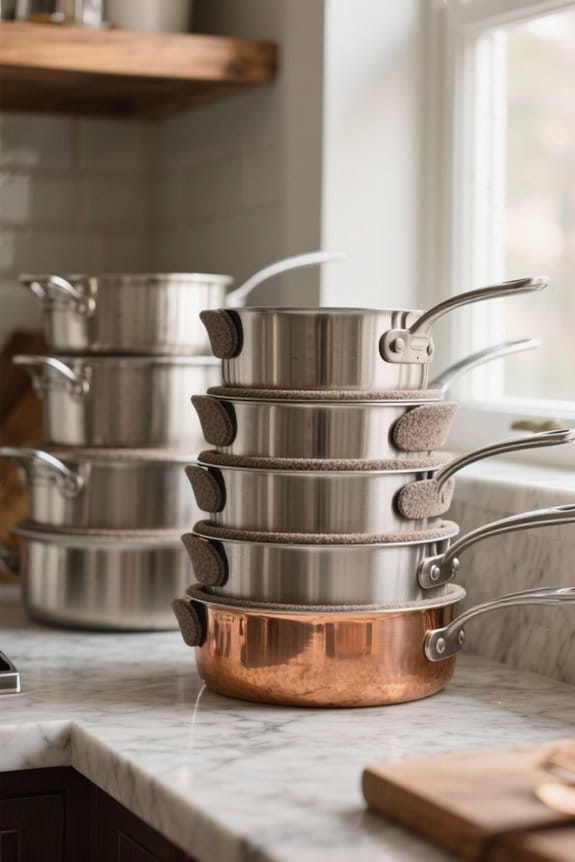
When selecting cookware, many consumers look for options that maximize kitchen space. Common types of stackable cookware include stainless steel, ceramic, and non-stick pans. These options are designed to reduce cabinet space by allowing efficient nesting. Many sets, such as Click Chef and GreenPan, feature innovative shapes that enable easy stacking. This design helps prevent scratching during storage. Additionally, some stacked cookware incorporates felt dividers or specialized handles to minimize contact between pieces. Such features enhance the longevity of pots and pans by protecting their surfaces. However, it is essential to use these protective elements when stacking your pots to maintain their non-stick properties and avoid potential damage over time. One example of high-quality cookware with exceptional heat retention is the All-Clad HA1 Hard Anodized Nonstick Grill, which ensures even cooking.
Recommended Products

CLEAN COOKING: NanoBond presents an entirely new category of clean-cooking, stick-resistant cookware. It is 4x stronger than typical stainless and is non-toxic and non-reactive, so there is nothing to compromise your food or your health. When you cook with NanoBond, you are cooking with pure flavor. No residue. No flaking. No compromise.

Contents: 3 stewing pan with lid Ø 16 cm (approximately 1, 9L), 20 cm (approx. 3, 9L) 24 cm (approx. 5, 7L), 1 x stewing pot diameter 16 cm (approx. 1, 4L) without lid, 1 vegetable steamer 20 cm diameter item number: 0760066380

Durable resistium non-stick coating
Risks of Damage Caused by Stacking
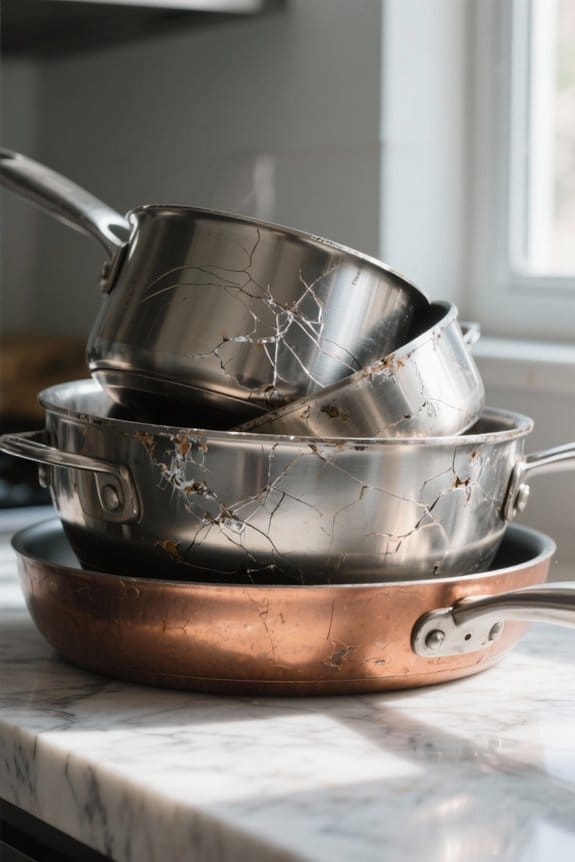
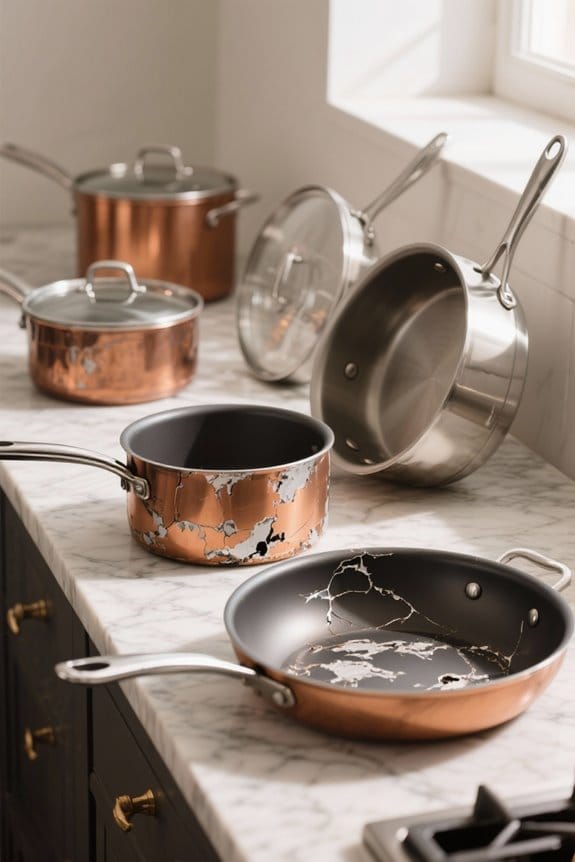
Properly stacking cookware can introduce significant risks of damage. When stacking pans, pressure points can form that warp their shape. This results in uneven heating and cooking. Non-stick coatings are particularly vulnerable to scratching and damage during stacking. Such scratches can diminish their effectiveness and lead to food sticking. Additionally, non-stick surfaces can chip or peel, especially without protective layers in between. This compromises cookware longevity and aesthetic appeal. High heat can further exacerbate these issues, causing deeper damage. Regularly inspecting stacked cookware is essential. Preventing damage can reduce the need for early replacements, which adds to kitchen clutter and costs. Proper storage techniques help maintain the integrity of pots and pans, supporting their lifespan. Reinforced die-cast aluminum or hard-anodized surfaces contribute to enhanced durability and heat distribution, making them a preferable choice for long-lasting cookware.
Recommended Products

22 PIECE SET: Includes 8” and 9.5” frying pans; 11” frying pan with lid; 11” grill pan with lid; 11” chef’s pan with lid; 11” square griddle pan; 1.5qt and 3.25qt saucepans with lids; 3.25qt sauté pan with lid; 5.4qt and 7.8qt stock pots with lids; small, medium, and large pan protectors.

Durable and High-Quality: Constructed from 100% 18-8 mirror polished stainless steel, this compact cookware set is built to last and delivers a sleek, professional look to your kitchen or galley.

Titanium Reinforced Coating: Equipped with titanium-infused interior coating, the surface is extra tough & durable to fend off scratches for long-lasting service.
Health Concerns Related to Scratched Non-Stick Surfaces
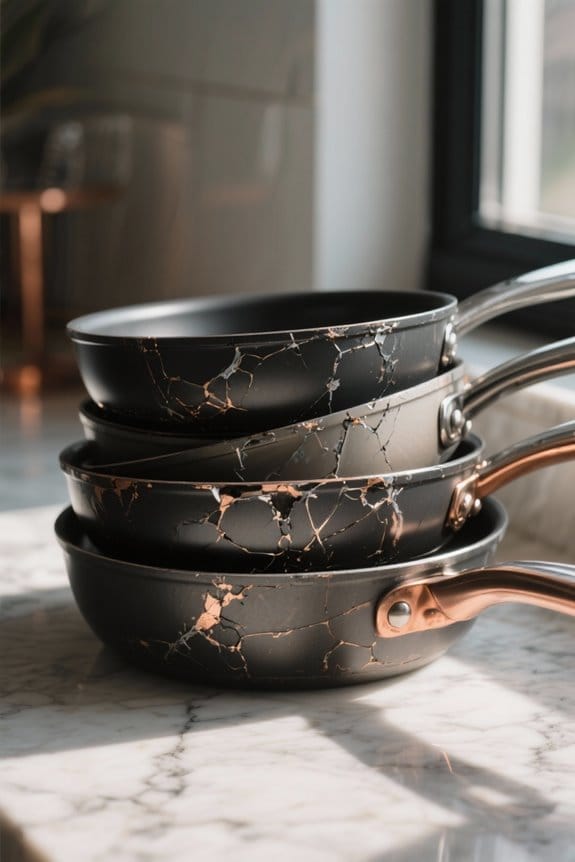
What happens to health when non-stick cookware becomes scratched? Scratched non-stick surfaces can release harmful per- and polyfluoroalkyl substances (PFAS). These chemicals are linked to health concerns, including compromised immune systems and certain cancers. Damage to the non-stick coating allows microplastics and nanoplastics to be ingested, posing significant risks. Research shows that scratched pans can degrade at high temperatures, releasing toxic fumes into the air. Regular consumption of food from these damaged surfaces heightens health problems. Inspect cookware frequently for scratches, peeling, or chipping to guarantee safety. Proper care and maintenance can prevent scratches, promoting longer-lasting and safer non-stick cookware. Prioritizing the integrity of non-stick surfaces is essential for maintaining a healthy cooking environment.
Alternatives to Stackable Cookware for Longevity
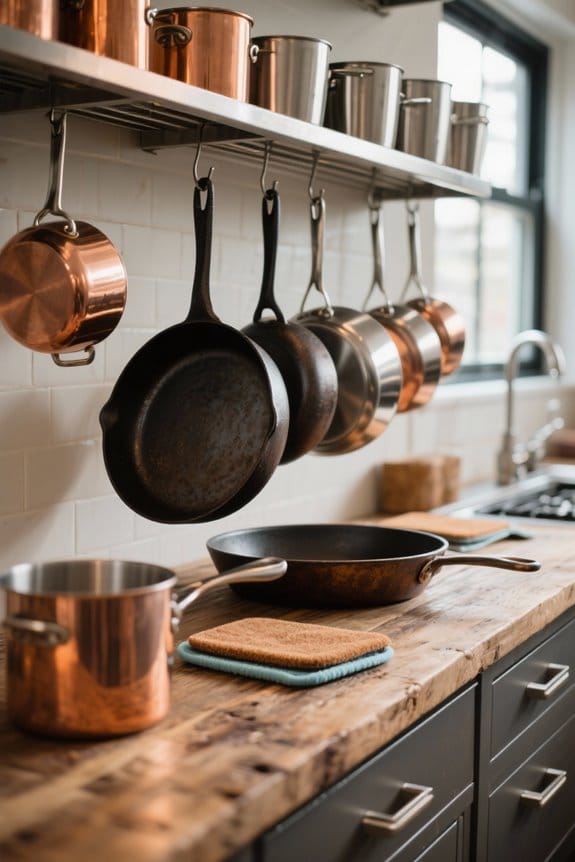
While many home cooks rely on stackable cookware for its convenience, alternatives can enhance cookware longevity and preserve its condition. Wall-mounted pegboards and magnetic pan racks save space and prevent scratches or chips from stacking. A canvas lid holder allows for organized storage, reducing the need to stack lids. Tiered organization stands maximize vertical space, ensuring cookware remains separate and intact. Hanging pot racks maintain accessibility while avoiding damage to non-stick surfaces. In addition, regularly using protective layers like pan protectors between pieces helps to maintain the integrity of cookware. Carbon steel is a preferred material for its durability and even heat distribution, making it a wise choice for those looking to invest in high-quality bakeware. These alternatives to stackable cookware can greatly improve usability and enhance longevity, making them practical choices for those who value their kitchen investments.
Proper Storage Techniques to Preserve Cookware
Cookware storage plays a considerable role in maintaining the quality and longevity of kitchen items. To guarantee pots and pans last longer, avoid stacking them directly. This practice can lead to scratches, especially on non-stick surfaces. Using protective dividers or felt pads between stacked cookware can minimize contact and reduce damage. Another effective method is hanging pots and pans on wall-mounted racks or pegboards. This prevents stacking and keeps cookware accessible. Implementing tiered shelves or organizers in cabinets allows for vertical storage, eliminating unnecessary wear and tear. Regularly inspecting cookware for scratches is crucial. By applying proper storage techniques, users can notably enhance cookware longevity and maintain ideal cooking performance over time. Nonstick coatings like PFOA-free options are safer, ensuring peace of mind for users.
The Role of Material in Cookware Lifespan
When selecting cookware, the material plays a crucial role in determining its lifespan. Non-stick coatings, like Teflon, are popular for their convenience but can become scratched easily when stacking. This diminishes their non-stick powers. Stainless steel is a durable option that may last longer, especially if users avoid stacking. Cast iron can withstand high temperatures and is resilient, but it also requires careful storage to prevent scratches. Ceramic-coated cookware offers decent longevity if stacked with protective layers. These different cookware materials each have varying maintenance needs. Understanding the material helps consumers choose wisely. Care and proper handling directly impact the cookware’s lifespan, making the choice essential for long-term use. Using dual riveted handles in stock pots, such as those found in Winco models, can facilitate easier handling and transport, thus prolonging the cookware’s usability.
Tips for Maintaining Non-Stick and Ceramic Cookware
To guarantee the longevity of non-stick and ceramic cookware, proper maintenance is essential. Hand-wash these items with mild soap and a soft sponge to prevent scratching. Avoid stacking them without protective padding. This will help minimize the risk of scratches and chips during storage. Use medium to low heat while cooking to maintain the non-stick surface. Regularly check for scratches or chips. If damage occurs, replace the cookware to protect health from ingesting harmful materials. Store non-stick and ceramic cookware to prevent thermal shock. Avoid immersing hot pans in cold water. Following these tips will help maintain both the performance and safety of non-stick and ceramic cookware over time. Blue Diamond pans utilize a diamond-infused surface for increased durability and quick heat distribution.
Frequently Asked Questions
Is It Okay to Stack Pots and Pans?
Stacking pots can be a double-edged blade; while it saves space, it risks damaging cookware materials. Employing pan protection maintains the cooking surface, but thoughtful storage concepts enhance heat distribution and encourage a lasting patina development.
How to Protect Pans When Stacking?
To protect pans when stacking, use pan protectors or protective liners that accommodate material compatibility and heat resistance. Employ thoughtful stacking methods and proper cookware organization to safeguard non-stick coatings and prevent damage.
What Is the Best Cookware for Longevity?
When it comes to cookware longevity, stainless steel, cast iron, and copper cookware shine. Nonstick coatings and ceramic surfaces require careful maintenance tips, while heat resistance guarantees they stand the test of time in any kitchen.
Can I Stack Pans on Top of Each Other?
Stacking pans is possible but requires careful consideration of stacking methods and pan materials. Implementing cookware protection strategies enhances functional organization and kitchen efficiency, while minimizing damage prevention for long-term use and maximal performance.