As an Amazon Associate, we earn from qualifying purchases. Some links on this site are affiliate links at no extra cost to you. Our recommendations are based on thorough research and editorial judgment.

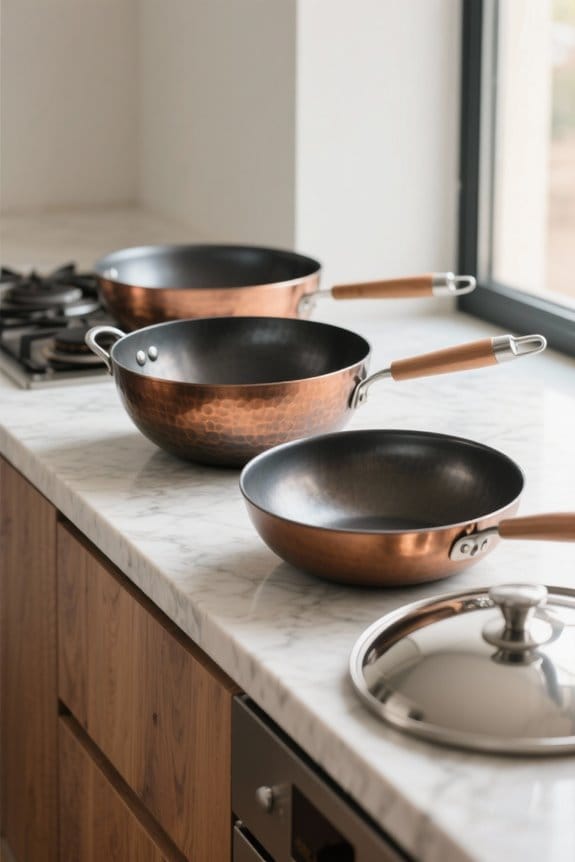
How to Maintain the Seasoning on Carbon Steel Woks

To maintain the seasoning on carbon steel woks, rinse immediately with hot water after use. Use a soft sponge or stiff brush to clean away food particles. Avoid harsh detergents and abrasive scrubbers that can damage the seasoning. After drying over low heat, apply a thin layer of high-smoke point oil. Check for dull spots regularly and reseason as needed. Following these methods will enhance the wok’s cooking performance and extend its lifespan. More techniques are available for effective care.
Key Takeaways
- Rinse your wok with very hot water immediately after cooking to prevent food residue from adhering.
- Use a soft sponge or stiff-bristled brush for scrubbing; avoid abrasive materials to protect the seasoning.
- Dry the wok completely over low heat to prevent rust formation and ensure longevity.
- Apply a thin layer of high-smoke point oil after each use to maintain the non-stick patina.
- Regularly check for dull spots and reseason as necessary by heating with oil until smoking.
Importance of Seasoning Your Wok
You may be interested



Seasoning a carbon steel wok is a fundamental process that every user should prioritize. This process creates a natural non-stick surface, forming a protective coating that guards against rust. A properly seasoned wok develops a unique patina that enhances flavor retention and improves the overall cooking experience. It also supports even heat distribution, which is essential for high-temperature stir-frying. Regular maintenance of the seasoning layer is necessary to sustain the wok’s durability. Applying a thin layer of oil after each use helps maintain the seasoning. Neglecting this maintenance can lead to food sticking, dull spots, and the need for complete reseasoning, which is time-consuming. Keeping the seasoning intact is vital for peak cooking performance.
Cleaning Your Wok After Use
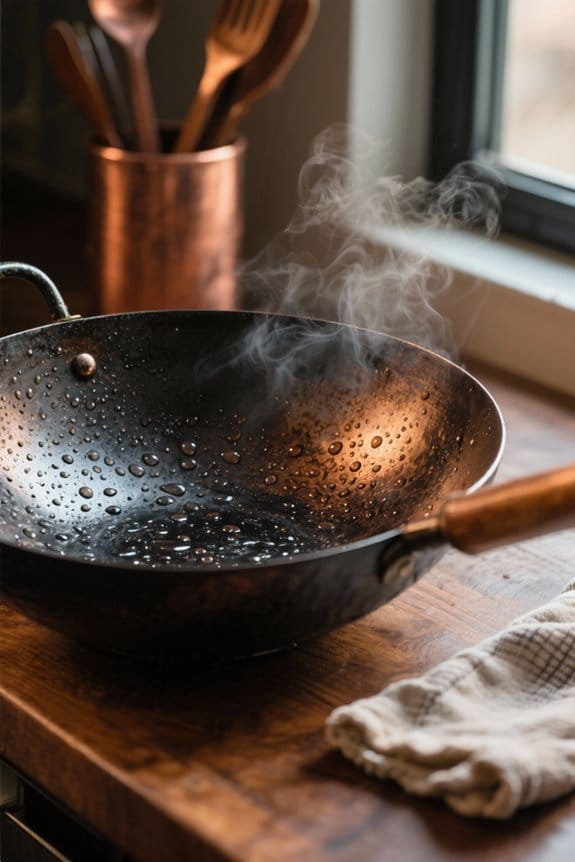
Cleaning a carbon steel wok after use is essential for maintaining its seasoning and overall performance. To start, rinse the wok under very hot water right after cooking to help remove any food residue. Use a soft sponge or stiff-bristled brush to scrub away particles. Avoid steel wool or abrasive materials, as they can damage the seasoning layer. If there’s heavy oil build-up, use a small amount of mild dish soap for a single wash. After rinsing, make sure to dry your wok completely on the stove over low heat. This step prevents rust formation. Finally, apply a light coat of cooking oil on the dry surface before storing it to protect the seasoning and prevent oxidation. To ensure the longevity of your wok’s nonstick performance, efficient heat retention is crucial for consistent cooking results.
Applying Oil for Maintenance
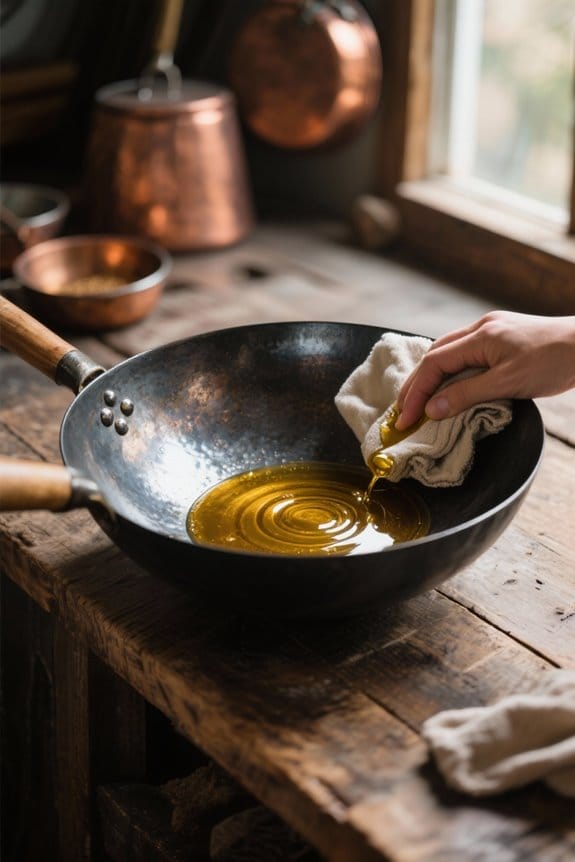
Proper oil application is essential for the long-term maintenance of a carbon steel wok. After each use, apply a thin layer of oil to maintain its seasoning and prevent rust. Use high-smoke point oils such as canola, grapeseed, or peanut oil for best results. Before cooking, preseason your wok by heating it until the oil smokes. This reinforces the non-stick qualities. After washing, dry the wok completely and warm it on the stove before applying oil. This process seals in moisture and prevents rust. Regularly monitor the appearance of your wok; dull spots may indicate the need for further oil application. Staying vigilant can help maintain its seasoning and improve the overall cooking performance. Regular seasoning with oil is crucial to ensure the wok remains rust-free and its nonstick properties are enhanced over time.
Recommended Products


CERTIFIED EXCELLENCE: Sesame Seed Oil made with toasted sesame seeds. This oil for cooking is USDA Organic certified, Kosher, and non-GMO Project verified. Great addition to your high-grade kitchen pantry staples.
Reseasoning Your Wok
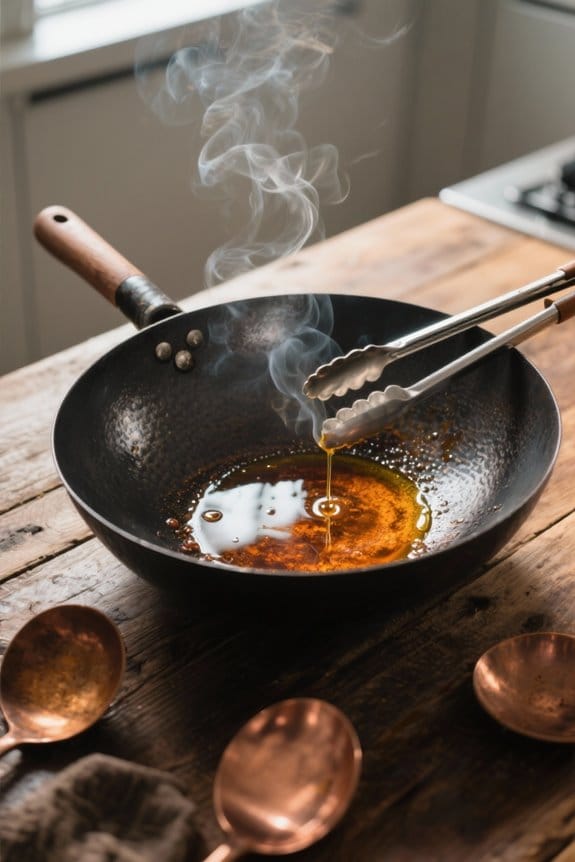
Maintaining a carbon steel wok’s seasoning is essential for ideal cooking performance. To determine if reseasoning is needed, check for dull spots or if food begins to stick. If this occurs, gently scour the wok’s surface with warm soapy water to remove old layers. After cleaning, apply a thin layer of oil to the dry wok. Heat the wok until the oil starts to smoke. Repeat this process several times to build up the seasoning effectively. Alternatively, for a quick method, place the wok in an oven set to 350°F for one hour. Regular monitoring of the wok’s condition guarantees lasting nonstick qualities and extends the lifespan of the cookware. Reseasoning as needed enhances cooking performance.
Best Practices for Long-Term Care
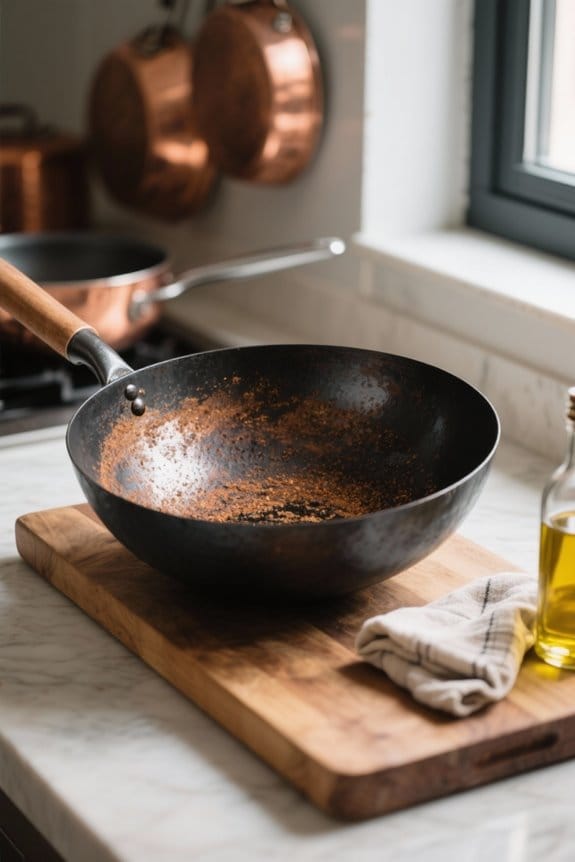
To guarantee a carbon steel wok remains in ideal condition, routine care is essential. Always wash your wok with hot water and a soft sponge right after use. This prevents food residue from hardening on the entire surface. Use a mild dish soap only for removing heavy oil buildup. Avoid harsh detergents and abrasive scrubbers to protect the seasoned carbon steel. After cleaning, apply heat to thoroughly dry the wok, which helps prevent rust. Once dry, apply a thin layer of oil, such as vegetable or canola, to maintain its non-stick patina. Regularly inspect the wok for dull spots or sticking food, as these signs may indicate the need for reseasoning to restore cooking performance. To extend the life of your wok, consider nonstick coating options that enhance durability and performance.
Recommended Products

Enameled cast iron delivers superior heat distribution and retention; Ready to use, requires no seasoning

Chinese wok, made in China. Our woks have been through 12 processes, 36,000 times of hand-hammering. It shines like a mirror. You can see all the hammer prints but hardly feel them. Mirror surface allows ingredients to slide smoothly inside the wok.

Chinese wok, made in China. Our woks have been through 12 processes, 36,000 times of hand-hammering. It shines like a mirror. You can see all the hammer prints but hardly feel them. Mirror surface allows ingredients to slide smoothly inside the wok.
Common Mistakes to Avoid
While enjoying the benefits of a carbon steel wok, it is essential to steer clear of common mistakes that can jeopardize its longevity. Avoid using harsh detergents, as they strip away the seasoning layer and compromise its non-stick properties. Do not let food residues remain, especially from acidic foods, which can harm the seasoning. Never submerge the wok in water or use a dishwasher, as this introduces moisture that promotes rust. Limit cooking acidic foods, as they may deteriorate the seasoned surface. Finally, be cautious not to overheat your wok during the seasoning process. Excessive temperatures can burn the oil, creating a sticky surface that requires reseasoning. Adhering to these guidelines helps maintain your wok’s durability. Additionally, consider using a pre-seasoned carbon steel wok like the YOSUKATA Carbon Steel Wok Pan to enhance initial non-stick performance and ensure even heat distribution.
Recommended Products
Chinese wok, made in China. Our woks have been through 12 processes, 36,000 times of hand-hammering. It shines like a mirror. You can see all the hammer prints but hardly feel them. Mirror surface allows ingredients to slide smoothly inside the wok.

Hand-hammered iron for even, intense heat every time; Flat-bottom design fits all stovetops, including induction; Sturdy iron handle for safe, confident cooking; Crafted for durability and authentic wok flavor.

Includes: 8" Seasoned Blue Carbon Steel Frying Pan | 10" Seasoned Blue Carbon Steel Frying Pan | 12" Seasoned Blue Carbon Steel Frying Pan
Frequently Asked Questions
How to Re Season a Carbon Steel Wok?
To re-season a carbon steel wok, employ basic wok preparation techniques by scrubbing, using the best oils, maintaining proper heat application, and following recommended seasoning duration, while prioritizing rust prevention tips for effective cooking surface care.
Do I Need to Season My Carbon Steel Wok?
Must one season a carbon steel wok regularly? Proper wok usage tips suggest that occasional seasoning techniques suffice, ensuring ideal heat distribution, compatibility with various cooking methods, and long-lasting longevity through diligent maintenance and rust prevention practices.
How to Keep a Wok Seasoned?
To keep a wok seasoned, proper wok care includes regular surface maintenance, using appropriate oil types for flavor enhancement, employing correct cooking techniques, and ensuring thorough cleaning to prevent rust and maintain ideal heat distribution and food safety.
Do You Wash a Wok After Seasoning?
Yes, washing a wok after seasoning is essential. Effective wok maintenance tips include using hot water, soft sponges, and oil for rust prevention. Proper cleaning techniques enhance food compatibility while mitigating overheating risks and ensuring even heat distribution.