As an Amazon Associate, we earn from qualifying purchases. Some links on this site are affiliate links at no extra cost to you. Our recommendations are based on thorough research and editorial judgment.

Why Some Baking Pans Have Rolled Edges

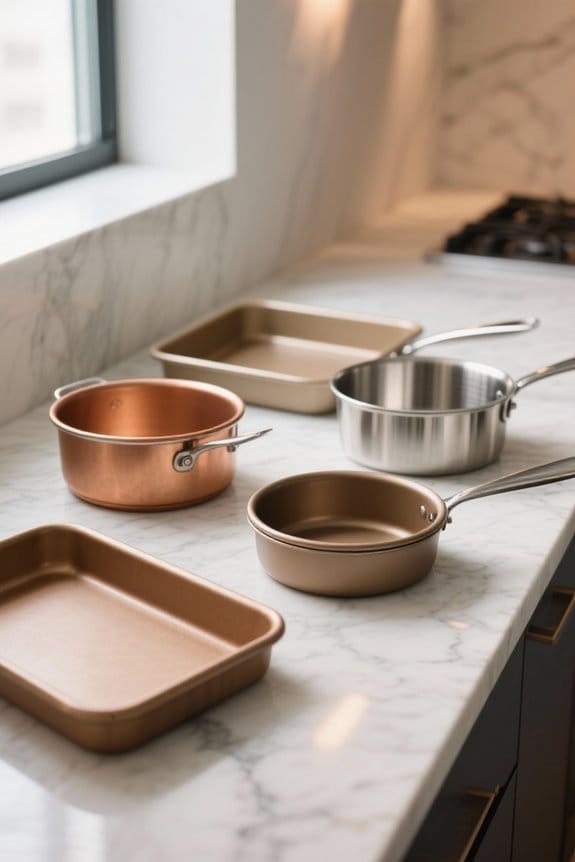
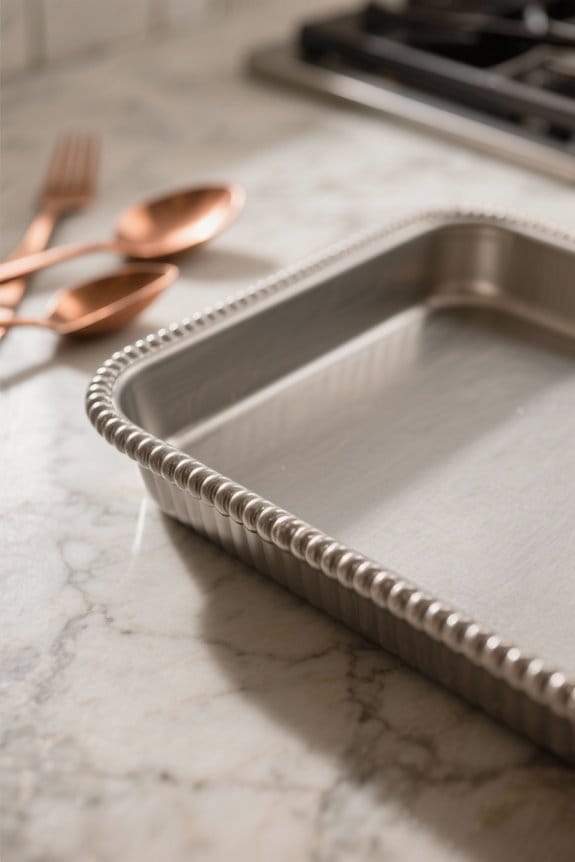
Baking pans with rolled edges provide enhanced durability and performance. They prevent warping and deformation, especially at high temperatures. Constructed from thicker materials like aluminum or carbon steel, they resist denting and guarantee even heat distribution. This design also improves handling safety by offering better grip and stability. The smooth surface simplifies cleanup by minimizing food sticking. Understanding these features can aid in choosing the right pans for effective baking. Additional insights can further clarify their advantages.
Key Takeaways
- Rolled edges enhance the structural integrity of pans, preventing warping and deformation during high-temperature baking.
- They provide improved grip and stability, reducing the risk of slips or spills while handling hot pans.
- The smooth surface minimizes food sticking, making cleanup after baking easier and faster.
- Rolled edges help distribute heat evenly, leading to consistent baking results and enhanced performance.
- They eliminate sharp edges, increasing safety and reducing the likelihood of finger injuries during handling.
Enhanced Durability of Rolled Edge Pans
You may be interested

Rolled edge baking pans offer enhanced durability compared to traditional flat-edged options. The rolled edges strengthen the structural integrity of these baking pans. This design prevents warping and deformation during high-temperature baking. Users benefit from pans made with thicker materials, which are less likely to dent or become damaged over time. Additionally, rolled edge pans evenly distribute heat, contributing to consistent baking results. Heavy-duty materials like carbon steel or aluminum are preferred for their ability to resist warping and scratching. The absence of sharp edges makes these pans safer for handling. A smoother surface also aids in cleaning. Overall, the reinforced structure guarantees that rolled edge baking pans can withstand the rigors of regular use, making them a practical choice for both novice and experienced bakers.
Recommended Products

Premium Carbon Steel Construction – Made from high-quality carbon steel with a protective enameled coating, this pan offers fast, even heat distribution, ensuring consistently perfect paellas with every use.

Includes 2 cookie pans, 2 round cake pans, 1 square cake pan, 2 loaf pans, 1 rectangular cake pan with lid, 1 12-cup muffin pan, 1-cup, 2-cup and 4-cup Pyrex glass measuring cups.

【Important Note】 This kitchen cabinet organizer is designed for frameless cabinets only and will not fit cabinets with frames around the doors
Benefits of Improved Handling
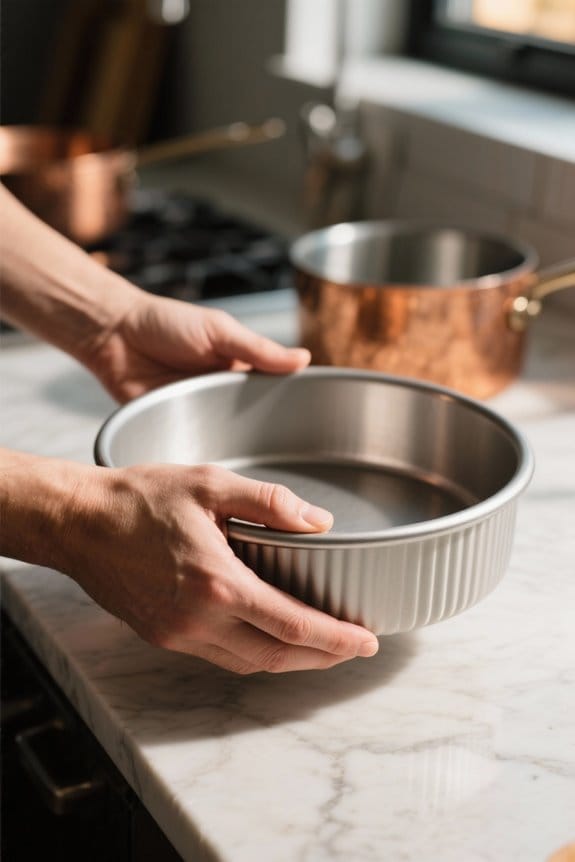
Handling baking pans can be challenging, especially when they are hot and heavy. Baking sheets with rolled edges offer improved grip and stability. The rounded edges create a reinforced structure that prevents bending or warping in high temperatures. This design facilitates safer handling, minimizing the risk of slips or spills. The slightly elevated surface aids in transferring the pans in and out of the oven more efficiently. Additionally, rolled edges reduce the likelihood of damaging the pan or injuring fingers on sharp edges. These features collectively enhance the overall durability of the baking sheet, making it a reliable choice for both home cooks and commercial bakers. Overall, rolled edges contribute to safer and more efficient baking practices. Furthermore, stainless steel baking sheets are resistant to warping and bending under high heat, which enhances their durability and performance in various cooking tasks.
Recommended Products

✅ Constructed of 80% solid granite

Sink Dimensions: 32-1/16" X 18-1/2" X 9" Min. Cabinet Size: 36"

PREMIUM FIRECLAY BUILD – HIGH-TEMPERATURE FIRING FOR SUPERIOR DURABILITY - Talllor 33 Inch Curved Apron Front White Farmhouse Sink is made from natural fireclay and fired at temperatures above 2130°F, creating a dense, non-porous ceramic structure with outstanding strength and durability. The smooth porcelain glaze resists heat, scratches, stains, and impact, making this White Farm Sink a long-lasting centerpiece for any modern or Country Style kitchen
Cleaner Design for Easier Maintenance
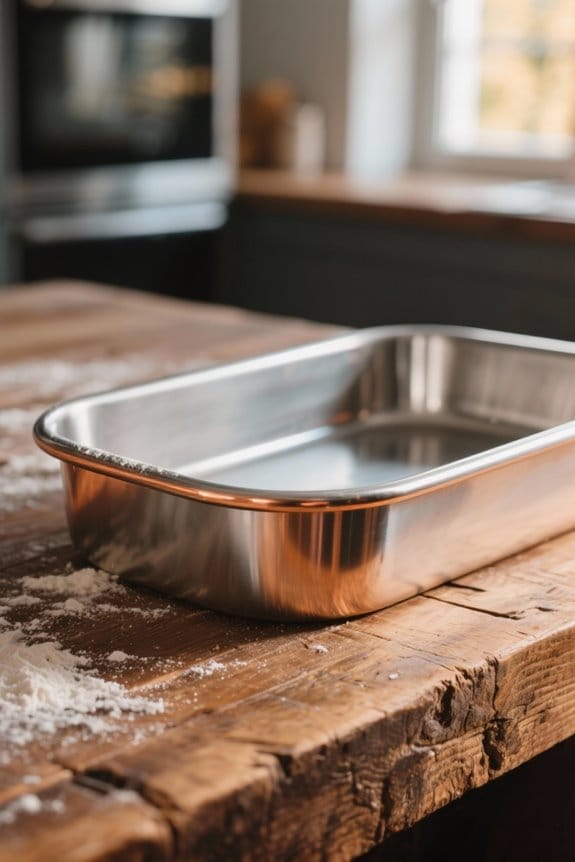
A cleaner design is vital for effective maintenance in baking pans. Rolled edges create a smooth surface that minimizes food sticking. This feature simplifies cleanup after baking. The design also prevents sharp edges that can trap grime, making maintenance easier. Additionally, rolled edges enhance the pan’s structural integrity. This reduces warping over time, leading to prolonged performance. Better heat distribution occurs around the edges of the pan, which improves baking results. Consequently, bakers spend less time scrubbing and more time enjoying their creations. Overall, these easy-to-maintain baking pans offer practical advantages for both novice and experienced bakers. Choosing pans with rolled edges guarantees a reliable tool for achieving consistently good results. Non-porous glazes in some baking dishes also contribute to easier maintenance by preventing stains and odors.
Recommended Products

𝐒𝐓𝐔𝐑𝐃𝐘 𝐂𝐎𝐍𝐒𝐓𝐑𝐔𝐂𝐓𝐈𝐎𝐍: Manufactured from 90 gauge aluminum foil, this baking pan boasts remarkable strength and resilience. The round baking pan allowing you to confidently bake and transport even the heaviest pies without worrying about deformation or leaks.

Product 1: Built to Last: This Rachael Ray bake-ware set features heavy gauge steel construction with rolled rim edges designed for easy, everyday use

Versatile: Our #1 best selling mini pie tins are perfect for pies, tarts, cobblers, cakes, and more. Ideal for home kitchens and restaurants, these foil pie pans are perfect for delicious baked goods.
Prevention of Warping Under High Heat
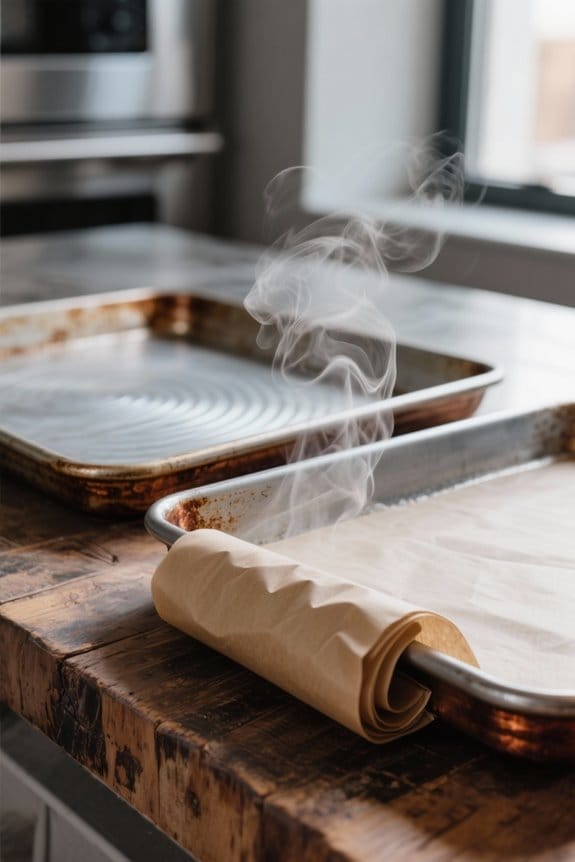
Baking pans need to withstand high heat without warping. Pans with rolled edges offer additional support. This design distributes stress evenly across the material. As a result, it reduces the risk of bending or buckling. Metal expands unevenly when heated, leading to warping, but rolled edges mitigate this effect. Higher-quality baking and cookie sheets are typically made from thicker materials. Thicker pans resist deformation better than thinner alternatives. The rolled design also creates a more stable cooking surface. This stability minimizes movement and vibration that can contribute to warping. Utilizing these pans at recommended baking temperatures, usually below 400°F, enhances their durability. Overall, rolled-edge pans perform reliably under high heat conditions. Additionally, 18/0 stainless steel is often used in high-quality baking sheets for its durability and rust resistance.
Comparison to Other Pan Designs
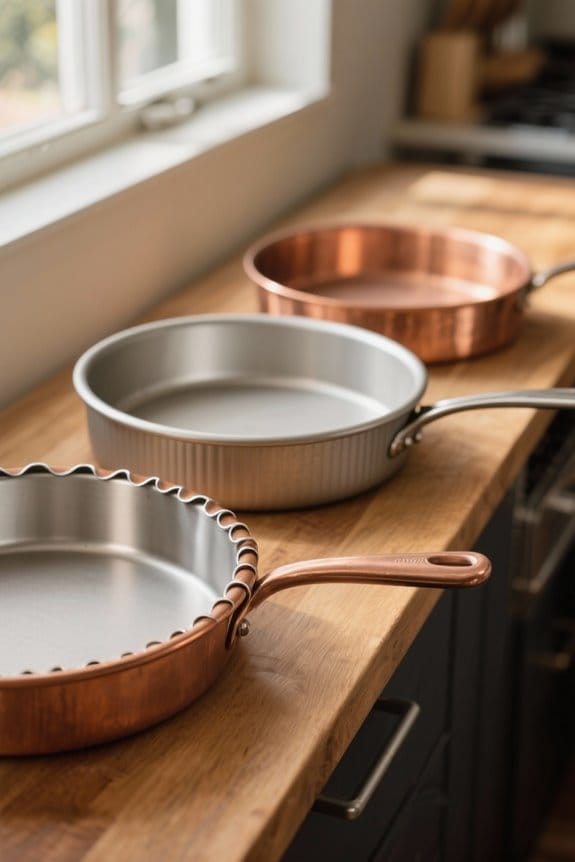
Rolled edge pans stand out when compared to other baking pan designs. They offer enhanced structural integrity, reducing the risk of warping during heating and cooling. Unlike flat pans, the rolled edges provide a lip that aids better food containment and minimizes spills. This feature is critical for recipes that need more stability. Single folded edge pans may suffice but lack the versatility of rolled edge designs. Rolled edge pans accommodate a variety of baking tasks, making them suitable for both simple and complex recipes. Their construction enhances durability by preventing sharp edges and resisting dents from handling. While traditional baking sheets are flat or slightly raised, rolled edge pans offer superior support for items like sheet cakes or roulades. Heavy-duty materials like carbon steel are recommended for rolled edge pans to improve heat distribution and ensure long-lasting use.
Recommended Products
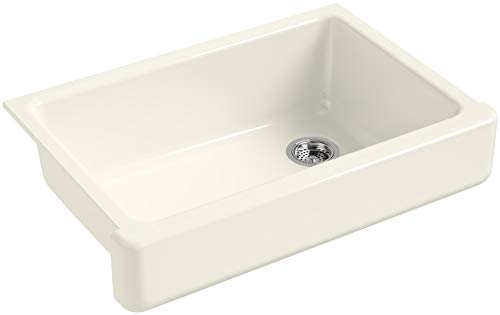
The farmhouse sink needs a minimum 33" (838 mm) base cabinet width

✅ 80% solid granite, silgranit material features the touch and feel of Natural stone. Required outside cabinet is 24 inch.
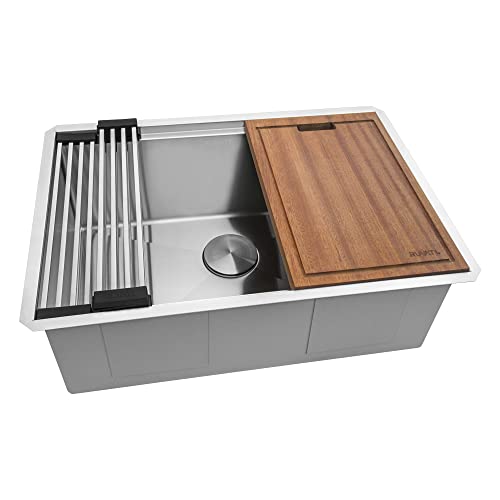
EASY-TO-CLEAN ROUNDED CORNERS:Features rounded corners and edges for easy cleaning. Sloped bottom with drain grooves and center drain for perfect water drainage. Designed for undermount installation.
Suitable Recipes for Rolled Edge Pans
Many recipes benefit from the specific design of rolled edge pans. These pans excel in creating light and fluffy textures, making them ideal for sponge cakes and other egg-based batters. The rolled edges effectively contain rising batters, which is advantageous for baking sheet cakes and cookie bars. Recipes like quiches and savory tarts gain stability as the crust is supported by the pan’s structure. Rolled edge pans are also suitable for brownies, as they prevent spills while offering ample surface area for even baking. Additionally, the design minimizes the risk of warping, which is vital for pastries and cookies that require precise baking. Overall, rolled edge pans enhance the baking experience across these varied recipes. Cocottes can be used for soups, stews, casseroles, and desserts, offering a versatile cooking experience akin to rolled edge pans in baking.
Recommendations for Quality Brands
When selecting high-quality rolled edge pans, several brands stand out for their performance and durability. USA Pans offers steel-based sheet pans that resist warping and promise longevity. NordicWare is known for its heavy gauge aluminum pans, which maintain their shape during high-heat baking. Anolon provides non-stick rolled edge sheet pans that guarantee easy food release without compromising structural integrity. Chicago Metallic’s range includes rolled-edge pans designed for even heat distribution, making them suitable for various baking tasks. For those seeking premium options, Williams Sonoma features high-end rolled edge pans with reinforced edges that minimize warping. Each of these brands represents a commitment to quality, reliability, and effective baking outcomes. Additionally, heavy-duty metal pans are essential for minimizing warping and ensuring consistent baking results.
Recommended Products

STAINLESS STEEL KITCHEN SINK with universal design, heavy-duty 16 Gauge construction, and easy-to-clean tightly rounded corners provides exceptional value and convenience with low-maintenance upkeep

✅ 【COMMERCIAL&HOUSEHOLD】-This electric pasta machine is not only suitable for your kitchen at home,but also it's a heavy-duty commercial noodle maker machine for your noodle restaurant,the automatic noodle machine can meet the whole family for handmade fresh noodles within ten mins,and also can make 55lbs/hrs of noodles for your business.Spaghetti,linguine,fettuccine,ramen,even dumpling wrapper,wonton skins,mantou,pancakes&flying cakes etc. can be made

【Premium 16-Gauge T-304 Stainless Steel with Nano-Black PVD Coating】Crafted of durable T-304 stainless steel (18/10 chromium/nickel) for superior strength and longevity. Outer layer incorporating with Nano-PVD technology, provides a smooth, non-porous surface that resists oil, stains, heat, and corrosion, making cleanup as easy as a non-stick pan. Note: The nano-black finish has a metallic sheen, appearing as a lustrous dark gray rather than solid black.
The Science Behind Heat Expansion
Understanding the science behind heat expansion can help bakers select the right pans for best performance. Rolled edges in baking pans serve a practical purpose. They help distribute heat evenly across the pan’s surface. This creates more controlled thermal expansion of the metal. When metal heats, thinner areas may expand more than thicker ones. This can lead to warping. Rolled edges add structural strength, minimizing heat-induced distortion. Additionally, the wider surface area of rolled edges promotes better heat conduction. This results in more uniform cooking. By choosing pans with rolled edges, bakers can guarantee their bakeware withstands high temperatures without losing functionality. This choice supports longer usage while maintaining the integrity of the pan during temperature changes. Porcelain casserole dishes are known for their ability to withstand high temperatures, making them a reliable choice for even heat distribution in baking.
Common Misconceptions About Baking Pans
Common misconceptions about baking pans can lead to confusion for bakers. One belief is that rolled edges limit a pan’s versatility. In reality, rolled edges enhance functionality by creating a lip that retains baked goods or liquids. Another myth is that these edges prevent easy release. The design actually aids in lifting items without damage. Many assume that rolled edges complicate cleaning; however, the smooth, rounded surface often simplifies the process compared to sharp corners. Finally, it is incorrect to categorize all pans with rolled edges as inferior. These pans can be high-quality tools when used correctly, particularly for specific baking tasks. Understanding these aspects helps bakers select the right equipment for their needs. One essential factor in choosing the right baking pan is the heat resistance ratings, which determine how well a pan can handle high-temperature baking without warping.
Care and Maintenance Tips for Longevity
To guarantee the longevity of baking pans with rolled edges, regular care and maintenance are essential. These rolled edges prevent warping and provide additional strength, enhancing durability. Inspect pans frequently for wear, such as scratches or dents. Address any signs of damage to maintain performance. Always adhere to the manufacturer’s care instructions. Hand washing is often recommended over dishwasher use to protect non-stick coatings and rolled edges. Store baking pans in a dry area with enough space to prevent nicks or scratches. Avoid using metal utensils on rolled-edge pans, as this can damage the surface and lead to peeling. Non-toxic ceramic coatings found in some pans promote healthier cooking and should be treated with care to retain their benefits. Following these tips will help ensure that baking pans retain their quality and efficiency over time.
Frequently Asked Questions
How to Prevent Baking Pans From Warping?
To prevent baking pans from warping, one should choose sturdy baking materials, preheat the oven properly, avoid overcrowding, and monitor pans regularly. Investing in quality bakeware can enhance durability and improve baking results.
Can I Still Use a Warped Pan?
A warped pan can still be used, though its pan durability may be compromised. It might lead to uneven cooking and browning, necessitating adjustments in oven placement for better results while occasionally managing its shape.
How to Avoid Warping a Stainless Steel Pan?
To avoid warping a stainless steel pan, one should opt for heavier gauge materials, preheat the oven, place pans centrally, and regularly check for wear. Proper stainless steel maintenance guarantees durability and peak cooking performance.
Are There Any Baking Sheets That Don’t Warp?
Are there truly baking sheets that resist warping? Yes, those crafted from heavy-gauge aluminum or cast iron often endure high heat without distorting. Material choices greatly affect durability and performance in baking, ensuring reliable results.