As an Amazon Associate, we earn from qualifying purchases. Some links on this site are affiliate links at no extra cost to you. Our recommendations are based on thorough research and editorial judgment.

How Proper Ventilation Affects Indoor Cooking Safety

Proper ventilation is essential for indoor cooking safety. It considerably lowers harmful pollutants, like PM2.5 and nitrogen dioxide, produced during cooking. Effective systems, such as ducted range hoods, expel contaminated air outside. This reduces respiratory risks associated with gas stoves. Routine maintenance of ventilation equipment is important for best performance. Additionally, using non-toxic cooking materials enhances air quality. Understanding ventilation options can lead to healthier cooking environments and improved indoor air safety. Further information follows.
Key Takeaways
- Proper ventilation reduces harmful indoor pollutant concentrations, significantly lowering the risk of respiratory diseases linked to cooking with gas stoves.
- Effective ventilation systems, like ducted range hoods, expel harmful emissions, ensuring cleaner air during cooking and reducing fire hazards.
- Exhaust fans can cut indoor PM2.5 levels by approximately 20%, improving air quality and promoting a safer cooking environment.
- Regular maintenance of ventilation systems is essential for optimal performance and safety, as clogged filters can increase indoor air pollution risks.
- Safe cooking practices, combined with adequate ventilation, enhance respiratory health outcomes and reduce health disparities in vulnerable communities.
Contaminants Released During Cooking
You may be interested



Cooking at home introduces various harmful contaminants into the air. Fine particulate matter (PM2.5) is one significant byproduct, which can penetrate deep into the lungs. Cooking methods such as frying and broiling at high temperatures release higher levels of PM2.5 and volatile organic compounds (VOCs). These pollutants contribute to indoor air pollution and can irritate respiratory function. Gas stoves also add nitrogen dioxide (NO2) to the air, worsening asthma and other respiratory issues. Effective ventilation systems are essential in combatting these risks. Ducted range hoods are particularly useful; they vent air outside, reducing harmful pollutant concentrations. Carbon steel cookware, such as a pre-seasoned wok, provides a non-toxic cooking experience that can reduce reliance on chemical-laden alternatives. Ensuring proper ventilation during cooking is critical for minimizing health impacts and maintaining safe indoor air quality.
Recommended Products

19' x 48" Restaurant Exhaust Hood System Constructed with 18 Gauge 430 Stainless Steel w/ Built-In 3" Air Gap

HANDCRAFTED & HIGH QUALITY: Our brass range hoods are handmade using solid, genuine 16 gauge brass by skilled artisans, which offers great strength and durability. It would be a beautiful and functional centerpiece for your kitchen, especially for modern style kitchens.

HANDCRAFTED & HIGH QUALITY: This copper range hood is hand-hammered using solid, genuine 16 gauge copper by skilled artisans. From style to durability and strength, custom copper stove hoods would be a focal point in any kitchen, especially for country/farmhouse-style kitchen.
Health Risks of Cooking With Gas
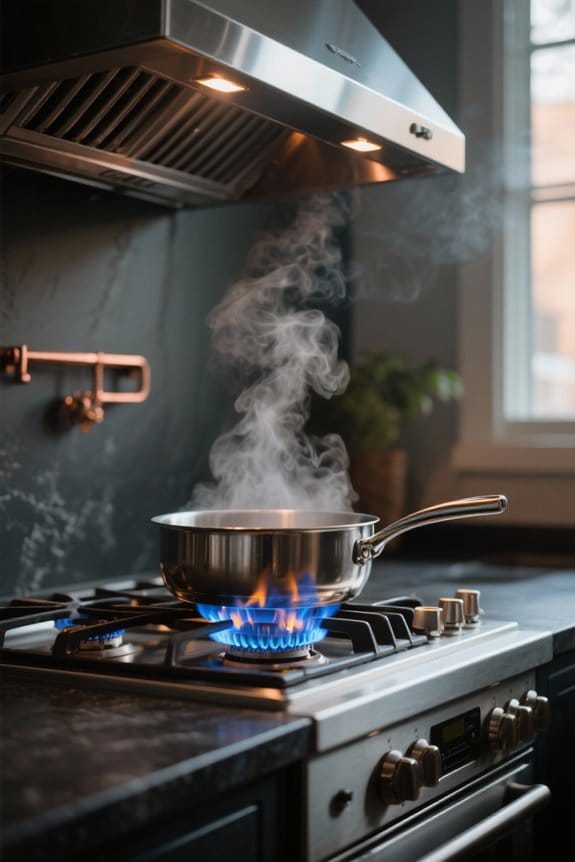
Gas stoves pose several health risks that consumers should be aware of. Cooking with gas considerably increases indoor nitrogen dioxide levels, which can be 1.5 to 4 times higher than those in homes with electric stoves. This gas can exacerbate respiratory issues, particularly in children and asthma patients. Additionally, gas stoves emit carbon monoxide and benzene, both of which pose serious health risks if allowed to accumulate indoors. Regular exposure to particulate matter from gas cooking is linked to chronic heart and lung conditions. Moreover, inadequately ventilated spaces can increase the risk of kitchen fires due to flammable grease and oil particles. These factors combined highlight the pressing need for effective ventilation to improve indoor air quality and minimize health risks. Utilizing efficient drainage features in cookware like mesh pasta baskets can also enhance overall kitchen safety by reducing the risk of water spills and subsequent slips or burns.
The Importance of Proper Ventilation
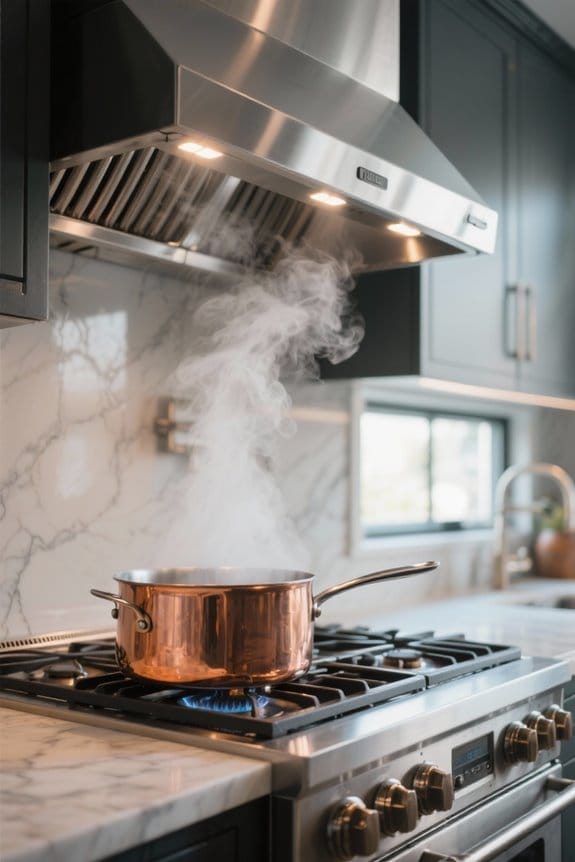
Ventilation is a critical component of indoor cooking safety. Proper ventilation systems, like range hoods and exhaust fans, effectively reduce indoor pollution by expelling harmful cooking emissions. These systems can lower nitrogen dioxide levels considerably, protecting against respiratory diseases. Kitchen ventilation minimizes the risk of kitchen fires by capturing flammable grease and oil particles. Studies show that installing an exhaust fan can reduce indoor PM2.5 levels by approximately 20%. This leads to healthier indoor air quality and a safer cooking environment. Regular maintenance of ventilation systems guarantees they operate effectively, continuing to remove harmful pollutants. Prioritizing proper ventilation is essential for health and safety in any kitchen. For those using nonstick coatings free from harmful chemicals like PFAS and PFOA, proper ventilation further ensures a safe cooking experience by reducing potential toxin exposure.
Recommended Products
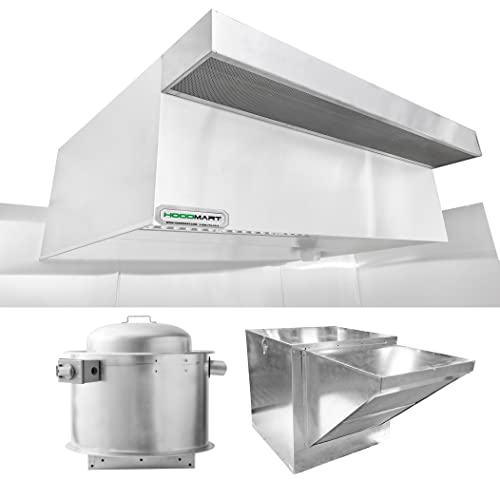
12-foot by 48-inch commercial grade Type-1 hood system with PSP (Perforated Supply Plenum) makeup-air, Built-in 3-inch air gap on back of hood

EXHAUST HOOD- 12ft 0" Long x 48” deep Stainless Steel Wall Canopy Hood with Front Perforated Supply Plenum. Meets all code requirements in North America.

MOVE AIR! – The X-47ATR has a high torque motor capable of producing 3600 Cubic Feet/min while drawing a low 2.8 Amps for maximum airflow capacity and efficiency. Dry wet floors, carpets, walls, ceilings, furniture, paint, drywall, cement, etc
How Ventilation Reduces Indoor Air Pollution
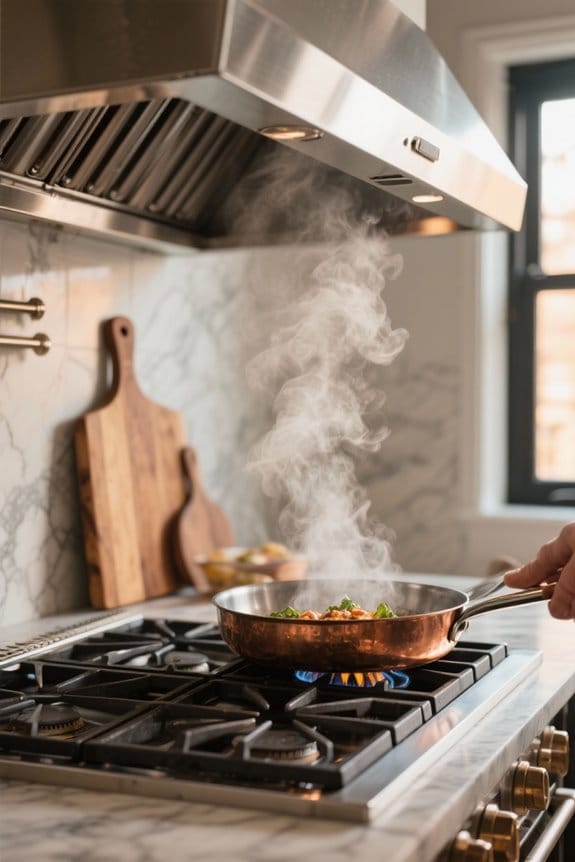
Indoor air quality can markedly worsen during routine meal preparation. Cooking generates pollutants that can raise indoor air pollution levels two to five times higher than those outdoors. Proper ventilation is essential to combat this issue. Ducted range hoods are particularly effective, as they expel air outside, removing harmful emissions. These range hoods can drastically lower fine particulate matter (PM2.5) levels, which are linked to respiratory issues and cardiovascular diseases. Using exhaust fans during high-temperature cooking methods can further reduce pollutants like carbon monoxide and volatile organic compounds. Homes equipped with effective ventilation can experience a 20% reduction in PM2.5 levels. This not only enhances indoor air quality but also supports better health for occupants. Using nonstick frying pans with non-toxic ceramic coatings can further reduce the risk of harmful emissions during cooking.
Recommended Products
20-foot by 48-inch commercial grade exhaust only Type-1 hood (designed to remove grease laden vapors)

48 INCH X 12 FOOT KITCHEN HOOD – Short cycle makeup air hoods maintain a comfortable temperature for employees working in a restaurant kitchen. This energy saving hood reliably exhausts the heat, smoke, and grease produced by cooking equipment.

HANDCRAFTED & HIGH QUALITY: This copper range hood is hand-hammered using solid, genuine 16 gauge copper by skilled artisans. From style to durability and strength, custom copper stove hoods would be a focal point in any kitchen, especially for country/farmhouse-style kitchen.
Types of Kitchen Ventilation Systems
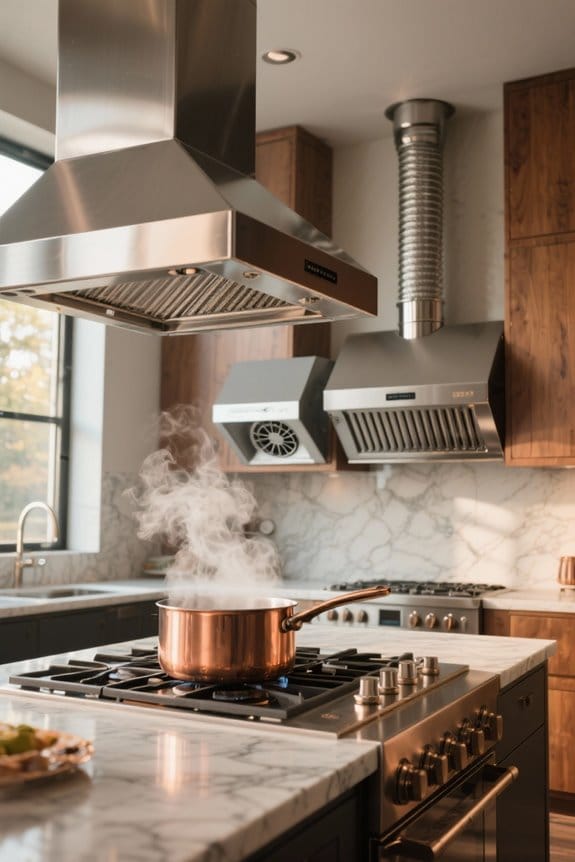
When considering different types of kitchen ventilation systems, one option that stands out is the range hood. Range hoods capture and expel cooking fumes directly outside. They come in various styles, including wall-mounted, under-cabinet, and island options. These systems guarantee effective removal of indoor pollutants, improving indoor air quality. Exhaust fans are another choice, drawing air from the kitchen and venting it outside. They are particularly useful in smaller spaces. For homes without ductwork, ductless range hoods filter air and recirculate it back into the kitchen. However, they require regular filter maintenance. Overall, ducted systems are more efficient at reducing pollutants compared to recirculating hoods, providing essential kitchen ventilation for a safer cooking environment. An important factor to consider when choosing ventilation systems is their heat distribution capability, as this influences how evenly cooking fumes are expelled and managed within the kitchen.
Recommended Products
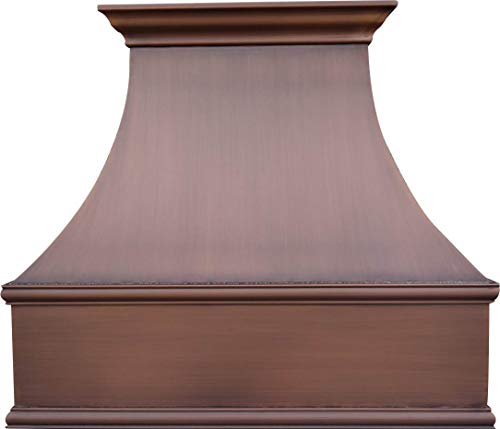
【Size Guide】: For better performance, wall mount range hoods should be the same width as or 3"- 6" wider than your cooktop. The height range between your cooktop and the copper hood should be 30" to 36" (33" is recommended). island mount range hoods should be 3"- 6" wider than your cooktop. The height range between your cooktop and the copper hood should be 30" to 36" (33" is recommended). We can make any hood size you need, please contact our custom service via Amazon.com for a quote.
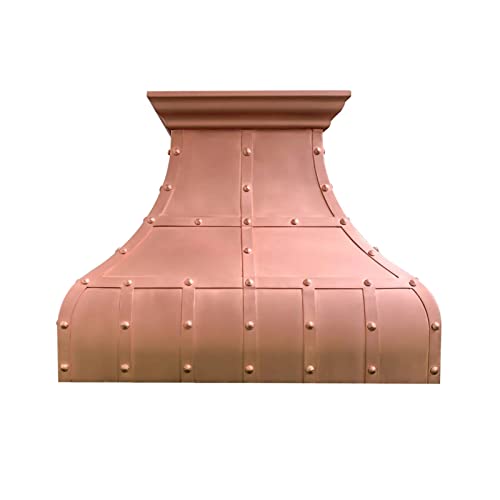
【Size Guide】: 48"W x 27"D x 48"H island mount. For better performance, island mount range hoods should be 3"- 6" wider than your cooktop. The height range between your cooktop and the copper hood should be 30" to 36" (33" is recommended). We can make any hood size you need, please contact our custom service via Amazon.com for a quote.
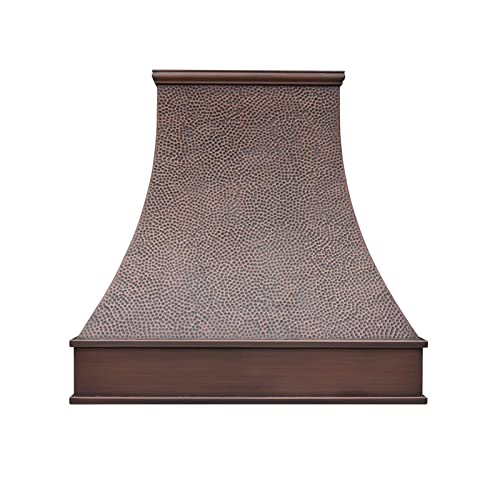
【Size Guide】: 36"W x 27"D x 39"H island mount. For better performance, island mount range hoods should be 3"- 6" wider than your cooktop. The height range between your cooktop and the copper hood should be 30" to 36" (33" is recommended). We can make any hood size you need, please contact our custom service via Amazon.com for a quote.
Strategies for Effective Kitchen Ventilation
Effective kitchen ventilation strategies play an essential role in creating a safer cooking environment. Using a ducted range hood is one of the most effective approaches. It exhausts cooking emissions outside, greatly reducing indoor air pollutants like carbon monoxide, particulate matter, and nitrogen dioxide. Regular maintenance, such as cleaning range hood filters, is critical for peak performance. This helps capture grease and harmful particles, preventing hazardous buildup. For those with natural gas appliances, monitoring carbon monoxide levels through detectors is crucial, as poor ventilation may lead to dangerous situations. Opening windows can also enhance airflow and lower indoor concentrations of harmful pollutants when mechanical ventilation is absent. Together, these strategies promote healthier indoor air quality during cooking. Additionally, selecting oven-safe nonstick skillets that are free from harmful chemicals can further ensure a safer indoor cooking environment.
Recommended Products

HANDCRAFTED & HIGH QUALITY: This copper range hood is hand-hammered using solid, genuine 16 gauge copper by skilled artisans. From style to durability and strength, custom copper stove hoods would be a focal point in any kitchen, especially for country/farmhouse-style kitchen.

HANDCRAFTED & HIGH QUALITY: This copper range hood is hand-hammered using solid, genuine 16 gauge copper by skilled artisans. From style to durability and strength, custom copper stove hoods would be a focal point in any kitchen, especially for country/farmhouse-style kitchen.
48 INCH X 9 FOOT KITCHEN HOOD – Short cycle makeup air hoods maintain a comfortable temperature for employees working in a restaurant kitchen. This energy saving hood reliably exhausts the heat, smoke, and grease produced by cooking equipment.
Climate Impact of Gas Stoves
Gas stoves, which primarily use natural gas, have a significant impact on climate change. The methane in natural gas is a potent greenhouse gas, much more effective than carbon dioxide at trapping heat. In Washington state, methane contributes approximately 20% of greenhouse gas emissions. While gas stoves are less gas-intensive than other appliances, their use still adds to household emissions. This increases air pollution exposure and can compromise indoor air quality. Reducing reliance on gas stoves aligns with climate change mitigation efforts. Shifting to electric stoves can help lower greenhouse gas emissions. This alteration not only supports public health but also benefits the environment overall. Ensuring proper ventilation is essential when using any cooking appliances. Investing in high-quality Dutch ovens can enhance cooking efficiency and reduce energy consumption, making them a valuable choice for eco-conscious cooking.
Disparities in Indoor Air Quality and Health Effects
Disparities in indoor air quality greatly affect health outcomes in various communities. Many minority households lack proper ventilation, which worsens indoor air pollution. Cooking with gas stoves often increases levels of nitrogen dioxide. Higher nitrogen dioxide levels considerably contribute to asthma and other respiratory issues. Black and Asian populations are more exposed to these pollutants, leading to increased health disparities. For instance, Black individuals face PM2.5 levels that are 1.3 times greater than white populations. American Indian and Alaska Native adults report asthma rates as high as 18%. These health challenges are compounded by structural inequalities in homeownership, restricting necessary modifications for improved ventilation. Addressing these concerns is essential for improving residential health outcomes and ensuring safer cooking environments. Incorporating safe cooking practices with non-toxic materials, such as stainless steel baking sheets, can further reduce exposure to indoor pollutants and enhance air quality.
Frequently Asked Questions
Why Is It Important to Have Proper Ventilation in the Kitchen?
Proper ventilation in the kitchen is essential for effective kitchen airflow, smoke removal, odor control, and moisture management. It guarantees compliance with safety standards, reduces gas emissions, aids heat dissipation, and improves overall air quality, mitigating health impacts.
What Can Be Caused by Improperly Vented Indoor Cooking Stoves?
Improperly vented indoor cooking stoves can lead to carbon monoxide poisoning, reduced indoor air quality, smoke inhalation risks, respiratory health implications, and fire safety concerns, alongside moisture buildup problems and toxic fume exposure, promoting kitchen mold growth.
What Are the Effects of Cooking in a Poorly Ventilated House?
In a poorly ventilated house, smoke buildup cloaks the air, inviting carbon monoxide and health risks. Odors linger, while burnt residue breeds mold growth. Allergic reactions, food contamination, and fire hazards thrive in this concealed, toxic atmosphere.
Is Cooking Without Ventilation Dangerous?
Cooking without ventilation is dangerous due to smoke inhalation risks, carbon monoxide exposure, and poor air quality. It creates respiratory problems, asthma triggers, fire hazards, and heat buildup, exacerbating kitchen odors and harmful cooking fumes.